


Yes, recycled industrial gypsum can replace natural gypsum in cement when it provides a consistent sulfate contribution and meets the cement plant’s technical, environmental and regulatory requirements. FGD gypsum is often the most practical substitute because it can have a high calcium sulfate dihydrate content after proper oxidation, washing and dewatering. Treated phosphogypsum and other industrial gypsum sources may also be used, but they usually require more extensive testing and pre-treatment.
The key requirement is not simply that the material contains gypsum. The specific industrial gypsum source must be tested with the target clinker and cement formulation. Moisture, sulfate availability, impurities, particle size and dosing stability all affect whether it can control cement setting time as reliably as natural gypsum.
Why Cement Uses Gypsum
Gypsum is added during final cement grinding as a source of sulfate. The sulfate helps regulate the hydration of tricalcium aluminate, commonly called C3A, in Portland cement clinker.
Without sufficient sulfate, C3A can react too rapidly when water is added, causing flash set or very short working time. With the correct sulfate balance, the cement has controlled setting behavior and remains workable during mixing, transport, placement and finishing.
Natural gypsum has traditionally been used because it is a reliable calcium sulfate source. Suitable industrial gypsum can perform the same role if it has compatible chemistry, consistent quality and the correct particle-size and moisture condition.
Which Recycled Gypsum Sources Can Be Used?
| Gypsum source | Potential for cement use | Main conditions to confirm |
|---|---|---|
| FGD gypsum | Often suitable as a natural-gypsum substitute when quality is controlled | Gypsum content, moisture, chloride, residual sulfite, ash-related impurities and stable dosing |
| Phosphogypsum | Potentially suitable after treatment and source-specific evaluation | Soluble phosphorus, fluoride-related compounds, acidity, trace constituents, radiological requirements and cement trials |
| Titanogypsum | Can be evaluated as a cement retarder or sulfate-bearing material | Iron content, acidity, color, moisture and effect on setting time and strength |
| Citrogypsum | May be considered after quality evaluation | Residual citric acid, organic content, moisture and setting-time effect |
| Fluorogypsum | May be considered for qualified cementitious uses | Fluoride-related compounds, acidity, soluble salts and compliance requirements |
| Borogypsum | May be used as a sulfate source in selected cement systems | Boron content, residual boric acid, silica and effect on cement setting behavior |
| Recycled gypsum board waste | Potentially usable after separation and contamination control | Paper, additives, foreign materials, moisture, purity and customer acceptance |
FGD Gypsum: The Most Established Alternative
FGD gypsum is produced by wet flue-gas desulfurization systems. When sulfur dioxide is removed using a limestone- or lime-based absorbent and the resulting calcium sulfite is oxidized, the process forms calcium sulfate dihydrate.
FGD gypsum can have a high calcium sulfate content and a composition close to natural gypsum. One published study reports that FGD gypsum can exceed 95% calcium sulfate content, giving it an important advantage as a substitute for natural gypsum in construction-material applications.
Studies have shown that FGD gypsum can be technically feasible as a setting-time regulator in Portland cement. The final result still depends on source quality, cement composition, addition rate, fineness, moisture and plant-specific sulfate optimization.
Before FGD gypsum replaces natural gypsum, the cement plant should test:
Calcium sulfate dihydrate content
Free moisture and storage behavior
Chloride and soluble-salt content
Residual sulfite and oxidation quality
Fly ash, silica, carbonate and other non-gypsum solids
Particle-size distribution and grinding behavior
Effect on setting time, soundness and strength development
Phosphogypsum: Possible but More Complex
Phosphogypsum is produced during phosphoric acid production. It is mainly calcium sulfate dihydrate, but it may contain soluble phosphorus, fluoride-related compounds, residual acidity, organic matter, trace elements and naturally occurring radionuclides.
These impurities can affect cement setting and strength. Phosphorus and fluoride-related compounds may prolong setting time or change hydration behavior, so phosphogypsum often requires washing, neutralization, drying, blending or another treatment route before it is used as a cement set regulator.
Research on phosphogypsum use in Portland cement describes it as promising, but identifies impurities such as P2O5 and fluoride as important factors that can affect cement performance. Lime purification and other treatments have been studied to improve its suitability.
Treated phosphogypsum has also been evaluated as a replacement for natural gypsum in cement production. One study reported that heavy-metal impurities were immobilized in the cement matrix and that treated phosphogypsum could function as a set regulator and mineral addition, but the authors emphasized that source-material impurities directly affect mortar properties.
For phosphogypsum, grinding should occur only after the material has passed the required technical and compliance evaluation. Fine grinding cannot remove soluble phosphorus, fluoride-related compounds, acidity or radionuclides.
How Industrial Gypsum Replaces Natural Gypsum
Industrial gypsum can be used through several approaches, depending on the material and cement plant process.
Direct substitution after preparation
Suitable FGD gypsum or other qualified industrial gypsum may replace natural gypsum directly after dewatering, drying, deagglomeration and grinding. The powder is stored and dosed into the cement grinding system with clinker and other constituents.
This route is most practical when the industrial gypsum has stable quality, suitable moisture and a compatible sulfate profile.
Partial substitution
A cement producer may begin with partial replacement, blending natural gypsum with industrial gypsum. This reduces supply risk and allows the plant to evaluate setting time, sulfate balance, grinding behavior and cement strength before increasing the substitution rate.
Partial substitution can also help manage small variations in industrial gypsum quality or dilute selected impurities.
Pre-treated industrial gypsum
For phosphogypsum, titanogypsum, fluorogypsum, citrogypsum or borogypsum, the material may need washing, neutralization, filtration, drying, blending or another treatment before it can be evaluated as a natural-gypsum substitute.
The treatment route must be justified by the value of the final product. A material may be technically treatable but not economically suitable if treatment cost, wastewater management, energy use and compliance requirements are too high.
What Must Match Natural Gypsum Performance?
To replace natural gypsum successfully, industrial gypsum must provide consistent performance in the cement system. The cement plant should evaluate the complete material profile, not only the calcium sulfate percentage.
| Requirement | Why it matters |
|---|---|
| Available sulfate contribution | Determines whether the material can regulate C3A hydration and cement setting time. |
| Calcium sulfate phase | Dihydrate, hemihydrate and anhydrite dissolve differently and can affect sulfate availability. |
| Gypsum purity | Higher and more stable gypsum content supports predictable dosing and cement quality. |
| Moisture content | Affects storage, conveying, dosing, grinding efficiency and finished-cement consistency. |
| Particle size and fineness | Influences grinding, blending and sulfate-release behavior in cement hydration. |
| Chlorides and soluble salts | Can affect cement quality, durability requirements and plant equipment. |
| Phosphorus, fluoride or acidity | Can alter setting and strength, particularly in phosphogypsum and some chemical-industry gypsum sources. |
| Trace constituents and compliance | Must meet applicable environmental, product-quality and regulatory requirements. |
| Supply consistency | Stable incoming quality is necessary for reliable cement production. |
How Much Industrial Gypsum Can Be Used?
The required gypsum addition rate depends on the target SO3 level, clinker mineralogy, C3A content, cement fineness, alkali content, supplementary cementitious materials and the calcium sulfate form of the industrial gypsum.
There is no universal replacement percentage. A cement plant should not copy the addition rate used for natural gypsum and assume that it will produce identical results with an industrial by-product. Different materials can have different purity, moisture, sulfate availability and impurity effects.
Research summaries report that several industrial by-product gypsum materials, including desulfurization gypsum, phosphogypsum and titanium gypsum, can act as cement retarders in tested systems. One review reported that approximate retarder dosages around 6% were used in comparisons with natural gypsum, but setting-time changes varied by gypsum type: desulfurization gypsum extended setting by about one hour, phosphogypsum by about 30 minutes and titanium gypsum by about two hours in the reported tests.
These figures are research findings, not plant design specifications. The correct sulfate addition must be determined by laboratory testing and controlled plant trials.
Processing Industrial Gypsum for Cement Use
Before it is used in cement, industrial gypsum may need to be prepared for stable feeding and dosing. The required process depends on moisture, lump size, impurities and final product specification.
Material receiving and storage
Industrial gypsum should be stored under conditions that limit rain exposure, contamination and uncontrolled moisture variation. Wet filter cake can compact and form lumps during storage, making consistent dosing difficult.
Dewatering and drying
High free moisture can cause bridging, sticking, reduced grinding efficiency and unstable cement dosing. Mechanical dewatering should be considered first, followed by thermal drying when necessary.
The drying target should be set by the cement plant’s handling and grinding requirements. Excessive drying can increase cost, while insufficient drying can lead to storage and feeding problems.
Deagglomeration and grinding
Industrial gypsum may need lump breaking, crushing or deagglomeration before grinding. The objective is to create a stable feed and a controlled powder that can be dosed consistently with cement clinker.
Grinding should be selected according to target fineness, production capacity, moisture and need for drying integration. The powder does not need to be finer than the cement application requires.
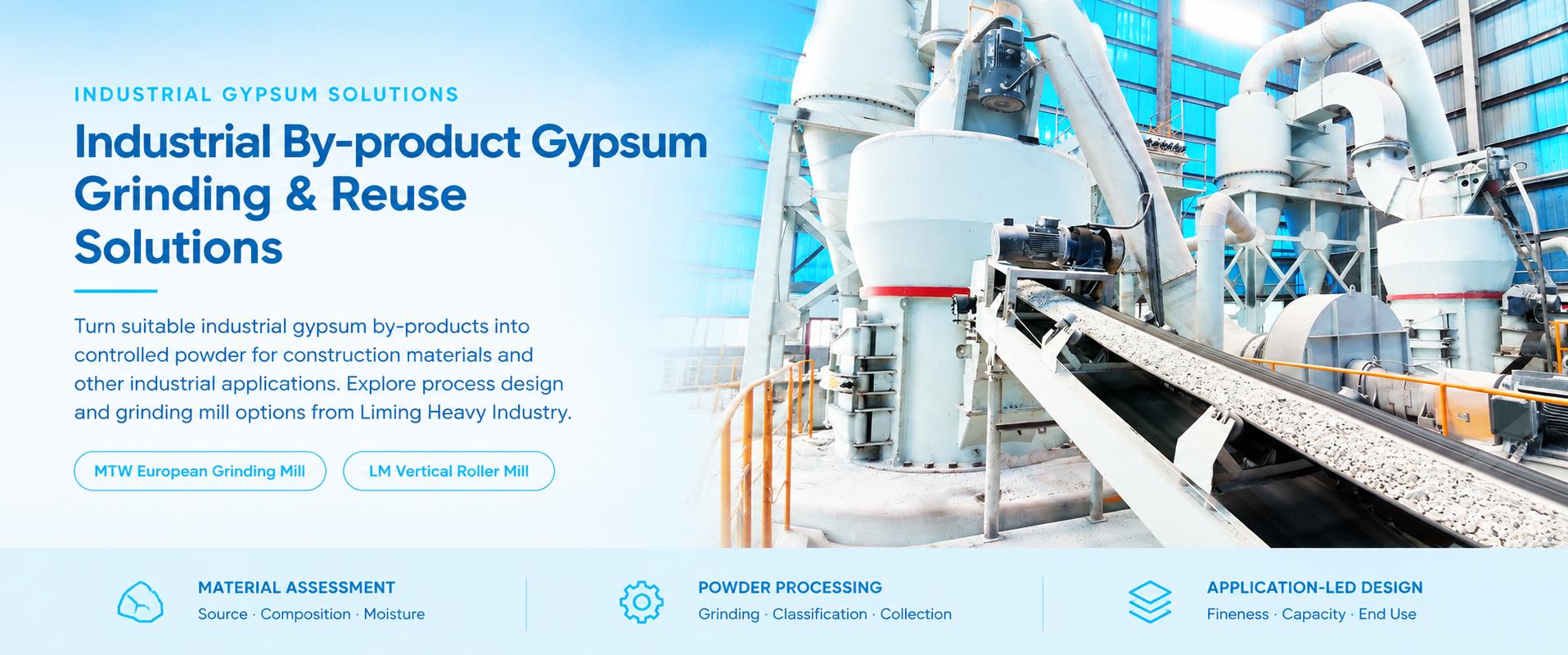
Grinding Equipment for Cement-Grade Industrial Gypsum
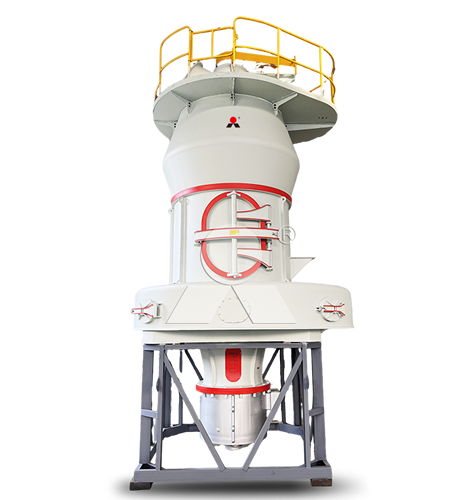
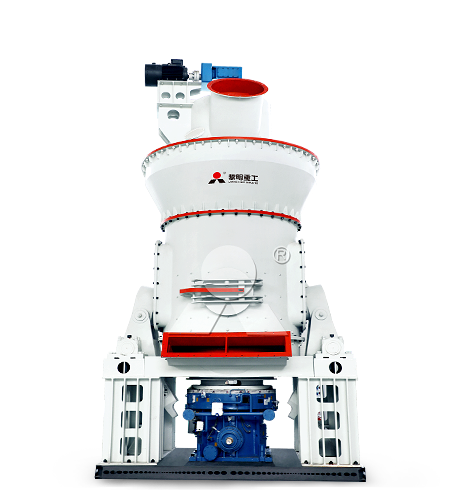
MTW European Grinding Mill, LM Vertical Roller Mill and Raymond mill can be considered for qualified industrial gypsum after necessary feed preparation.
MTW European Grinding Mill
MTW European Grinding Mill is suitable for small-to-medium capacity industrial gypsum powder projects. It can produce controlled conventional powder fineness for cement use when the feed is dry or adequately conditioned.
For wet FGD gypsum or other moist industrial gypsum, upstream dewatering and drying may be needed before the material enters the mill.
LM Vertical Roller Mill
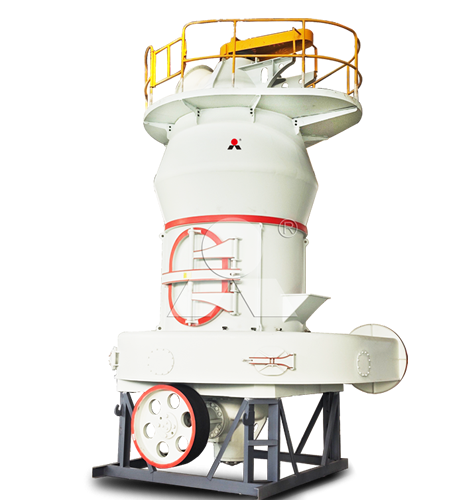
LM Vertical Roller Mill is suitable for high-capacity cement-grade gypsum processing and projects that benefit from integrated drying, grinding and classification. It is especially relevant for FGD gypsum and prepared industrial gypsum with moderate moisture.
The final configuration should be based on actual evaporation duty, finished-powder capacity, target fineness, available heat source and cement plant handling requirements.
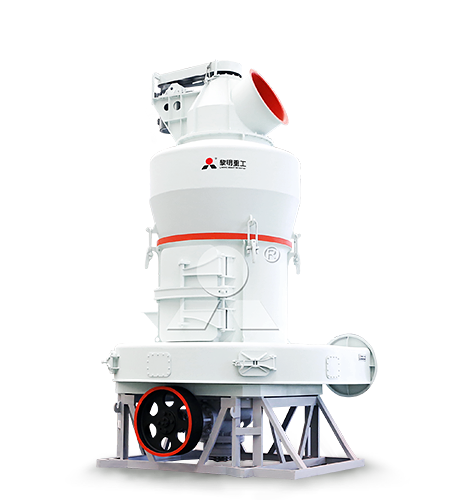
Raymond Mill
Raymond mill can be considered for conventional cement-grade gypsum powder production with moderate output requirements and dry, stable, properly prepared feed. It is generally suitable when the project does not require major integrated drying duty.
Environmental and Supply Considerations
Replacing natural gypsum with suitable industrial or recycled gypsum can reduce dependence on mined raw material and may reduce disposal or storage requirements for by-product gypsum. Life-cycle research on gypsum plasterboard recycling has found that recycled gypsum can have environmental advantages over natural gypsum or FGD gypsum, especially for land transformation and abiotic resource depletion, although results depend on transport, processing and local conditions.
However, environmental benefit does not remove the need for quality control. The recycled material must still meet cement-performance requirements, and any source-specific environmental or regulatory conditions must be satisfied before routine use.
Recommended Evaluation Procedure
Identify the industrial gypsum source and original production process.
Collect representative samples from normal production and storage conditions.
Test gypsum content, moisture, calcium sulfate phase, particle size and flowability.
Analyze source-specific impurities, such as chloride and sulfite for FGD gypsum, or phosphorus, fluoride and acidity for phosphogypsum.
Review applicable environmental, product-quality and regulatory requirements.
Determine whether washing, neutralization, dewatering, drying, blending or other treatment is required.
Grind the prepared gypsum to a fineness suitable for stable cement blending and dosing.
Perform laboratory cement trials to measure SO3, setting time, soundness, strength and durability-related properties.
Run a controlled plant trial with stable dosing and production monitoring.
Establish incoming-material and finished-cement quality-control limits before full substitution.
Conclusion
Recycled industrial gypsum can replace natural gypsum in cement when it provides reliable sulfate control and meets the cement plant’s quality requirements. FGD gypsum is often the most established alternative because of its high calcium sulfate content and relatively consistent chemistry after proper processing.
Phosphogypsum, titanogypsum, citrogypsum, fluorogypsum, borogypsum and recycled gypsum-board material can also be considered, but they require source-specific testing and, in some cases, pre-treatment. Grinding improves particle-size control and dosing consistency, but it does not remove unsuitable impurities.
For prepared cement-grade gypsum, MTW European Grinding Mill is suitable for small-to-medium capacity powder production, LM Vertical Roller Mill is suitable for high-capacity systems with drying integration, and Raymond mill is suitable for conventional processing with dry, stable feed. Final substitution should be validated through laboratory and plant trials using the actual clinker, cement formulation and industrial gypsum source.
Related Industrial By-product Gypsum Solutions


LIMING at MiningMetals Uzbekistan 2026 | Booth B94
2026-10-22

LIMING Heavy Industry at MINEXPO Africa 2026 | Booth 133
2026-10-22
Liming Heavy Industry to Exhibit at bauma CHINA 2026 – Visit Us at Booth E6.510
2026-10-15
Meet Liming Heavy Industry at the 140th Canton Fair 2026
2026-10-13
Liming Heavy Industry to Attend the 140th Canton Fair
2026-09-25
Complete Mineral Processing Solutions
Convenient Reliable Professional Efficient Get Your Quote
Please feel free to submit your inquiry information to us. We will contact with you as soon as possible.
Our team will contact you as soon as possible.