


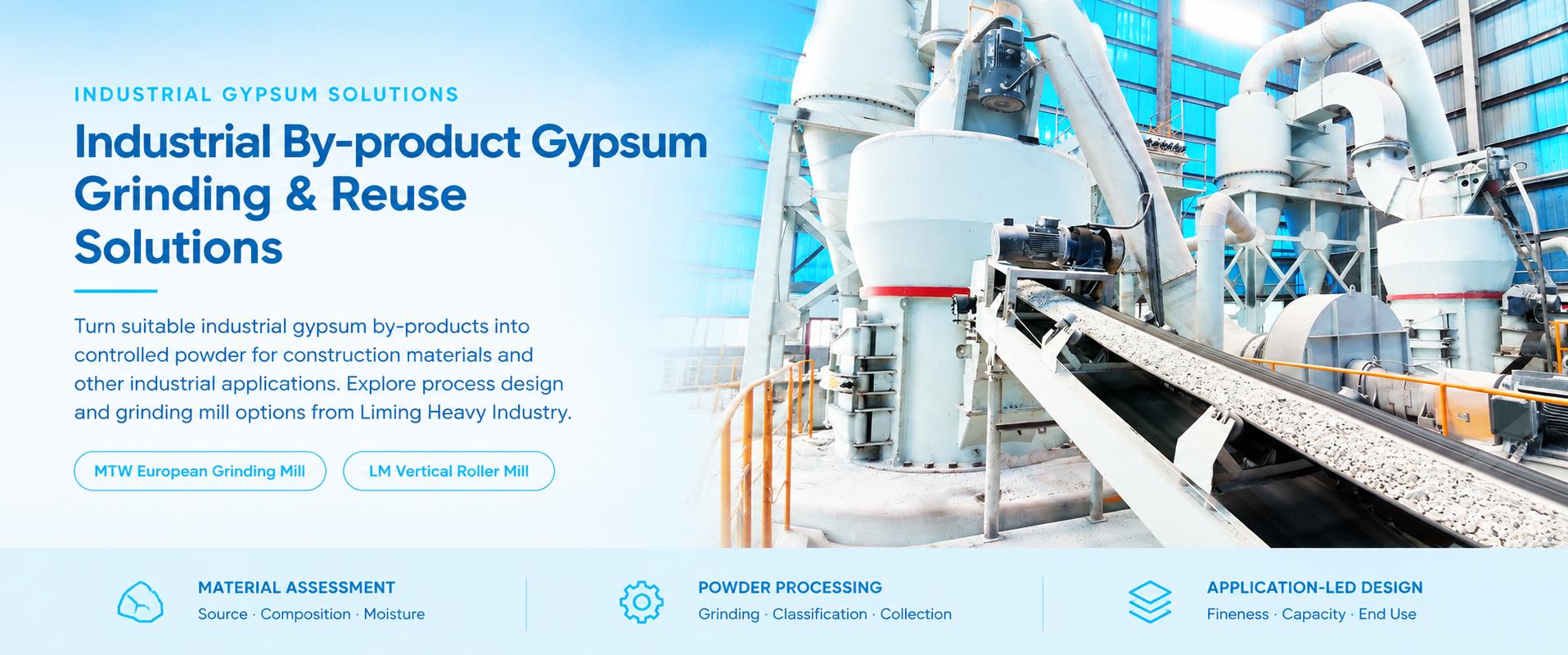
Moisture affects every stage of industrial gypsum grinding: storage, feeding, deagglomeration, drying, mill output, classification, dust collection and finished-powder storage. High free moisture can make gypsum sticky and difficult to feed, reduce grinding capacity, destabilize fineness and cause powder caking after production.
The key issue is free moisture, not the chemically bound water inside calcium sulfate dihydrate. Free moisture must be managed so that the material can move continuously through the plant. The correct solution may be covered storage, mechanical dewatering, a separate dryer, integrated drying in an LM Vertical Roller Mill or a combination of these measures.
Free Moisture vs. Chemically Bound Water
Gypsum is calcium sulfate dihydrate, written as CaSO4·2H2O. The two water molecules in this formula are part of the crystal structure. They are called chemically bound water.
Industrial gypsum can also contain free moisture. This is water on particle surfaces, between particles or trapped in filter cake, slurry-derived solids and wet stockpiles. Free moisture is the main cause of handling and grinding problems.
| Water type | Where it is found | Effect on grinding |
|---|---|---|
| Free moisture | On particle surfaces, in pores, between particles and in wet filter cake | Can cause bridging, sticking, agglomeration, reduced capacity and powder caking |
| Chemically bound water | Inside the calcium sulfate dihydrate crystal structure | Does not normally cause handling problems; removing it converts gypsum to hemihydrate during calcination |
Drying before grinding is intended to remove free moisture. It should not unintentionally remove chemically bound water when the target product is dihydrate gypsum powder. If hemihydrate gypsum is required for plaster or gypsum board, calcination should be treated as a separate controlled process.
How Moisture Affects Raw-Material Storage
Wet industrial gypsum can change rapidly during storage. FGD gypsum, phosphogypsum, citrogypsum, titanogypsum, fluorogypsum and borogypsum may be delivered as moist filter cake or slurry-derived solids. If exposed to rain or humidity, their moisture can increase further.
High moisture in storage can cause:
Compaction and formation of hard lumps
Uneven moisture distribution through the stockpile
Bridging and rat-holing in hoppers
Material buildup on chutes, conveyors and transfer points
Higher drying load and energy cost
Variable feed condition from one production shift to another
Surface contamination and loss of powder quality
Covered storage is often one of the lowest-cost ways to improve grinding reliability. It prevents rain exposure, reduces moisture variation and makes feed behavior more predictable. For wet filter cake, the storage arrangement should also allow controlled reclaiming and avoid excessive compaction under the stockpile.
How Moisture Affects Feeding and Material Handling
Gypsum with high free moisture can be difficult to move from storage to the grinding line. It may adhere to hopper walls, bridge above feeders, compact in screw conveyors or form large agglomerates that cannot enter the mill steadily.
Stable feeding is essential because mill output and product fineness depend on a consistent material flow. If wet gypsum enters the mill in intermittent surges, mill load, airflow, classifier performance and powder quality can all become unstable.
Common moisture-related handling problems include:
Hopper bridging
Material rat-holing
Stickiness on belt or screw conveyors
Build-up in transfer chutes
Unstable feeder load
Blocked rotary valves or airlocks
Large wet lumps entering the grinding system
Possible solutions include covered storage, hopper design suited to cohesive materials, liners, lump breaking, controlled feed-rate equipment, mechanical dewatering and drying before the mill.
How Moisture Affects Grinding Capacity
Moisture usually reduces practical grinding capacity. When gypsum contains excess free water, part of the process energy and airflow is used to heat and evaporate water instead of grinding and classifying powder. Wet material may also coat grinding components and reduce the efficiency of size reduction.
Capacity should be measured as finished dry powder at the required fineness, not as wet-feed tonnage. A plant receiving 30 tonnes per hour of wet gypsum does not produce 30 tonnes per hour of saleable dry powder if part of the feed mass is water.
For example, assume a grinding plant receives 30 tonnes per hour of industrial gypsum at 15% free moisture and produces finished powder at 2% moisture:
Wet feed: 30 tonnes per hour
Dry solids in feed: 30 × 85% = 25.5 tonnes per hour
Finished powder at 2% moisture: 25.5 ÷ 98% = approximately 26.0 tonnes per hour
Water to remove: 30 − 26.0 = approximately 4.0 tonnes per hour
The process therefore needs enough drying capacity to evaporate approximately 4.0 tonnes of water per hour, in addition to the grinding and classification duty. If the drying system is undersized, the mill may not reach its required powder output or product-moisture target.
How Moisture Affects Grinding Components
High-moisture gypsum can coat rollers, grinding rings, grinding tables, classifier parts and internal ducts. This creates a layer of compacted material that reduces effective grinding action and can make product fineness unstable.
Wet buildup can also cause:
Reduced grinding efficiency
More frequent cleaning and downtime
Unstable grinding pressure or mill load
Irregular circulation of coarse material
Higher wear in some areas because of uneven material flow
Difficulty maintaining a stable air and powder balance
For mills designed primarily for dry feed, such as MTW European Grinding Mill or Raymond mill, high-moisture gypsum normally needs upstream drying or conditioning. These mills can produce reliable powder from prepared gypsum, but they should not be expected to solve severe wet filter-cake handling problems without appropriate feed preparation.
How Moisture Affects Classification and Fineness
Classification separates finished fine powder from coarse particles. It depends on stable airflow and consistent material dispersion. When gypsum is too wet, particles can stick together, behave as larger agglomerates and become more difficult to classify accurately.
Moisture-related classification problems can include:
Coarse wet agglomerates entering the finished product
Unstable classifier cut point
Reduced separation efficiency
Higher circulating load and lower mill capacity
Inconsistent sieve residue or particle-size distribution
Powder accumulation in ducts and classifier zones
A stable moisture level helps the mill produce a more consistent powder. This is especially important when the final application requires controlled gypsum fineness for cement, plaster, dry mortar or gypsum-board feed.
How Moisture Affects Dust Collection
Gypsum grinding systems use airflow to convey fine powder, support classification and move material to the collector. Moisture can disrupt this system by causing powder to adhere to ducts, cyclone surfaces, rotary valves and filter components.
When gypsum is too wet, dust collection may become less efficient because material accumulates in the gas path instead of remaining dispersed. This can increase pressure drop, reduce airflow, overload fans and create unstable powder collection.
A complete moisture-control plan should consider:
Feed moisture
Hot-gas temperature and volume where drying is used
Airflow through the mill and classifier
Filter differential pressure
Duct insulation where condensation is possible
Powder temperature at collection
Sealing of transfer points and storage silos
How Moisture Affects Finished-Powder Storage
Even after grinding, gypsum powder can cake if it contains too much residual moisture or absorbs humidity during storage. Caked powder loses flowability and may become difficult to discharge from silos, fill into bags or dose into cement and dry-mortar production lines.
Moisture-related storage problems include:
Silo bridging and poor discharge
Powder lumps in bags or big bags
Reduced bulk-flow consistency
Difficulty with pneumatic conveying
Variable dosing in the customer’s process
Product rejection because of moisture or caking
Finished powder should be stored in dry, sealed silos or packaging. The plant should control final powder moisture, powder temperature and exposure to humid air during collection, transfer and dispatch.
Typical Moisture Conditions by Gypsum Type
The moisture level and handling challenge depend on the industrial gypsum source. The following ranges are examples of process conditions, not universal specifications.
| Gypsum type | Typical moisture-related issue | Processing focus |
|---|---|---|
| FGD gypsum | Moist filter cake after washing and dewatering | Mechanical dewatering, covered storage, drying when required and stable feeding |
| Phosphogypsum | Variable moisture from wet production, stacks and weather-exposed storage | Sampling, segregation, dewatering, drying and source-specific impurity management |
| Citrogypsum | Moist residue after filtration and potential organic or citrate-related content | Dewatering, drying, feed preparation and product-specific quality control |
| Titanogypsum | Wet slurry-derived material with possible compaction and iron-related impurities | Dewatering, drying, deagglomeration and color or impurity evaluation |
| Fluorogypsum | Moist process residue with possible acidity and fluoride-related compounds | Dewatering, drying, corrosion-aware equipment selection and chemical qualification |
| Borogypsum | Moist filter cake from boric acid production | Dewatering, drying, boron-content testing and stable feed preparation |
For FGD gypsum, moisture requirements can vary sharply by final use. One supplier guide describes disposal-grade FGD gypsum at approximately 15% moisture, while wallboard-grade gypsum may require less than 10% moisture after dewatering and washing. Actual requirements depend on the board producer and local process conditions.
Drying Before Grinding vs. Integrated Drying
Industrial gypsum can be dried before the mill or dried inside an integrated grinding system. The correct choice depends on capacity, moisture, heat source, plant layout and selected mill type.
Separate drying before grinding
Separate drying can be used when the incoming gypsum is too wet for conventional milling. The material is first dewatered or dried, then fed to MTW European Grinding Mill or Raymond mill at a stable moisture level.
This route is suitable when:
The feed has high or highly variable free moisture.
The project uses MTW European Grinding Mill or Raymond mill.
The plant needs separate control of drying and grinding.
Wet filter cake requires lump breaking or conditioning before milling.
The required capacity is moderate and a separate dryer is practical.
Integrated drying, grinding and classification
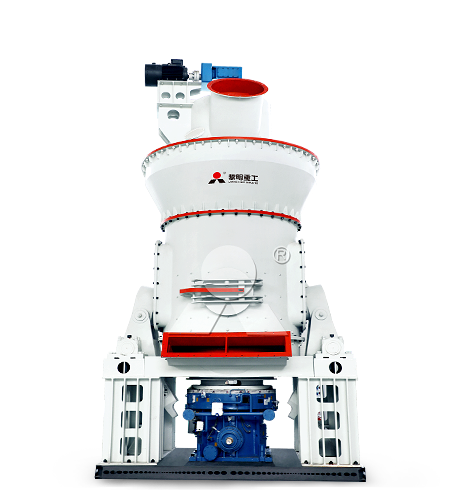
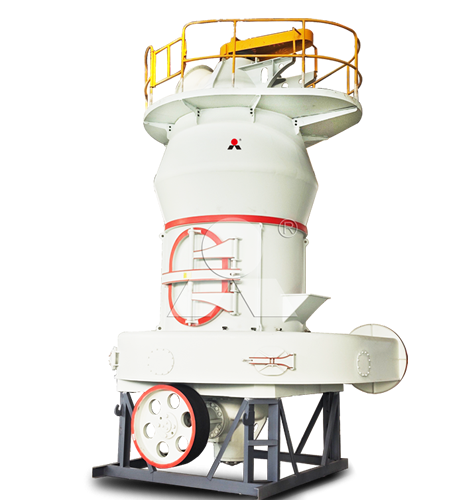
LM Vertical Roller Mill can integrate drying, grinding and classification when the feed condition, heat source and process design are suitable. Hot gas removes free moisture while the material is ground and classified.
This route is especially useful when:
The project requires medium-to-high finished-powder capacity.
The gypsum has moderate moisture or meaningful moisture variation.
A reliable hot-gas source is available.
The plant benefits from a compact and continuous process layout.
The drying load can be matched to mill airflow and collection capacity.
Grinding-drying should remove surface moisture without uncontrolled gypsum calcination when the final product is dihydrate gypsum powder. One gypsum-processing reference describes grinding-drying as operation that heats gypsum only until surface moisture has evaporated, with a maximum gas temperature after the classifier of 90°C in the cited MPS mill configuration.
How Moisture Influences Mill Selection
| Feed condition | Suitable process direction | Reason |
|---|---|---|
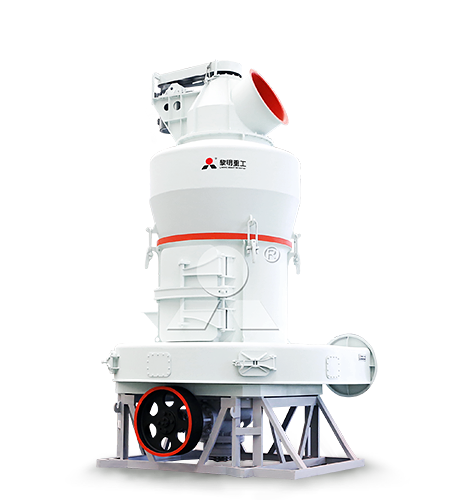
| Dry, stable gypsum with low free moisture | MTW European Grinding Mill or Raymond mill | Conventional grinding systems can operate efficiently with prepared dry feed. |
| Prepared gypsum with moderate moisture and small-to-medium capacity | Separate drying + MTW European Grinding Mill | Drying stabilizes feed before conventional powder grinding. |
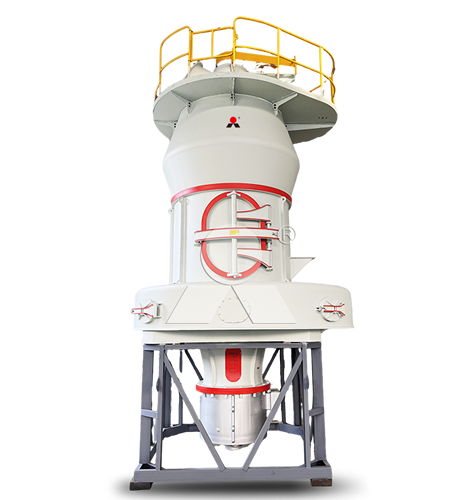
| High-capacity gypsum production with drying demand | LM Vertical Roller Mill | Can integrate drying, grinding and classification in one system. |
| Wet filter cake with severe stickiness or large agglomerates | Dewatering, deagglomeration and drying before final mill selection | Feed preparation must be solved before reliable grinding is possible. |
| Variable stockpile material exposed to weather | Segregation, covered storage, moisture testing and flexible drying design | Average moisture alone does not represent normal operating conditions. |
How to Control Moisture in an Industrial Gypsum Plant
Effective moisture control begins at the gypsum source and continues through storage, feeding, grinding and powder dispatch.
Measure minimum, average and maximum free moisture, not only one sample.
Use covered storage to prevent rain exposure and uncontrolled moisture increase.
Separate fresh wet material from older or drier stockpile material when their behavior differs.
Use mechanical dewatering before thermal drying whenever practical.
Break wet agglomerates before they reach the dryer or grinding mill.
Select feeders, hoppers and conveyors designed for cohesive material.
Size drying equipment for the highest normal moisture condition, not only the average.
Control hot-gas temperature and airflow to remove free water without unwanted calcination.
Monitor filter differential pressure, fan performance and powder moisture during operation.
Store finished powder in dry, sealed silos or moisture-protected packaging.
Common Moisture-Related Mistakes
Using only average moisture for plant design
A dryer or integrated grinding system sized only for average moisture may fail when feed moisture increases after rain, source-process changes or stockpile variation. The design should consider the highest normal operating moisture and include appropriate operating flexibility.
Assuming filter cake is ready for any mill
FGD gypsum and other industrial gypsum filter cakes can look like fine material but still behave as sticky, compacted masses. The physical behavior of the feed must be tested before selecting a conventional grinding system.
Confusing drying with calcination
Drying removes free moisture. Calcination removes chemically bound water and changes calcium sulfate dihydrate into hemihydrate. A drying process for cement-grade or industrial dihydrate gypsum should not unintentionally calcine the material.
Ignoring finished-powder moisture
A mill can appear to run normally while the final powder still has enough moisture to cake in silos or bags. The product specification should include both fineness and final moisture.
Trying to solve chemical problems with drying
Drying improves handling but does not remove soluble phosphorus, fluoride-related compounds, acidity, boron, iron or other impurities. Moisture control must be combined with the appropriate material-quality and end-use evaluation.
Information Needed for Moisture-Control Design
To design the drying and grinding section of an industrial gypsum plant, provide:
Gypsum type and source process
Minimum, average and maximum free moisture
Raw-material photos and feed-condition description
Feed form, maximum lump size and degree of agglomeration
Required finished-powder moisture
Target fineness and required powder capacity
Final application, such as cement, gypsum board, plaster or dry mortar
Whether the product must remain dihydrate gypsum or be calcined
Available heat source, temperature and fuel conditions
Raw-material storage and finished-powder dispatch method
Conclusion
Moisture has a major effect on industrial gypsum grinding because it controls material flow, drying demand, mill capacity, classifier performance, dust collection and finished-powder storage. High free moisture can turn fine gypsum into sticky filter cake or compacted lumps that are difficult to feed and grind.
For dry or adequately prepared gypsum, MTW European Grinding Mill and Raymond mill can provide reliable conventional powder production. For high-capacity projects or gypsum with meaningful drying demand, LM Vertical Roller Mill can integrate drying, grinding and classification.
The best moisture-control strategy is based on representative testing of minimum, average and maximum feed moisture, combined with a realistic drying-load calculation and a defined finished-powder moisture target. Drying improves handling and grinding stability, but it must be controlled to avoid unwanted calcination and should not be mistaken for impurity removal.
Related Industrial By-product Gypsum Solutions


LIMING at MiningMetals Uzbekistan 2026 | Booth B94
2026-10-22

LIMING Heavy Industry at MINEXPO Africa 2026 | Booth 133
2026-10-22
Liming Heavy Industry to Exhibit at bauma CHINA 2026 – Visit Us at Booth E6.510
2026-10-15
Meet Liming Heavy Industry at the 140th Canton Fair 2026
2026-10-13
Liming Heavy Industry to Attend the 140th Canton Fair
2026-09-25
Complete Mineral Processing Solutions
Convenient Reliable Professional Efficient Get Your Quote
Please feel free to submit your inquiry information to us. We will contact with you as soon as possible.
Our team will contact you as soon as possible.