


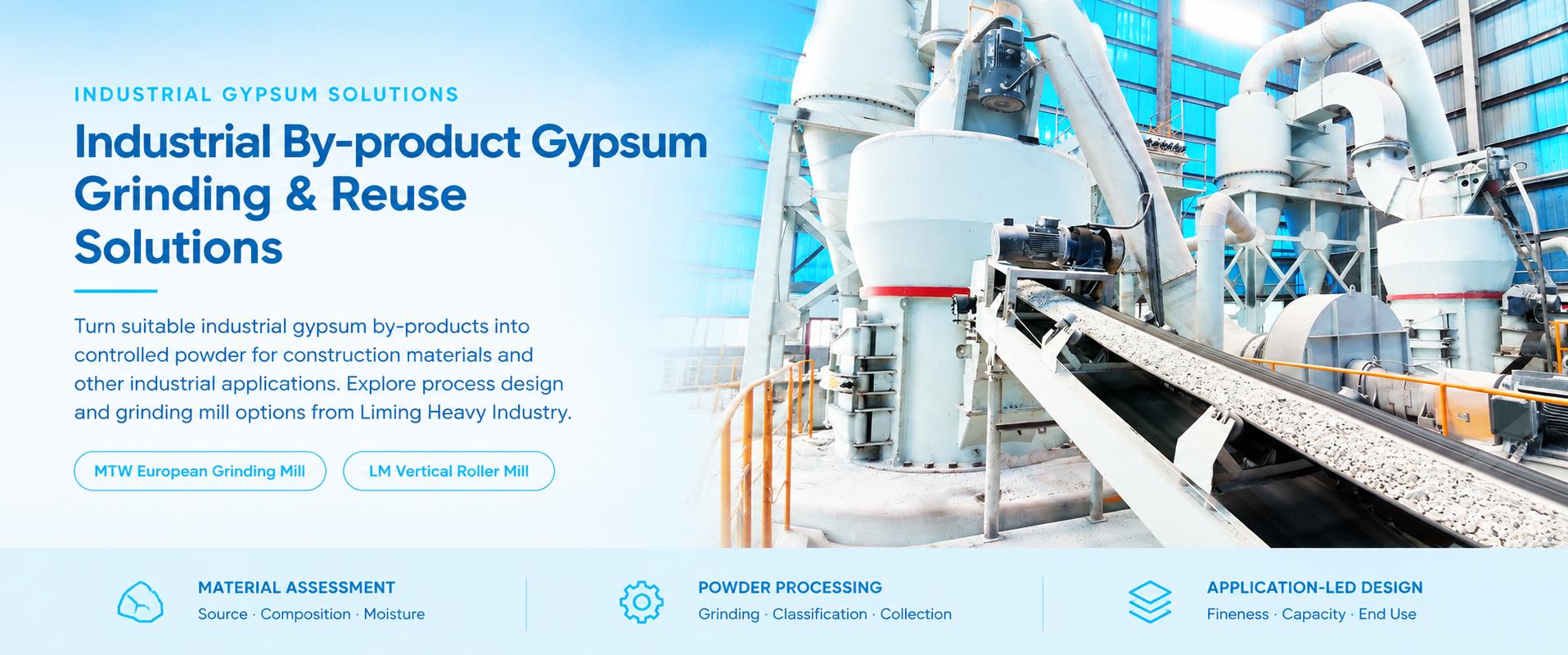
Fluorogypsum can be ground for industrial reuse, but only after the material has been tested and prepared for a specific application. It is a calcium sulfate-rich by-product from hydrofluoric acid production, and it can contain residual fluoride, free moisture, acidity, silica and other source-specific constituents. Grinding improves particle-size control and powder uniformity, but it does not remove fluoride-related impurities or prove that the material is suitable for cement, plaster, construction materials or another end use.
A suitable fluorogypsum project starts with chemical analysis, moisture testing and application-specific evaluation. If the material meets the required quality limits after necessary treatment, it may be processed through deagglomeration, drying, grinding, classification, powder collection and controlled storage.
What Is Fluorogypsum?
Fluorogypsum is an industrial gypsum by-product generated during hydrofluoric acid production from fluorspar, also called fluorite, and sulfuric acid. Fluorspar is mainly calcium fluoride, CaF2. When it reacts with sulfuric acid, hydrofluoric acid is produced together with calcium sulfate.
A simplified reaction is:
CaF2 + H2SO4 → 2HF + CaSO4
The calcium sulfate-containing residue is fluorogypsum. Depending on process conditions, it may contain calcium sulfate in different hydration states, residual fluoride compounds, sulfuric acid, silica, iron compounds, moisture and other impurities from fluorspar and the hydrofluoric acid process.
The U.S. Federal Highway Administration describes fluorogypsum as a sulfate-rich by-product generated during hydrofluoric acid production from fluorspar and sulfuric acid. It reports that fluorogypsum is primarily calcium sulfate and can contain approximately 1–3% fluoride in representative samples, although actual composition must be verified for each source.
Why Fluorogypsum Needs Careful Evaluation
Fluorogypsum can contain a high proportion of calcium sulfate, but it should not be treated as equivalent to natural gypsum without testing. The main concern is fluoride-related content, together with acidity, soluble salts, moisture and other source-specific impurities.
These factors can affect:
Worker-safety and material-handling procedures
Equipment corrosion and selection of construction materials
Feed flowability, drying requirement and grinding efficiency
Finished-powder moisture absorption and storage behavior
Setting behavior in cementitious or gypsum-based products
Suitability for plaster, gypsum board, cement or dry mortar
Environmental acceptance, leaching behavior and local compliance requirements
The key engineering question is not simply “Can fluorogypsum be ground?” It is:
Can this fluorogypsum source, after suitable preparation and testing, meet the quality and compliance requirements for a defined industrial application?
Typical Fluorogypsum Characteristics
Fluorogypsum is often discharged as slurry or moist process residue. In some historical recovery practices, the material was placed in holding ponds, allowed to solidify or dry, then removed as a coarse, gypsum-rich residue for crushing and screening.
The exact physical condition can vary widely. A fluorogypsum source may be received as:
Slurry-derived solids
Moist filter cake
Solidified pond material
Crushed stockpile material
Fine powder mixed with larger agglomerates
Weather-exposed material with variable moisture
Even when the original calcium sulfate particles are fine, fluorogypsum can form large lumps during storage or drying. The plant should be designed for the real feed condition, including maximum lump size, free moisture, bulk density and tendency to bridge or stick.
What Should Be Tested Before Processing?
Representative sampling should be completed before mill selection. Samples should come from normal production and storage conditions, not only from the most favorable batch.
A preliminary fluorogypsum evaluation may include:
Calcium sulfate content and gypsum phase
Free moisture and total moisture
Total fluoride and soluble fluoride where relevant
pH and residual acidity
Soluble salts and conductivity
Silica, iron, alumina and other mineral impurities
Trace elements and application-specific environmental parameters
Particle-size distribution and maximum feed size
Bulk density, flowability and tendency to agglomerate
Potential corrosiveness toward process equipment
Target final application and customer quality requirements
For construction-material applications, testing should also include end-use performance. Depending on the product, this may involve setting time, strength, water demand, dimensional stability, leaching behavior, durability and compatibility with other formulation components.
Potential Reuse Applications
Fluorogypsum may be evaluated for several reuse routes after appropriate material qualification. The actual application depends on the impurity profile, treatment cost, local regulations and customer acceptance.
Cement and cementitious materials
Fluorogypsum may be considered as a calcium sulfate source in cement or cementitious products when fluoride-related compounds, acidity and other impurities are within acceptable limits. The material must provide a stable sulfate contribution and must not cause unacceptable changes in cement setting, strength or durability.
Cement trials should confirm sulfate balance, setting time, compressive strength, chloride and fluoride-related effects, and compatibility with the cement plant’s clinker and grinding system. Grinding can improve dosing and blending consistency, but it cannot solve a chemical-quality problem.
Gypsum-based building materials
Fluorogypsum has been investigated as a component of building materials, including gypsum-based composites and plasterboard-related products. The Federal Highway Administration notes that fluorogypsum has been proposed for use in impure plasterboard, while research on fluorogypsum-based building materials indicates potential environmental benefits when the material is suitably controlled.
For gypsum plaster, blocks or panel products, fluoride content, acidity, color, setting behavior and final-product safety must be evaluated carefully. A material that is acceptable in a low-value cementitious application may not be appropriate for interior board or decorative plaster.
Road base, fill and civil-engineering materials
Fluorogypsum may be evaluated for engineered fill, road base, subbase or stabilized construction materials. These applications can sometimes accept larger particle sizes and more variable color than fine plaster or gypsum-board products.
Historical field use has included fluorogypsum as fill, subbase material and aggregate in lime-fly ash stabilized base applications. The Federal Highway Administration reports that solidified fluorogypsum may be blasted, crushed and screened to create a coarse aggregate fraction and a fine calcium sulfate-rich fraction for such uses.
These applications still require project-specific evaluation of strength, moisture sensitivity, leaching, drainage, sulfate-related expansion risk and local regulatory requirements.
Other industrial applications
Other possible routes include use as a filler, sulfate-bearing raw material, component in specialized composites or feedstock for chemical recovery. Each route should be assessed separately. The material must meet application-specific quality and safety requirements before commercial use begins.
Typical Fluorogypsum Processing Flow
A fluorogypsum processing line should be designed around feed condition and final product. A basic powder-production route may include:
Fluorogypsum receiving → sampling → covered storage → deagglomeration → dewatering or drying → grinding → classification → powder collection → storage or packing → quality control
If the material requires acidity reduction or fluoride-related impurity management, the line may include additional steps:
Fluorogypsum receiving → sampling → segregation → washing / neutralization / treatment when required → filtration and dewatering → drying → deagglomeration → grinding → classification → powder collection → application-specific testing
For coarse civil-engineering applications, the route may be simpler:
Solidified fluorogypsum → excavation or recovery → crushing → screening → blending or stabilization → stockpiling → quality control
1. Receiving, Storage and Feed Management
Fluorogypsum should be stored in a manner that limits rain exposure, uncontrolled moisture increase and cross-contamination. Covered storage helps reduce drying cost and improves feed consistency.
If the material is stored in ponds or exposed stockpiles, moisture may vary between surface layers, deeper layers and different collection locations. A practical plant should use representative sampling and may need stockpile segregation or controlled blending before the material enters the process.
Receiving hoppers, conveyors and transfer chutes should be selected for potentially moist, cohesive and mildly corrosive material. Where residual acidity is present, equipment materials and protective linings should be selected accordingly.
2. Washing, Neutralization and Fluoride Management
Washing or neutralization may be needed when fluoride-related compounds, residual acidity or soluble salts prevent the material from meeting the target application’s requirements. The correct treatment depends on whether the limiting constituent is soluble, how much reduction is required and whether the treatment creates a manageable wastewater stream.
Potential treatment approaches may include:
Water washing to reduce selected soluble components
Filtration and mechanical dewatering after washing
pH adjustment or neutralization where residual acidity is limiting
Controlled blending with a compatible higher-purity material
Physical separation or screening for coarse contamination
Selection of an application with appropriate impurity tolerance
Any washing or neutralization system must include water recycling, filtrate treatment, solids handling and compliance planning. It is not enough to design the mill while leaving process water and dissolved constituents unaddressed.
3. Dewatering and Drying
Fluorogypsum may contain substantial free moisture if it is recovered from slurry, filter cake or holding ponds. Mechanical dewatering should be evaluated first because it generally removes water at lower energy cost than thermal drying.
After mechanical dewatering, thermal drying may be required when the material remains too wet for stable grinding or final-product storage. High moisture can cause bridging in hoppers, sticking on conveyors, coating of grinding components, unstable classification and powder caking.
The drying stage should remove free moisture without unintentionally calcining the gypsum when the target product is calcium sulfate dihydrate powder. If the final product is a calcined gypsum binder, calcination should be designed as a separate controlled stage.
4. Deagglomeration, Crushing and Screening
Feed preparation depends on the material form. Moist filter cake may need lump breaking and controlled feeding. Solidified pond material may require excavation, crushing and screening before it can be used as aggregate or fed into a powder line.
The Federal Highway Administration describes recovered solidified fluorogypsum as a coarse “crusher run” material with fine calcium sulfate-rich particles. In such cases, crushing and screening can separate or control the coarse and fine fractions for the intended use.
For grinding applications, the objective is to provide a stable feed size for the mill. It is not necessary to produce final powder in the crushing stage.
5. Grinding and Classification
Grinding produces controlled fluorogypsum powder for a qualified industrial application. The final fineness depends on the product. Cement, dry mortar, gypsum-based composites and other materials can require different particle-size distributions.
For conventional industrial powder, a range of approximately 100–325 mesh may be used as an initial reference, but the final fineness should be defined through application testing. Finer powder increases surface area and can improve dispersion, but it also increases grinding energy, dust tendency and water demand in many building-material formulations.
Classification separates finished powder from oversized particles. Coarse particles return to the grinding zone, while qualified powder moves to collection and storage. Stable feed rate, airflow and classifier settings are necessary for consistent powder quality.
Grinding-Mill Selection for Fluorogypsum
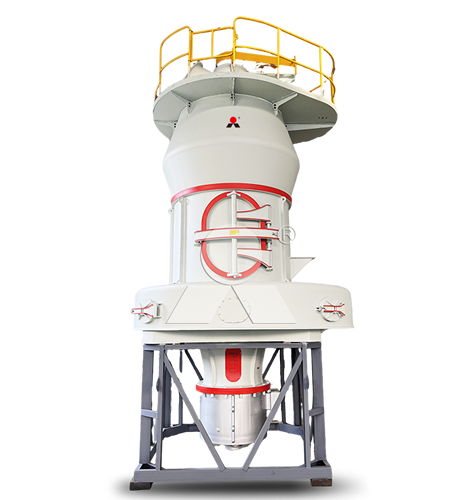
MTW European Grinding Mill, LM Vertical Roller Mill and Raymond mill can be considered for suitable fluorogypsum after material evaluation and feed preparation.
MTW European Grinding Mill
MTW European Grinding Mill is suitable for small-to-medium capacity fluorogypsum powder projects with prepared, relatively stable feed. It can provide controlled conventional fineness when moisture is within the operating range and the material has been deagglomerated or dried as necessary.
For wet fluorogypsum, upstream dewatering and drying are usually needed before MTW grinding. The mill controls particle size but does not remove fluoride-related impurities, acidity or other chemical limitations.
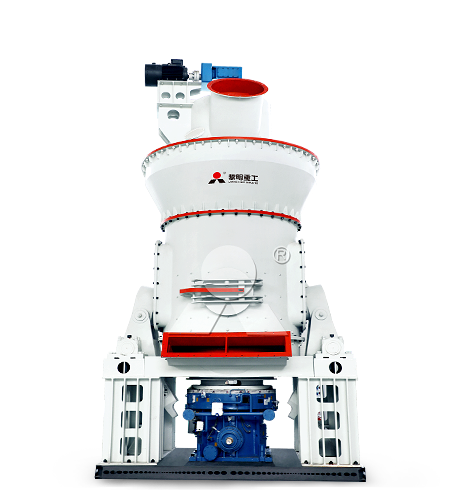
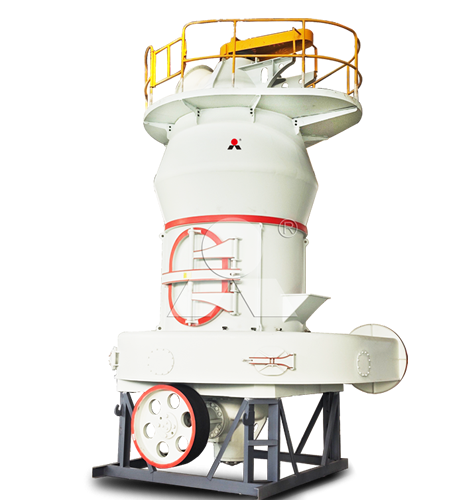
LM Vertical Roller Mill
LM Vertical Roller Mill is suitable for medium-to-large capacity fluorogypsum processing and projects with significant drying demand. It can integrate drying, grinding and classification when a suitable heat source is available and the process is designed around the actual moisture range.
It is particularly relevant for continuous high-output powder production from moist fluorogypsum. The final configuration should consider feed moisture, evaporation load, material corrosiveness, target fineness, powder capacity and dust-control requirements.
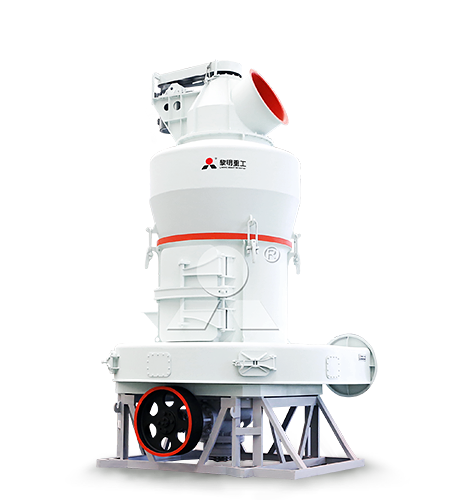
Raymond Mill
Raymond mill can be considered for conventional fluorogypsum powder production with moderate output requirements and dry or pre-dried, stable feed. It is generally suitable when the material does not require major drying duty inside the grinding system.
For moist, sticky or highly variable fluorogypsum, the process should improve dewatering, drying and feed conditioning before a Raymond mill is selected.
Fluorogypsum Grinding vs. Calcination
Grinding and calcination serve different purposes. Grinding reduces particle size and controls powder fineness. Calcination removes part of the chemically bound water from calcium sulfate dihydrate and produces calcium sulfate hemihydrate, commonly called stucco or plaster of Paris.
Use grinding only when the final product is dihydrate gypsum powder for a qualified cement, filler, civil-engineering or industrial application. Add calcination only when the product requires a settable gypsum binder, such as plaster, gypsum blocks or selected gypsum-board feed.
Fluorogypsum should be tested carefully before calcination because fluoride-related impurities, acidity and other residues can affect phase conversion, setting behavior, color and the safety or acceptance of the finished product.
Quality Control for Reused Fluorogypsum
Quality control should be established for both incoming material and finished powder. The test plan should reflect the intended application and the known variability of the fluorogypsum source.
Typical quality-control items include:
Calcium sulfate content and gypsum phase
Free moisture and finished-powder moisture
Total and soluble fluoride where relevant
pH and residual acidity
Soluble salts and conductivity
Particle-size distribution and sieve residue
Bulk density and powder flowability
Trace-element and leaching results where required
Setting time and strength for cementitious or gypsum-based products
Color, odor and other product-specific requirements
Common Challenges in Fluorogypsum Processing
Fluoride-related impurities
Residual fluoride can limit applications and may require treatment or a reuse route with suitable impurity tolerance. Finer grinding does not remove fluoride-related compounds.
Residual acidity and corrosion
Residual acidity can affect worker safety, equipment corrosion and compatibility with cementitious products. The plant may require neutralization, corrosion-resistant materials, protected transfer equipment or a different application route.
High moisture and difficult handling
Slurry-derived or pond-recovered fluorogypsum can have variable moisture and compacted lumps. Mechanical dewatering, covered storage, deagglomeration and thermal drying may be needed before stable grinding is possible.
Variable source quality
Changes in fluorspar quality, sulfuric acid process conditions, neutralization practice and storage can alter the gypsum content, fluoride level, moisture and physical behavior. Regular sampling and source control are essential.
Assuming every calcium sulfate material can be used in plasterboard
Fluorogypsum may be evaluated for gypsum-based building materials, but it should not be assumed suitable for gypsum board or interior plaster without detailed chemical, performance and regulatory verification. The product route must match the actual material quality.
Recommended Project Sequence
Identify the hydrofluoric acid production route and fluorogypsum source.
Collect representative samples from normal production and storage conditions.
Test calcium sulfate content, moisture, fluoride-related parameters, pH, salts, impurities and physical condition.
Define the intended final application and its acceptance requirements.
Determine whether washing, neutralization, dewatering, drying, blending or other treatment is required.
Set target powder fineness, finished-powder moisture and required production capacity.
Select MTW European Grinding Mill for prepared small-to-medium capacity powder production.
Select LM Vertical Roller Mill for larger-capacity projects or integrated drying requirements.
Select Raymond mill for conventional processing with dry, stable and adequately prepared feed.
Add calcination only if the target product requires hemihydrate gypsum.
Validate the finished product through cement, building-material, civil-engineering or other end-use trials.
Maintain routine quality control and compliance monitoring.
Conclusion
Fluorogypsum can be ground for industrial reuse when it has been tested, prepared and matched to a suitable application. It is a calcium sulfate-rich by-product of hydrofluoric acid production, but its fluoride-related content, acidity, moisture and source-specific impurities must be evaluated before grinding and reuse.
For suitable material, the processing line may include deagglomeration, dewatering, drying, grinding, classification, collection and controlled storage. MTW European Grinding Mill is suitable for prepared small-to-medium capacity projects. LM Vertical Roller Mill is suitable for larger-capacity systems and materials requiring drying integration. Raymond mill is suitable for conventional powder production with dry, stable and properly conditioned feed.
Grinding provides particle-size control, not impurity removal. The most reliable fluorogypsum project begins with representative material analysis, defines the final application, includes necessary treatment and confirms the finished powder through application-specific testing.
Related Industrial By-product Gypsum Solutions


LIMING at MiningMetals Uzbekistan 2026 | Booth B94
2026-10-22

LIMING Heavy Industry at MINEXPO Africa 2026 | Booth 133
2026-10-22
Liming Heavy Industry to Exhibit at bauma CHINA 2026 – Visit Us at Booth E6.510
2026-10-15
Meet Liming Heavy Industry at the 140th Canton Fair 2026
2026-10-13
Liming Heavy Industry to Attend the 140th Canton Fair
2026-09-25
Complete Mineral Processing Solutions
Convenient Reliable Professional Efficient Get Your Quote
Please feel free to submit your inquiry information to us. We will contact with you as soon as possible.
Our team will contact you as soon as possible.