


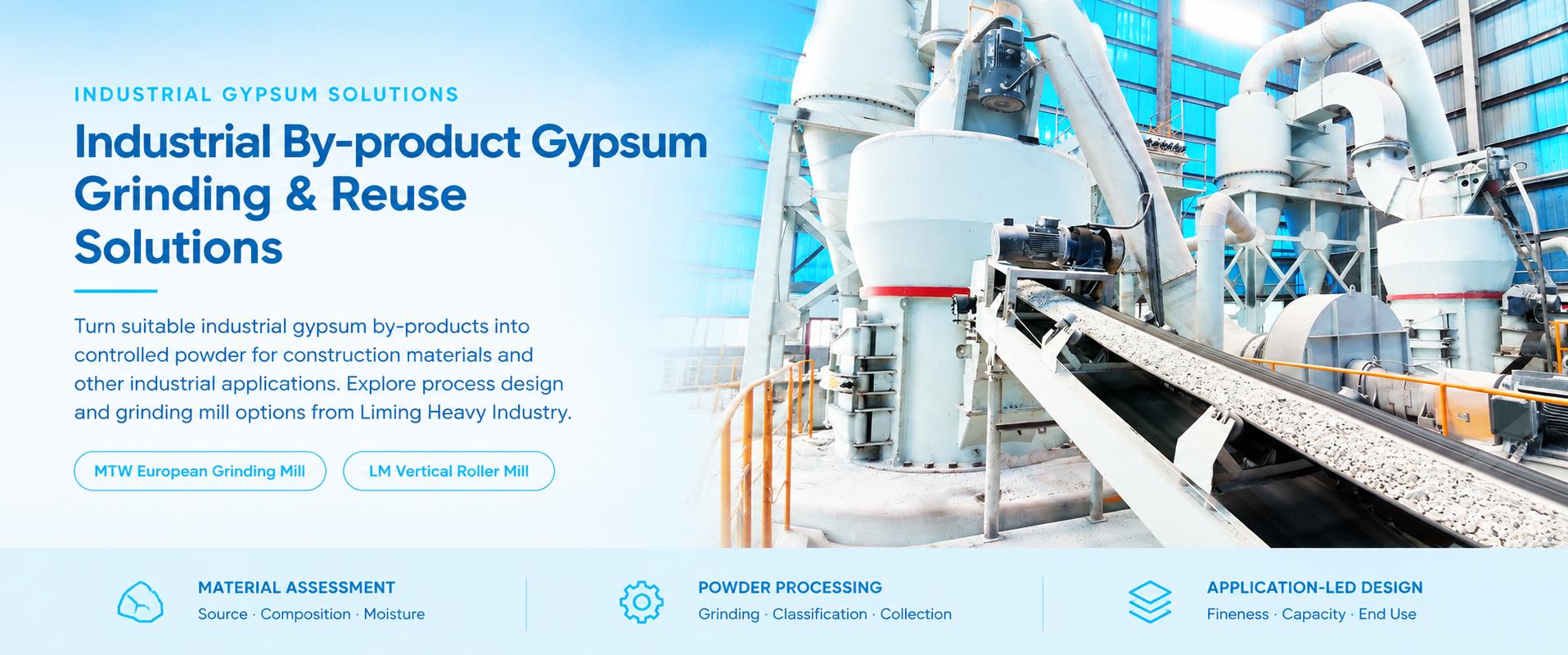
There is no single “correct” fineness for industrial gypsum powder used in construction materials. The required particle size depends on whether the powder will be used for cement, gypsum plaster, dry mortar, gypsum board, blocks, wall putty or another formulation. In many conventional projects, industrial gypsum powder is prepared in the approximate range of 100–325 mesh, but the final specification should be confirmed through product trials and the receiving manufacturer’s quality standard.
For construction materials, the best powder is not necessarily the finest powder. Particle-size distribution affects water demand, setting time, workability, density, strength and storage behavior. A suitable gypsum powder should have consistent fineness, controlled moisture and a chemical profile that matches the intended application.
Why Fineness Matters in Construction Materials
Gypsum powder reacts with water during plaster, gypsum-board and gypsum-based mortar production. Particle size affects the surface area available for hydration and influences how quickly the material dissolves, sets and develops strength.
Increasing the fine fraction can shorten setting time and improve powder dispersion, but it can also increase water demand. If the powder is too fine, the mixture may require more water, become more difficult to control or produce a more porous hardened product. Particle-size analysis guidance for building materials notes that an optimum gypsum distribution is needed to achieve the desired setting time, compressive strength and density; increasing the fine fraction can decrease setting time while increasing the water-to-gypsum ratio.
For this reason, fineness should be selected as part of the complete material formulation. It should not be chosen only according to the maximum capability of the grinding mill.
Typical Fineness Ranges by Application
| Construction-material application | Typical starting fineness range | Main quality focus |
|---|---|---|
| Cement set regulator | About 100–325 mesh | Stable sulfate release, reliable dosing and consistent cement setting behavior |
| Gypsum plaster and skim coat | About 150–325 mesh | Water demand, workability, setting time, surface finish and strength |
| Gypsum-based dry mortar | About 150–325 mesh | Powder flow, blending consistency, water retention and application performance |
| Gypsum board feed | Application-specific; commonly controlled medium-fine feed | Calcination behavior, slurry rheology, setting rate, board density and core quality |
| Gypsum blocks and molded products | About 100–250 mesh | Setting behavior, mold filling, water demand and mechanical strength |
| Wall putty and decorative gypsum products | About 200–325 mesh | Surface smoothness, dispersion, workability and finishing quality |
These ranges are starting points, not fixed requirements. The actual target should be set by the formulation, product standard, local market requirement and production trials. A material described as “200 mesh” can also have different particle-size distributions depending on the mill, classifier setting and test method.
Gypsum for Cement: Fineness for Setting Control
Gypsum is used in cement as a sulfate source that helps control setting time. The powder should be fine enough to blend uniformly with clinker and provide consistent sulfate availability during hydration.
For many cement applications, industrial gypsum in the approximate range of 100–325 mesh can be evaluated. The correct fineness depends on clinker mineralogy, cement fineness, gypsum purity, calcium sulfate form, sulfate target and the cement plant’s grinding process.
Very coarse gypsum may dissolve too slowly and provide inconsistent sulfate control. Extremely fine gypsum may increase grinding energy without improving cement performance. The optimum level should be confirmed through cement trials that measure setting time, SO3 balance, early strength, later strength and production consistency.
Gypsum for Plaster: Balance Fineness and Workability
Gypsum plaster needs a balanced particle-size distribution. Fine powder can help produce a smoother surface, but excessive fine particles may increase water demand and reduce working comfort. Coarser particles can improve certain aspects of handling but may reduce surface quality or create uneven setting behavior.
For plastering gypsum, a medium-fine range around 150–325 mesh is often a practical starting point. The final specification should be based on the desired application time, water-to-gypsum ratio, setting time, surface finish, density and strength.
Experimental work on gypsum particle-size distribution has shown that both water demand and setting behavior can change as gypsum becomes finer. In one reported study, the water-to-gypsum ratio increased as fineness increased, while setting behavior varied according to the particle-size range and mix design.
For construction plaster, the objective is usually a controlled distribution rather than maximum fineness. A properly balanced powder can provide stable workability, adequate open time, good adhesion and a smooth finished surface.
Gypsum for Dry Mortar
Gypsum can be used in dry mortar as a binder, setting regulator or formulation component. The powder must disperse evenly with sand, cement, fillers, cellulose ethers and other additives. Fineness affects blending consistency, water demand, setting rate and the texture of the applied mortar.
A typical starting range for gypsum used in dry mortar is approximately 150–325 mesh. The best target depends on sand grading, binder type, additive package, required open time, application thickness and the final surface requirement.
If gypsum is too coarse, it may not distribute uniformly in the dry mix. If it is too fine, it can increase dust, raise water demand and change rheology. The final fineness should be verified through mortar trials, including flow, water retention, working time, adhesion, shrinkage and strength testing.
Gypsum for Gypsum Board
Gypsum board production requires a more process-specific fineness target. The raw gypsum may be ground before calcination, after calcination or as part of an integrated grinding and calcination process. The required size distribution depends on the calciner, desired stucco properties, slurry water demand, additives, line speed, board thickness and target board density.
For this reason, gypsum board producers should not select feed only by mesh size. The specification may include particle-size distribution, surface area, moisture, bulk density, calcination response and slurry performance.
Gypsum board and gypsum panel standards regulate product design and quality through referenced standards, but the board manufacturer’s own production specification is normally the key reference for incoming gypsum feed.
For suitable FGD gypsum, the material must first meet board-grade chemical and moisture requirements. Grinding can improve consistency, but it cannot correct unsuitable impurity levels or replace proper calcination control.
Gypsum for Blocks and Molded Products
Gypsum blocks and molded products need powder that can be mixed, poured or pressed consistently. A medium-fine range of approximately 100–250 mesh may be a reasonable starting point, depending on the product design and production method.
Particle size affects mold filling, water requirement, setting rate, porosity and strength. Finer powder can increase surface smoothness, while a broader distribution may help improve packing density. The right balance should be determined by the manufacturer’s mix design and product-performance testing.
Why Particle-Size Distribution Matters More Than One Mesh Number
Mesh describes only one approximate screen opening. It does not fully describe the powder. Two gypsum powders with the same nominal mesh value can behave differently if one has a large fine fraction and the other has a broad distribution with more coarse particles.
A complete gypsum powder specification should consider:
D10, D50 and D90 particle-size values
Percentage retained on or passing through defined sieves
Specific surface area where relevant
Finished-powder moisture
Bulk density and flowability
Gypsum purity and chemical composition
Setting time and water-demand performance in the final formulation
ASTM C472 provides test methods for physical properties of gypsum, gypsum plasters and gypsum concrete, including free-water content and fineness determination using standard sieves or an alcohol-wash method for finer material.
How Fineness Affects Construction-Material Performance
| Powder property | When gypsum becomes finer | Potential construction-material effect |
|---|---|---|
| Surface area | Increases | Can increase reaction rate and affect setting behavior |
| Water demand | Often increases | May affect workability, porosity, density and strength |
| Setting behavior | May change depending on particle distribution and formulation | Can influence open time, application time and production speed |
| Surface finish | Can become smoother | Useful for skim coat, decorative plaster and wall putty when formulation is balanced |
| Dust tendency | Usually increases | May require better dust collection, packaging and handling control |
| Grinding energy | Increases | Raises production cost and can reduce mill output |
| Powder flowability | May decrease if excessive ultra-fine material is produced | Can affect silo discharge, mixing and bag filling |
Construction-material producers should optimize fineness together with additives and water demand. A lower-cost powder with a suitable distribution can sometimes perform better than an excessively fine powder that requires more water or additional additives.
Industrial By-product Gypsum: Additional Requirements
For FGD gypsum, phosphogypsum and other industrial by-product sources, fineness is only one part of the quality requirement. Before the powder is used in a construction material, the producer should confirm gypsum content, free moisture, soluble salts, chlorides, residual sulfite, phosphate, fluoride-related compounds, acidity, trace elements and other source-specific properties.
FGD gypsum may be suitable for construction materials when it is properly washed, dewatered and controlled. Phosphogypsum requires more detailed evaluation because its impurity profile can affect setting behavior, durability, safety and regulatory acceptance.
The grinding target should therefore be selected after the raw material has been qualified for the intended product. Grinding can control particle size, but it cannot remove unsuitable chemical impurities or prove compliance with building-material requirements.
Choosing a Grinding Mill for Construction-Grade Gypsum
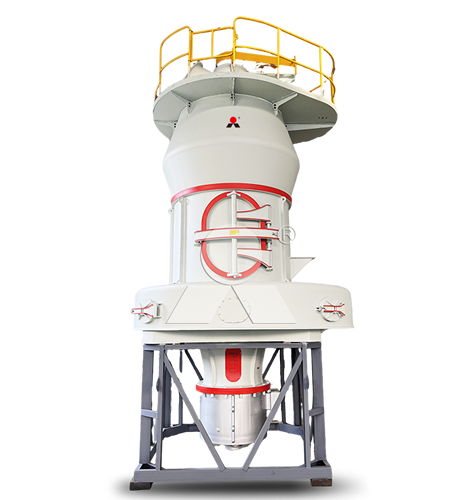
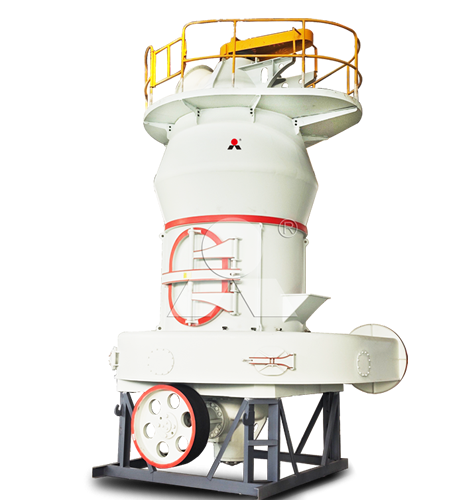
Mill selection depends on feed moisture, target fineness, capacity and the need for integrated drying. MTW European Grinding Mill, LM Vertical Roller Mill and Raymond mill can all be considered for suitable industrial gypsum powder.
MTW European Grinding Mill
MTW European Grinding Mill is suitable for small-to-medium capacity construction-grade gypsum powder production. It can produce controlled conventional fineness, including common ranges used for cement, plaster, dry mortar and wall-putty applications, when feed moisture is stable and the material has been properly prepared.
If the industrial gypsum is wet, dewatering or separate drying may be required before MTW grinding.
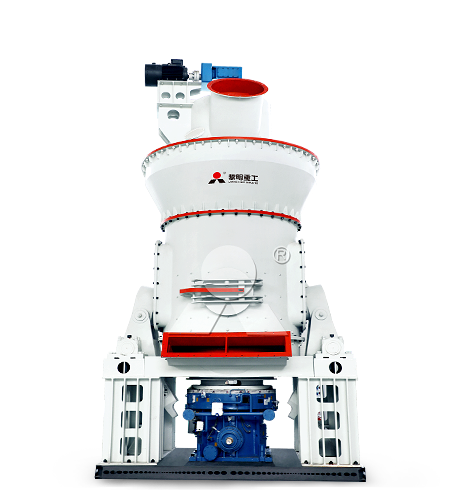
LM Vertical Roller Mill
LM Vertical Roller Mill is suitable for larger-capacity gypsum powder lines and projects that benefit from integrated drying, grinding and classification. It is especially relevant for FGD gypsum or prepared phosphogypsum with moderate moisture and a continuous high-output requirement.
The final design should be based on actual moisture, drying load, target fineness, finished-powder capacity and the specific construction-material application.
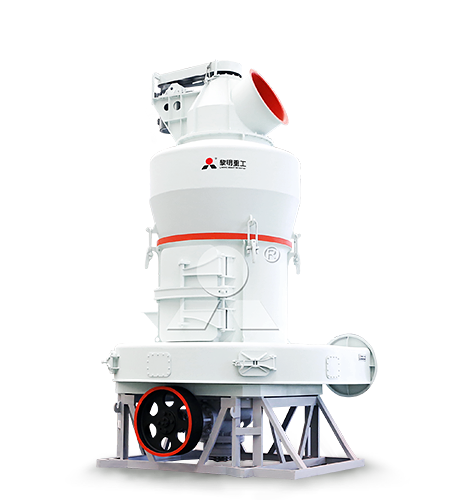
Raymond Mill
Raymond mill can be considered for conventional gypsum powder production with moderate output and dry, stable, pre-treated feed. It is suitable when the project does not require major drying duty inside the grinding system.
Recommended Process for Setting Fineness
Define the construction material to be produced, such as cement, plaster, dry mortar, gypsum board or wall putty.
Obtain the product specification and relevant local standard requirements.
Test the industrial gypsum for purity, moisture, particle size and source-specific impurities.
Select a preliminary powder range, such as 100–200 mesh, 150–325 mesh or another application-appropriate range.
Produce laboratory or pilot samples at different fineness levels.
Test water demand, setting time, flowability, workability, strength, density, adhesion and surface quality.
Define a measurable final specification using sieve residue or particle-size distribution.
Select MTW European Grinding Mill, LM Vertical Roller Mill or Raymond mill based on the required capacity at that final fineness.
Maintain regular production testing to keep fineness and moisture consistent.
Conclusion
For industrial gypsum powder used in construction materials, a typical starting range is about 100–325 mesh, with 150–325 mesh often considered for plaster, dry mortar and fine construction-material products. Cement, gypsum board, blocks, wall putty and decorative gypsum products can require different particle-size distributions.
The best fineness is not always the finest powder. Excessively fine gypsum can increase water demand, dust, energy consumption and formulation sensitivity. The correct target should balance workability, setting time, strength, density, surface finish and production cost.
For industrial by-product gypsum, material purity and moisture must be confirmed before fineness is optimized. MTW European Grinding Mill is suitable for prepared small-to-medium capacity powder production, LM Vertical Roller Mill is suitable for larger-capacity lines with drying integration, and Raymond mill is suitable for conventional gypsum powder with dry, stable feed.
Related Industrial By-product Gypsum Solutions


LIMING at MiningMetals Uzbekistan 2026 | Booth B94
2026-10-22

LIMING Heavy Industry at MINEXPO Africa 2026 | Booth 133
2026-10-22
Liming Heavy Industry to Exhibit at bauma CHINA 2026 – Visit Us at Booth E6.510
2026-10-15
Meet Liming Heavy Industry at the 140th Canton Fair 2026
2026-10-13
Liming Heavy Industry to Attend the 140th Canton Fair
2026-09-25
Complete Mineral Processing Solutions
Convenient Reliable Professional Efficient Get Your Quote
Please feel free to submit your inquiry information to us. We will contact with you as soon as possible.
Our team will contact you as soon as possible.