


Summary:
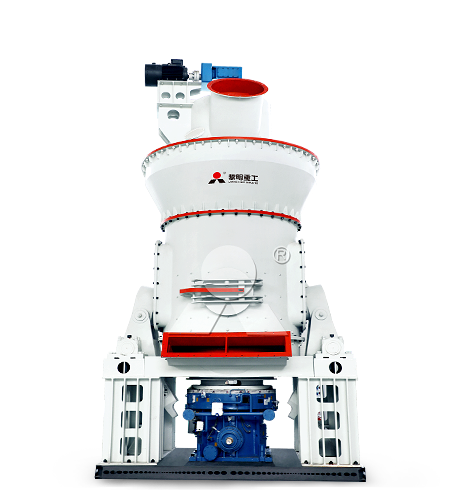
Carbon black is most commonly ground with a Raymond mill for coarser reinforcing-grade powder (80–325 mesh), and with an ultrafine vertical/ring-roller mill such as the LUM Ultrafine Vertical Roller Mill or MW Micro Powder Mill when the target fineness extends to 400–2500 mesh (roughly 5–45 μm D97), as required for conductive, battery-grade, or high-tint ink applications.
Details:
Carbon black is most commonly ground with a Raymond mill for coarser reinforcing-grade powder (80–325 mesh), and with an ultrafine vertical/ring-roller mill such as the LUM Ultrafine Vertical Roller Mill or MW Micro Powder Mill when the target fineness extends to 400–2500 mesh (roughly 5–45 μm D97), as required for conductive, battery-grade, or high-tint ink applications. Ball mills are generally avoided for carbon black because of higher energy consumption and greater difficulty achieving narrow particle size distribution at fine sizes.
_1767930568573.jpg)
Why Carbon Black Requires Specialized Grinding
Carbon black behaves differently from most mineral powders during grinding because it is extremely low in bulk density, has a high surface area, and tends to agglomerate rather than fracture like a brittle mineral. This means the mill and classifier must be matched not just to a target mesh size but also to how easily the material re-agglomerates in the air stream, which affects classifier efficiency and dust collection design. Feed material is typically pre-crushed or already granulated carbon black, virgin or pyrolysis-recovered (rCB), with feed size generally kept below 20–30 mm ahead of the main mill.
Matching Mill Type to Required Fineness
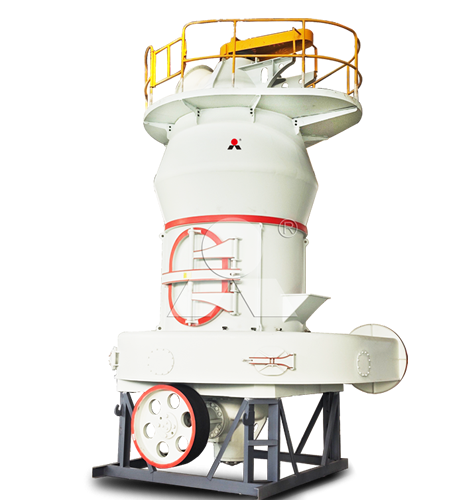
Mill selection for carbon black is driven primarily by the target D97 particle size and end application, since rubber-grade fillers, ink pigments, and battery conductive additives sit in very different fineness bands. A Raymond mill suits general industrial and rubber-reinforcing carbon black in the 80–325 mesh range, while finer, higher-value products need an ultrafine mill design with a more precise turbo classifier.
| Mill Type | Typical Fineness Range | Typical Application | Relative Capital Cost |
|---|---|---|---|
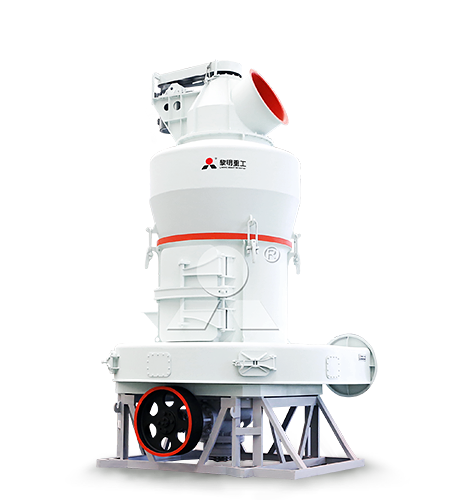
| Raymond Mill | 80–325 mesh (approx. 180–45 μm) | Rubber reinforcing filler, general industrial carbon black | Lower |
| MW Micro Powder Mill | Roughly 200–800 mesh (approx. 75–17 μm) | Mid-fine carbon black for coatings, moderate-purity ink | Moderate |
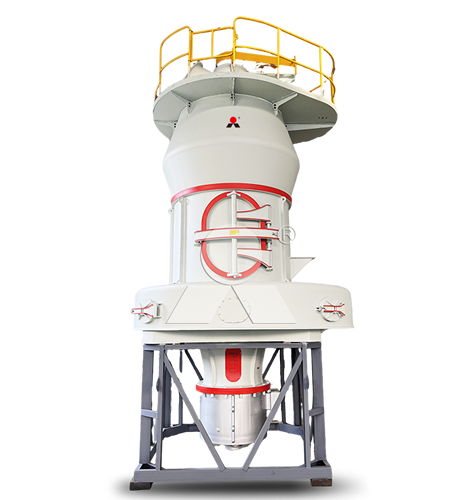
| LUM Ultrafine Vertical Roller Mill | Up to approximately 400–2500 mesh (approx. 45–5 μm) | Battery-grade conductive carbon black, high-tint ink pigment, rCB refining | Higher |
These fineness bands reflect typical industry ranges rather than verified output for any specific installation, since actual D97 achieved depends on the carbon black's original particle structure, ash content (for rCB), and moisture at the mill inlet.
Grinding Process Flow
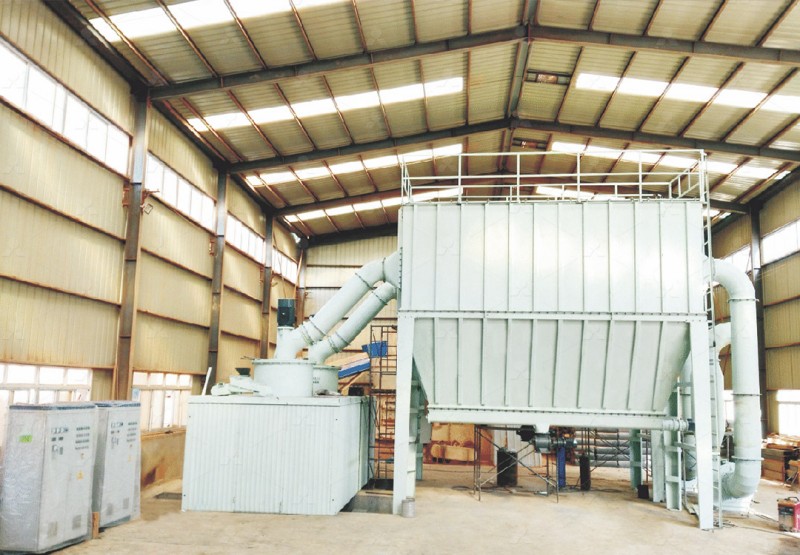
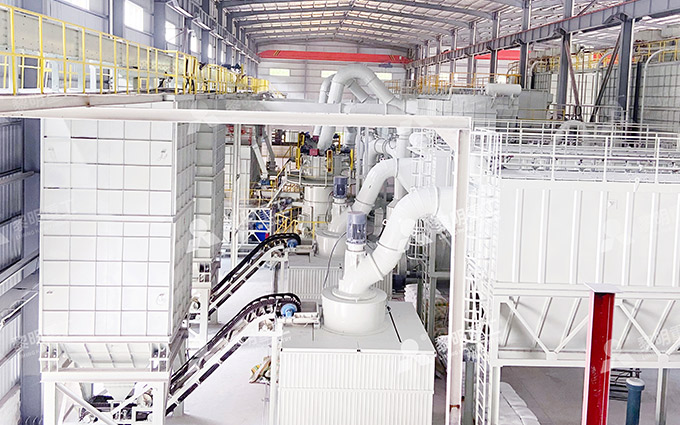
A typical carbon black grinding line runs as: pre-crushing/feeding → main mill grinding → air classification → cyclone and bag-filter dust collection → packing or bulk silo storage. The main unit uses grinding rollers pressed against a ring or grinding ring/table by centrifugal force, shearing and compressing the material bed formed by internal shovels, and classified fine powder is carried out by airflow while oversize particles return for re-grinding.
Feeding and Pre-Treatment
Bulk or granulated carbon black is reduced to a feed size of roughly 20–30 mm ahead of the mill, and an electromagnetic or vibrating feeder delivers material at a constant rate, since uneven feed causes fineness drift downstream in the classifier.
Main Grinding and Classification
Inside the mill, centrifugal force drives the grinding rollers against the ring, and airflow lifts ground particles into a turbo classifier where blade speed sets the cut point; increasing classifier speed produces a finer, tighter particle size distribution but reduces throughput.
Dust Collection
Given carbon black's fine, lightweight nature, cyclone separators recover the bulk of the product first, followed by a pulse-jet bag filter to capture residual fines and control exhaust emissions to meet local environmental limits; undersized bag filter area is a frequent cause of product loss and elevated stack emissions on carbon black lines.
Recovered Carbon Black (rCB) Considerations
Recovered carbon black from tire pyrolysis often carries higher ash content and a broader particle size distribution than virgin carbon black, so refining it toward specifications close to virgin material typically requires an ultrafine mill with a more selective classifier rather than a standard Raymond mill. Wear-resistant roller and ring materials (such as higher-grade alloy steels) are also more important here, since recovered feedstock can contain residual mineral fillers that increase abrasive wear compared with pure virgin carbon black.
_1767929649018.jpg)
Equipment Selection Checklist
Confirm the required finished fineness as D97 or mesh, since this alone narrows the choice between Raymond, MW, and LUM mill families.
Identify feed source: virgin carbon black versus rCB, since rCB may require harder wear parts and finer classification to remove residual ash-related coarse fractions.
Check moisture content at the mill inlet, since excess moisture in carbon black causes buildup on internal surfaces and reduces classifier efficiency.
Size the cyclone and bag filter for carbon black's low bulk density, not simply scaled from mineral powder dust collection designs.
Match required capacity (t/h) at the target fineness, since throughput drops significantly as target mesh size increases.
Specify wear-resistant roller and ring materials when processing abrasive or ash-containing rCB feedstock.
Practical Note on Equipment Recommendation
Equipment should be selected according to the fineness band and feedstock type rather than by brand preference: Raymond mills for standard reinforcing-grade carbon black, and LUM Ultrafine Vertical Roller Mills or MW Micro Powder Mills when moving into battery-grade, ink-pigment, or rCB refining applications. Manufacturers including Liming Heavy Industry offer these mill families configured for carbon black processing, though the final model and classifier setting should be confirmed against a grinding test on the actual feedstock sample rather than catalog fineness ranges alone.
Related FAQ


Liming Heavy Industry to Exhibit at bauma CHINA 2026 – Visit Us at Booth E6.510
2026-10-15

Meet Liming Heavy Industry at the 140th Canton Fair 2026
2026-10-13
Liming Heavy Industry to Attend the 140th Canton Fair
2026-09-25
Liming Heavy Industry at bauma CONEXPO INDIA 2026 | Booth 5-C6
2026-09-07
Turnkey Raw Mill Cement Plant in Saudi Arabia: Design and Installation
2026-09-03
Complete Mineral Processing Solutions
Convenient Reliable Professional Efficient Get Your Quote
Please feel free to submit your inquiry information to us. We will contact with you as soon as possible.
Our team will contact you as soon as possible.