


Summary:
Reaching 325 mesh (D97 approximately 45 μm) quicklime powder requires a Raymond mill or MTW European Grinding Mill with an internal air classifier, following a process of crushing, controlled feeding, layer-by-layer roller-and-ring grinding, and classification.
Details:
Reaching 325 mesh (D97 approximately 45 μm) quicklime powder requires a Raymond mill or MTW European Grinding Mill with an internal air classifier, following a process of crushing, controlled feeding, layer-by-layer roller-and-ring grinding, and classification. An LM Vertical Roller Mill is the better choice when capacity needs exceed roughly 15–20 t/h at this fineness, since it integrates grinding and classification at lower energy consumption per ton.
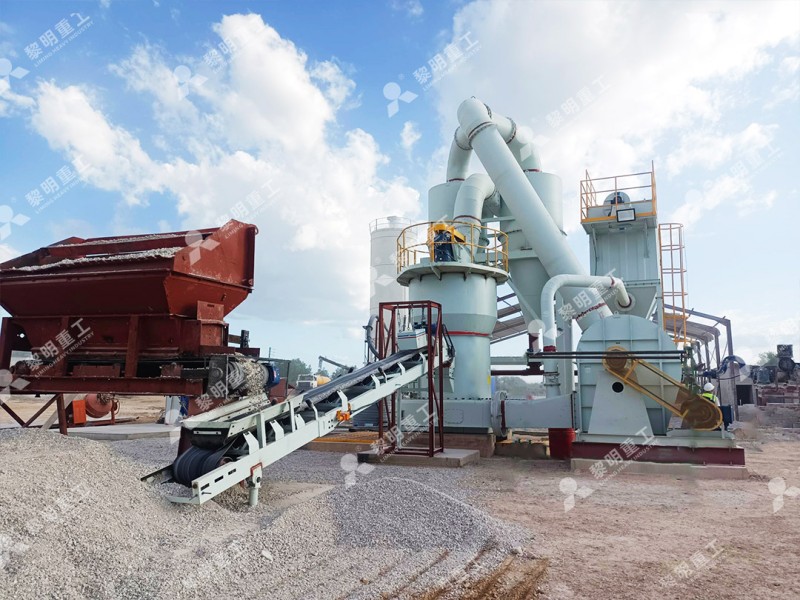
Why Quicklime Grinding Differs from Limestone Grinding
Quicklime (CaO) is more reactive and moisture-sensitive than the limestone it is calcined from, and it also tends to be somewhat softer and more friable after calcination at 900–1100°C. This changes two practical aspects of mill operation: moisture control becomes critical, since even small amounts of ambient humidity can cause CaO to start hydrating inside ducting and building up on internal surfaces, and dust collection must be sized generously because quicklime dust is corrosive and irritant, requiring stricter sealing and filter media selection than for inert limestone powder.
Process Flow to Reach 325 Mesh
The grinding sequence for 325 mesh quicklime powder is: primary crushing → feed bin and controlled feeding → main mill grinding → air classification → cyclone and bag filter dust collection → packing or bulk storage. Each stage plays a defined role in reaching a consistent 325 mesh cut point rather than just an average fineness.
Crushing and Feeding
Calcined quicklime lumps are first reduced by a jaw crusher or hammer crusher to a feed size generally below 15–20 mm, since most Raymond and MTW mills cannot accept larger feed without risking roller overload. A bucket elevator lifts crushed material to a storage hopper, and a vibrating feeder meters it into the mill at a steady rate; feed rate swings are a common cause of fineness drift, since overfeeding raises mill load and pushes coarser particles through the classifier.
_1767930326613.jpg)
Main Grinding
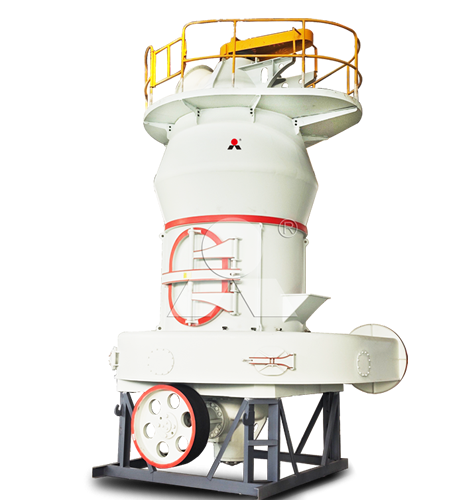
Inside the mill, a main shaft drives grinding rollers that swing outward under centrifugal force and press against a stationary ring, shearing and compressing the quicklime bed carried between roller and ring. Ground material is lifted by airflow generated by the main fan and carried upward toward the classifier, while a shovel blade system continuously feeds fresh material into the grinding zone.
Classification to 325 Mesh
An adjustable-speed cage classifier sits above the grinding chamber and rejects particles coarser than the target cut point back to the grinding zone, while accepted fines pass through with the airflow. Reaching 325 mesh specifically means setting the classifier rotor speed at the higher end of its adjustable range; increasing classifier speed narrows the particle size distribution and lowers D97 but reduces throughput, since more material is rejected for re-grinding per pass.
Dust Collection
A cyclone separator recovers the bulk of the classified fine powder first, and a pulse-jet bag filter polishes the remaining exhaust air before release, both sized to handle quicklime's reactive, moisture-sensitive dust rather than a generic mineral powder specification. Air volume and negative pressure across the mill, classifier, and dust collector must be balanced during commissioning, since an undersized fan or filter area is a common cause of both reduced classifier efficiency and product buildup in ducting.
_1761355927036.jpg)
Mill Selection for 325 Mesh Quicklime
Mill choice at 325 mesh depends mainly on required capacity and operating cost target rather than achievable fineness alone, since Raymond mills, MTW mills, and LM Vertical Roller Mills can all reach this cut point.
| Mill Type | Typical Capacity at 325 Mesh | Relative Energy Use | Best Fit |
|---|---|---|---|
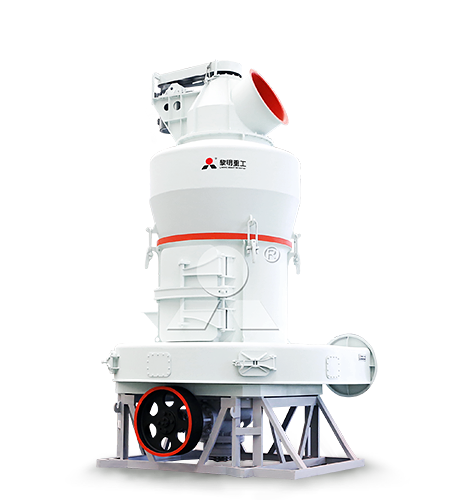
| Raymond Mill | Roughly 1–8 t/h | Moderate, ~35–45 kWh/t typical range | Small-scale, budget-sensitive lines |
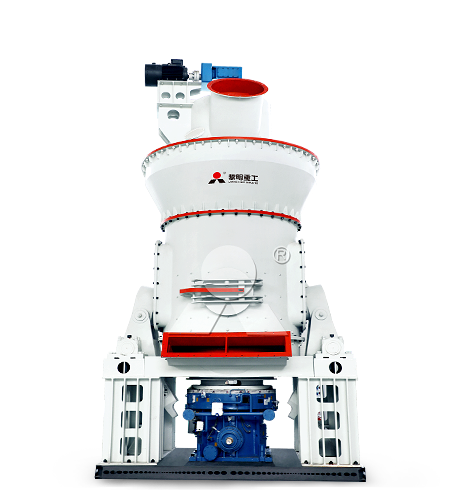
| MTW European Mill | Roughly 3–15 t/h | Slightly lower per ton than Raymond mill | Mid-capacity lines needing improved reliability |
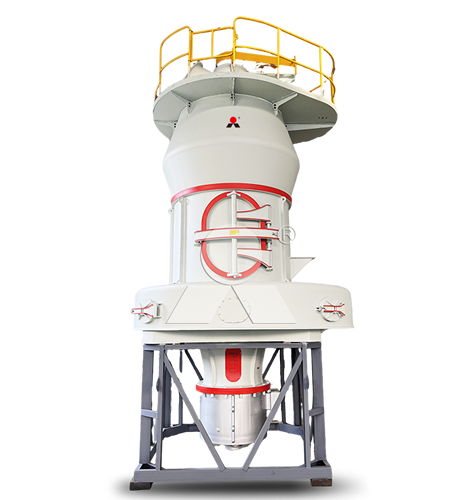
| LM Vertical Roller Mill | Roughly 10–40 t/h or higher | Lower per ton, integrated drying/grinding/classifying | Larger plants targeting lower kWh/t and smaller footprint per ton |
For projects requiring fineness finer than 325 mesh, up to 800–2500 mesh (roughly 17–5 μm), an ultrafine mill such as the LUM Ultrafine Vertical Roller Mill or MW Micro Powder Mill is the more appropriate choice, since standard Raymond and MTW classifiers are not designed to hold a stable cut point that fine.
Practical Engineering Considerations
Because quicklime reacts readily with atmospheric moisture, most operators keep the feed moisture below roughly 1% and maintain sealed ducting throughout the grinding and dust collection system to avoid CaO hydrating into calcium hydroxide inside the equipment, which can cause caking on internal surfaces and reduced airflow. Grinding roller and ring wear should also be monitored more closely than on limestone lines, since fine CaO dust combined with any residual moisture accelerates surface wear on unprotected metal parts.
_1761355701097.jpg)
Equipment Selection Checklist
Confirm quicklime's CaO content, reactivity, and moisture at the mill inlet before finalizing mill selection.
Define target fineness as D97 or mesh, since capacity and classifier speed both depend on this figure.
Set required capacity (t/h) at 325 mesh, and confirm whether a single Raymond/MTW mill or an LM Vertical Roller Mill is more cost-effective at that scale.
Size dust collection for quicklime's reactive, corrosive dust characteristics, not a generic mineral powder assumption.
Specify sealed ducting and moisture control measures to prevent in-line hydration.
Request the supplier's tested capacity and energy consumption curve for an actual quicklime sample rather than relying only on catalog maximum figures.
Manufacturers including Liming Heavy Industry supply Raymond mills, MTW European Grinding Mills, and LM Vertical Roller Mills configured for quicklime grinding to 325 mesh, and final model selection should be verified against a grinding test on the specific quicklime feedstock rather than general industry fineness ranges alone.
Related FAQ


Liming Heavy Industry to Exhibit at bauma CHINA 2026 – Visit Us at Booth E6.510
2026-10-15

Meet Liming Heavy Industry at the 140th Canton Fair 2026
2026-10-13
Liming Heavy Industry to Attend the 140th Canton Fair
2026-09-25
Liming Heavy Industry at bauma CONEXPO INDIA 2026 | Booth 5-C6
2026-09-07
Turnkey Raw Mill Cement Plant in Saudi Arabia: Design and Installation
2026-09-03
Complete Mineral Processing Solutions
Convenient Reliable Professional Efficient Get Your Quote
Please feel free to submit your inquiry information to us. We will contact with you as soon as possible.
Our team will contact you as soon as possible.