


Summary:
A small limestone powder production line (typically 5–30 t/h finished output, targeting 80–400 mesh, i.e., roughly D97 of 180 μm to 38 μm) generally requires five equipment groups: raw material handling and crushing, a primary grinding mill, an air classifier, a dust collection system, and finished-product packing or bulk loading.
Details:
A small limestone powder production line (typically 5–30 t/h finished output, targeting 80–400 mesh, i.e., roughly D97 of 180 μm to 38 μm) generally requires five equipment groups: raw material handling and crushing, a primary grinding mill, an air classifier, a dust collection system, and finished-product packing or bulk loading. For most small-scale operators, a Raymond mill or MTW European Grinding Mill covers the common fineness range economically, while an LM Vertical Roller Mill is chosen when higher single-line capacity or lower kWh/t is needed.
_1767929649018.jpg)
Defining "Small" for Limestone Powder Plants
A small line is best defined by finished capacity and fineness rather than by a fixed plant footprint, since these two variables determine every downstream equipment choice. Typical small-scale limestone powder projects fall between 1–30 t/h, with feed limestone at 90–95% CaCO3 purity, Mohs hardness around 3, and moisture below 6% at the mill inlet. Below this range, batch or lab-scale mills are more appropriate; above it, multi-mill or vertical roller mill lines with higher automation become more cost-effective per ton.
Core Process Flow
The process flow for a small limestone powder line is: crushing → storage/feeding → main grinding → classification → dust collection → packing, with material handling equipment connecting each stage. This sequence applies whether the target product is 325 mesh ground calcium carbonate filler or coarser 100–200 mesh agricultural limestone.
| Process Stage | Typical Equipment | Function / Output |
|---|---|---|
| Primary crushing | Jaw crusher or hammer crusher | Reduce quarry limestone to feed size ≤15–20 mm |
| Feeding & storage | Bucket elevator, vibrating feeder, storage bin | Continuous, metered feed to the mill |
| Main grinding | Raymond mill, MTW mill, or LM vertical roller mill | Grinds crushed limestone to target fineness |
| Classification | Integrated or external air classifier | Controls D97/D50 cut point of finished powder |
| Dust collection | Cyclone + bag filter/pulse jet collector | Recovers fines, controls emissions (<10–30 mg/Nm3 typical target) |
| Finished product handling | Screw conveyor, bucket elevator, silo, packing machine | Storage, bagging, or bulk loading |
Crushing and Feeding Equipment
Crushing equipment is required whenever quarry limestone arrives larger than the mill's maximum feed size, which for most Raymond and MTW mills is 20–35 mm. A jaw crusher handles the primary reduction of blasted limestone blocks, and for a small line a single-stage jaw crusher followed by a vibrating screen is usually sufficient, since limestone is relatively soft and non-abrasive compared to granite or basalt. After crushing, a bucket elevator lifts material into a storage hopper, and a vibrating or electromagnetic feeder delivers a controlled, continuous flow into the mill; feed rate stability directly affects mill load and finished fineness consistency, so under- or over-feeding is a common cause of output fluctuation.
_1767930326613.jpg)
Selecting the Main Grinding Mill
The main grinding mill is selected based on required fineness, capacity, energy consumption per ton, and available capital, not on a single "best" technology. For limestone powder specifically, Raymond mills, MTW European Grinding Mills, and LM Vertical Roller Mills are the technically appropriate families; ball mills are generally oversized for small lines below 30 t/h, and LUM or MW micro powder mills are reserved for finer, higher-value products outside the typical small-line scope unless the project specifically targets sub-45 μm fillers.
| Mill Type | Typical Fineness Range | Typical Capacity | Energy Consumption | Best Fit |
|---|---|---|---|---|
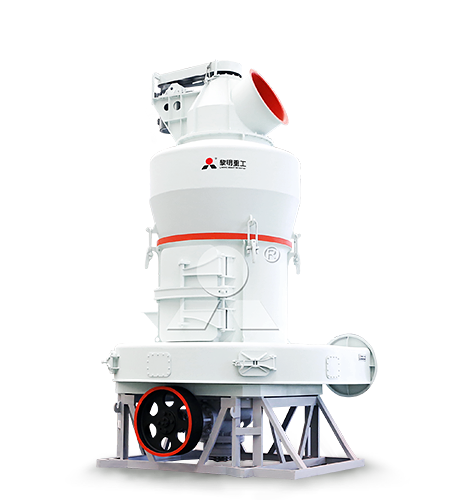
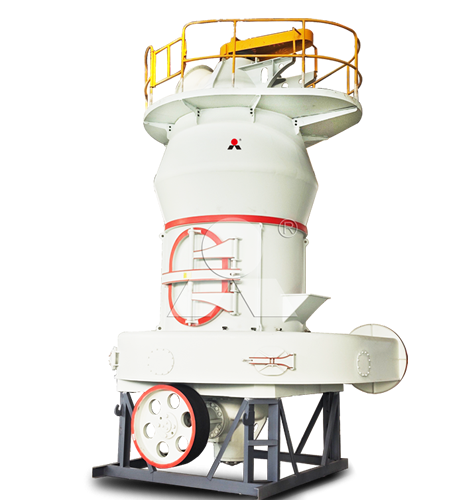
| Raymond Mill | 80–325 mesh (180–45 μm) | 1–15 t/h per unit | Moderate, ~35–45 kWh/t (varies with fineness and material) | Low-to-mid capacity, budget-sensitive projects |
| MTW European Mill | 80–325 mesh, adjustable | 3.5–20 t/h per unit | Somewhat lower than Raymond mill per ton | Upgraded output and reliability over standard Raymond mill |
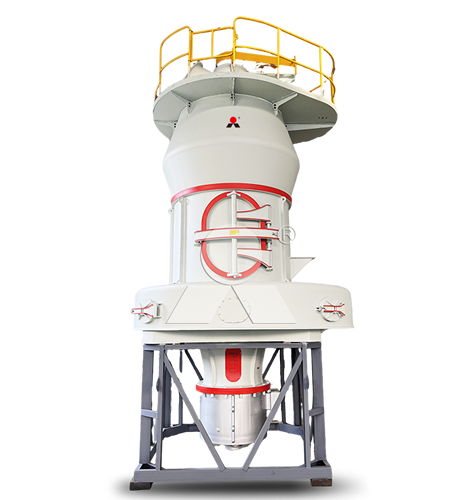
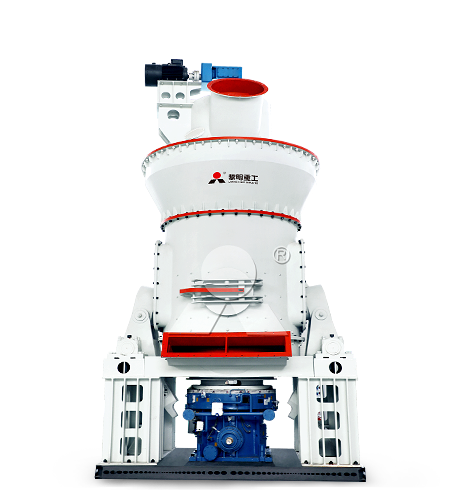
| LM Vertical Roller Mill | 80–425 mesh | 5–70 t/h per unit | Lower per ton, roughly 25–30 kWh/t typical range | Higher capacity, lower operating cost per ton, less floor space per ton of output |
As a practical guide: choose a Raymond mill when capacity needs are modest and capital cost is the primary constraint; choose an MTW mill when slightly higher throughput and improved wear-part life are needed within a similar footprint; and step up to an LM Vertical Roller Mill once a single line must exceed roughly 15–20 t/h or when lower kWh/t becomes economically significant over the plant's operating life. These are general industry ranges, not verified performance figures for any specific installation, since actual output and energy use vary with limestone hardness, moisture, and target fineness.
_1761355927039.jpg)
Classification System
An air classifier is required on every limestone powder line because it determines the actual cut point of the finished product, independent of how finely the mill physically grinds the material. Most Raymond and MTW mills use an internal or closely coupled cage classifier, adjustable by rotor speed to shift the D97 cut point within the mill's rated fineness band. On vertical roller mills, the classifier sits above the grinding chamber and rejects oversize particles back to the grinding table, which is why VRM systems can hold tighter D50/D97 control at higher throughput. For projects needing multiple product grades from one line (e.g., both 200 mesh and 325 mesh limestone powder), a separate external classifier with its own blower and cyclone is sometimes added downstream to allow grade switching without stopping the mill.
Dust Collection and Air System
A dust collection system is not optional on a limestone powder line, both for material recovery and for meeting emission limits. The typical arrangement is a cyclone separator for primary fines recovery followed by a bag filter or pulse-jet dust collector for final polishing of the exhaust air; industry targets commonly cited are dust emissions below 10–30 mg/Nm3, though the applicable local regulation should always govern final design. The air volume and negative pressure across the mill, classifier, and dust collector must be balanced during commissioning; undersized fan capacity is a frequent cause of material building up in ducting or reduced classifier efficiency.
Auxiliary and Finished Product Equipment
Beyond the core grinding train, a small line needs conveying equipment (screw or bucket elevator) to move classified powder to storage, a finished product silo sized for at least 8–24 hours of buffer capacity, and a packing line—either valve-bag packers for bagged product or a bulk loading spout for silo trucks. An electrical control cabinet with variable frequency drives on the feeder and main fan allows fine-tuning of feed rate and air balance without manual mechanical adjustment, which is a common upgrade for small lines that started as fully manual operations.
Sizing Example: 10 t/h, 325 Mesh Target
Consider a project targeting 10 t/h of 325 mesh (D97 ≈ 45 μm) limestone powder from quarry stone at 92% CaCO3, Mohs hardness 3, feed size up to 400 mm. This requires a jaw crusher rated above the plant's peak feed rate to reduce material to ≤20 mm, a bucket elevator and feed bin sized for at least one shift of buffer, and either two parallel MTW mills or one appropriately sized LM Vertical Roller Mill to reach the combined 10 t/h at 325 mesh, since a single Raymond mill unit is unlikely to reach 10 t/h at that fineness. The classifier setting, fan capacity, and bag filter area must then be matched to whichever mill configuration is chosen; these specific figures depend on the supplier's tested performance curve for the actual limestone sample, not on general industry ranges.
_1761355701094.jpg)
Equipment Selection Checklist
Confirm limestone hardness, CaCO3 purity, abrasiveness, and moisture content from an actual quarry sample, not an assumed average.
Define target fineness as D97 or mesh, plus acceptable tolerance, since this drives classifier and mill selection.
Set required finished capacity (t/h) and confirm whether single-line or multi-mill configuration is more economical at that scale.
Verify crusher discharge size matches the selected mill's maximum feed size.
Check available power supply capacity against the mill and fan motor ratings.
Confirm dust emission requirements for the plant location and size the bag filter accordingly.
Request the supplier's tested kWh/t and capacity curve for a limestone sample similar to the actual project feed, rather than accepting only catalog maximums.
Plan for wear part replacement (grinding rollers, ring/rolls, liner plates) and include this in operating cost estimates.
Common Design Mistakes on Small Lines
The most frequent design mistake on small limestone powder lines is undersizing the dust collection and air system relative to the mill's actual air volume requirement, which leads to classifier inefficiency and product fineness drifting outside specification even when the mill itself performs correctly. A second common mistake is selecting mill capacity based only on catalog maximum output rather than the output achievable at the specific fineness required, since capacity and fineness are inversely related on nearly all mill types—finer product always reduces throughput. A third mistake is skipping a buffer storage bin between crushing and grinding, which forces the mill to run intermittently whenever crusher feed is interrupted, reducing overall line utilization.
Several manufacturers, including Liming Heavy Industry, supply Raymond mills, MTW European Grinding Mills, and LM Vertical Roller Mills configured for small limestone powder lines, and equipment selection should ultimately be validated against the specific limestone sample's hardness, moisture, and required fineness rather than general catalog specifications alone.
Related FAQ


Liming Heavy Industry to Exhibit at bauma CHINA 2026 – Visit Us at Booth E6.510
2026-10-15

Meet Liming Heavy Industry at the 140th Canton Fair 2026
2026-10-13
Liming Heavy Industry to Attend the 140th Canton Fair
2026-09-25
Liming Heavy Industry at bauma CONEXPO INDIA 2026 | Booth 5-C6
2026-09-07
Turnkey Raw Mill Cement Plant in Saudi Arabia: Design and Installation
2026-09-03
Complete Mineral Processing Solutions
Convenient Reliable Professional Efficient Get Your Quote
Please feel free to submit your inquiry information to us. We will contact with you as soon as possible.
Our team will contact you as soon as possible.