


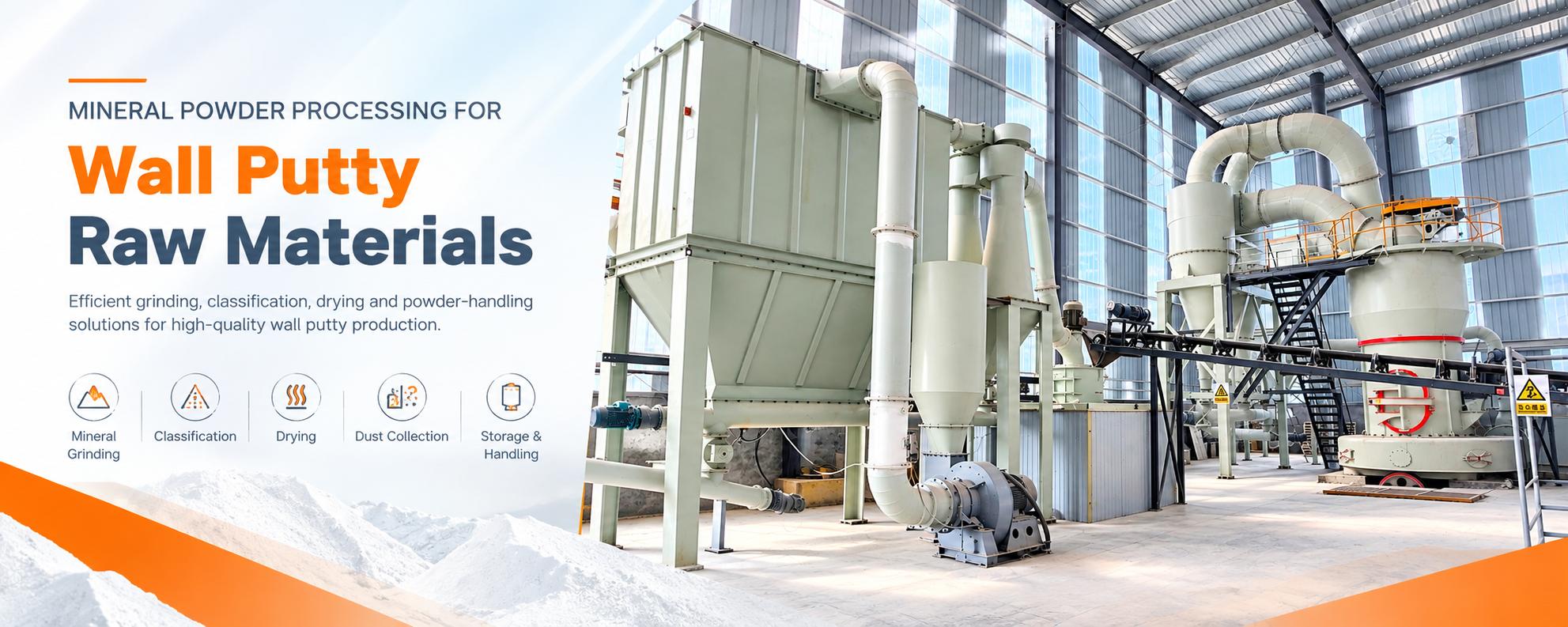
Select a grinding mill for wall putty minerals by defining the finished powder first, then checking which system can produce it consistently from the available raw material. The essential requirements are particle-size distribution, coarse-residue control, moisture, cleanliness, and saleable output. A nominal mesh grade or maximum capacity figure is not enough to establish suitability.
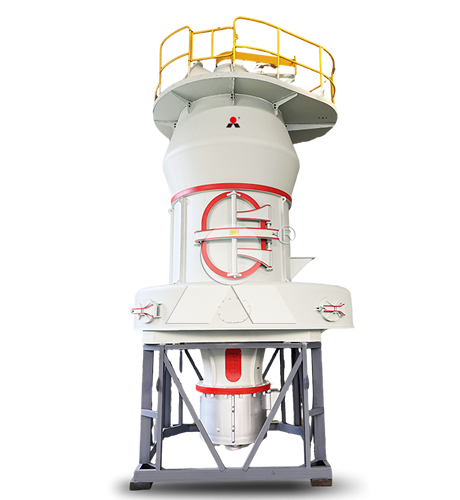
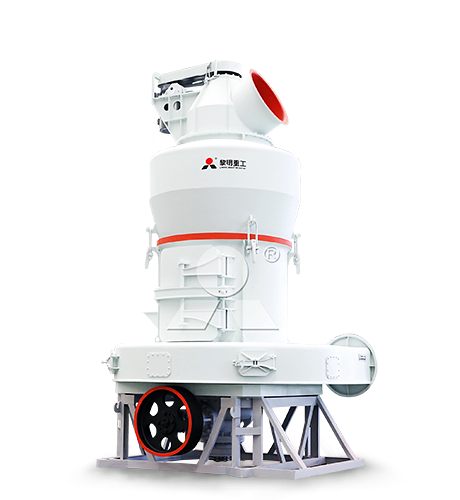
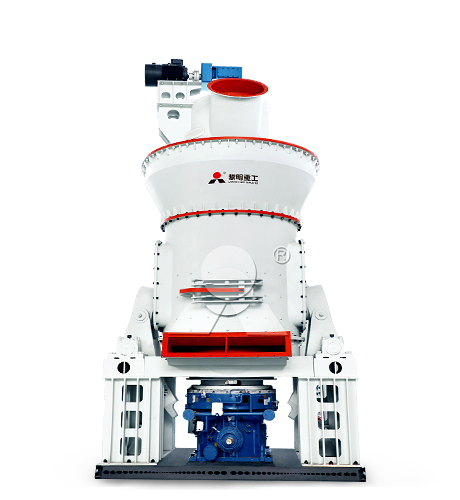
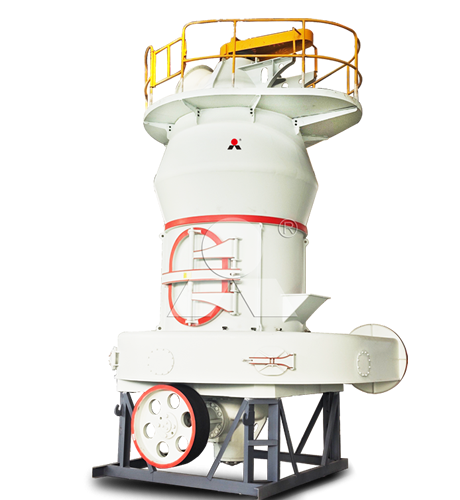
For Liming Heavy Industry equipment, the MTW European Trapezium Mill is a candidate for conventional fine mineral grinding, the LM Vertical Roller Mill is worth evaluating where integrated drying and grinding suit the project, and the LUM Ultrafine Vertical Mill is an option where the approved product requires ultrafine processing. These are starting points for evaluation, not substitutes for material testing.
Start with a Powder Specification, Not a Machine Model
The most important selection criterion is consistency. A mill must repeatedly produce powder that works in the customer’s putty, rather than produce one satisfactory sample under unusually favorable conditions.
Before requesting an equipment proposal, prepare a product brief that answers the following questions:
Which mineral will be processed: limestone, calcite, marble, dolomite, talc, kaolin, or another specified material?
Will the powder serve an interior finishing putty, a leveling product, or another defined formulation?
What particle-size distribution and coarse-residue limits have been approved?
What moisture and color requirements apply at dispatch?
How many tonnes per hour of acceptable finished powder are required?
Will the plant produce one grade continuously or change between several products?
If the powder specification has not yet been established, use a reference filler that performs well in the intended putty. Trial grinding and formulation testing can then help define a practical target before the equipment configuration is finalized.
Choose the Processing Route That Matches the Duty
| Project Requirement | Liming Heavy Industry Mill to Evaluate | What Must Be Confirmed |
|---|---|---|
| Conventional fine mineral powder for an established putty formulation | MTW European Trapezium Mill | Output at the specified grading, coarse residue, feed condition, and wear characteristics |
| A project where integrated drying, grinding, and classification may simplify the process | LM Vertical Roller Mill | Drying duty, heat-source arrangements, mineral suitability, and finished-powder quality |
| An approved formulation requiring an ultrafine filler | LUM Ultrafine Vertical Mill | The complete size distribution, production rate, energy demand, and application performance |
Liming Heavy Industry identifies MTW and LM equipment for standard-fineness ground calcium carbonate processing and LUM equipment for ultrafine applications. Its LM system integrates drying, grinding, classification, and conveying, while the LUM system combines ultrafine grinding with classification and conveying. Actual suitability depends on the selected configuration and material.
Do not select an ultrafine mill merely because the putty is described as a premium product. A finer powder can change water demand and application behavior. The additional grinding is justified only when the resulting powder delivers a verified benefit in the formulation.
Check the Raw Material Before Comparing Capacity
Mineral Composition and Abrasiveness
A commercial mineral name does not fully describe the feed. Limestone may contain hard mineral inclusions, dolomite supplies may vary between quarry layers, and kaolin can arrive with different moisture and impurity levels.
Provide representative samples and available composition data. Ask the equipment supplier to assess how the feed affects grinding, wear, classification, and product quality. Where color is important, include checks for contamination introduced by the process as well as impurities already present in the stone.
Feed Size and Variability
Confirm the allowable feed size for the selected model and design the crushing stage accordingly. Do not apply one feed-size figure across an entire mill family. Oversized or highly variable feed can make operation less stable and reduce the usefulness of a capacity estimate.
The equipment proposal should identify what reaches the mill inlet, not simply the size of material leaving the quarry. Include crushing, screening where required, storage, metering, and tramp-metal protection in that assessment.
Moisture and Drying Duty
Use the expected seasonal moisture range rather than a single dry-weather result. Excess moisture can contribute to sticking, blockage, and reduced classification efficiency. Liming Heavy Industry identifies these issues in its MTW-series operating guidance.
If drying is necessary, ask for a defined drying arrangement and the assumptions behind it. Integrated drying capability does not mean unlimited tolerance for wet feed. The system must be matched to incoming moisture, required throughput, available heat, and acceptable finished-powder moisture.
Pay Particular Attention to Classification
For wall putty minerals, classification is central to controlling the product—not just an accessory to the mill. In a closed-circuit grinding system, acceptable fine powder passes to collection while rejected coarse material returns for further grinding.
During evaluation, ask for the full particle-size distribution rather than only a nominal mesh designation. A satisfactory median particle size does not establish that the coarse fraction is acceptable.
The trial report should distinguish between:
The overall distribution of the finished powder.
The amount of material retained by the agreed residue test.
The stability of those results during steady production.
The output achieved while maintaining both requirements.
If scratches are a concern, inspect retained particles and test the powder in putty. Increasing average fineness may not resolve contamination, hard grit, or agglomerates introduced elsewhere in the process.
Compare Complete Systems, Not Mill Prices Alone
A grinding mill is only one part of the powder line. A useful proposal should clearly define the equipment needed to turn incoming material into stored or packaged product.
| System Area | What to Clarify |
|---|---|
| Raw-material preparation | Required crushing, feed storage, metering, and metal removal |
| Grinding and classification | Selected model, classifier arrangement, controls, and product-change procedures |
| Drying | Whether drying is required, the heat source, and the moisture assumptions |
| Powder collection | Collection equipment, discharge arrangements, and maintenance access |
| Finished-product handling | Conveying, storage capacity, sampling points, and packaging or bulk loading |
| Site integration | Foundations, building requirements, utilities, electrical scope, and installation responsibilities |
Check cleanability where the line will process several minerals. Product changeovers can leave residual material in conveyors, collectors, and storage equipment. For white putty fillers, this can be important even when the mill itself produces the required fineness.
Ask for Capacity at the Required Product Quality
The meaningful figure is saleable output at the approved specification. A maximum capacity quoted for a coarser product or a different feed material is not a reliable basis for a wall putty project.
Request that each proposal states the conditions attached to its production estimate:
Raw-material type and relevant test results.
Feed size and moisture.
Target particle-size distribution and coarse-residue requirement.
Expected operating conditions and any drying assumptions.
Which auxiliary equipment is included.
The method proposed for checking performance during commissioning.
Compare operating costs on the same basis. Ask whether energy estimates cover only the main mill or also include fans, classification, collection, and conveying. Review wear-part expectations, maintenance access, spare-parts availability, and the consequences of planned shutdowns.
Use a Grinding Trial to Reduce Selection Risk
A representative trial connects the raw material, proposed equipment, and finished formulation. Supply material that reflects routine production, including expected variation, rather than selecting only unusually clean or dry pieces.
Agree on the trial objectives, including particle distribution, residue, moisture, and required output.
Record the feed condition and operating settings used to produce the sample.
Collect finished powder after operating conditions have stabilized and obtain repeat samples where practical.
Test the powder using the agreed laboratory methods and compare it with the approved reference.
Prepare putty under controlled conditions and assess spreading, scratches, water adjustment, sanding, and the relevant dried or cured properties.
Use the combined results to confirm the equipment configuration and acceptance criteria.
If the powder meets the laboratory specification but performs poorly in putty, revisit the specification before finalizing the line. Conversely, if the application result is satisfactory but the proposed operating conditions are difficult to maintain, investigate production repeatability before approving the configuration.
Prepare a Clear Equipment Enquiry
For a project assessment, provide Liming Heavy Industry with the mineral type, representative sample, feed-size range, seasonal moisture, target hourly output, and required powder grades. Include an approved filler sample and the intended putty application whenever available.
Also state the plant location, available utilities, installation space, storage needs, and packaging method. With these inputs, the proposed mill can be evaluated as part of a complete production system designed to deliver a repeatable wall putty filler.
Related Wall Putty Raw Material Processing


Liming Heavy Industry to Exhibit at bauma CHINA 2026 – Visit Us at Booth E6.510
2026-10-15

Meet Liming Heavy Industry at the 140th Canton Fair 2026
2026-10-13
Liming Heavy Industry to Attend the 140th Canton Fair
2026-09-25
Liming Heavy Industry at bauma CONEXPO INDIA 2026 | Booth 5-C6
2026-09-07
Turnkey Raw Mill Cement Plant in Saudi Arabia: Design and Installation
2026-09-03
Complete Mineral Processing Solutions
Convenient Reliable Professional Efficient Get Your Quote
Please feel free to submit your inquiry information to us. We will contact with you as soon as possible.
Our team will contact you as soon as possible.