


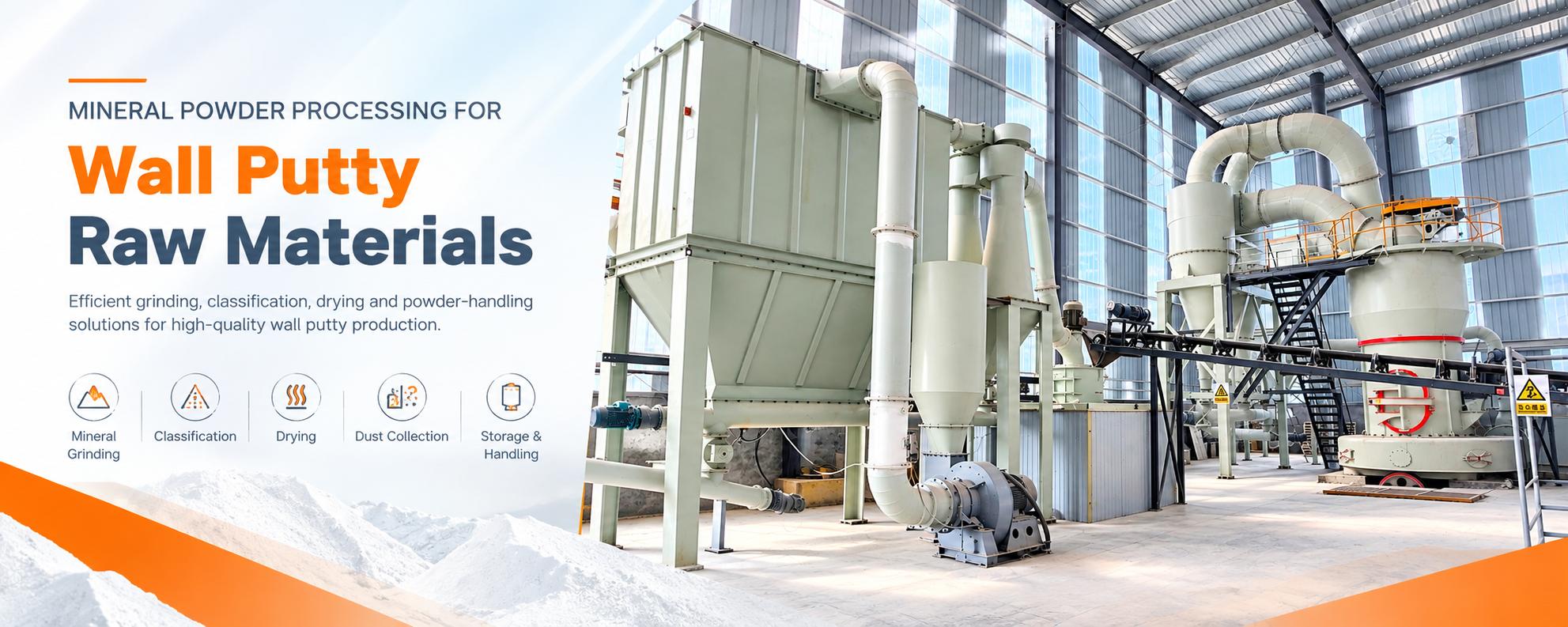
For wall putty mineral processing, the choice between a Liming Heavy Industry MTW European Trapezium Mill and an LM Vertical Roller Mill should follow the required powder quality, feed condition, production rate, and plant arrangement. MTW is a roller-and-ring grinding system used for fine mineral powder production. LM integrates drying, grinding, classification, and conveying in a vertical mill arrangement. Neither is automatically the better choice for every putty filler project.
The decisive factor is fit: which complete system can repeatedly produce the approved filler from the available raw material at an acceptable operating cost?
MTW and LM at a Glance
| Selection Factor | MTW European Trapezium Mill | LM Vertical Roller Mill |
|---|---|---|
| Processing arrangement | Roller-and-ring grinding with airflow carrying powder to classification and collection | Vertical grinding system integrating drying, grinding, classification, and conveying |
| Project evaluation focus | Required fine-powder grade, feed preparation, classifier performance, and line configuration | Grinding duty, drying requirement, process integration, and stable operating conditions |
| Moisture assessment | Confirm the allowable feed condition and any proposed drying arrangement | Confirm the available drying duty, heat source, and finished-powder moisture |
| Capacity comparison | Check output for the selected model at the required powder specification | Check output for the selected model at the same specification and feed condition |
| Final approval | Representative grinding trial and putty application testing | Representative grinding trial and putty application testing |
The distinction above reflects the manufacturers’ described process arrangements. It should not be interpreted as a universal rule that MTW is only for small plants or LM is always preferable for large ones. Model selection and the complete process scope must be evaluated together.
First, Establish What the Putty Actually Needs
A mill selection based only on a mesh label leaves important questions unanswered. The specification should describe the particle-size distribution, acceptable coarse residue, moisture, color, and required saleable output.
For a thin finishing putty, freedom from troublesome coarse particles may be particularly important. For another product, stable mixing and water requirement may be the main concern. These priorities should come from an approved formulation and application trial rather than from the mill catalogue.
Prepare the same product brief for both equipment options:
Mineral type and representative composition.
Approved reference powder, where available.
Target particle-size distribution and coarse-residue limit.
Finished-powder moisture and color requirements.
Required hourly output at that specification.
Expected operating hours and number of product grades.
This makes the comparison meaningful. A capacity figure for one powder grade should not be compared with a figure for a different grade or raw material.
How the Grinding Arrangements Differ
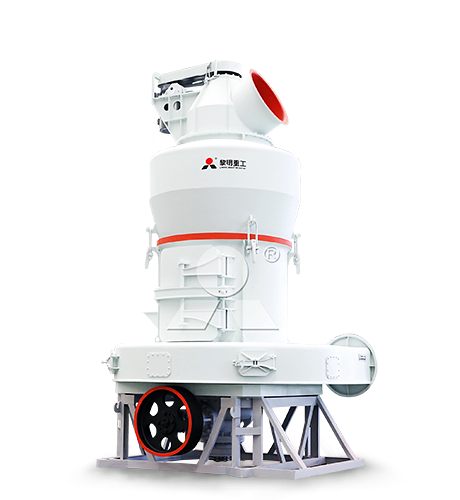
MTW: Roller-and-Ring Grinding with Air Classification
In the Liming Heavy Industry MTW system, prepared material is fed into the mill and ground between rollers and a grinding ring. Airflow carries the powder toward a separator; particles that do not meet the fineness requirement return for further grinding, while acceptable powder passes to collection. The described line includes feeding, airflow, classification, collection, and electrical equipment in addition to the mill itself.
For a wall putty filler project, evaluate the MTW option against the required grading and output. Ask how the proposed classifier, airflow arrangement, and feed control will maintain the specification during routine production—not only during sample preparation.
LM: Integrated Vertical Grinding and Drying
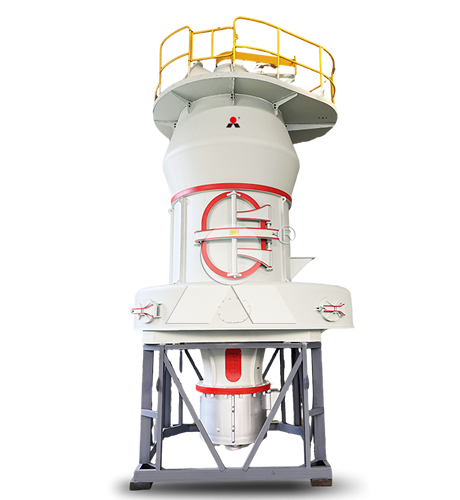
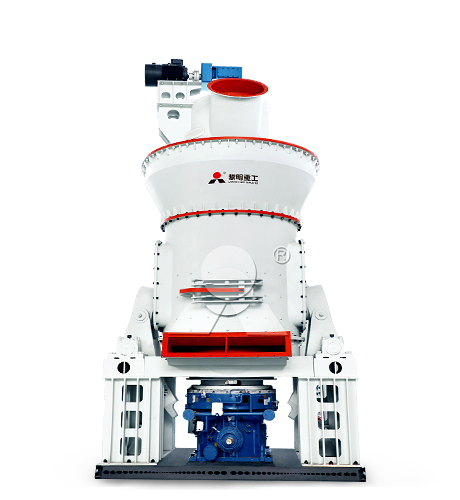
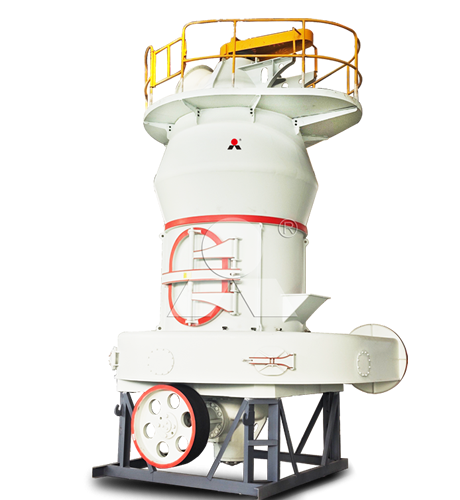
The Liming Heavy Industry LM Vertical Roller Mill combines drying, grinding, powder selection, and conveying. Its published mineral applications include limestone, calcite, marble, dolomite, talc, and other nonmetallic materials.
This arrangement deserves evaluation when drying and process integration are important parts of the project. However, integrated drying does not remove the need for a moisture assessment. The proposed system still needs a defined feed condition, heat source, gas-handling arrangement, and finished-product target.
Moisture Can Change the Selection
A quarry sample collected in dry weather may not represent the feed received throughout the year. Record normal moisture, seasonal peaks, and the likelihood of wet fines or sticky material entering the plant.
For either mill, ask the supplier to distinguish between three conditions:
The moisture range the proposed feed and conveying equipment can handle.
The moisture that can be removed at the required production rate.
The moisture expected in the collected finished powder.
These are related but different requirements. A system may accept the incoming material yet still require additional measures to achieve the finished-powder condition needed for dry-mix putty.
Where drying is necessary, compare the complete thermal and electrical requirements. Do not assume that LM always eliminates separate preparation or that an MTW proposal cannot include a suitable drying arrangement. Require a project-specific process description.
Classification Matters as Much as the Mill Name
Both grinding routes use classification to separate acceptable powder from coarser material. Liming Heavy Industry describes adjustable classification in its MTW equipment and integrated powder selection in its LM equipment.
For wall putty minerals, ask for more than a statement that the finished powder is “uniform.” Review the full distribution and an agreed residue test. A satisfactory median size does not establish that occasional oversized particles are absent.
During trials, check whether the target is maintained over repeated samples. If the average grading is acceptable but coarse residue varies, investigate classification, feed stability, agglomeration, and contamination before approving the system.
Compare Saleable Output, Not Maximum Capacity
The useful production figure is the amount of acceptable finished powder produced per hour under agreed conditions. Broad capacity ranges across a mill family do not establish the performance of a particular model on the customer’s mineral.
Request a clearly stated basis for each proposal:
| Proposal Item | What Should Be Stated |
|---|---|
| Feed material | Mineral source, composition, feed size, and moisture assumptions |
| Finished product | Particle distribution, residue limit, and moisture target |
| Production estimate | Expected acceptable output for the selected model and configuration |
| Energy scope | Whether figures include fans, classification, collection, conveying, and drying |
| Performance verification | Sampling procedure, test methods, and commissioning acceptance conditions |
Where several powder grades are planned, request performance estimates for each grade. Also consider transition time and the handling of powder produced during a changeover.
Check the Plant Around the Mill
A compact-looking machine does not necessarily produce the smallest installed plant. Compare general arrangement drawings that include feed preparation, collectors, fans, ducts, storage, packaging, maintenance access, and any drying equipment.
For an existing site, identify restrictions before finalizing the proposal:
Available building height and usable floor area.
Foundation and structural requirements.
Electrical supply and available heat sources.
Access for lifting and replacing wear parts.
Raw-material and finished-powder storage capacity.
Routes for bagged delivery or bulk loading.
If the line will process different minerals, ask how residual material is removed from the entire system. White filler quality can be affected by material remaining in conveyors, collectors, and storage equipment after the mill has stopped.
Maintenance and Operating Cost Need a Common Basis
MTW equipment incorporates features such as internal thin-oil lubrication and a curved air-duct arrangement, while LM uses an integrated vertical processing configuration. These design descriptions are relevant, but they do not establish a universal maintenance-cost or energy-cost advantage for the proposed duty.
Ask for maintenance requirements tied to the actual feed and selected model. Review wear-part access, lifting arrangements, lubrication tasks, inspection intervals, spare-parts supply, and expected shutdown procedures.
Compare total installed scope and operating requirements rather than the main-machine price alone. If one proposal excludes equipment included in the other, reconcile those differences before making a financial comparison.
Resolve the Choice Through a Representative Trial
Use representative mineral feed and agree on the trial targets before testing. Record the material condition, operating settings, powder results, and basis of the output estimate. Retain enough powder to evaluate it in the intended wall putty.
The application trial should compare mixing, any water adjustment, spreading, scratches, sanding, and the required dried or cured properties against an approved reference. If the powder passes laboratory checks but performs differently in putty, revisit the specification before finalizing the equipment.
For a project-specific comparison, provide Liming Heavy Industry with the raw-material sample, target powder specification, required output, moisture range, and site constraints. Request MTW and LM proposals on the same operating basis so the final decision reflects the complete production duty rather than a general preference for one mill type.
Related Wall Putty Raw Material Processing


Liming Heavy Industry to Exhibit at bauma CHINA 2026 – Visit Us at Booth E6.510
2026-10-15

Meet Liming Heavy Industry at the 140th Canton Fair 2026
2026-10-13
Liming Heavy Industry to Attend the 140th Canton Fair
2026-09-25
Liming Heavy Industry at bauma CONEXPO INDIA 2026 | Booth 5-C6
2026-09-07
Turnkey Raw Mill Cement Plant in Saudi Arabia: Design and Installation
2026-09-03
Complete Mineral Processing Solutions
Convenient Reliable Professional Efficient Get Your Quote
Please feel free to submit your inquiry information to us. We will contact with you as soon as possible.
Our team will contact you as soon as possible.