


Summary:
API-grade barite for drilling mud is most commonly produced with Raymond mills or MTW European Trapezium mills for standard 200-325 mesh output, while ring roller mills or ultrafine vertical mills are selected when the specification calls for D97 below 15 microns.
Details:
API-grade barite for drilling mud is most commonly produced with Raymond mills or MTW European Trapezium mills for standard 200-325 mesh output, while ring roller mills or ultrafine vertical mills are selected when the specification calls for D97 below 15 microns. The correct mill choice depends less on the mineral itself and more on the target particle size distribution, since barite's high specific gravity (4.20 g/cm3 minimum) and relatively low hardness (Mohs 3-3.5) make it forgiving to grind but demanding to classify precisely.
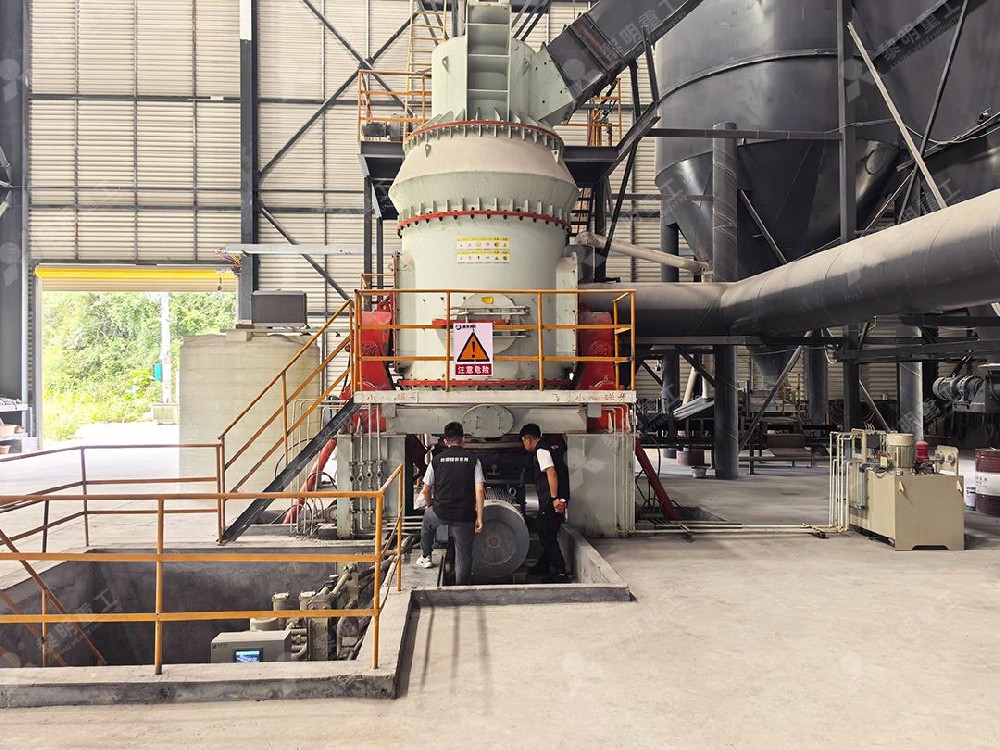
Having commissioned several barite grinding lines for oilfield service companies, I have seen more plants fail on classification accuracy than on grinding capacity. The mill is rarely the bottleneck; the air classifier and downstream dust collection usually are.
What API 13A Actually Requires From the Powder
Before selecting equipment, it helps to translate the API 13A specification into grinding targets. The standard requires a minimum specific gravity of 4.20 g/cm3, water-soluble alkaline earth metals (as calcium) below 250 mg/kg, and a controlled particle size distribution where a large majority of material passes 200 mesh, with strict limits on both the coarse tail and the ultrafine fraction.
| Parameter | API 13A Requirement | Practical Grinding Target |
|---|---|---|
| Specific gravity | Greater than or equal to 4.20 g/cm3 | Feed selection, not a grinding variable |
| Residue on 325 mesh | Less than or equal to 3.0 percent | D97 controlled at 45 micron cut point |
| Fraction below 6 micron | Less than or equal to 30 percent | Classifier wheel speed and airflow balance |
| Fraction above 75 micron | Less than or equal to 3 percent | Sharp classification cut, minimal bypass |
Notice that both a coarse limit and a fines limit apply simultaneously. This is the part many newcomers to barite processing overlook: it is not enough to grind fine, the distribution must stay narrow. Excess sub-6-micron fines can actually work against mud rheology, causing viscosity problems downstream at the wellsite.
Matching Mill Type to the Target Mesh Range
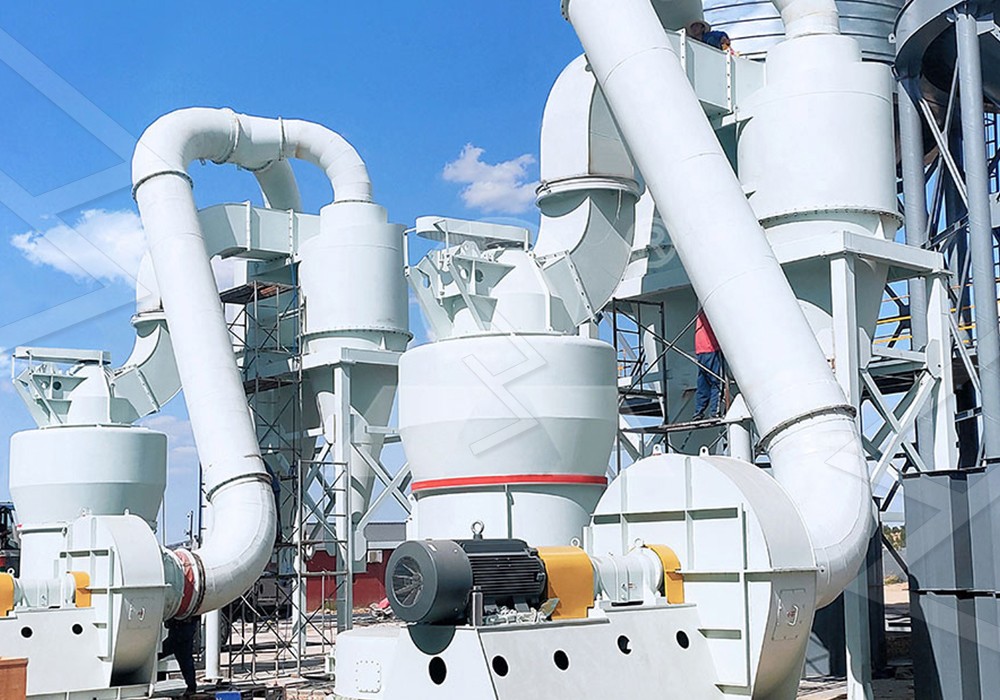
For the majority of onshore drilling mud programs, a 200 to 325 mesh product satisfies API grade requirements, and this range is squarely within the operating window of Raymond mills and MTW-series trapezium mills. These mills use a ring-roller grinding principle with an internal or external classifier, and they handle barite's moderate hardness without excessive wear compared to harder silicate minerals.
| Mill Type | Typical Output Fineness | Capacity Range | Best Fit |
|---|---|---|---|
| Raymond Mill | 80-325 mesh | 3-20 t/h | Standard API barite, moderate throughput |
| MTW Trapezium Mill | 30-325 mesh (up to approximately 0.038 mm) | 3-45 t/h | Higher capacity lines, stable long-term operation |
| Ball Mill | 200-400 mesh | 5-100 t/h | Very large tonnage, less precise PSD control |
| Ring Roller / Ultrafine Vertical Mill | 325 mesh up to D97 less than 10 micron | 0.5-25 t/h | Premium grade, offshore, deep-well drilling |
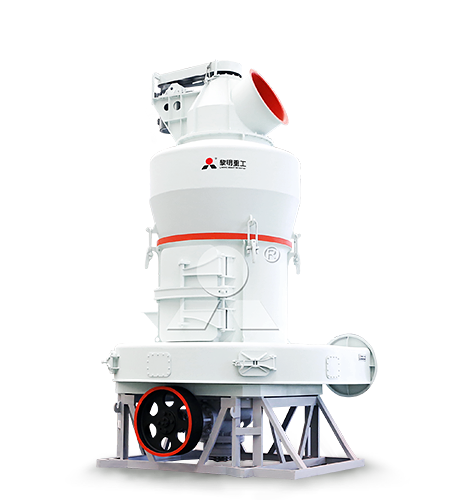
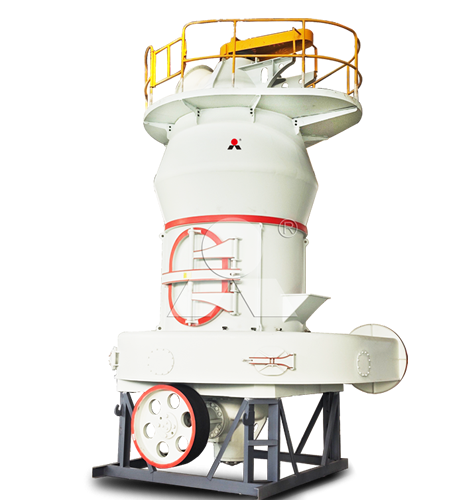
Liming Heavy Industry's MTW European Type Raymond Mill and MW Ring Roller Micro Powder Mill both fit naturally into this selection matrix, offering a practical path from standard API grade up to finer premium grades without changing the core mill platform, since the classifier and drive can often be upgraded independently of the mill body.
When Fine Grinding Actually Pays Off
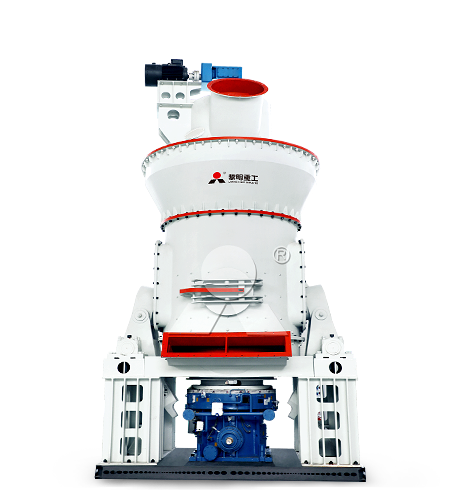
Offshore and deep-well drilling programs increasingly specify finer barite, sometimes down to 600 mesh (approximately 25 micron) or better, because finer particles suspend more uniformly in high-density mud and reduce settling during non-circulating periods such as connections or logging runs. In these cases, a ring roller mill or vertical ultrafine mill with a high-precision turbine classifier becomes the more defensible choice, even though throughput per unit typically drops compared to a standard Raymond mill.
Practical experience shows that plants targeting D97 below 10 micron need classifier wheel speeds well above 1500 rpm with tight cutting precision, often in the range of plus or minus 0.3 to 0.5 micron, to avoid oversize particles slipping through the cut point. Cutting corners on classifier maintenance at this fineness level is a common mistake; a worn wheel or eroded guide vane will quietly widen the particle size distribution long before capacity visibly drops.
_1761355927036.jpg)
Engineering Notes From the Field
Barite's high density means airflow calculations must be re-verified against the equipment supplier's standard curves, which are usually developed for lower-density minerals such as calcium carbonate or limestone.
During commissioning, expect grinding roller wear rates on barite to be moderate, but liner wear in the classifier housing can accelerate due to the mineral's density and abrasive gangue content such as quartz or fluorite inclusions.
Moisture above 2 percent in raw barite feed can cause material buildup on the grinding ring and should be addressed with a pre-drying step rather than compensated for by increasing mill airflow.
Many plants encounter inconsistent whiteness readings when barite ore sources are blended without pre-homogenization; this is a raw material issue, not a grinding issue, and should be resolved before the feed reaches the mill.
A Representative Production Scenario
Consider a typical 5 t/h barite powder line targeting API 13A grade with occasional premium-grade batches for offshore contracts. The feed barite arrives at roughly 90 to 96 percent BaSO4 content with specific gravity around 4.2 to 4.3 g/cm3. A single MTW-series mill with an adjustable classifier can typically switch between a standard 325 mesh product and a finer premium cut simply by adjusting classifier wheel speed and internal airflow, without requiring a separate mill for the premium grade. This flexibility is one reason mill operators favor trapezium and ring roller designs over fixed-classification ball mills for barite service, where product specification can shift from contract to contract.
Selection Checklist Before Ordering a Barite Mill
Confirm the target mesh range and whether both coarse and fine limits apply, not just a single top-size specification.
Verify feed moisture content and plan for pre-drying if above approximately 2 percent.
Check classifier wheel speed range against the finest grade you may need to produce, not just the average order.
Specify wear-resistant liners and rollers rated for high-density, moderately abrasive minerals.
Include dust collection sized for barite's higher bulk density compared to lighter industrial minerals.
Frequently Asked Questions
What mesh size is required for standard API grade barite?
Standard API 13A barite typically requires the majority of material to pass 200 mesh with no more than about 3 percent residue on 325 mesh.
Can a single mill produce both standard and premium fine barite grades?
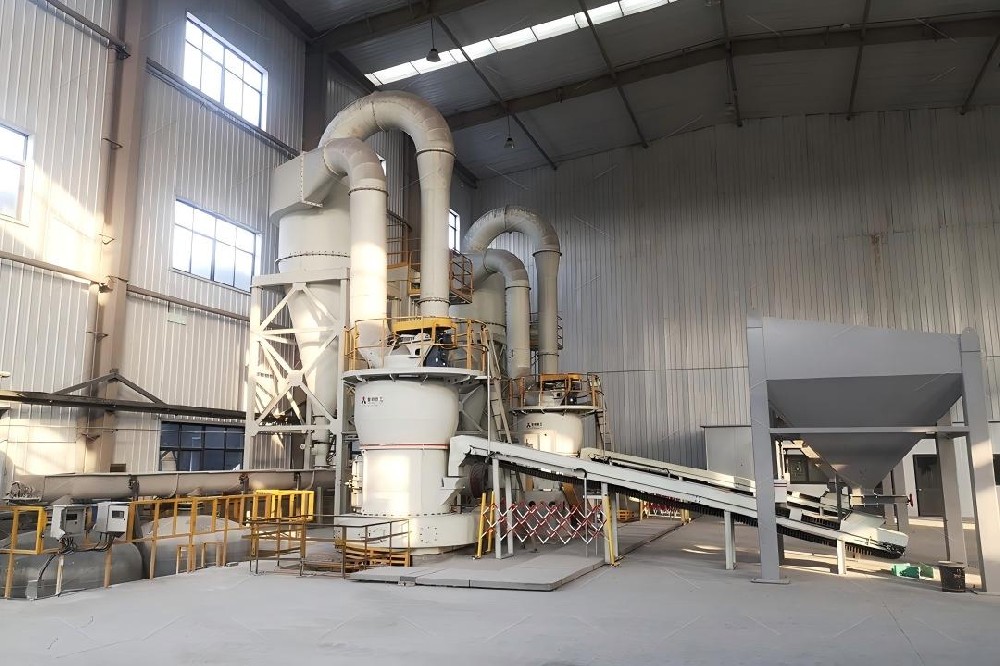
Yes, mills such as the MTW Trapezium Mill can often shift output fineness by adjusting classifier speed and airflow, avoiding the need for a dedicated ultrafine mill for occasional premium orders.
Why does barite drilling mud specification limit both coarse and fine particles?
Excess coarse particles cause settling and poor suspension, while excess ultrafine particles can increase mud viscosity beyond desired rheological limits, so a narrow, controlled distribution is preferred over simply grinding as fine as possible.
Is ball milling suitable for barite destined for drilling fluids?
Ball mills can reach the required mesh range and handle large tonnage, but they generally offer less precise particle size distribution control compared to trapezium or ring roller mills with integrated classifiers.
What causes inconsistent whiteness or BaSO4 content in finished barite powder?
This is usually a raw material blending issue rather than a grinding problem, and is best resolved through ore homogenization before the feed enters the mill.
Related FAQ


Meet Liming Heavy Industry at the 140th Canton Fair 2026
2026-10-13

Liming Heavy Industry to Attend the 140th Canton Fair
2026-09-25
Liming Heavy Industry at bauma CONEXPO INDIA 2026 | Booth 5-C6
2026-09-07
Turnkey Raw Mill Cement Plant in Saudi Arabia: Design and Installation
2026-09-03
Cement Raw Mill Supplier in Indonesia: Cost and Configuration Analysis
2026-09-01
Complete Mineral Processing Solutions
Convenient Reliable Professional Efficient Get Your Quote
Please feel free to submit your inquiry information to us. We will contact with you as soon as possible.
Our team will contact you as soon as possible.