


Summary:
The core of a limestone grinding plant consists of a primary crusher, a main mill like the MTW Raymond mill or LM vertical mill, and a dynamic classifier.
Details:
Material Behavior and System Feed
Limestone, primarily calcium carbonate, exhibits a Mohs hardness of 3.0 and low abrasiveness. This makes it highly grindable. Before entering the milling circuit, the raw material feed size must be crushed to under 35mm. Feed moisture should remain below 6% to prevent material packing between the rollers and the grinding track, which restricts throughput and spikes motor amperage.
_1767930326613.jpg)
The Main Milling Unit
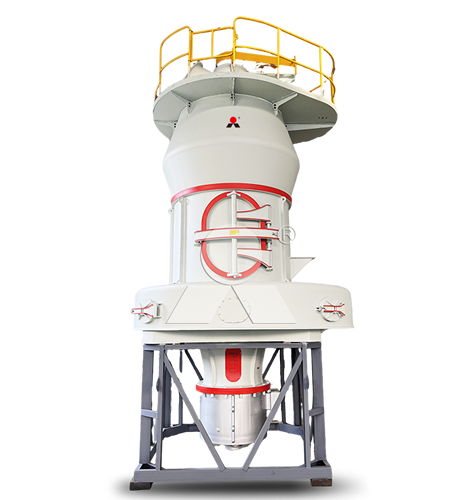
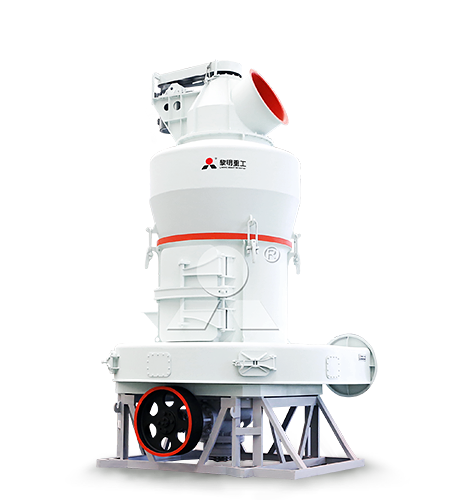
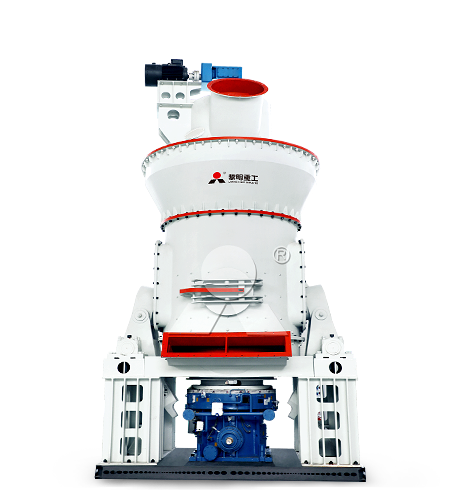
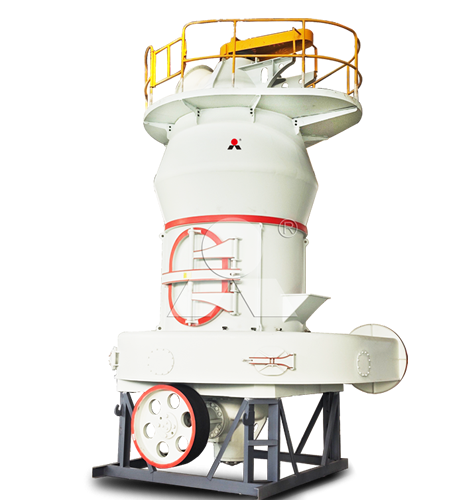
The selection of the grinding mill determines the system layout and energy efficiency. For standard industrial applications like flue gas desulfurization (FGD) or construction filler requiring a fineness of 250 to 325 mesh, the MTW European Type Raymond Mill operates reliably. It uses suspended rollers driven by centrifugal force to crush the limestone against a stationary ring. When processing high-capacity loads or requiring 400-mesh powder for paints and plastics, the LM Series Vertical Roller Mill is the standard field solution. It integrates grinding, drying, and classifying into a single unit, significantly reducing the specific energy consumption (kWh/t).
_1761355927036.jpg)
Classification and Powder Collection
After comminution, an induced draft fan pulls the ground limestone upward into a variable-speed dynamic classifier. The rotor RPM dictates the cut point; adjusting it controls the D90/D97 particle size distribution. On-spec powder passes through the classifier into a cyclone collector or a pulse-jet bag filter, which separates the final product from the conveying airstream while maintaining negative pressure to control dust emissions.
_1761361296291.jpg)
Key Operating Parameters
Feed Size: Strictly under 35mm to prevent mechanical shock to the grinding elements.
Moisture Limit: Controlled below 6% to maintain proper pneumatic conveying capability.
Target Fineness: Adjustable from 80 to 400 mesh based on classifier rotor speed.
System Draft: Maintained under negative pressure to eliminate fugitive dust.
_1761355701094.jpg)
Frequently Asked Questions
How do I adjust the limestone powder fineness?
You modify the variable frequency drive (VFD) on the classifier motor. Increasing the rotor RPM rejects coarser particles back to the grinding zone, yielding a finer product.
What causes excessive vibration in a limestone vertical mill?
Vibration typically spikes due to an unstable material bed on the grinding table. This is caused by irregular feed rates, excessively large feed lumps, or incorrect hydraulic pressure on the rollers.
Why is a pulse-jet baghouse required in the circuit?
While cyclones capture the bulk of the product, a pulse-jet bag filter is necessary to capture the ultrafine particulate fraction, ensuring the system meets stringent environmental emission standards.
Related FAQ


LIMING Heavy Industry to Participate in SIREXE 2026 in Abidjan, Côte d'Ivoire
2026-10-26

LIMING at MiningMetals Uzbekistan 2026 | Booth B94
2026-10-22
LIMING Heavy Industry at MINEXPO Africa 2026 | Booth 133
2026-10-22
Liming Heavy Industry to Exhibit at bauma CHINA 2026 – Visit Us at Booth E6.510
2026-10-15
Meet Liming Heavy Industry at the 140th Canton Fair 2026
2026-10-13
Complete Mineral Processing Solutions
Convenient Reliable Professional Efficient Get Your Quote
Please feel free to submit your inquiry information to us. We will contact with you as soon as possible.
Our team will contact you as soon as possible.