


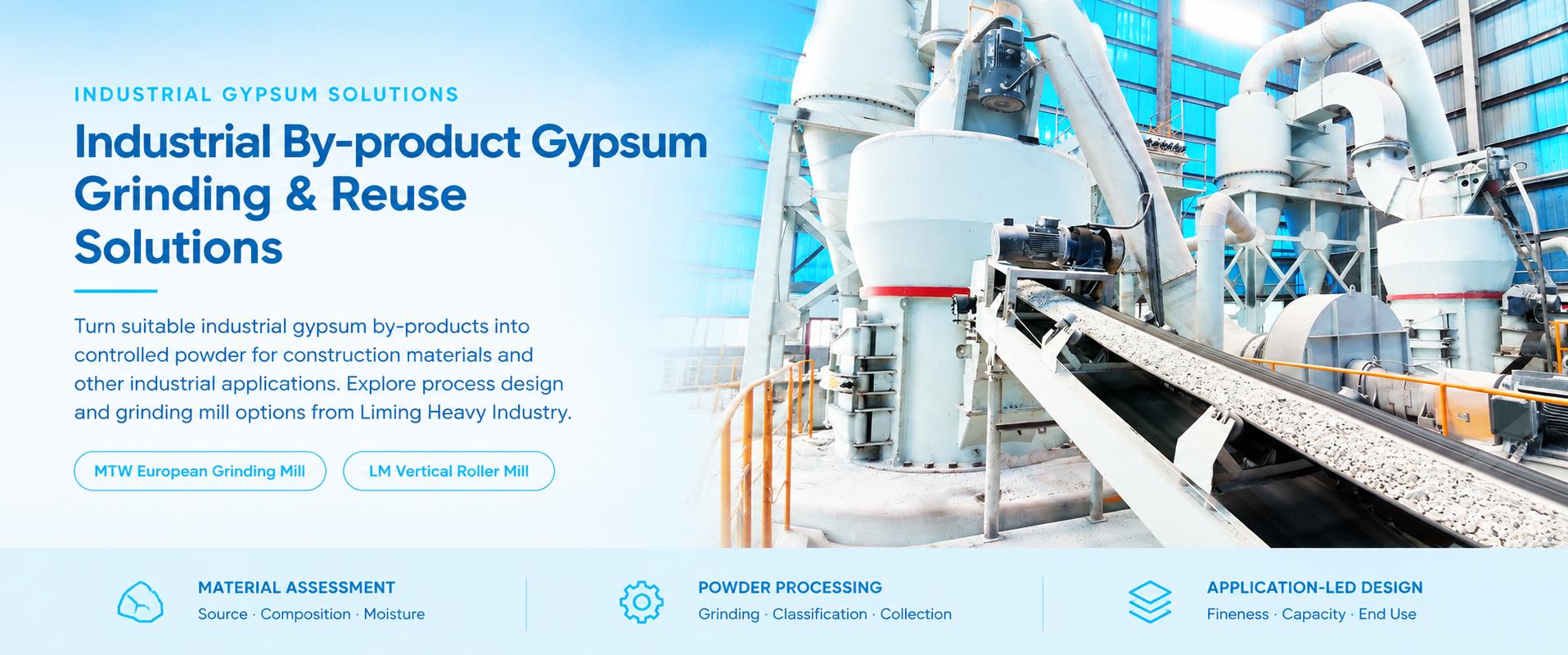
MTW European Grinding Mill is a practical solution for conventional gypsum powder production when the feed material is properly prepared and moisture is controlled. It is suitable for natural gypsum and qualified industrial by-product gypsum, including FGD gypsum and treated phosphogypsum, where the project requires stable medium-fine powder, controlled classification and small-to-medium production capacity.
For gypsum applications, mill selection should be based on the required finished-powder capacity at the specified fineness, not only on a general capacity figure. Feed moisture, lump size, gypsum source, impurity profile, product fineness, drying requirement and final application all influence actual output.
What Is MTW European Grinding Mill?
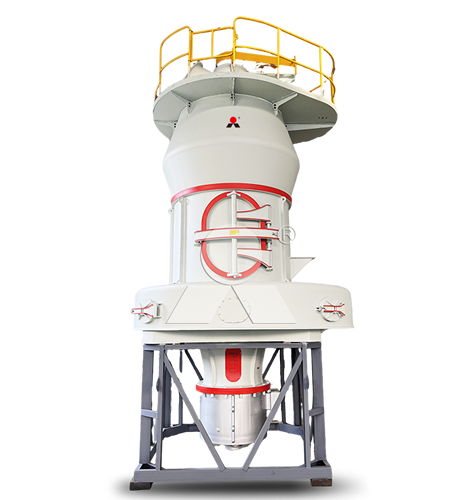
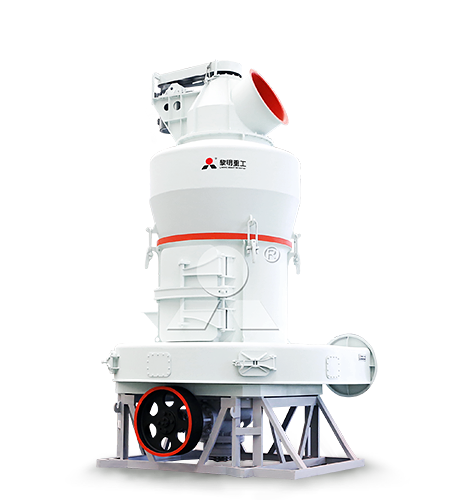
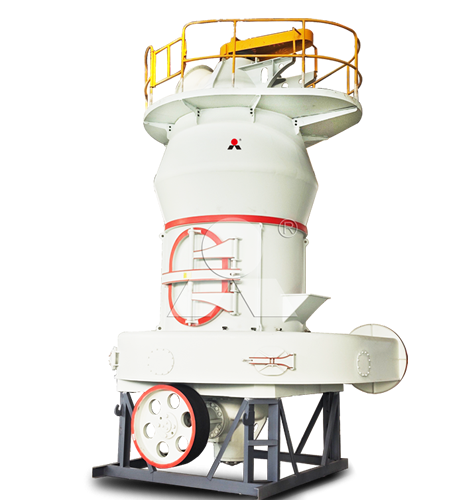
MTW European Grinding Mill is a roller grinding system designed for non-metallic mineral powder production. It uses grinding rollers and a grinding ring to reduce material size, while an air-classification system separates qualified powder from coarse particles.
For gypsum processing, the system can be used to produce controlled powder for cement, gypsum-based mortar, plaster, building-material production and other industrial applications. It is most suitable when the feed is dry or has been dried and conditioned before entering the mill.
Liming Heavy Industry lists MTW European Type Raymond Mill with a nominal capacity range of 3–55 tonnes per hour and a discharge-fineness range of 1.6–0.038 mm. Actual gypsum output varies by model, feed condition, material moisture, target fineness and process configuration.
When Is MTW European Grinding Mill Suitable for Gypsum?
MTW European Grinding Mill is suitable for projects that need conventional gypsum powder rather than ultra-fine powder or very large integrated drying-and-grinding capacity. It is often a good fit where the material is stable, the drying requirement is limited or handled separately, and the target production rate is within the small-to-medium range.
It can be considered for:
Natural gypsum powder production
Prepared FGD gypsum powder
Treated and adequately conditioned phosphogypsum powder
Gypsum powder for cement grinding and cement setting control
Gypsum feed preparation for plaster, mortar and building materials
Industrial gypsum powder requiring controlled medium-fine fineness
For industrial by-product gypsum, the material must first pass application-specific quality checks. MTW European Grinding Mill controls particle size; it does not remove unsuitable chemical impurities or confirm that a gypsum source is acceptable for cement, gypsum board or another final use.
Typical Gypsum Capacity Range
MTW European Grinding Mill covers a broad nominal range, but the output of a specific gypsum project must be calculated using actual feed data. The manufacturer’s published range for the MTW European Type Raymond Mill is 3–55 t/h, while the industrial by-product gypsum solution page may describe a practical project range of approximately 2–55 t/h depending on the selected model and process conditions.
For gypsum powder, capacity is affected by the required fineness. A mill can generally produce more tonnes per hour at a coarser product specification than at a finer specification. Moisture and feed stability can reduce the available output further.
| Project factor | Effect on MTW gypsum capacity |
|---|---|
| Target fineness | Finer powder normally reduces throughput because grinding and classification demand increase. |
| Feed moisture | Higher free moisture can reduce output, cause buildup and require upstream drying. |
| Feed size and lump condition | Oversized or compacted lumps require crushing or deagglomeration for stable feeding. |
| Gypsum source | FGD gypsum, phosphogypsum and other by-products may differ in moisture, flowability and impurity content. |
| Classifier setting | A tighter cut point improves fineness control but may reduce finished-powder output. |
| Airflow and dust collection | Stable airflow supports classification and powder collection; poor airflow reduces system efficiency. |
| Grinding component condition | Worn rollers, rings, blades or classifier components can lower capacity and make fineness inconsistent. |
MTW Gypsum Fineness Range
The required gypsum powder fineness should be defined by the final application. MTW European Grinding Mill is intended for conventional powder production and can produce gypsum in a typical industrial fineness range of approximately 20–400 mesh, depending on the selected model, classifier configuration and process conditions.
The manufacturer’s published technical information for MTW European Type Raymond Mill gives a discharge-fineness range of 1.6–0.038 mm. The fine end of 0.038 mm is approximately 400 mesh under common screen-equivalency references, although mesh values are approximate and should not replace particle-size testing.
| Typical gypsum powder range | Approximate particle-size reference | Possible application direction |
|---|---|---|
| 20–80 mesh | Coarser gypsum powder or granular feed | Applications requiring easier handling, blending or further processing |
| 80–200 mesh | Conventional industrial gypsum powder | Selected cement, building-material and gypsum-processing applications |
| 200–325 mesh | Medium-fine gypsum powder | Controlled blending, cement use, dry-mix materials and selected gypsum products |
| 325–400 mesh | Fine conventional gypsum powder | Applications requiring more uniform fine powder, subject to product testing |
Mesh is only an approximate way to describe powder size. A project should specify the actual measurement method required by the customer, such as screen residue, laser particle-size distribution, D50, D90 or specific surface area. Two products described as “325 mesh” can have different particle-size distributions and different performance in cement, plaster or building-material formulations.
How Fineness Affects MTW Output
Target fineness and output must be considered together. Producing a finer gypsum powder requires more grinding work and more precise classification. As the classifier is adjusted to reject more coarse particles, more material returns to the grinding zone, which can reduce the finished-product capacity.
For example, a project requiring conventional 100–200 mesh gypsum powder may achieve a higher production rate than the same mill producing a narrow 325–400 mesh product. The actual difference depends on feed condition, gypsum hardness, moisture, airflow, mill model and operating settings.
For this reason, a capacity proposal should always state:
Feed material type and condition
Feed moisture range
Maximum feed size
Required finished-powder fineness
Required capacity in tonnes per hour of finished powder
Expected operating hours per day and days per year
Need for drying before grinding
A capacity number without a corresponding fineness requirement is not sufficient for equipment selection.
Feed Requirements for MTW Gypsum Grinding
MTW European Grinding Mill performs best with stable, prepared feed. Natural gypsum and industrial gypsum by-products should be screened, deagglomerated or crushed as needed before entering the mill.
Feed size
Published MTW equipment information lists a maximum feed size of up to 50 mm for some models. The appropriate feed size for a gypsum project depends on the selected model and material condition. In practice, it is preferable to use uniform and manageable feed rather than sending irregular large lumps into the mill.
Industrial gypsum may have fine primary particles but still contain large agglomerates. FGD gypsum filter cake and stored phosphogypsum can compact into lumps because of moisture. These lumps should be broken before grinding so that the feeder can deliver material consistently.
Feed moisture
Free moisture is one of the most important feed requirements. MTW European Grinding Mill is suitable for gypsum that is dry or has been adequately conditioned. High-moisture filter cake can cause buildup in hoppers, feeders, grinding components and ducts.
If the incoming industrial gypsum has high free moisture, the process may require mechanical dewatering, thermal drying, covered storage, deagglomeration or a combination of these measures before MTW grinding. The correct target moisture should be confirmed through material testing and project-specific process design.
Feed consistency
Consistent feed rate supports stable grinding pressure, airflow and classification. Significant changes in moisture, lump size or feed rate can cause variations in final powder fineness and reduce output.
For industrial by-product gypsum, material from different stockpile zones may have different moisture and flowability. Controlled blending, regular sampling and stable feeding equipment can help maintain consistent mill operation.
Typical MTW Gypsum Grinding Process
A conventional MTW gypsum powder line may include the following stages:
Receive gypsum and store it under controlled conditions.
Sample the material and confirm moisture, feed condition and application-related quality.
Break lumps, crush oversized material or deagglomerate filter cake when required.
Dewater or dry the material if feed moisture is too high for stable grinding.
Feed prepared gypsum continuously to the MTW European Grinding Mill.
Grind the material and classify the powder to the target fineness.
Collect finished powder through the air and dust-collection system.
Transfer powder to a silo, packing station or bulk-loading system.
Monitor final fineness, moisture and other quality parameters.
The process may be simpler for dry natural gypsum and more complex for wet FGD gypsum or phosphogypsum. The equipment arrangement should reflect the actual material condition and the final product specification.
MTW European Grinding Mill for FGD Gypsum
MTW European Grinding Mill can be used for FGD gypsum when the material has been washed, dewatered and conditioned to provide stable feed. FGD gypsum is often supplied as moist filter cake, so moisture control and deagglomeration are especially important.
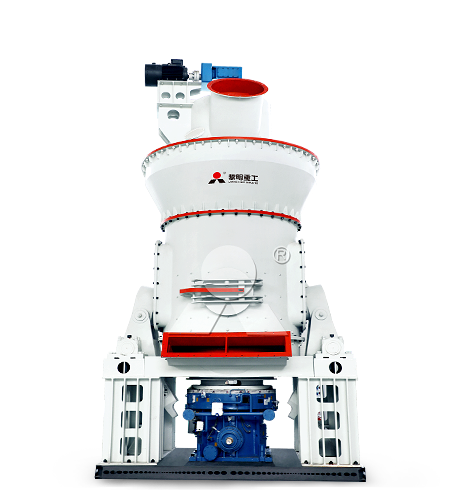
For small-to-medium capacity FGD gypsum powder production, an MTW system can provide controlled conventional fineness after suitable feed preparation. If the project has high moisture, substantial drying demand or very high continuous capacity requirements, an LM Vertical Roller Mill may be more suitable because it can integrate drying, grinding and classification within one process system.
MTW European Grinding Mill for Phosphogypsum
MTW European Grinding Mill can also be considered for phosphogypsum powder production after the material has been evaluated and properly prepared. Phosphogypsum may require more than drying and grinding because its impurity profile can include soluble phosphorus, fluoride-related compounds, acidity and other source-specific constituents.
Before MTW grinding, the project should confirm the intended final application and whether washing, neutralization, filtration, drying or other pre-treatment is required. Grinding improves particle-size control, but it does not remove unsuitable impurities or establish end-use compliance.
MTW European Grinding Mill vs. LM Vertical Roller Mill
| Selection factor | MTW European Grinding Mill | LM Vertical Roller Mill |
|---|---|---|
| Typical project capacity | Small to medium | Medium to large and high capacity |
| Best feed condition | Dry or adequately conditioned gypsum | Gypsum with higher moisture or projects requiring drying integration |
| Drying arrangement | Usually separate upstream drying when feed is wet | Can combine drying, grinding and classification when properly designed |
| Powder range | Conventional medium-fine gypsum powder | Controlled powder production with high-throughput capability |
| Plant layout | Compact conventional grinding line | Integrated high-capacity processing system |
| Best-fit application | Prepared gypsum powder for cement, building materials and other conventional uses | Large-scale gypsum processing with significant moisture-management needs |
MTW European Grinding Mill vs. Raymond Mill
MTW European Grinding Mill and Raymond mill can both be considered for conventional gypsum powder production. The final selection depends on the required capacity, process configuration, feed condition, automation requirement and required powder consistency.
MTW European Grinding Mill is generally selected where the project needs a modern European-type grinding arrangement, controlled classification and small-to-medium capacity powder production. Raymond mill can be a practical option for moderate output requirements with dry, stable and prepared feed.
Neither mill should be selected as a substitute for feed preparation. For wet, sticky gypsum or projects with high drying duty, material conditioning must be completed before grinding or the project should evaluate LM Vertical Roller Mill with integrated drying capability.
How to Improve MTW Gypsum Grinding Performance
Stable operation depends on the complete powder system. The following practices can help maintain capacity and fineness consistency:
Keep feed moisture within the designed operating range.
Break compacted gypsum lumps before feeding.
Use stable, adjustable feeding equipment.
Maintain the correct airflow for grinding, classification and powder collection.
Set the classifier according to the required product fineness.
Inspect and maintain grinding rollers, grinding rings, blades and classifier components.
Monitor filter performance, fan operation and duct sealing.
Protect finished gypsum powder from moisture absorption during storage.
Test final powder regularly for fineness, moisture and application-specific quality requirements.
Information Needed to Select an MTW Model for Gypsum
To select an MTW European Grinding Mill and estimate realistic capacity, provide the following information:
Gypsum source, such as natural gypsum, FGD gypsum or phosphogypsum
Representative chemical analysis and gypsum content
Feed moisture, including minimum, average and maximum values
Feed size, maximum lump size and degree of agglomeration
Required finished-powder fineness and testing method
Required output in tonnes per hour of finished powder
Final application, such as cement, plaster, dry mortar or another industrial product
Need for separate drying or other pre-treatment
Available plant space, power supply and dust-control requirements
Finished-powder storage, packing and bulk-dispatch method
Conclusion
MTW European Grinding Mill is suitable for conventional gypsum powder production at small-to-medium capacity when the feed has been properly prepared. Its published nominal capacity range is 3–55 t/h, and its published discharge fineness can reach approximately 0.038 mm, equivalent to about 400 mesh under common mesh references.
For gypsum, the actual capacity depends on feed moisture, feed size, gypsum source, target fineness, classifier setting and system configuration. MTW European Grinding Mill is a strong choice for dry or conditioned natural gypsum, FGD gypsum and treated phosphogypsum requiring controlled conventional powder.
If the project requires very high capacity, major drying duty or integrated drying and grinding, LM Vertical Roller Mill may be more appropriate. The final choice should be based on representative material testing and the required finished-powder output at the specified fineness.
Related Industrial By-product Gypsum Solutions


LIMING at MiningMetals Uzbekistan 2026 | Booth B94
2026-10-22

LIMING Heavy Industry at MINEXPO Africa 2026 | Booth 133
2026-10-22
Liming Heavy Industry to Exhibit at bauma CHINA 2026 – Visit Us at Booth E6.510
2026-10-15
Meet Liming Heavy Industry at the 140th Canton Fair 2026
2026-10-13
Liming Heavy Industry to Attend the 140th Canton Fair
2026-09-25
Complete Mineral Processing Solutions
Convenient Reliable Professional Efficient Get Your Quote
Please feel free to submit your inquiry information to us. We will contact with you as soon as possible.
Our team will contact you as soon as possible.