


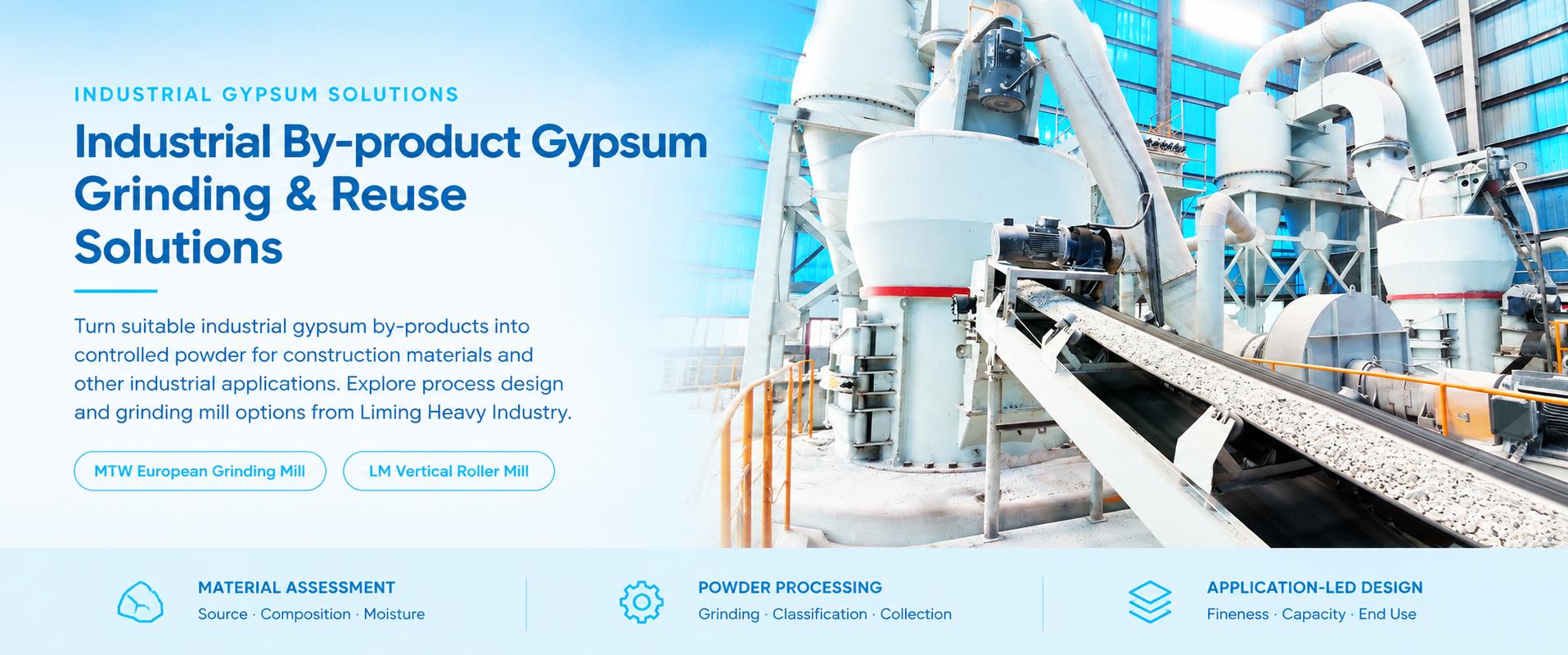
FGD gypsum and phosphogypsum are both industrial by-product gypsum materials, but they come from different industries and usually require different processing routes. FGD gypsum is produced during flue-gas desulfurization and is often a relatively high-calcium-sulfate material after oxidation, washing and dewatering. Phosphogypsum is generated during phosphoric acid production and typically requires more extensive evaluation because it can contain soluble phosphorus, fluoride-related compounds, residual acidity, trace elements and naturally occurring radionuclides.
The main processing difference is that FGD gypsum projects often focus on moisture control, stable feeding, drying and particle-size control. Phosphogypsum projects may require those same steps plus source-specific impurity management, radiological evaluation, environmental review and application-specific pre-treatment before grinding.
FGD Gypsum and Phosphogypsum at a Glance
| Factor | FGD Gypsum | Phosphogypsum |
|---|---|---|
| Industrial source | Flue-gas desulfurization, commonly from power or industrial exhaust-gas treatment | Wet-process phosphoric acid production for phosphate fertilizer manufacture |
| Main gypsum component | Usually calcium sulfate dihydrate after forced oxidation | Usually calcium sulfate dihydrate with source-specific impurities |
| Typical feed form | Moist slurry-derived solids or filter cake after washing and dewatering | Wet filter cake, stack material, stockpile material or aged phosphogypsum |
| Main processing challenge | Free moisture, soluble salts, residual sulfite, material handling and feed consistency | Moisture plus soluble phosphorus, fluoride-related compounds, acidity, salts, trace constituents and possible radionuclides |
| Typical pre-treatment focus | Oxidation, washing, dewatering, drying, deagglomeration and grinding | Sampling, chemical evaluation, possible washing, neutralization, impurity reduction, dewatering, drying and grinding |
| Reuse assessment | Usually focused on product quality, moisture, impurity limits and market requirements | Requires technical, environmental, radiological and regulatory evaluation for the intended use |
| Grinding-system priority | Stable feeding, drying duty, throughput and powder fineness | Prepared feed, moisture control, qualified application route and consistent powder quality after treatment |
How FGD Gypsum Is Produced
FGD gypsum is generated when sulfur dioxide is removed from flue gas. In wet limestone- or lime-based flue-gas desulfurization systems, sulfur dioxide reacts with the absorbent and forms calcium sulfite. When the material is oxidized, calcium sulfite is converted into calcium sulfate dihydrate, commonly known as FGD gypsum.
The material is usually washed and dewatered before it is transported for reuse or storage. High-quality FGD gypsum can contain a high proportion of calcium sulfate dihydrate. One published comparison reports FGD gypsum with more than 90% calcium sulfate dihydrate and other measured elements below 0.1%, although actual composition varies with fuel source, absorbent, oxidation efficiency, washing performance and plant operation.
FGD gypsum is widely recognized as a type of synthetic gypsum. It can be used in gypsum board, cement, agricultural and other applications when it meets the quality requirements of the receiving market.
How Phosphogypsum Is Produced
Phosphogypsum is generated during wet-process phosphoric acid production. Phosphate rock reacts with sulfuric acid to produce phosphoric acid for fertilizer manufacture. Calcium from the phosphate rock combines with sulfate to form phosphogypsum.
Although phosphogypsum is mainly calcium sulfate dihydrate, it carries source-specific components from the phosphate rock and acid-production process. These may include soluble phosphorus, fluoride-related compounds, residual acidity, organic matter, soluble salts, silica, alumina, trace elements and naturally occurring radionuclides.
Phosphogypsum is therefore more complex than FGD gypsum for many reuse applications. The material must be assessed not only for gypsum content and moisture, but also for the impurities that may affect product quality, environmental performance and regulatory acceptance.
Recent reviews of synthetic gypsum identify phosphorus and fluorine-related impurities as notable characteristics of phosphogypsum. They also note that impurity levels can influence hydration behavior, water demand, material strength, salt-related moisture absorption and the suitability of products such as gypsum boards or cementitious materials.
Raw-Material Testing Differences
Both materials should be tested before process design, but phosphogypsum generally requires a broader test program.
Typical FGD gypsum test items
Calcium sulfate dihydrate content
Free moisture and total moisture
Particle-size distribution and degree of agglomeration
Chloride and soluble-salt content where relevant
Residual sulfite and oxidation quality
Residual carbonate, fly ash, silica or other non-gypsum components
Bulk density, flowability and storage behavior
Required final powder fineness and intended application
Typical phosphogypsum test items
Calcium sulfate dihydrate content
Free moisture, total moisture and seasonal moisture variation
pH and residual acidity
Soluble phosphorus and phosphate-related compounds
Fluoride-related compounds
Soluble salts, chloride and conductivity where relevant
Organic matter and color-related impurities
Silica, alumina, iron and other mineral impurities
Trace elements and heavy metals where required
Radionuclide content and radiological characteristics where required
Particle-size distribution, bulk density and flowability
Application-specific performance testing
The wider phosphogypsum test program does not mean every source is unsuitable. It means the processing route must be designed around actual material data. Two phosphogypsum sources can have very different reuse potential because phosphate-rock chemistry, acid-process conditions and storage history can differ.
Moisture and Material Handling
Both FGD gypsum and phosphogypsum can have significant free moisture. They are often generated in wet processes and may be supplied as filter cake, compacted material or stockpile feed.
FGD gypsum moisture is often influenced by washing and dewatering performance. The material may be relatively uniform when it is supplied directly from a controlled filtration process. Its main handling challenges are moisture-related lump formation, filter-cake flowability, storage conditions and stable feeding to the dryer or mill.
Phosphogypsum moisture can be more variable because the material may be taken from fresh production, long-term stacks, mixed storage zones or weather-exposed stockpiles. Older material can have uneven moisture, compaction, surface contamination and changed physical behavior.
For both materials, the plant should measure minimum, average and maximum moisture. The process must be designed for normal moisture variation, not only for the best sample received during laboratory testing.
Pre-treatment Differences
FGD gypsum pre-treatment
For FGD gypsum, the process commonly focuses on preparing a stable feed for powder production. Depending on the source condition, the plant may include:
Covered storage to reduce rain exposure and moisture variation
Lump breaking or deagglomeration of filter cake
Screening and foreign-material removal
Mechanical dewatering when required
Thermal drying before grinding or integrated drying during grinding
Blending to stabilize moisture or quality variation
If FGD gypsum is well washed, oxidized and dewatered, the route can be relatively direct: prepare the feed, reduce free moisture, grind, classify and store the finished powder.
Phosphogypsum pre-treatment
Phosphogypsum may require the same mechanical preparation steps, but it can also require impurity-management measures before grinding. The selected process depends on the final application and the actual impurity profile.
Potential pre-treatment steps may include:
Controlled sampling and stockpile segregation
Screening and removal of foreign materials
Washing to reduce selected soluble impurities
Neutralization or pH adjustment when required
Filtration or dewatering after washing
Physical separation, blending or other material-conditioning steps
Thermal treatment where justified by the product route
Drying and deagglomeration before grinding
Grinding should follow the treatment steps required to make the material suitable for its end use. Fine grinding cannot replace impurity control. If soluble phosphorus, fluoride-related compounds, acidity or other constituents remain outside the customer’s acceptance range, the project may need additional treatment, a different application or a different material source.
Drying Differences
Both FGD gypsum and phosphogypsum may need drying before conventional grinding. The main difference is the degree of variation and the interaction between moisture management and material quality.
FGD gypsum often needs drying because it is supplied as moist filter cake. The drying system is usually designed around free-water removal, stable feeding and the required final powder moisture. If production capacity is high, LM Vertical Roller Mill can integrate drying, grinding and classification in one system.
Phosphogypsum may have a similar or higher drying requirement, but its drying route must also consider impurities and end-use limitations. Drying improves handling but does not remove soluble phosphorus, fluoride-related compounds, acidity or other chemical constituents. For phosphogypsum, drying is one part of the process, not the complete solution.
Grinding Differences
FGD gypsum and phosphogypsum can both be ground into controlled powder after suitable preparation. The grinding principle is similar: feed the material steadily, reduce particle size, classify the powder and collect the finished product.
The difference lies in what must happen before the mill:
| Grinding-stage factor | FGD Gypsum | Phosphogypsum |
|---|---|---|
| Main feed issue | Moist filter cake, agglomeration and moisture stability | Moisture, agglomeration, impurities and possible storage variability |
| Main milling objective | Controlled fineness and stable powder production | Controlled fineness after the material has been qualified for its intended use |
| Need for separate drying | Depends on filter-cake moisture and mill selection | Depends on moisture, pretreatment route and mill selection |
| Need for impurity treatment before milling | Usually limited to source-specific quality control and washing results | May be significant, depending on soluble impurities, acidity, radionuclides and final application |
| Quality-control focus after milling | Fineness, moisture, gypsum quality and customer specification | Fineness, moisture, chemistry, application performance and compliance parameters |
Suitable Grinding Mills
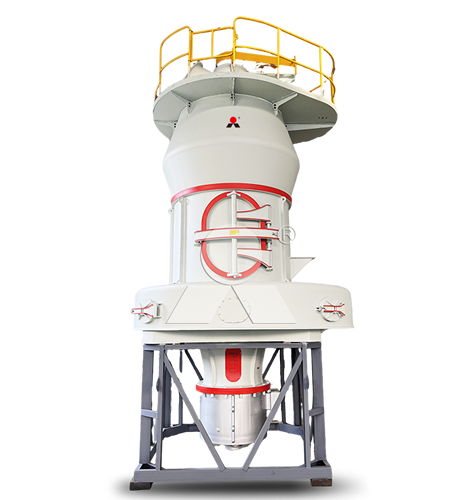
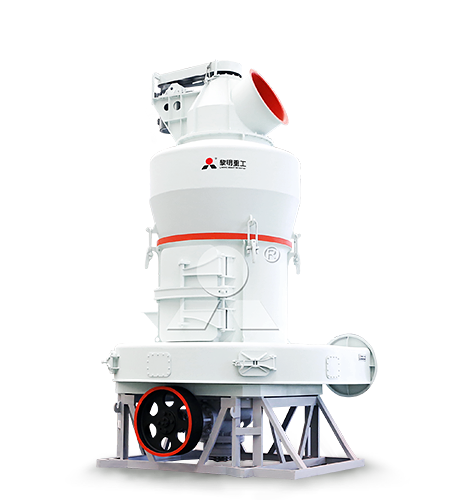
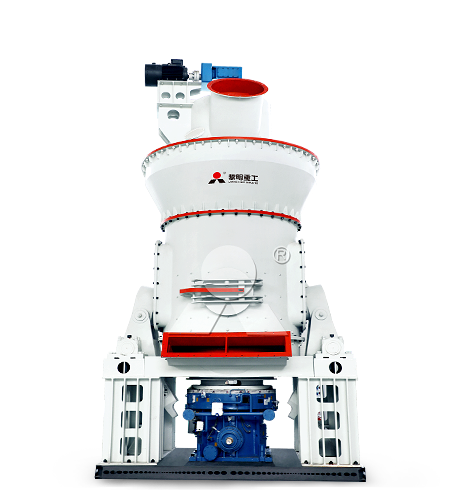
For both FGD gypsum and prepared phosphogypsum, mill selection should be based on feed moisture, target fineness, capacity, drying requirement and final application. MTW European Grinding Mill, LM Vertical Roller Mill and Raymond mill can be considered for suitable material.
MTW European Grinding Mill
MTW European Grinding Mill is suitable for small-to-medium capacity projects with prepared, relatively stable feed. It can be used for FGD gypsum after dewatering and drying as needed. It can also be used for phosphogypsum after the required material evaluation and pre-treatment have been completed.
For wet, sticky material, upstream preparation is important. MTW European Grinding Mill controls powder fineness but is not designed to replace major dewatering, impurity-treatment or high-moisture drying systems.
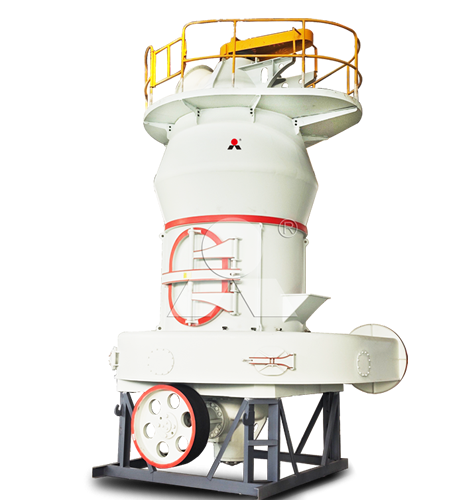
LM Vertical Roller Mill
LM Vertical Roller Mill is suitable for larger-capacity projects and material that benefits from integrated drying, grinding and classification. It is especially relevant for moist FGD gypsum and prepared phosphogypsum when a suitable heat source is available.
For high-volume phosphogypsum projects, LM Vertical Roller Mill can improve process integration after the source material has been evaluated and treated as needed. Its drying capability does not remove chemical impurities, so upstream treatment remains necessary when required by the final application.
Raymond Mill
Raymond mill can be considered for conventional gypsum powder production with moderate capacity requirements and dry, stable, pre-treated feed. It is generally more suitable for low-moisture FGD gypsum or adequately dried phosphogypsum than for wet filter cake or highly variable stockpile material.
Application Differences
FGD gypsum has an established reuse route in gypsum board, cement, selected building materials and some agricultural applications when material quality meets local requirements. The relatively high calcium sulfate content of many FGD sources can make it a practical substitute for natural gypsum after washing, dewatering and drying.
Phosphogypsum may also be used in cement, building materials, roads, soil-related applications and other industrial uses, but its reuse route must be selected more carefully. The material’s impurity profile, environmental performance and regulatory status can limit applications that may be available to FGD gypsum.
For both materials, final-use acceptance must be based on the receiving customer’s specification and local rules. A material suitable for cement use may not be suitable for gypsum board. A material accepted in one country may require additional evaluation or may be restricted in another.
How to Select the Right Process Route
A practical selection sequence is:
Identify whether the material is FGD gypsum or phosphogypsum and document the source process.
Collect representative samples from normal production and storage conditions.
Measure moisture, gypsum content, particle size, physical condition and source-specific impurities.
Define the intended final application and its acceptance criteria.
For FGD gypsum, evaluate washing quality, dewatering, drying, feeding and grinding requirements.
For phosphogypsum, complete additional chemical, environmental, radiological and regulatory evaluation where required.
Select necessary pre-treatment before choosing the final grinding system.
Set target fineness, finished-powder moisture and required production capacity.
Select MTW European Grinding Mill, LM Vertical Roller Mill or Raymond mill based on the prepared feed and process requirements.
Verify the finished powder through end-use trials and regular quality control.
Conclusion
FGD gypsum and phosphogypsum are both gypsum-containing industrial by-products, but their processing routes are different because their sources and impurity profiles are different. FGD gypsum processing often focuses on washing quality, dewatering, drying, stable feeding and controlled grinding. Phosphogypsum processing may require these steps plus impurity management, radiological assessment, compliance review and application-specific treatment.
For both materials, MTW European Grinding Mill is suitable for prepared small-to-medium capacity powder production. LM Vertical Roller Mill is suitable for larger-capacity projects and materials requiring integrated drying. Raymond mill is suitable for conventional powder production with dry, stable and adequately prepared feed.
The correct process should be selected from representative material analysis and final-use requirements. Grinding is essential for particle-size control, but successful reuse depends on the complete route from source evaluation and pre-treatment to finished-powder quality and verified end-use acceptance.
Related Industrial By-product Gypsum Solutions


LIMING at MiningMetals Uzbekistan 2026 | Booth B94
2026-10-22

LIMING Heavy Industry at MINEXPO Africa 2026 | Booth 133
2026-10-22
Liming Heavy Industry to Exhibit at bauma CHINA 2026 – Visit Us at Booth E6.510
2026-10-15
Meet Liming Heavy Industry at the 140th Canton Fair 2026
2026-10-13
Liming Heavy Industry to Attend the 140th Canton Fair
2026-09-25
Complete Mineral Processing Solutions
Convenient Reliable Professional Efficient Get Your Quote
Please feel free to submit your inquiry information to us. We will contact with you as soon as possible.
Our team will contact you as soon as possible.