


The best calcium carbonate grinding mill depends on the required particle-size distribution, especially D50 and D97, as well as raw material hardness, moisture, whiteness, capacity, final application, and whether the GCC powder will remain uncoated or receive stearic acid surface treatment.
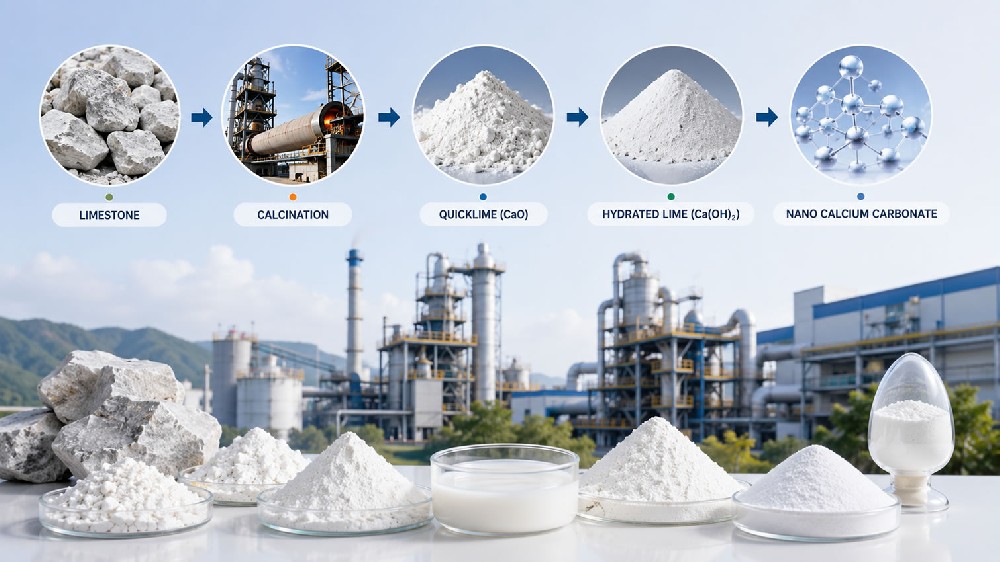
For ground calcium carbonate (GCC) producers, “5–45 μm” is not one product category. A 45 μm powder for wall putty or dry mortar, a 10–20 μm grade for general industrial filling, and a 5 μm or finer grade for paint, PVC, filler masterbatch, cable compounds, or rubber require different process priorities. Ultrafine calcium carbonate requires even tighter coordination between grinding, air classification, powder collection, conveying, and quality control.
Quick Answer: Which Mill Is Suitable for GCC?
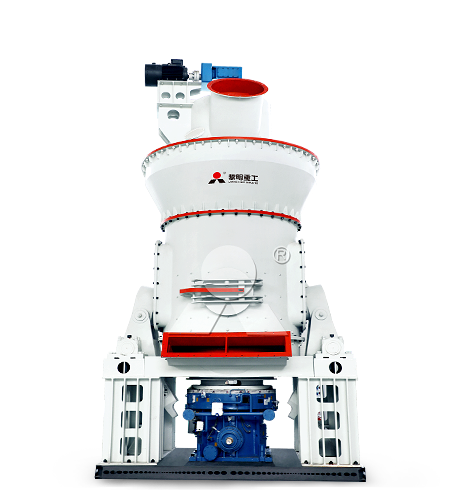
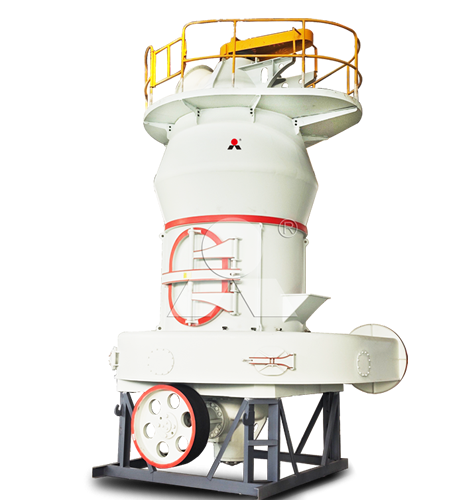
For many medium-fine calcium carbonate powder projects, an MTW Raymond Mill can be selected when the objective is stable dry grinding, controlled fineness, reliable operation, and an efficient process for general GCC markets. For large-scale continuous production, an LM Vertical Roller Mill may be considered where high throughput, integrated grinding and classification, and centralized plant operation are required.
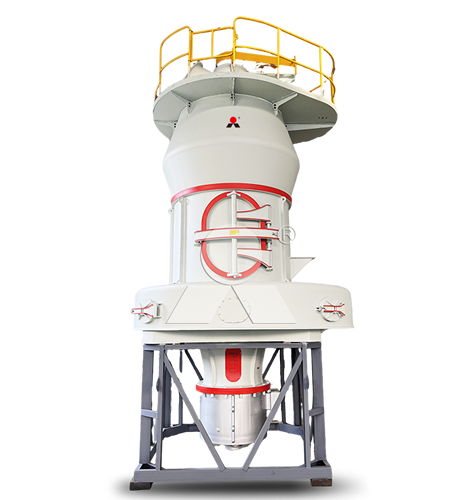
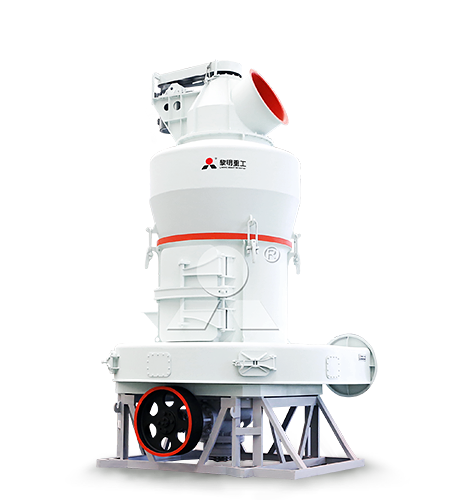
For fine and ultrafine GCC grades with stricter particle-size control, a LUM Ultrafine Mill or MW Micro Powder Mill can be evaluated according to the required D50, D97, capacity, raw material, and end-use market. The final machine selection should be based on material testing and process engineering, not on mesh alone.
| Target GCC Product | Typical Particle-Size Direction | Common End Uses | Equipment Selection Direction |
|---|---|---|---|
| Coarser GCC powder | Approximately 20–45 μm or application-defined mesh grades | Wall putty, dry mortar, construction materials, general filler | MTW Raymond Mill with collection, conveying, and packing systems |
| Medium-fine GCC powder | Approximately 10–20 μm with controlled coarse residue | Paint, rubber, PVC, ceramics, paper, general plastics | MTW Raymond Mill or LM Vertical Roller Mill, depending on capacity and specification |
| Fine GCC powder | Approximately 5–10 μm with controlled D97 | Fine coatings, PVC, filler masterbatch, cable compounds, rubber | LUM Ultrafine Mill or MW Micro Powder Mill with accurate air classification |
| Ultrafine GCC powder | Below approximately 5 μm, application-specific D50 and D97 | High-value plastics, premium coatings, paper, specialty filler products | LUM Ultrafine Mill or MW Micro Powder Mill with high-efficiency classification and strict quality control |
These ranges are general process directions. Final powder requirements differ by customer formula, national standard, resin system, coating process, product thickness, and quality target. A mill must be selected according to the complete target specification rather than a single particle-size number.
Why Particle Size Matters in GCC Production
Ground calcium carbonate is produced by mechanically grinding natural limestone, calcite, marble, or chalk into powder. The final powder may range from coarse mineral filler to fine and ultrafine grades for high-value industrial applications. GCC is used in plastics, paints, paper, rubber, adhesives, sealants, ceramics, glass, construction materials, and other products because it can provide volume, whiteness, rheology control, processing benefits, and cost efficiency.
However, particle size is more than a number on a technical data sheet. It influences powder surface area, oil absorption, resin demand, brightness perception, dispersion, product texture, coating smoothness, plastic surface appearance, and processing behavior.
| Particle-Size Parameter | Meaning | Why It Matters to GCC Buyers |
|---|---|---|
| D50 | The median particle size; 50% of particles are smaller and 50% are larger | Provides a fast indicator of average product fineness |
| D90 | 90% of particles are smaller than the stated size | Shows the upper portion of the size distribution |
| D97 | Approximately 97% of particles are smaller than the stated size | Helps control the coarse-particle tail that can cause defects |
| Specific surface area | The available surface area per gram of powder | Influences coating demand, oil absorption, binder demand, and dispersion behavior |
| Sieve residue | The amount retained on a specified sieve | Helps identify oversize particles, contamination, or agglomerates |
Two GCC products can have the same D50 but perform very differently. For example, two powders may both report D50 around 5 μm, but one may have a much larger D97 value and more coarse particles. In a thin plastic film, high-gloss coating, fine cable compound, or smooth extrusion product, the coarse-particle tail can create surface defects even when the D50 appears acceptable.
Understanding the 5–45 μm GCC Range
The 5–45 μm range covers several commercially distinct calcium carbonate markets. Selecting a mill without defining the end-use segment can result in excessive energy use, unstable fineness, unsuitable product quality, or a plant that cannot meet the most profitable product grades.
Approximately 20–45 μm GCC
Coarser GCC grades are commonly used in wall putty, dry mortar, construction fillers, selected ceramics, and general industrial products. In this range, the producer often prioritizes output, operating cost, stable feed, low maintenance, controlled residue, and consistent whiteness. Extremely narrow particle-size distribution may be less critical than in premium plastic or coating grades.
Approximately 10–20 μm GCC
Medium-fine GCC is widely relevant to paint, rubber, PVC, paper, ceramics, glass, and general polymer filling. The requirements usually become stricter for particle-size consistency, whiteness, coarse-particle control, moisture, and product stability. Many projects in this range require a well-matched grinding and classification system rather than a basic powder mill alone.
Approximately 5–10 μm GCC
Fine GCC grades are often used in higher-value plastics, masterbatch, PVC products, cable compounds, rubber, coatings, and specialty fillers. Customers may require lower coarse residue, tighter D97 control, higher whiteness, low moisture, and reliable dispersion. For coated GCC, the powder must also be suitable for uniform stearic acid surface treatment.
Ultrafine GCC Below Approximately 5 μm
Ultrafine powder production requires precise control. At this level, specific surface area rises significantly, and powder handling becomes more sensitive. Classification efficiency, airflow control, dust collection, sealing, conveying, and anti-agglomeration measures become central to product quality. Ultrafine GCC is commonly associated with demanding paper, coatings, plastics, masterbatch, PVC, rubber, and specialty mineral applications.
Choose the Mill by Application, Not Mesh Alone
“Mesh” remains common in commercial inquiries, but it is not sufficient for high-value calcium carbonate projects. Mesh only approximates sieve opening and does not fully describe the particle-size distribution produced by a modern dry grinding and air classification system.
When a customer requests “800 mesh calcium carbonate,” the equipment supplier should clarify whether the buyer means:
A nominal mesh designation only
A required D50 value
A D97 or D98 top-cut limit
A maximum sieve residue requirement
A specific surface area target
A powder grade for paint, PVC, masterbatch, cable, rubber, paper, or construction use
A coated or uncoated GCC product
For a reliable grinding plant design, a customer should provide both the required median particle size and the acceptable coarse-particle tail. This is particularly important for thin film, high-gloss coatings, cable compounds, fine plastic extrusion, and applications where surface smoothness is important.
| End Use | What the Buyer Usually Values | Critical Powder-Control Focus |
|---|---|---|
| Wall putty and dry mortar | Stable output, cost control, whiteness, suitable texture | Reliable coarse-to-medium grinding and low residue |
| Matte paint and architectural coating | Whiteness, particle distribution, rheology, consistent batch quality | Fine classification and controlled coarse particles |
| PE/PP filler masterbatch | Dispersion, low moisture, surface quality, high loading potential | Fine powder, narrow distribution, low coarse tail, coating readiness |
| PVC pipe, profile, and sheet | Process stability, whiteness, smooth appearance, cost-performance ratio | Consistent D50/D97, moisture control, surface treatment when required |
| Cable compounds | Fine powder, reliable dispersion, low contamination, stable processing | Strict classification, cleanliness, low moisture, controlled surface treatment |
| Rubber | Filler distribution, viscosity control, compound economics | Particle-size selection, compatibility, and stable supply quality |
| Paper and specialty coating | Brightness, smoothness, controlled fineness, low defect risk | Fine or ultrafine powder with strict distribution control |
MTW Raymond Mill for Medium-Fine GCC
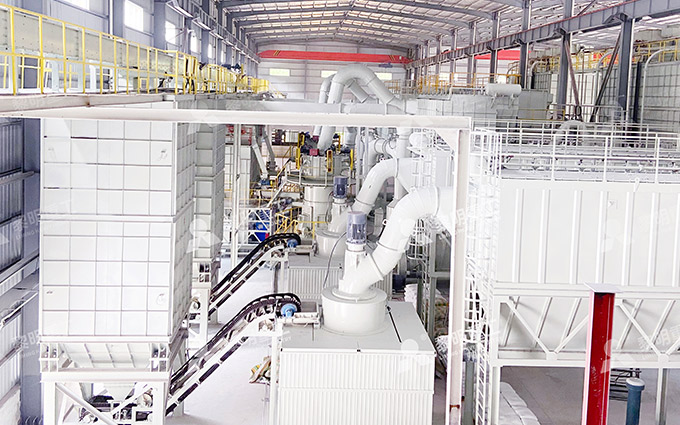
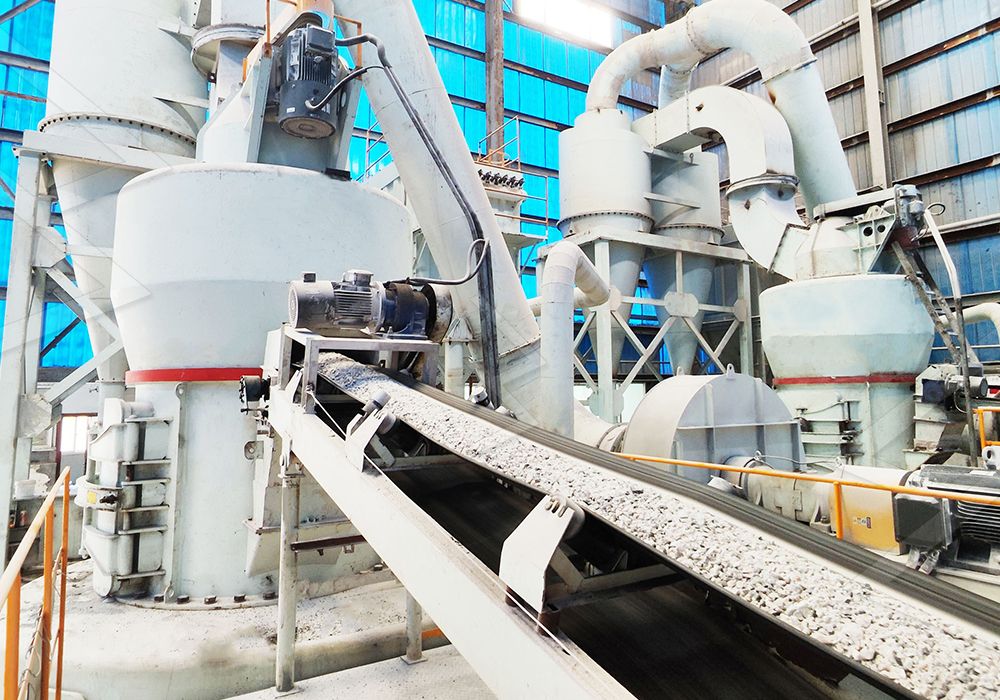
An MTW Raymond Mill is suitable for many calcium carbonate grinding projects that require stable production of medium-fine powder. It can be integrated with feeding, grinding, classification, collection, dust removal, conveying, storage, and packing systems to form a practical dry-process GCC production line.
For projects targeting general filler, construction-grade calcium carbonate, wall putty, selected paint grades, ceramic minerals, rubber filling, or medium-fine uncoated GCC, an MTW Raymond Mill can be an appropriate starting point. The actual fineness and capacity depend on material hardness, feed size, moisture, desired powder distribution, system configuration, and operating conditions.
When evaluating an MTW Raymond Mill for calcium carbonate, focus on:
Required finished powder D50 and D97
Expected capacity in tons per hour
Raw material moisture and maximum feed size
Need for dynamic classification and top-cut control
Dust collection and environmental requirements
Need for a future coating or modification section
Finished-product storage and packaging format
For higher-value fine GCC, the project may require a different solution with tighter classification capability. The mill should therefore be selected according to the target product portfolio rather than only the initial budget.
LM Vertical Roller Mill for Large-Scale GCC Production
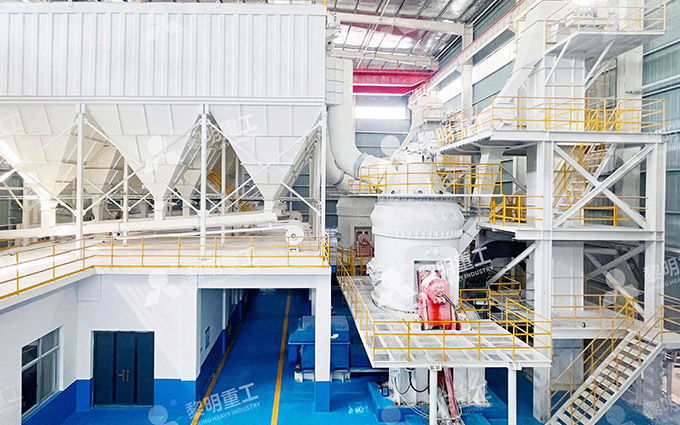
An LM Vertical Roller Mill can be considered for calcium carbonate producers planning larger-scale continuous powder production. A vertical roller mill integrates grinding, classification, drying capability under suitable conditions, and pneumatic conveying principles into a compact process arrangement.
For GCC projects, the value of an LM Vertical Roller Mill is not simply its size. It is the ability to build a centralized production system with stable material feeding, continuous grinding, adjustable classification, powder collection, and process automation. This can be important for producers serving multiple industrial customers with a stable volume requirement.
LM Vertical Roller Mill selection should consider:
Annual production target and required operating hours
Raw limestone or calcite hardness and abrasiveness
Feed size after crushing
Raw material moisture and local climate conditions
Target product grades and required flexibility
Required D50, D97, sieve residue, and whiteness stability
Site area, building layout, electrical supply, and maintenance access
Dust-control standards and automation requirements
For a producer that plans to supply both medium-fine GCC and higher-value fine grades, the overall plant may require separate or carefully configured process sections. Equipment decisions should be based on the commercial mix of products, not only on the maximum possible tonnage.
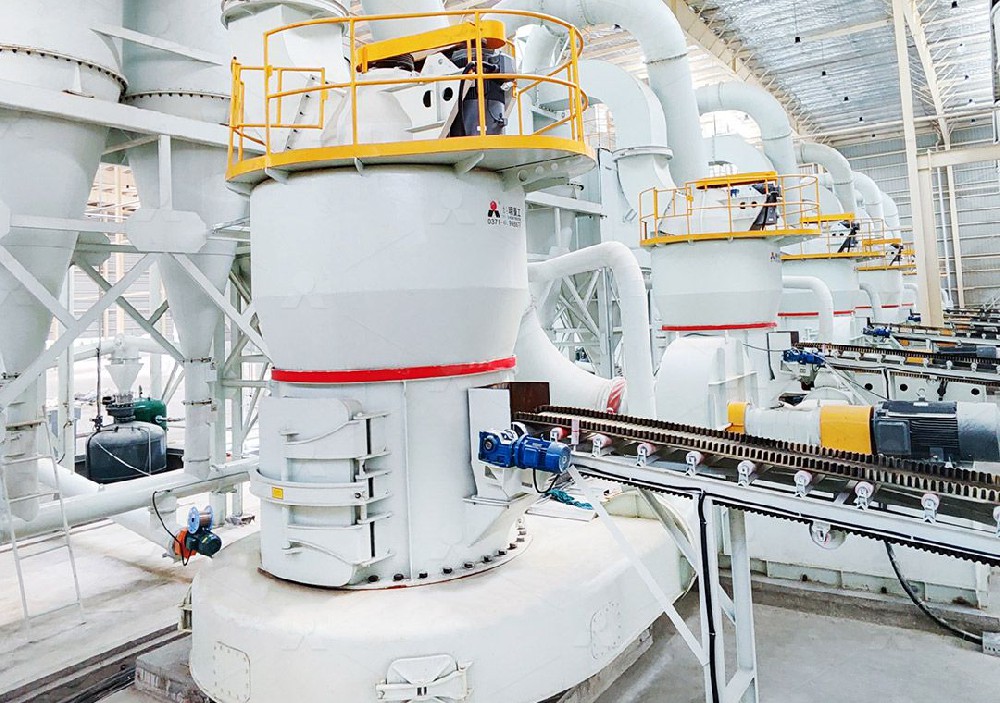
LUM Ultrafine Mill for Fine and Ultrafine GCC
A LUM Ultrafine Mill is designed for fine and ultrafine non-metallic mineral powder production. In calcium carbonate projects, it can be evaluated when the producer targets finer GCC grades that require controlled particle distribution, reduced coarse particles, and stable ultrafine powder output.
Fine and ultrafine calcium carbonate production is especially relevant for producers serving premium paint, coating, paper, PVC, filler masterbatch, cable compound, rubber, adhesive, sealant, and specialized plastic markets. These applications often require a tighter relationship between the D50 value and the D97 top cut.
When selecting a LUM Ultrafine Mill for GCC, the project team should define:
Required final D50 and D97 values for each planned product grade
Whether the powder will be sold uncoated or stearic-acid-coated
Specific surface area target and acceptable oil absorption
Required moisture level before final packing or coating
Need for multiple product grades and rapid fineness adjustment
Customer requirements for powder cleanliness, whiteness, and sieve residue
Powder collection efficiency and system sealing requirements
For coated GCC, an ultrafine grinding section must be coordinated with the coating process. Finer powder has a larger surface area, which can change stearic acid demand and coating behavior. The final system should therefore include suitable powder storage, thermal conditioning, additive dosing, high-intensity coating, cooling, and packaging equipment.
MW Micro Powder Mill for Ultrafine Calcium Carbonate
An MW Micro Powder Mill can be considered for calcium carbonate projects that require ultrafine powder and precise powder collection. It is relevant when the producer seeks to move from general mineral filling toward fine or ultrafine value-added GCC markets.
Ultrafine powder projects demand close process control because very fine particles can be more sensitive to moisture, agglomeration, powder loss, conveying behavior, and changes in airflow. The grinding system must work together with the classifier, fan, dust collector, finished-product collector, silo, and packing section.
Key questions for an MW Micro Powder Mill project include:
What is the required final particle-size distribution, not only the nominal mesh?
What maximum D97 or D98 value is acceptable?
What throughput is required at the target fineness?
What is the whiteness and chemical purity of the raw calcite or limestone?
Will the customer use the powder for plastic, paper, paint, PVC, rubber, or coating?
Does the project require coated GCC production after grinding?
What level of automation, quality control, and packaging capacity is required?
For high-value ultrafine products, the complete plant should include a quality-control plan. A particle-size analyzer, whiteness measurement, moisture testing, sieve-residue testing, and application-related checks help the producer maintain a product that customers can use consistently.
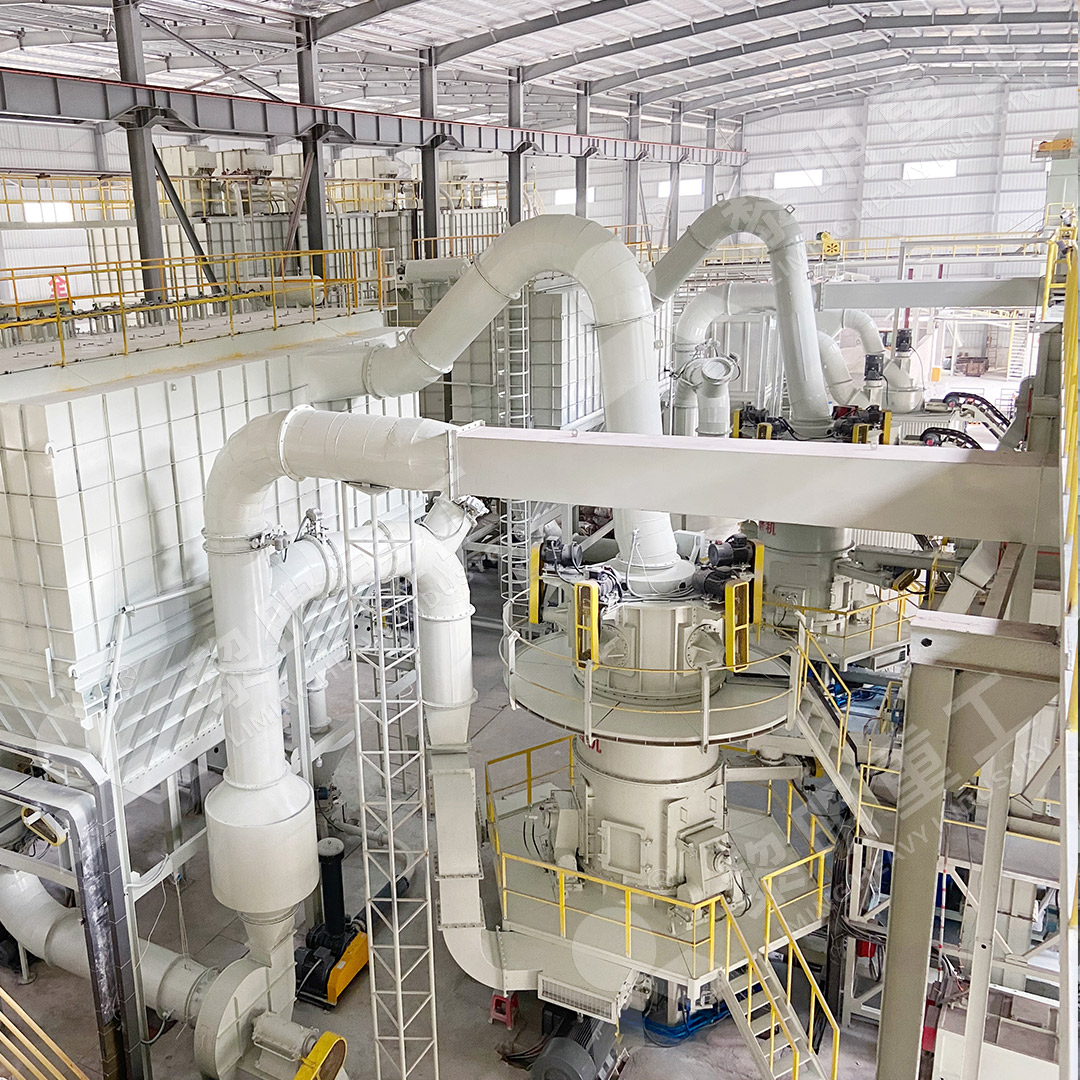
Grinding, Classification, and Powder Collection Work Together
A calcium carbonate mill cannot be evaluated in isolation. The final powder is produced by a complete process system. Even a high-performance grinding machine may not deliver the required GCC quality if the classifier, fan, cyclone, pulse-jet filter, conveying system, or storage arrangement is improperly matched.
A typical dry GCC grinding line includes:
Raw limestone or calcite receiving and storage
Primary and secondary crushing where required
Vibrating or belt feeding system
Grinding mill
Dynamic air classifier
Fan system and airflow control
Cyclone collector or powder collector
Pulse-jet bag filter or other dust-removal equipment
Conveying system and finished-product silo
Automatic packing machine, jumbo bag station, or bulk loading system
For coated calcium carbonate, the plant normally requires additional sections:
Fine powder buffer silo or conditioning system
Stearic acid storage, heating, melting, and metering
Surface-treatment or coating machine
High-intensity mixing zone
Cooling and, where required, final classification
Dedicated finished-product storage and packing
The proper process flow depends on whether the project is focused on uncoated GCC, coated GCC, or flexible production of both. A plant designed for general 45 μm construction filler will not automatically meet the quality requirements of 5 μm coated GCC for premium filler masterbatch or cable compounds.
How to Select a Mill for Coated GCC Production
Coated GCC production requires the same fundamental grinding and classification principles as uncoated GCC, but it adds surface-treatment requirements. The producer must first make a stable powder with controlled fineness, then apply the coating agent consistently.
_1767930326611.jpg)
For a coated calcium carbonate project, review the following process factors:
| Selection Factor | Why It Is Important | Effect on Plant Design |
|---|---|---|
| Target D50 and D97 | Determines grinding and classification duty | Influences mill selection, classifier capacity, and circulation load |
| Specific surface area | Changes coating demand and powder behavior | Influences stearic acid dosage and coating intensity |
| Raw material moisture | High moisture can reduce coating uniformity and powder flow | May require drying, conditioning, or tighter storage control |
| Coating agent and dosage | Defines surface treatment and compatibility target | Requires accurate storage, heating, metering, and mixing equipment |
| Final application | Different resins and products need different powder behavior | Determines fineness, coating level, quality-control plan, and packaging |
| Annual capacity | Determines equipment scale and automation need | Influences mill model, number of lines, silo volume, and packing capacity |
For example, a project serving wall putty may prioritize high output and stable medium-fine powder. A project serving PE/PP filler masterbatch may need finer GCC, lower moisture, a tightly controlled coarse-particle tail, and stearic acid coating. Although both projects process limestone or calcite, their equipment configuration and quality-control priorities are different.
Common Mill Selection Mistakes
Calcium carbonate projects often face avoidable problems when equipment selection is based on incomplete specifications. The following mistakes can lead to poor product quality, low capacity, high energy consumption, or difficulty entering higher-value markets.
| Common Mistake | Why It Causes Problems | Better Approach |
|---|---|---|
| Selecting by mesh only | Mesh does not define the full particle-size distribution | Define D50, D97, sieve residue, and final application |
| Ignoring raw material quality | Low whiteness, high iron, high silica, or variable hardness cannot be solved by mill selection alone | Test representative raw material before final engineering |
| Choosing capacity at a coarser reference fineness | Output normally changes as required fineness becomes stricter | Confirm guaranteed capacity at the actual target product specification |
| Underestimating classification | Coarse particles can damage powder performance even when D50 is acceptable | Select grinding and classification as one system |
| Adding coating without moisture control | High moisture can reduce coating quality and powder flow | Control feed, powder, storage, and packing moisture |
| Ignoring the final customer application | One GCC grade cannot optimize every market | Build the product portfolio around target industries and customer tests |
| Installing only a mill without complete handling equipment | Poor collection, conveying, storage, or packing can reduce final product quality | Design a complete production line with matched auxiliary equipment |
What Information Is Needed for a GCC Grinding Mill Proposal?
To recommend the right calcium carbonate grinding solution, an equipment supplier needs project data that connects the raw mineral to the required final powder. The more complete the information, the more accurate the process design and quotation can be.
_1767929649018.jpg)
Raw material type: limestone, calcite, marble, chalk, or another calcium carbonate mineral.
Raw material analysis: CaCO3 content, MgCO3, SiO2, Fe2O3, whiteness, and other relevant data.
Physical properties: maximum feed size, Mohs hardness, abrasiveness, and moisture.
Target powder specification: D50, D97, mesh requirement, specific surface area, sieve residue, moisture, and whiteness.
Product type: uncoated GCC, stearic-acid-coated GCC, or both.
Final application: paint, putty, paper, PVC, PE/PP masterbatch, cable, rubber, ceramics, glass, or construction materials.
Required capacity: tons per hour, tons per day, or tons per year for each product grade.
Plant location: local voltage and frequency, site layout, altitude, climate, dust-control standards, and transport restrictions.
Packaging: valve bags, PP-PE bags, jumbo bags, bulk loading, palletizing, or container-loading requirements.
Project status: new plant, capacity expansion, product upgrade, replacement equipment, or coated GCC conversion project.
Liming Heavy Industry can evaluate these conditions and recommend a calcium carbonate grinding process centered on the appropriate MTW Raymond Mill, LM Vertical Roller Mill, LUM Ultrafine Mill, or MW Micro Powder Mill, with supporting crushing, classification, powder collection, conveying, storage, and packaging equipment.
Frequently Asked Questions
What is GCC?
GCC means ground calcium carbonate. It is produced by mechanically grinding natural calcium carbonate minerals such as limestone, calcite, marble, or chalk into powder with a controlled particle-size distribution.
What is the difference between 5 μm and 45 μm calcium carbonate?
A 5 μm grade is much finer and has a higher specific surface area than a 45 μm grade. Fine powder is generally used in more demanding applications such as coatings, plastics, PVC, masterbatch, cable compounds, and specialty fillers, while coarser powder is commonly used in construction materials and general mineral filling.
Why are D50 and D97 both important for calcium carbonate?
D50 describes the median particle size, while D97 indicates the coarse-particle limit for most of the powder. A low D50 alone does not guarantee a smooth, consistent product if the powder still contains too many large particles.
Can an MTW Raymond Mill produce calcium carbonate powder?
Yes. An MTW Raymond Mill can be used for many medium-fine calcium carbonate grinding projects. The suitable finished-powder range and capacity depend on the raw material, system design, classification configuration, and required quality standard.
_1761361296291.jpg)
When should a producer choose an LM Vertical Roller Mill?
An LM Vertical Roller Mill can be considered for larger-scale, continuous GCC projects that require integrated grinding, classification, centralized process control, and stable production. The final decision should be based on capacity, target powder grades, raw material properties, and site conditions.
Which mill is suitable for ultrafine calcium carbonate?
For fine and ultrafine GCC projects, a LUM Ultrafine Mill or MW Micro Powder Mill can be evaluated. The final selection depends on target D50, D97, capacity, raw material quality, product application, and whether the powder will be coated.
Can one GCC plant produce several fineness grades?
Yes. A plant can be designed to produce multiple grades if the grinding, classification, storage, control system, and product-change procedures are configured accordingly. The degree of flexibility depends on the product range and required quality consistency.
Does coated GCC require different equipment from uncoated GCC?
Both require crushing, grinding, classification, collection, and packing. Coated GCC additionally requires stearic acid handling, accurate dosing, thermal conditioning, high-intensity surface treatment, cooling, and measures to control product flow and cross-contamination.
What causes low output in a calcium carbonate grinding line?
Low output may result from wet or oversized feed, unsuitable mill selection, excessively fine target specification, incorrect classifier setting, unstable airflow, worn components, poor feeding, inadequate dust collection, or raw material that differs from the original design basis.
What should a new calcium carbonate investor do before buying equipment?
Define the target market and powder grades, test the raw material, collect customer quality requirements, estimate realistic demand, determine the required capacity, and request a process design based on D50, D97, moisture, whiteness, application, and coating requirements.
Conclusion: Start with the GCC Product Specification
Calcium carbonate grinding mill selection should begin with the final product, not with a machine name. A 5–45 μm GCC range includes multiple markets with different quality requirements, profitability levels, and process needs. Producers should define the required D50, D97, whiteness, moisture, coating status, annual capacity, and final application before selecting equipment.
_1761355701097.jpg)
For medium-fine GCC, an MTW Raymond Mill can support many practical dry grinding projects. For larger-scale continuous production, an LM Vertical Roller Mill may be appropriate. For fine and ultrafine calcium carbonate products, LUM Ultrafine Mill and MW Micro Powder Mill solutions can be evaluated where stricter particle-size distribution and product-quality control are required.
Liming Heavy Industry provides grinding equipment and integrated process solutions for limestone and calcite powder production. By matching crushing, grinding, air classification, powder collection, conveying, storage, coating, and packing systems to the actual GCC specification, producers can build a plant designed for stable output, controllable quality, and long-term competitiveness in the calcium carbonate market.
Related Industry News


Meet Liming Heavy Industry at the 140th Canton Fair 2026
2026-10-13

Liming Heavy Industry to Attend the 140th Canton Fair
2026-09-25
Liming Heavy Industry at bauma CONEXPO INDIA 2026 | Booth 5-C6
2026-09-07
Turnkey Raw Mill Cement Plant in Saudi Arabia: Design and Installation
2026-09-03
Cement Raw Mill Supplier in Indonesia: Cost and Configuration Analysis
2026-09-01
Complete Mineral Processing Solutions
Convenient Reliable Professional Efficient Get Your Quote
Please feel free to submit your inquiry information to us. We will contact with you as soon as possible.
Our team will contact you as soon as possible.