


Coated calcium carbonate powder is produced by grinding high-purity limestone or calcite into controlled GCC particle sizes, classifying the powder to remove oversize particles, and applying a uniform surface treatment—commonly stearic acid—to improve compatibility with plastics, rubber, PVC, masterbatch, cable compounds, and other organic systems.
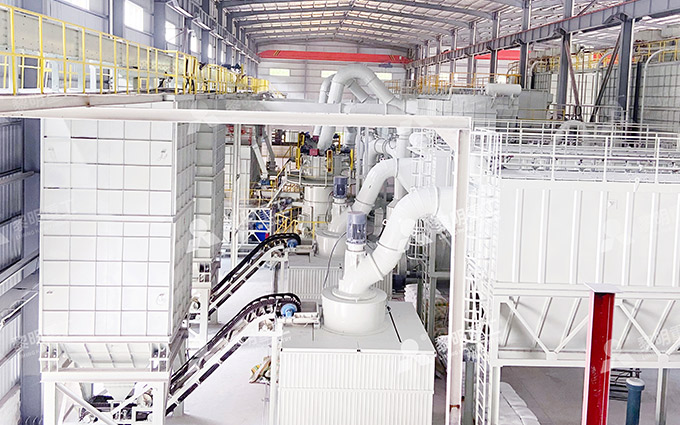
A successful coated ground calcium carbonate (GCC) project requires more than selecting a grinding mill. Product quality depends on the raw material, target particle-size distribution, moisture control, powder temperature, stearic acid dosing accuracy, coating intensity, classification efficiency, dust collection, storage, and packaging. For investors and calcium carbonate producers, the correct process design should begin with the target market and final powder specification—not with a machine model alone.
What Is Coated Calcium Carbonate Powder?
Coated calcium carbonate is a natural calcium carbonate powder whose particle surface has been modified with an organic treatment agent. For GCC used in plastic and rubber applications, the most common treatment agent is stearic acid. The coating changes the surface behavior of calcium carbonate from relatively hydrophilic and mineral-like to more hydrophobic and compatible with many organic polymers.
Natural ground calcium carbonate is commonly made from white limestone, calcite, marble, or other high-calcium mineral sources. After crushing, grinding, and air classification, the fine GCC powder can be sold as an uncoated mineral filler. When the same powder is further treated with stearic acid under controlled temperature and mixing conditions, it becomes coated calcium carbonate.
In international markets, coated GCC may also be described as:
Stearic-acid-coated calcium carbonate
Surface-treated calcium carbonate
Activated calcium carbonate
Modified GCC powder
Coated calcite powder
However, these names alone do not guarantee the same quality. Buyers should compare the coating agent, coating dosage, particle-size distribution, whiteness, moisture, oil absorption, activation level, residue control, and performance in the final customer formulation.
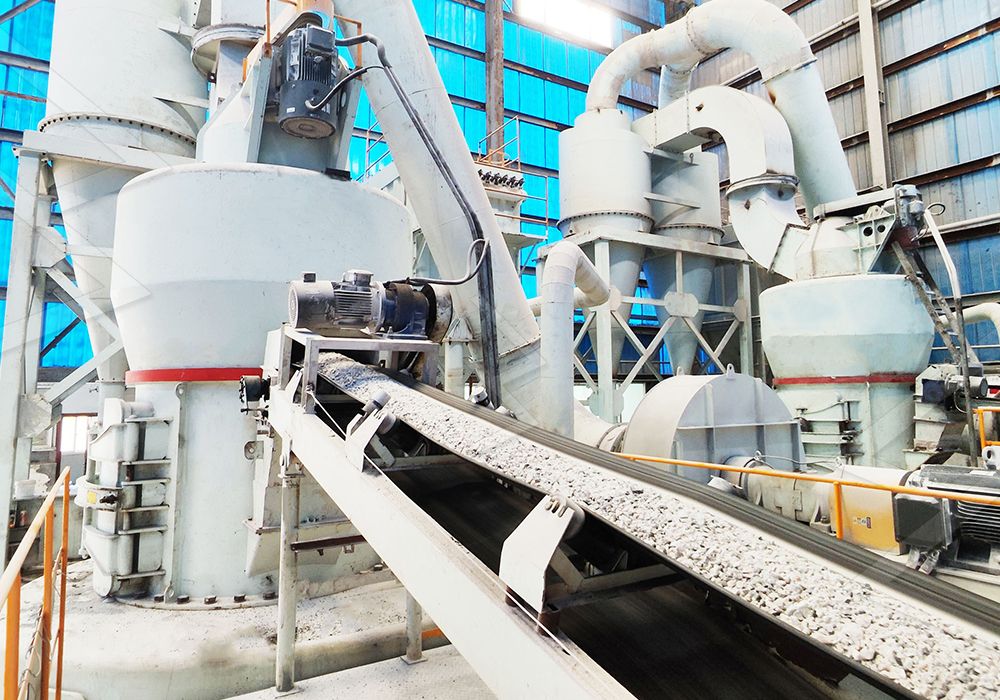
Why Is Calcium Carbonate Coated with Stearic Acid?
Calcium carbonate is an inorganic mineral filler, while many end-use materials—including polyethylene, polypropylene, PVC, EVA, synthetic rubber, sealants, and certain adhesives—are organic polymer systems. Without proper surface treatment, untreated calcium carbonate may have weaker compatibility with nonpolar or low-polarity resins and may agglomerate more easily during mixing.
Stearic acid has a long hydrocarbon chain. When it is uniformly distributed on the calcium carbonate surface, it can improve powder wettability in organic systems and help reduce direct mineral-to-mineral attraction. The goal is to make the powder easier to disperse in the polymer matrix and more stable during conveying, mixing, extrusion, pelletizing, or compounding.
| Performance Area | Potential Benefit of Stearic Acid Coating | Practical Importance |
|---|---|---|
| Powder surface behavior | More hydrophobic and oleophilic particle surface | Improves suitability for many resin and rubber systems |
| Dispersion | More uniform distribution in compatible polymer formulations | Can improve consistency, appearance, and process stability |
| Moisture resistance | Lower affinity for moisture compared with untreated mineral surfaces | Useful for storage, conveying, and plastic-processing conditions |
| Processing flow | Reduced friction and improved powder handling in suitable formulations | Relevant to mixing, extrusion, and high-filler compounding |
| Oil absorption | May be lower than comparable uncoated material | Can affect resin, plasticizer, or binder demand |
| Filler loading | May support higher loading in properly engineered formulas | Important for masterbatch, PVC, cable, and rubber producers |
Coating is not a substitute for proper particle-size control. A coarse, poorly classified coated product may still perform poorly in high-value applications. Likewise, an ultrafine powder with excessive stearic acid, inconsistent treatment, or high moisture may create processing problems. Stable quality comes from the combined control of grinding, classification, drying or thermal conditioning, coating, cooling, and packing.
Coated Calcium Carbonate Production Process
The most common commercial route for coated GCC is a dry process. It begins with carefully selected limestone or calcite and ends with a fine, classified, surface-treated powder ready for bulk loading or bagged export. The exact layout differs by product target, raw material, capacity, and automation level, but the core process follows the sequence below.
Raw material selection and quality testing
Crushing and controlled feed preparation
Grinding to the target powder fineness
Air classification and oversize control
Powder heating or thermal conditioning where required
Stearic acid melting, dosing, and feeding
High-intensity mixing and surface coating
Final classification, cooling, collection, and storage
Automatic weighing, bagging, bulk loading, or container preparation
For coated GCC used in plastics, the production line should be designed as an integrated system. Grinding and coating should not be treated as unrelated stages because powder fineness, specific surface area, temperature, residence time, and conveying conditions directly affect coating quality.
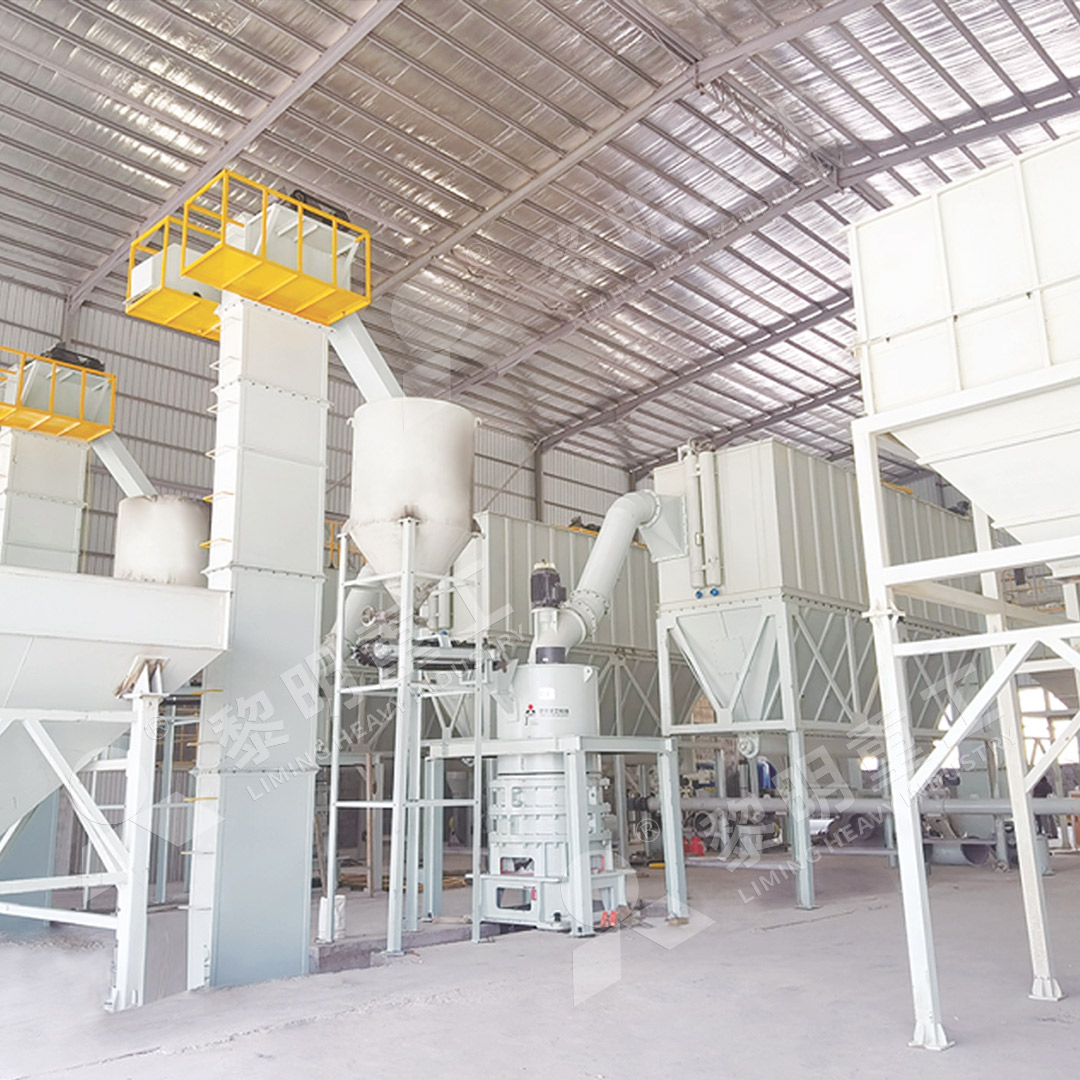
Step 1: Select the Right Limestone or Calcite
The first quality decision is the mineral source. High-grade coated calcium carbonate begins with stable, high-whiteness limestone or calcite. Even the best milling and coating equipment cannot fully correct a raw material with poor brightness, unstable chemistry, excessive silica, high iron contamination, or inconsistent hardness.
Before designing a coated GCC plant, test the raw material for:
CaCO3 content and mineralogical composition
Whiteness, brightness, and color consistency
Fe2O3, SiO2, MgCO3, Al2O3, and other impurities
Mohs hardness and grindability
Natural moisture and seasonal moisture variation
Maximum rock size after quarrying or primary crushing
Variation between mine benches, stockpiles, or suppliers
For high-whiteness plastic, PVC, masterbatch, and cable applications, raw material consistency is especially important. A plant may achieve the required D50 and D97, but inconsistent whiteness or iron content can still lead to customer complaints about color, grayness, or appearance in finished products.
Step 2: Crush and Prepare the Feed Material
After raw material selection, limestone or calcite is crushed to a feed size suitable for the grinding system. The target feed size depends on the selected mill, material hardness, plant capacity, and process layout. Stable feed size helps maintain mill loading, reduces power fluctuations, and supports consistent product fineness.
A practical crushing and feed-preparation system may include:
Primary crusher for large run-of-mine limestone or calcite
Secondary crushing stage where finer feed is required
Vibrating feeder or belt feeder for stable mill feeding
Magnetic separation to reduce the risk of metallic contamination
Buffer silo to separate upstream crushing fluctuations from grinding operations
Dust collection and enclosed transfer points for clean plant operation
The goal is not merely to make the stone smaller. The goal is to create a clean, stable, correctly sized feed that allows the grinding and classification system to operate continuously and predictably.
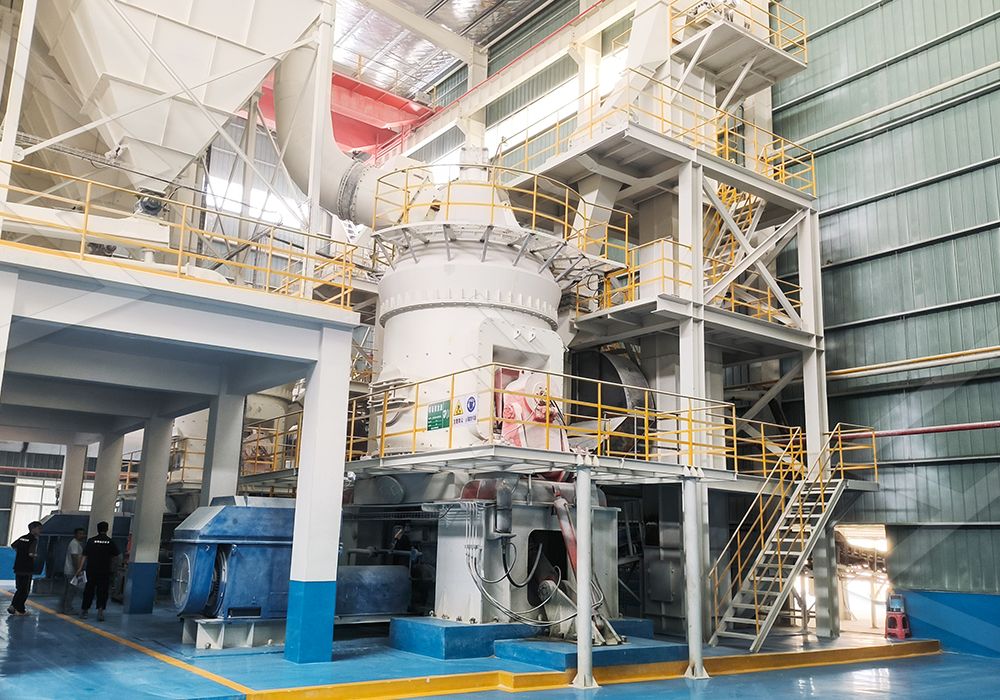
Step 3: Grind the Calcium Carbonate to the Required Fineness
Grinding is the stage that transforms crushed limestone or calcite into GCC powder. The required equipment depends on the final powder grade, including target D50, D97, specific surface area, capacity, and end-use application.
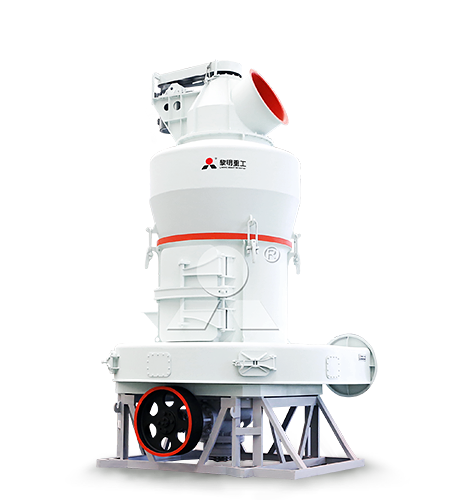
For ordinary or medium-fine GCC used in putty, construction materials, selected paint grades, and general industrial filling, a MTW Raymond Mill can be configured for efficient milling, classification, collection, and conveying. It is suitable when the project requires stable output, controlled fineness, and a mature dry powder process.
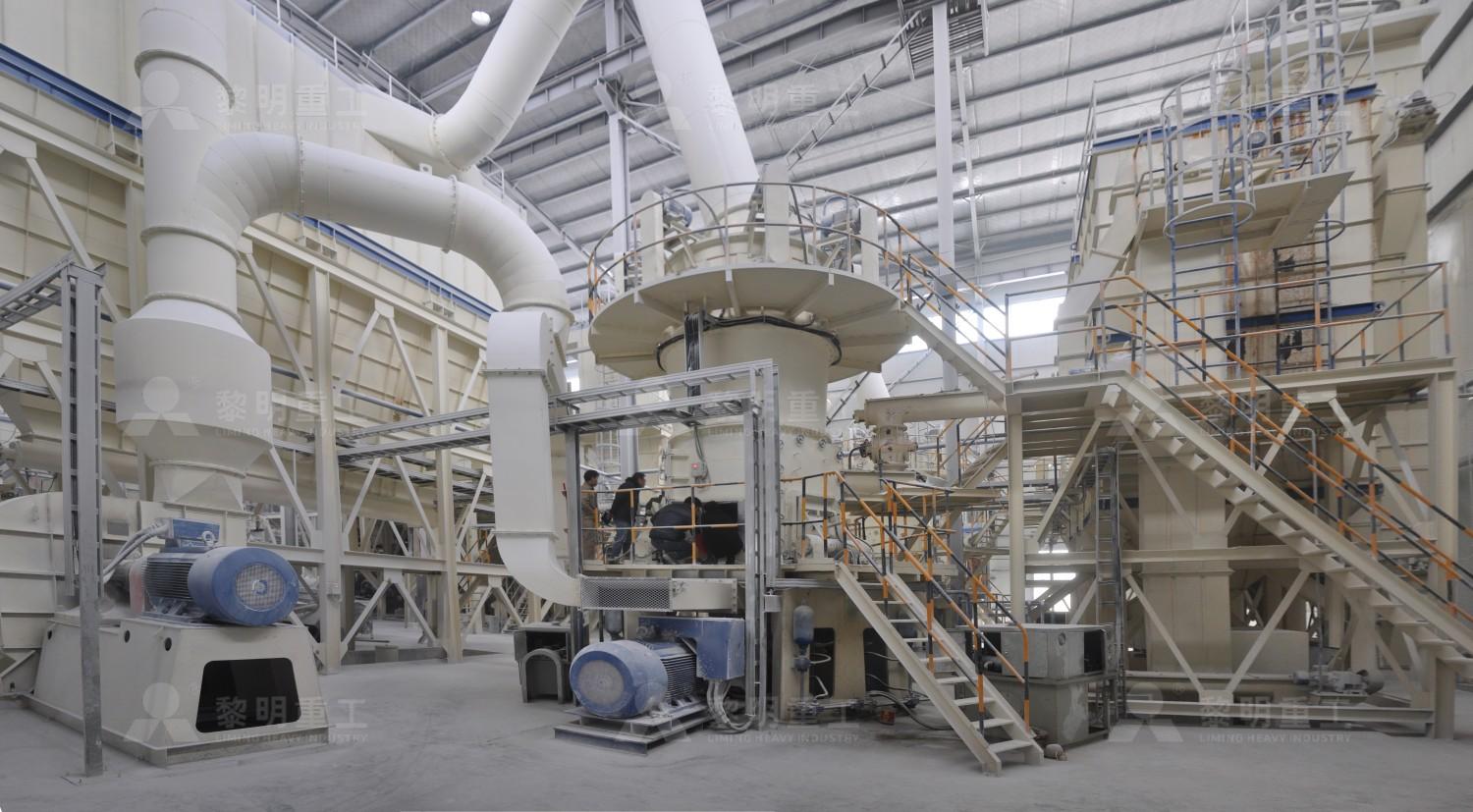
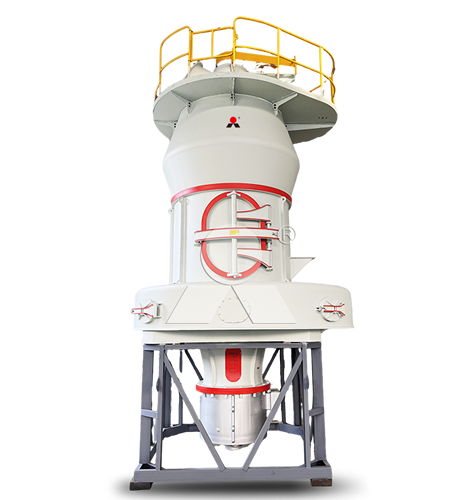
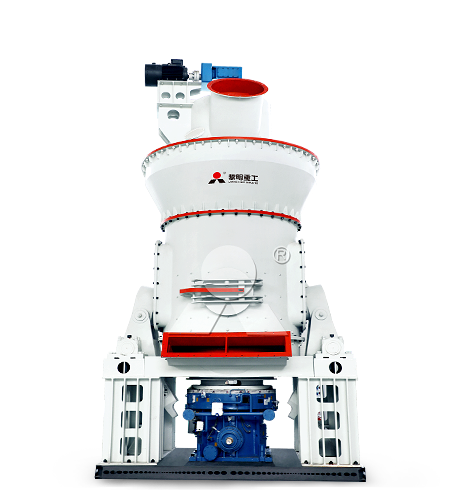
For larger-scale continuous calcium carbonate production, an LM Vertical Roller Mill can be considered where the project requires high throughput, centralized operation, integrated grinding and classification, and efficient powder production. Its suitability should be determined through raw-material testing, target particle-size requirements, and production capacity calculations.
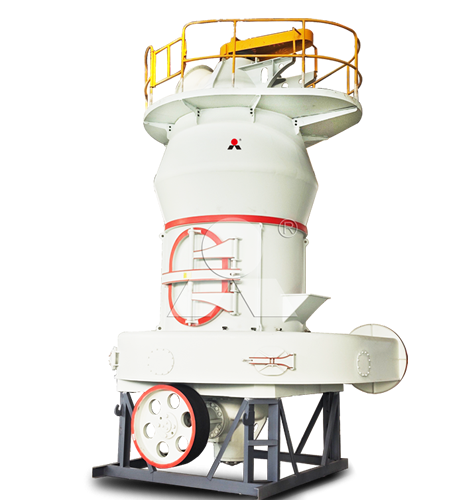
For finer GCC grades used in higher-value applications, including selected plastic, coating, and paper grades, a LUM Ultrafine Mill or MW Micro Powder Mill may be selected according to the required fineness, top-cut control, hourly output, and particle-size distribution. Fine and ultrafine calcium carbonate production requires close coordination between grinding force, classifier performance, airflow, powder collection, and system sealing.
| Target Product Direction | Typical Priority | Grinding and Classification Consideration |
|---|---|---|
| General uncoated GCC | Stable output and cost efficiency | Medium-fine grinding with reliable dust collection and finished-product control |
| Paint and paper GCC | Whiteness, controlled particle distribution, low coarse residue | Fine grinding and accurate air classification |
| Plastic and masterbatch GCC | Fine powder, low moisture, narrow distribution, coating readiness | Fine or ultrafine grinding followed by precise classification and surface treatment |
| Coated GCC for PVC, cable, and rubber | Dispersion, top-cut control, consistent coating quality | Integrated fine grinding, classification, thermal conditioning, coating, cooling, and packing |
A correct mill selection should never be based on “mesh” alone. Two powders described by the same nominal mesh may differ greatly in D50, D97, specific surface area, coarse-particle tail, whiteness, oil absorption, and downstream performance. For high-value coated GCC, the desired particle-size distribution should be defined clearly before final equipment selection.
Step 4: Classify the Powder and Control D50 and D97
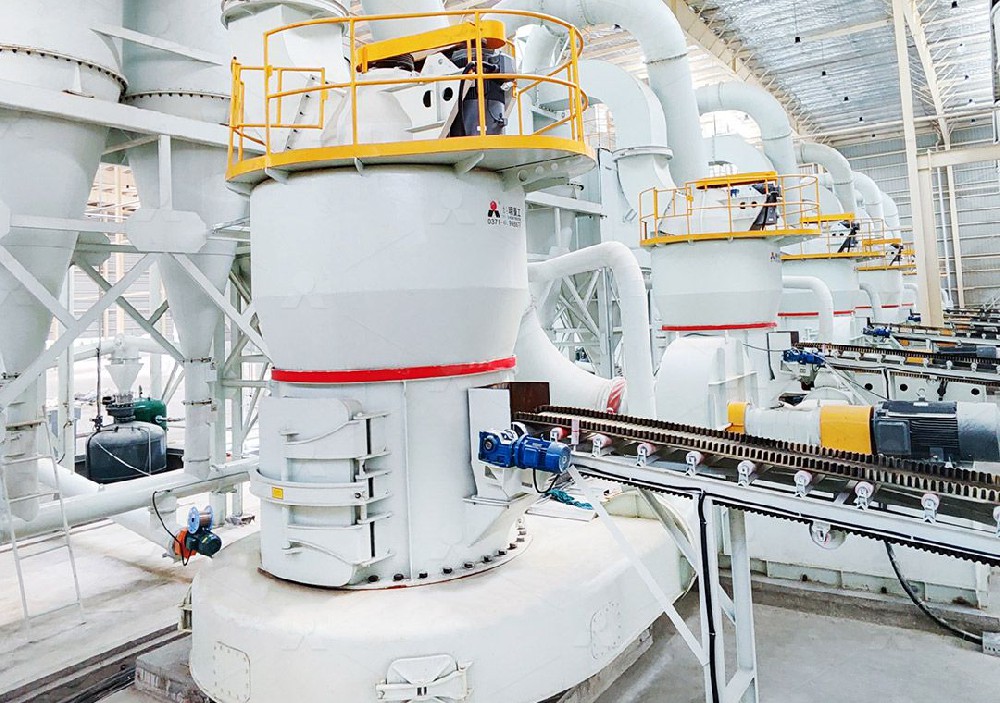
Air classification is one of the most important stages in GCC production. Grinding generates a range of particle sizes, while the customer normally requires a controlled finished product. The classifier separates fine particles from oversize material and helps establish the powder’s particle-size distribution.
Two common data points in a calcium carbonate technical data sheet are:
D50: the median particle size; 50% of particles are smaller than this value.
D97: the top-cut indicator; approximately 97% of particles are smaller than this value.
For example, a coated GCC grade with D50 at or below 2.5 μm and D97 around 10 μm is a substantially different product from a general uncoated GCC grade with D50 around 5 μm and D97 around 20 μm. The finer material has higher specific surface area and may require more precise grinding, classification, conveying, and coating control.
Inadequate classification can create several problems:
Oversize particles that affect film appearance, extrusion stability, surface smoothness, or paint texture
Unstable product quality between batches
Higher energy use from unnecessary overgrinding
Difficulty meeting customer D97 or sieve-residue requirements
Less uniform coating because particle surface area varies excessively
For this reason, the classifier, fan system, cyclone or collector arrangement, and powder circulation route should be engineered together with the mill. In a complete calcium carbonate plant, classification is not an accessory; it is a core quality-control process.
Step 5: Control Moisture and Powder Temperature
Moisture control is particularly important before stearic acid coating. Excessive moisture can reduce coating consistency, increase powder agglomeration, complicate pneumatic conveying, and create storage risks. Many commercial coated GCC specifications target low ex-works moisture, often at or below approximately 0.2%, although the acceptable limit depends on the customer application and test method.
Powder temperature is also important. Stearic acid must be delivered in a form that can distribute efficiently over the powder surface. Depending on the process design, stearic acid may be heated and fed as a molten liquid, or it may be introduced under controlled thermal conditions that allow it to soften, melt, and spread during high-intensity mixing.
The exact operating temperature is not universal. It depends on the coating equipment, stearic acid grade, feed moisture, powder fineness, throughput, mixer design, residence time, and required product performance. The correct approach is to establish a validated operating window through commissioning trials and laboratory verification rather than relying on a single temperature number.
Step 6: Dose and Apply Stearic Acid Uniformly
The coating stage determines whether the GCC becomes a stable, high-value surface-treated powder or merely a mixture of mineral powder and additive. The objective is to distribute stearic acid as evenly as possible across the available calcium carbonate surface.
Commercial stearic acid dosage often falls within a relatively low percentage range, but the correct dosage varies with particle size, specific surface area, raw mineral surface, intended resin system, coating equipment, and desired activation level. A finer powder generally presents more surface area and may require a different treatment strategy from a coarser powder.
Key coating-control variables include:
Actual stearic acid dosage by mass
Stearic acid quality and melting behavior
Powder feed rate and feed stability
Powder moisture level
Powder and coating-zone temperature
Mixing intensity, shear force, and residence time
Particle-size distribution and specific surface area
Post-coating cooling and anti-agglomeration performance
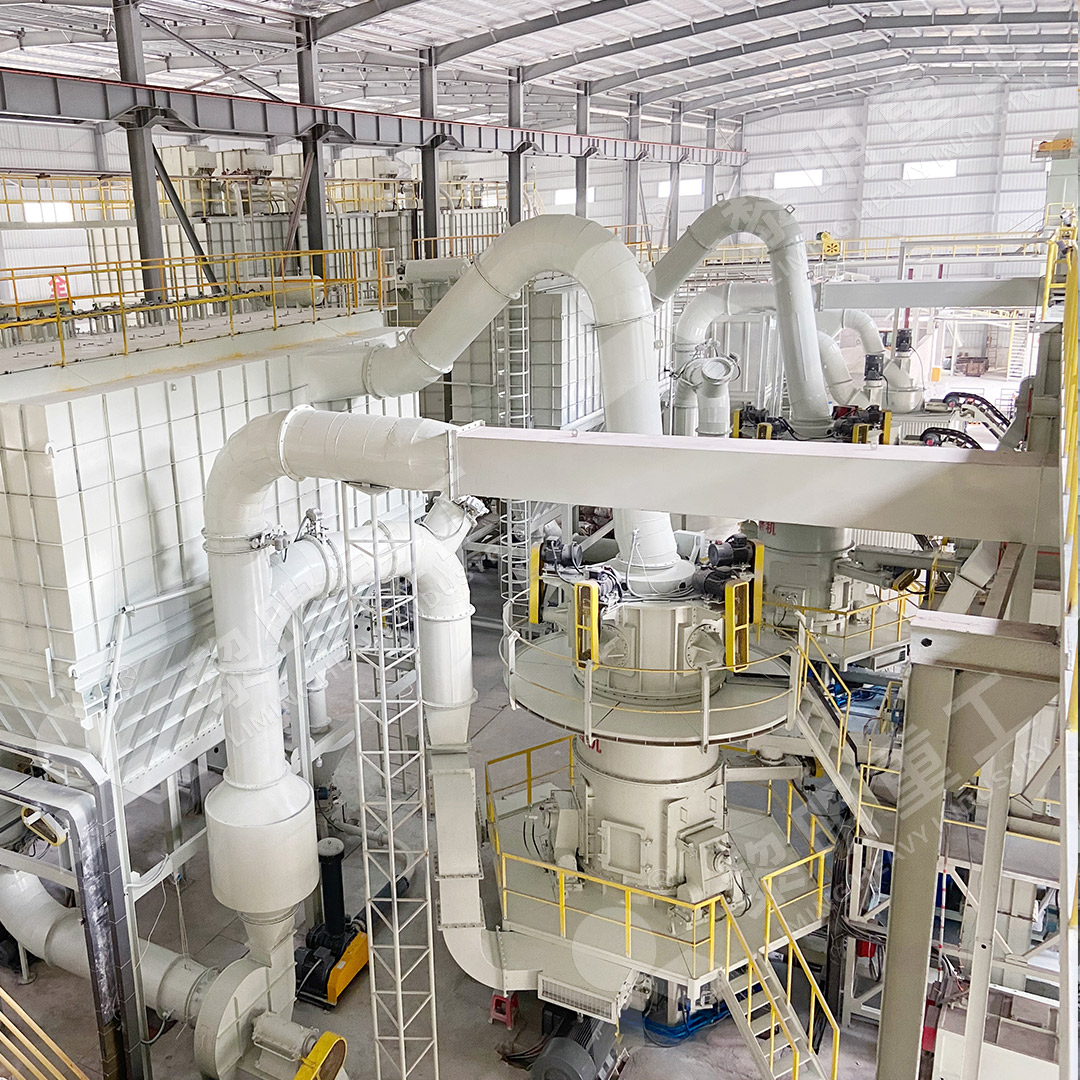
A coated GCC line may use a high-speed mixer, pin-type coating system, turbine-style modifier, or another specialized high-intensity coating device. The equipment should provide enough mixing energy to disperse the powder and distribute the modifier, while avoiding excessive heat exposure, poor flow, uncontrolled agglomeration, or an uneven treatment result.
Step 7: Final Classification, Cooling, Collection, and Packing
After coating, the product should remain free-flowing and meet its particle-size and surface-treatment requirements. Final classification may be used to remove oversize particles, break soft agglomerates, or maintain the specified top cut. Cooling can be important to stabilize the product before storage and packaging.
The final material-handling section commonly includes:
Finished-product air classification where required
Pulse-jet bag filters or other dust-collection equipment
Product cyclone or collector system
Cooling and conditioning stage
Finished-product silos with level control
Automatic bagging for 20 kg, 25 kg, or customer-specific packaging
Valve bags, PP-PE bags, jumbo bags, or bulk tanker loading systems
Metal detection, weighing, labeling, and palletizing where required
For export business, packaging is part of quality management. Moisture-resistant bags, accurate net weight, dust-controlled filling, clear traceability, and reliable container loading help protect the powder from the production plant to the converter’s facility.
Typical Coated GCC Quality Parameters
Each market has different standards, but a coated calcium carbonate technical data sheet commonly includes the following parameters. A serious producer should define test methods and acceptance limits before commissioning the line.
| Parameter | Why Buyers Check It | Production Stage That Controls It |
|---|---|---|
| CaCO3 content | Indicates mineral purity | Raw material selection and quality control |
| Whiteness or brightness | Affects color and appearance of final products | Raw material, contamination control, processing cleanliness |
| D50 and D97 | Defines median size and coarse-particle control | Grinding and air classification |
| Specific surface area | Relates to fineness, coating demand, and formulation behavior | Grinding, classification, and powder morphology |
| Moisture | Important for storage and polymer processing | Feed preparation, thermal control, collection, packaging |
| Stearic acid content | Verifies treatment dosage | Dosing and coating process |
| Activation degree or hydrophobicity | Indicates effectiveness of surface treatment | Coating temperature, intensity, residence time, and dosage |
| Oil absorption | Affects resin, plasticizer, or binder requirement | Particle size, morphology, treatment, and test consistency |
| Sieve residue or coarse residue | Reveals oversize particles and agglomerates | Classification and final product finishing |
When comparing products from different suppliers, verify that the same test method, instrument, sampling procedure, and reporting basis are used. A number on a data sheet is only useful when the measurement conditions are understood.
_1767929649018.jpg)
Common Problems in Coated Calcium Carbonate Production
Most coating problems can be traced to raw material instability, insufficient powder preparation, incorrect dosing, weak mixing, excessive moisture, or poor particle-size control. The following table helps connect visible product issues with likely process areas.
| Observed Problem | Possible Cause | Recommended Investigation |
|---|---|---|
| Poor dispersion in PE, PP, PVC, or rubber | Insufficient coating, uneven treatment, unsuitable particle distribution | Check dosage accuracy, coating temperature, mixing intensity, D50/D97, and application trial results |
| High moisture or caking in bags | Wet feed, condensation, inadequate cooling, poor packaging control | Check feed moisture, powder temperature before packing, silo conditions, and bag integrity |
| High oil absorption | Fine or porous powder, inconsistent coating, different test method | Verify particle distribution, specific surface area, coating uniformity, and laboratory method |
| Coarse particles or sieve residue | Classifier setting, worn components, unstable mill operation, agglomeration | Inspect classifier speed, airflow, mill loading, wear condition, and post-coating finishing |
| Unstable whiteness | Raw material variation or contamination | Review quarry stockpiles, metal contamination control, and cleaning procedures |
| Powder does not flow well | High moisture, excessive additive, poor cooling, agglomeration | Review powder temperature, coating dosage, storage time, and conveying configuration |
How to Design a Coated Calcium Carbonate Plant
A coated calcium carbonate project should be designed around the commercial product portfolio. The producer must first decide which grades will be sold, which customers will buy them, and what technical performance is required. Only then can the appropriate grinding and coating configuration be selected.
A complete plant may include the following functional modules:
Raw material receiving and storage
Primary and secondary crushing
Feed silo and controlled feeding system
Grinding mill
Dynamic air classifier
Dust collection and negative-pressure conveying
Fine powder storage and conditioning
Stearic acid storage, melting, metering, and injection
High-intensity coating machine or modifier
Cooling, final classification, and finished-product collection
Finished-product silo, packing machine, and loading system
Electrical control, automation, quality-control laboratory, and environmental protection equipment
Liming Heavy Industry can support calcium carbonate processing projects with grinding equipment and system solutions for limestone and calcite powder production. Depending on raw material properties, expected output, target product fineness, and the required level of automation, a project can be configured around an MTW Raymond Mill, LM Vertical Roller Mill, LUM Ultrafine Mill, or MW Micro Powder Mill, together with classification, dust collection, conveying, storage, and packing sections.
_1767930326611.jpg)
For a coated GCC project, the grinding plant should be connected to a properly matched surface-treatment section. The final configuration should be determined after reviewing the raw-material analysis, maximum feed size, moisture, required D50 and D97, hourly capacity, target applications, and whether the customer needs uncoated GCC, coated GCC, or a flexible line capable of producing both.
Which GCC Grades Are Suitable for Different Applications?
| End-Use Industry | Common GCC Requirement | Coated or Uncoated? | Key Production Focus |
|---|---|---|---|
| PE/PP filler masterbatch | Fine powder, low moisture, stable dispersion | Usually coated | Fine grinding, narrow classification, uniform stearic acid coating |
| PVC pipe, profile, and sheet | Consistent fineness, whiteness, processability | Often coated | Top-cut control, low moisture, stable surface treatment |
| Cable compounds | Fine powder, low coarse residue, stable electrical-grade processing | Often coated | High cleanliness, accurate classification, low moisture, uniform coating |
| Rubber compounds | Controlled rheology, filler dispersion, cost-performance balance | Often coated, depending on the formula | Particle-size selection and compatibility testing |
| Matte emulsion paint and putty | Whiteness, controlled particle size, economical filling | Usually uncoated | Grinding, classification, low residue, stable powder quality |
| Paper and paperboard | Brightness, particle distribution, application-specific performance | Usually uncoated | Fine grinding, impurity control, application-specific testing |
| Ceramics and glass | Stable chemistry, controlled impurities, suitable particle size | Usually uncoated | Raw mineral quality and consistent milling |
The table provides general direction, not a universal rule. Actual product selection should be confirmed through application trials with the customer’s resin, additives, pigments, processing equipment, and performance targets.
Information Needed for a Grinding and Coating Plant Proposal
To prepare a reliable coated calcium carbonate grinding and coating solution, an equipment supplier needs more than a request for “a calcium carbonate mill.” The following information helps define the right process and prevents an unsuitable quotation.
Raw material: limestone, calcite, marble, chalk, or another calcium carbonate source.
Chemical analysis: CaCO3, MgCO3, SiO2, Fe2O3, and other relevant impurities.
Raw material characteristics: moisture, Mohs hardness, whiteness, maximum feed size, and expected variation.
Final product: coated GCC, uncoated GCC, or both product types.
Required powder fineness: D50, D97, specific surface area, sieve residue, or equivalent particle-size target.
Design capacity: tons per hour, tons per day, or annual production target.
Target end use: masterbatch, PVC, cable compounds, rubber, paint, paper, ceramics, glass, or construction materials.
Coating requirement: stearic acid or another modifier, target dosage, and required activation or hydrophobicity level.
Plant conditions: installation location, available power supply, environmental requirements, building limitations, and automation preference.
Packaging requirement: valve bags, PP-PE bags, jumbo bags, bulk loading, palletizing, and container-loading method.
Frequently Asked Questions
What is the main difference between coated and uncoated calcium carbonate?
Coated calcium carbonate has a surface treatment—commonly stearic acid—that improves compatibility with many organic polymers and rubber compounds. Uncoated calcium carbonate retains its natural mineral surface and is commonly used in water-based coatings, paper, ceramics, glass, and general mineral-filler applications.
_1761355701097.jpg)
Why is stearic acid used for calcium carbonate coating?
Stearic acid helps modify the surface of calcium carbonate particles, making them more hydrophobic and more compatible with resin-based systems such as PE, PP, PVC, EVA, and certain rubber formulations.
Can a calcium carbonate grinding mill produce coated GCC directly?
A grinding mill produces the required GCC powder fineness, but a coated product normally also needs a controlled surface-treatment section. Depending on the project design, grinding, classification, heating, stearic acid dosing, high-intensity coating, cooling, and final collection are combined into an integrated process.
What particle size is commonly used for coated calcium carbonate?
The required particle size depends on the application. Plastic masterbatch, PVC, cable, and rubber customers may require different D50 and D97 values. Fine grades may have D50 values of several micrometers or below, while the acceptable coarse-particle limit is often equally important.
Does finer calcium carbonate always require more stearic acid?
Not always, but finer powder generally has higher specific surface area, which can change coating demand. The correct dosage should be determined through product testing and process trials rather than assumed from particle size alone.
Can one plant make both uncoated and coated calcium carbonate powder?
Yes, a plant can be designed to produce both, provided that the process layout includes appropriate storage, transfer, cleaning, coating, and product-separation arrangements. The design must prevent cross-contamination between untreated and treated grades.
What causes poor coating quality in GCC production?
Common causes include excessive moisture, unstable powder feed, inaccurate stearic acid dosing, poor temperature control, insufficient mixing intensity, inadequate residence time, inconsistent raw material, and poor particle-size classification.
Is coated GCC suitable for water-based paint?
It may be used in selected formulations, but uncoated GCC is more commonly preferred for many water-based paint and putty systems. The appropriate choice depends on the binder chemistry, dispersion process, rheology target, gloss level, and other formulation requirements.
What should be tested before buying a calcium carbonate grinding and coating line?
Test the raw material’s chemical composition, whiteness, moisture, hardness, feed size, and grindability. Define the target D50, D97, capacity, coating requirement, end-use market, and packaging format. A representative sample trial is strongly recommended before finalizing the plant configuration.
Which Liming Heavy Industry mill is suitable for calcium carbonate?
The appropriate model depends on required fineness, capacity, raw material characteristics, and the final product. MTW Raymond Mill can be considered for many medium-fine GCC projects; LM Vertical Roller Mill can support large-scale continuous grinding; LUM Ultrafine Mill and MW Micro Powder Mill can be evaluated for finer and ultrafine calcium carbonate grades. Final selection should be based on engineering data and material testing.
Conclusion
Producing coated calcium carbonate powder is a complete mineral-processing and surface-modification project. It begins with high-quality limestone or calcite, continues through controlled crushing, grinding, and air classification, and ends with precise stearic acid treatment, cooling, collection, and packaging.
For customers in plastic masterbatch, PVC, cable compounds, rubber, sealants, and related polymer applications, coated GCC can provide important advantages in compatibility, dispersion, powder flow, and formulation efficiency. To achieve those benefits consistently, the producer must control not only the coating machine but also the particle-size distribution, moisture, temperature, dosage, airflow, and final-product handling.
Liming Heavy Industry provides grinding equipment and integrated process solutions for limestone and calcite powder projects. By matching the grinding mill, classifier, dust collection, conveying, storage, and coating sections to the target product specification, a calcium carbonate producer can build a line designed for stable output, controlled quality, and long-term market competitiveness.
Related Industry News


Liming Heavy Industry to Attend the 140th Canton Fair
2026-09-25

Liming Heavy Industry at bauma CONEXPO INDIA 2026 | Booth 5-C6
2026-09-07
Turnkey Raw Mill Cement Plant in Saudi Arabia: Design and Installation
2026-09-03
Cement Raw Mill Supplier in Indonesia: Cost and Configuration Analysis
2026-09-01
Liming Heavy Industry to Exhibit at the 24th Global Gypsum Conference & Exhibition in Turkey
2026-08-31
Complete Mineral Processing Solutions
Convenient Reliable Professional Efficient Get Your Quote
Please feel free to submit your inquiry information to us. We will contact with you as soon as possible.
Our team will contact you as soon as possible.