


Short answer: coated calcium carbonate is surface-treated—most commonly with stearic acid—to improve compatibility with organic polymers, while uncoated calcium carbonate retains its natural hydrophilic mineral surface and is often preferred for water-based, mineral, ceramic, paper, and general filler applications.
For buyers, compounders, and mineral-processing investors, the correct choice is not simply “coated is better” or “uncoated is cheaper.” The appropriate grade depends on the end-use formulation, resin or binder chemistry, target particle-size distribution, required whiteness, oil absorption, moisture control, and production economics.
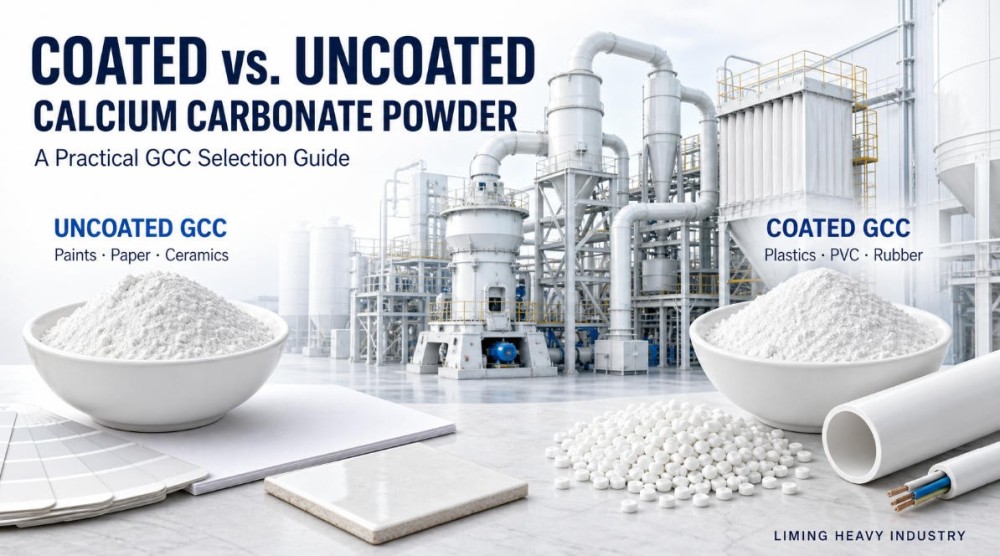
What Is the Difference Between Coated and Uncoated Calcium Carbonate?
Both products are calcium carbonate (CaCO3) powders. In ground calcium carbonate (GCC), the mineral is commonly produced from high-purity limestone, calcite, or marble through crushing, grinding, classification, collection, and packing. The decisive difference is the condition of the particle surface after milling.
Uncoated calcium carbonate powder has no intentional organic surface treatment. Its natural mineral surface is relatively hydrophilic and polar.
Coated calcium carbonate powder is treated with a surface modifier, commonly stearic acid. The treatment makes the particle surface more hydrophobic and more compatible with many organic polymer systems.
In commercial discussions, coated GCC may also be called surface-treated calcium carbonate, activated calcium carbonate, or stearic-acid-coated calcium carbonate. However, the buyer should always verify the actual coating agent, treatment dosage, activation degree, and application conditions instead of relying only on the product name.
Coated vs. Uncoated GCC: Technical Comparison
| Property | Coated Calcium Carbonate | Uncoated Calcium Carbonate | Why It Matters |
|---|---|---|---|
| Surface treatment | Usually coated with stearic acid or another modifier | No intentional organic coating | Determines powder–binder interaction |
| Surface behavior | More hydrophobic and oleophilic | More hydrophilic and mineral-like | Influences moisture resistance and wettability |
| Compatibility with PE, PP, PVC, EVA, and rubber | Generally better | Often requires more formulation support | Affects dispersion, torque, and final-product consistency |
| Dispersion in polymer compounds | Usually easier at higher loading levels | May agglomerate more easily in nonpolar media | Influences appearance and mechanical properties |
| Oil absorption | Often lower for comparable grades | Often higher for comparable grades | Affects resin, plasticizer, or binder demand |
| Typical applications | Plastic compounds, filler masterbatch, PVC, cable compounds, rubber, sealants | Water-based coatings, putty, paper, ceramics, glass, construction materials | Helps match the grade to the end-use system |
| Relative material cost | Usually higher due to coating and process control | Usually lower when particle size and quality are comparable | Must be evaluated against total formulation cost |
Important: particle size also changes performance. A finer coated grade and a coarser uncoated grade cannot be compared solely by coating status. D50, D97, particle shape, specific surface area, whiteness, mineral purity, and the test method for oil absorption should be evaluated together.
Why Stearic Acid Coating Changes Calcium Carbonate Performance
Calcium carbonate is an inorganic mineral filler. Many important end-use materials—such as polyethylene, polypropylene, PVC, EVA, synthetic rubber, and certain sealant systems—are organic and often relatively nonpolar. Without suitable surface treatment, the powder may not wet or disperse efficiently in the polymer matrix.
Stearic acid is commonly used because its long hydrocarbon chain changes the outer surface characteristics of calcium carbonate particles. In practical compounding, a well-controlled coating process can provide the following benefits:
Improved dispersion in polymer and rubber matrices.
Better processing flow during mixing, extrusion, pelletizing, or calendaring.
Lower tendency for moisture-related agglomeration during storage and conveying.
Potentially lower oil absorption and reduced demand for some liquid formulation components.
Higher practical filler loading in suitable formulations.
More consistent surface appearance in finished plastic products when the full formulation is properly optimized.
These benefits are not automatic. Insufficient coating may leave part of the mineral surface untreated; excessive or poorly distributed coating can create processing issues, affect odor or volatility, and add unnecessary cost. The coating dosage, thermal conditions, powder temperature, residence time, mixing intensity, and feed uniformity must be controlled at industrial scale.
Where Should Coated Calcium Carbonate Be Used?
Coated calcium carbonate is primarily selected when the powder must disperse in an organic, resin-rich, oil-based, or rubber-based system. It is especially relevant when the producer wants a stable process at relatively high filler loading.
Plastic Compounds and Filler Masterbatch
For PE and PP filler masterbatch, coated GCC is widely used to improve powder dispersion in the carrier resin and support stable extrusion. Typical buyer requirements include D50 or D97, whiteness, moisture, coating content, bulk density, sieve residue, oil absorption, and compatibility with the selected carrier resin.
PVC Pipe, Profile, Sheet, and Cable Compounds
In PVC applications, coated calcium carbonate can help improve processing behavior and dispersion. The selected grade must still be tested within the customer’s complete PVC formula because resin K-value, plasticizer type, stabilizer, lubricant package, processing temperature, and filler loading strongly affect the final result.
Rubber and Elastomer Products
Surface-treated calcium carbonate can be used in rubber compounds where filler dispersion, viscosity management, cost control, and surface finish matter. The proper grade depends on the rubber type, hardness target, reinforcement requirements, and the balance between cost and performance.
Sealants, Adhesives, and Selected Oil-Based Systems
In compatible formulations, coated GCC may improve filler wetting and help manage rheology. Buyers should confirm chemical compatibility with the resin, plasticizer, solvent, curing system, and desired shelf-life performance.
Where Should Uncoated Calcium Carbonate Be Used?
Uncoated calcium carbonate is often the more direct and economical option when a natural mineral surface is suitable or preferred. It remains one of the most widely used industrial fillers because it can provide whiteness, volume, rheology control, opacity contribution, and cost efficiency.
Water-Based Paints and Architectural Coatings
Uncoated GCC is commonly used in matte and semi-matte emulsion paints, primers, putty, texture coatings, and other water-based systems. Particle-size distribution, whiteness, brightness, grindability, water demand, pH, and dispersion stability are usually more important than a hydrophobic surface treatment.
Paper and Paperboard
Calcium carbonate can be used as a filler or coating pigment in paper applications. Product selection depends on paper grade, brightness requirements, particle-size distribution, retention system, and the specific production process.
Ceramics, Glass, and Construction Materials
For ceramic bodies, glaze-related mineral systems, glass batches, dry mortars, wall putty, and many construction applications, uncoated calcium carbonate is frequently appropriate. The priority may be mineral chemistry, moisture, particle-size consistency, whiteness, and controlled impurities rather than resin compatibility.
General Industrial Filling
Uncoated GCC can also be used in selected plastics, rubber compounds, and other industrial products where the formula tolerates untreated mineral filler or where the converter adds its own coupling agent or processing aid.

How to Read a Calcium Carbonate Technical Data Sheet
A reliable purchasing decision should not be based only on “mesh” or a single D50 value. Review the full technical data sheet and request a representative sample for formulation trials.
Particle-size distribution: check D50, D97, D100 if available, and sieve residue. D50 indicates the median size; D97 helps reveal the coarse-particle tail.
Whiteness and color: ask for the test method, instrument, and color scale. “Whiteness” values are not always directly comparable between suppliers.
CaCO3 purity and impurities: review CaCO3, MgCO3, Fe2O3, SiO2, and other components relevant to the application.
Moisture: low and stable moisture is particularly important for plastics, masterbatch, pneumatic conveying, and long-distance export storage.
Oil absorption: compare only when test methods are consistent. It is relevant to resin demand, viscosity, and formulation economics.
Coating specification: for coated grades, confirm the coating agent, coating percentage, treatment consistency, and, when relevant, activation degree.
Application trial: evaluate the material in the actual formulation, rather than relying only on laboratory data.
Example: Two GCC Grades That Should Not Be Treated as Direct Equivalents
Consider a coated GCC with D50 at or below 2.5 μm, D97 around 10 μm, specific surface area above 11 m²/g, and oil absorption near 15 g/100 g. Compare it with an uncoated GCC having D50 around 5 μm, D97 around 20 μm, specific surface area above 9 m²/g, and oil absorption near 22 g/100 g.
The first grade is both finer and surface-treated. It may be suitable for plastic masterbatch, PVC, cable compounds, or rubber applications where dispersion and processability are priorities. The second grade is coarser and uncoated, making it a more natural candidate for matte paint, paper, ceramics, glass, or general industrial filling.
The conclusion is not that the coated grade is universally superior. It is that the two grades solve different formulation and processing problems.
GCC Production: From Limestone to Coated Calcium Carbonate Powder
A consistent calcium carbonate powder requires more than a mill. The complete GCC production route typically includes raw-material evaluation, crushing, grinding, classification, powder collection, surface treatment where required, storage, and packaging.
High-whiteness limestone or calcite is selected and crushed to a controlled feed size.
The material is ground to the required fineness.
An air classifier controls the final particle-size distribution and removes oversize particles.
For coated GCC, the powder is mixed with a controlled amount of stearic acid or another surface modifier under suitable thermal and mechanical conditions.
The finished powder is collected, stored, packed, and prepared for bulk or container shipment.
For investors and mineral processors, the target application should define the production line. A plant designed for coarse filler used in putty or construction materials is not automatically suitable for fine, narrow-distribution coated GCC for filler masterbatch or cable compounds.
Grinding and Coating Equipment for GCC Projects
When a producer plans to manufacture uncoated or coated calcium carbonate rather than purchase finished powder, equipment selection should be based on feed material hardness, moisture, required capacity, target D50 and D97, desired whiteness retention, product portfolio, energy target, and coating requirements.
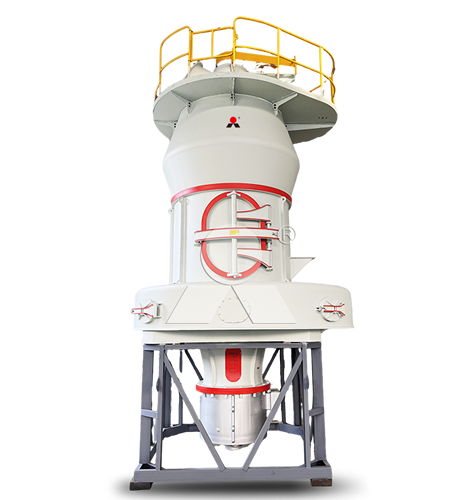
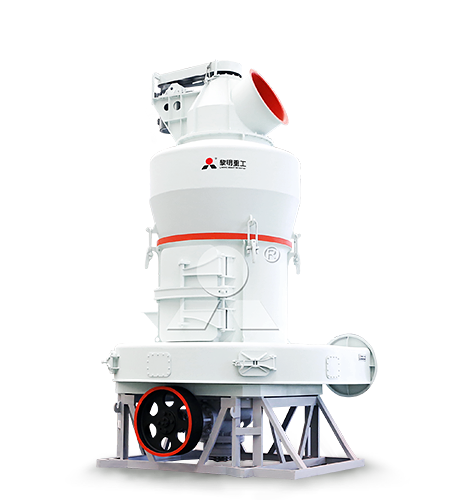
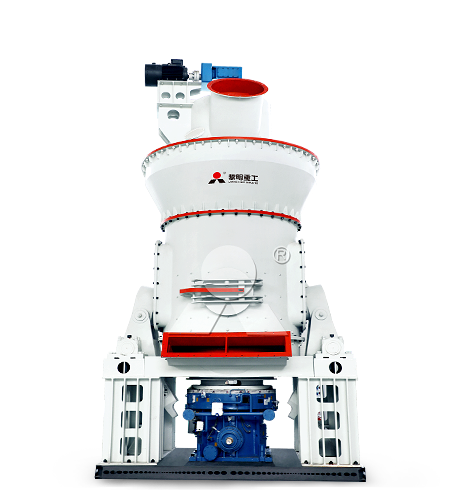
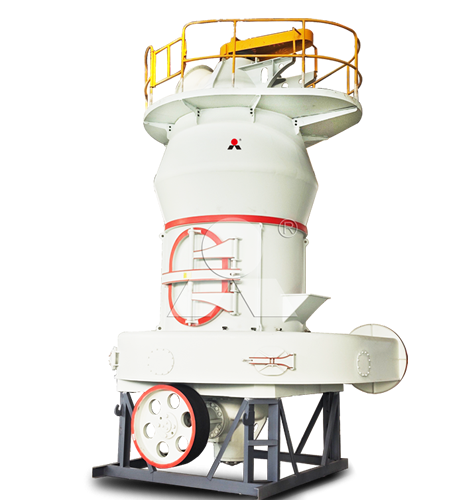
Liming Heavy Industry provides grinding solutions for non-metallic mineral processing, including limestone and calcite grinding projects. Depending on the project scale and target powder specification, a production system may combine crushing equipment, a grinding mill, classification, dust collection, conveying, storage, and automated packing. For coated calcium carbonate, the grinding section should be integrated with a dedicated surface-treatment and coating system rather than treated as a stand-alone milling step.
For example, a customer seeking GCC for paint may prioritize stable medium-fine powder, controlled coarse residue, high whiteness, and reliable continuous output. A customer producing coated GCC for plastic masterbatch may require a finer and narrower particle-size distribution, low moisture, efficient powder handling, precise stearic-acid dosing, and consistent coating quality. These are different process design targets.
Before requesting a mill quotation, prepare the following project information:
Raw material type: limestone, calcite, marble, or another calcium carbonate source.
Raw material chemical analysis, whiteness, Mohs hardness, moisture, and maximum feed size.
Required final powder grades, including D50, D97, mesh-equivalent targets, and annual or hourly capacity.
Whether the product will be uncoated GCC, stearic-acid-coated GCC, or both.
Target applications: paint, paper, PVC, PE/PP filler masterbatch, cable compound, rubber, ceramics, or construction materials.
Available power supply, site conditions, environmental requirements, and preferred automation level.
Frequently Asked Questions
Is coated calcium carbonate always better than uncoated calcium carbonate?
No. Coated calcium carbonate is usually more suitable for organic polymer and rubber systems, while uncoated GCC is often a better fit for water-based coatings, paper, ceramics, glass, mineral products, and cost-sensitive general filling. Select according to the end-use formula.
Can uncoated calcium carbonate be used in plastic?
Yes. Many plastic formulations use uncoated GCC. However, compared with an appropriate coated grade, it may require different processing aids, lower filler loading, or more careful compounding to achieve acceptable dispersion and processing behavior.
What coating percentage is common for coated GCC?
Stearic-acid dosage varies with particle size, specific surface area, mineral surface characteristics, and the target application. A range around 0.8% to 1.2% is common for certain commercial grades, but the correct dosage must be verified through trials and quality control.
Does a finer calcium carbonate always have lower oil absorption?
No. Finer particles often have higher specific surface area, which can increase binder demand. Surface treatment, particle shape, porosity, aggregation state, and the measurement method also affect oil absorption. Compare supplier data only under consistent test conditions.
What is the difference between GCC and PCC?
GCC is ground calcium carbonate produced by mechanically grinding natural mineral sources such as limestone or calcite. PCC is precipitated calcium carbonate produced through a chemical process. They can differ in particle morphology, purity, surface area, application behavior, and production route.
Conclusion: Select the Powder for the Application, Then Design the Process
Coated and uncoated calcium carbonate powders serve different functions. Choose coated GCC when polymer compatibility, hydrophobicity, efficient dispersion, and high-filler compound processing are central requirements. Choose uncoated GCC when the application benefits from a natural mineral surface, such as water-based paint, paper, ceramics, glass, and many construction products.
For powder buyers, validate the grade through technical data, sample testing, and actual formulation trials. For producers planning a GCC plant, define the product portfolio first—especially the required particle-size distribution and whether surface treatment is needed—then configure the grinding, classification, coating, collection, and packaging system accordingly. Liming Heavy Industry can support non-metallic mineral grinding projects with equipment solutions tailored to limestone and calcite powder production requirements.
Related Industry News


Liming Heavy Industry to Attend the 140th Canton Fair
2026-09-25

Liming Heavy Industry at bauma CONEXPO INDIA 2026 | Booth 5-C6
2026-09-07
Turnkey Raw Mill Cement Plant in Saudi Arabia: Design and Installation
2026-09-03
Cement Raw Mill Supplier in Indonesia: Cost and Configuration Analysis
2026-09-01
Liming Heavy Industry to Exhibit at the 24th Global Gypsum Conference & Exhibition in Turkey
2026-08-31
Complete Mineral Processing Solutions
Convenient Reliable Professional Efficient Get Your Quote
Please feel free to submit your inquiry information to us. We will contact with you as soon as possible.
Our team will contact you as soon as possible.