


For paper coating and printing-grade kaolin, the grinding system should be selected around the required particle-size distribution, brightness preservation, contaminant control, moisture condition, and final coating formulation—not simply by tonnes per hour. A practical dry-processing route commonly includes controlled feeding, drying when necessary, fine grinding, air classification, dust collection, and sealed conveying to prevent contamination.
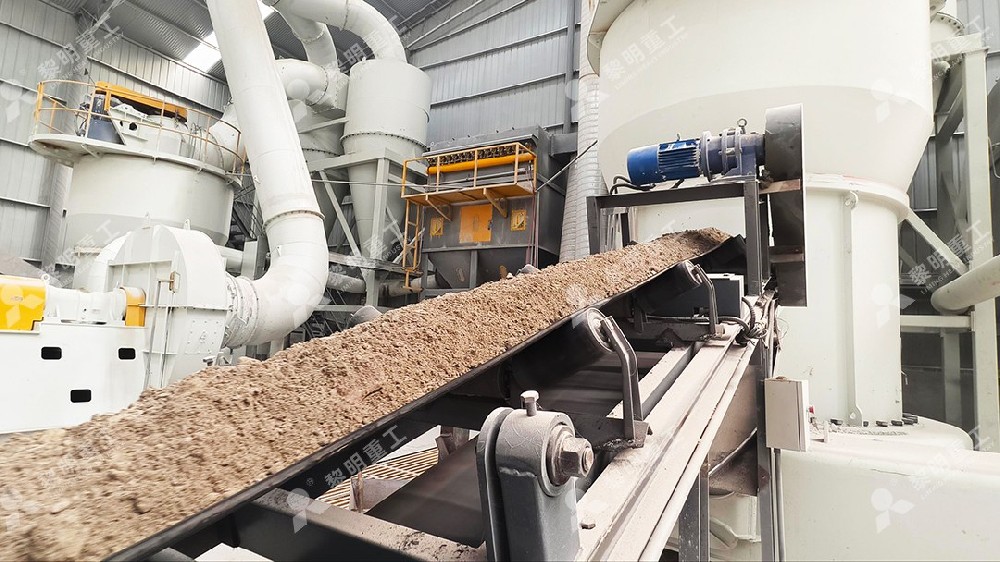
For many Indian paper-coating projects requiring fine kaolin powder in a conventional coating-grade range, an MTW European Grinding Mill or an LM Vertical Roller Mill may be suitable after engineering review. Where the target is substantially finer powder with tighter particle-size control, an LUM Ultrafine Vertical Roller Mill or MW Micro Powder Mill may be considered. The final selection requires representative kaolin samples and confirmed product specifications, especially D50, D90 or D97, residue limits, moisture, and required hourly output.
Why Paper-Coating Kaolin Requires a Different Selection Method
Kaolin for paper coating is not evaluated only by its average particle size. The coating process depends on particle shape, narrowness of size distribution, brightness, opacity, viscosity behavior in slurry preparation, abrasion, and the amount of coarse residue. A grinding plant that produces the correct nominal mesh but excessive coarse particles can create problems in coating preparation, blade coating, surface smoothness, print gloss, and finished-paper appearance.
For this reason, a project described only as “325 mesh kaolin” is not sufficiently defined for reliable equipment selection. Mesh is a useful preliminary reference, but coated-paper applications often require a more detailed particle-size specification. The purchaser should clarify whether the requirement is based on mesh residue, D50, D90, D97, or another particle-size distribution criterion.
Kaolin deposits also vary considerably. A soft, dry, low-abrasion kaolin may grind efficiently in a conventional roller mill. A material containing quartz, mica, iron-bearing minerals, sand, or hard agglomerates may require more careful feed preparation, impurity removal, wear protection, and classification control. Similar material names do not guarantee similar grinding behavior.
Typical Process Route for Dry Kaolin Powder
A dry kaolin grinding plant for paper-related powder production should be designed as a complete system. The mill is only one part of the process. The necessary stages depend on the feed condition and finished-product requirement.
_1767930326613.jpg)
A typical route may include:
Raw kaolin receiving and controlled storage
Screening or removal of oversized foreign material
Crushing when the feed size exceeds the mill’s acceptable feed range
Drying if feed moisture would cause sticking, low output, unstable airflow, or classifier blockage
Fine grinding in a roller, vertical, or ultrafine grinding mill
Air classification to control the finished particle-size distribution
Bag-filter dust collection and negative-pressure operation
Sealed pneumatic or mechanical conveying to finished-product silos
Sampling, packing, or bulk loading
If mined kaolin has variable moisture, drying should be considered at the beginning of process design. Wet or sticky feed can reduce mill throughput, form deposits in chutes and ducts, destabilize the classifier, and increase pressure loss across the dust-collection system. In some cases, using hot air in the grinding system can combine partial drying and milling, but the practical drying duty must be confirmed from feed moisture, feed rate, and ambient conditions.
Grinding Technology for Different Kaolin Requirements
| Grinding technology | Most suitable conditions | Key engineering considerations |
|---|---|---|
| Raymond mill | Small to medium output, conventional fine kaolin powder, relatively simple dry process | Suitable only when target fineness, feed condition, and capacity match the equipment range; classifier adjustment and feed stability strongly affect product consistency. |
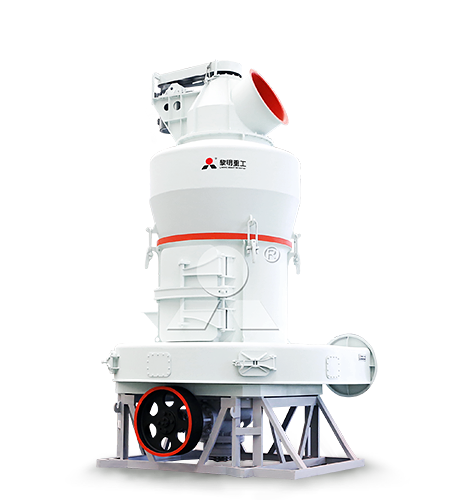
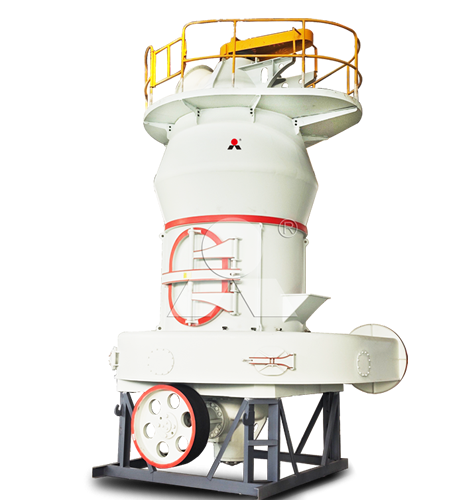
| MTW European Grinding Mill | Fine dry kaolin powder where a stable continuous process and moderate-to-higher output are required | Appropriate for projects needing controlled grinding and classification without moving to ultrafine technology unnecessarily. |
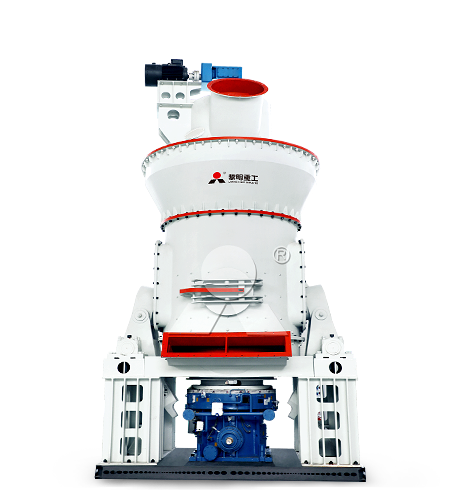
| LM Vertical Roller Mill | Larger dry grinding plants with integrated grinding, classification, conveying, and possible drying requirements | Often considered when capacity is substantial or feed moisture requires process integration; product-quality control depends on classifier performance and operating stability. |
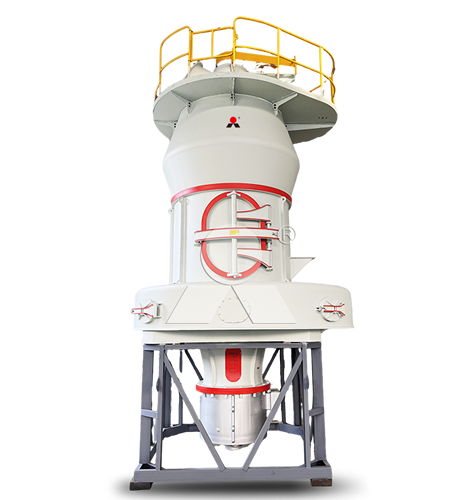
| LUM Ultrafine Vertical Roller Mill | Finer kaolin grades requiring tighter control of the upper particle-size range | Higher fineness generally increases specific energy demand and may reduce practical throughput; sample testing is important before sizing. |
| MW Micro Powder Mill | Fine to ultrafine powder applications with relatively lower production scale or specialized fineness requirements | Should be selected only when the coating specification requires its fineness range and process complexity is justified. |
The appropriate technology is determined by the relationship between feed size, moisture, mineral hardness, impurity level, finished fineness, particle-size distribution, and required production rate. It is not good engineering practice to select an ultrafine mill simply because paper coating uses fine kaolin. If the coating formulation accepts a conventional fine grade, a mill designed for substantially finer powder may add unnecessary energy use and system complexity.
_1767929649018.jpg)
Capacity Must Be Evaluated at the Required Fineness
Nominal mill capacity should not be treated as a fixed value. Practical output changes with kaolin grindability, feed moisture, feed-size distribution, product fineness, classifier settings, air volume, grinding-component wear, and the amount of coarse material returned for regrinding.
For example, consider a hypothetical plant requiring 240 tonnes of finished kaolin powder per day. If the plant operates 20 effective production hours per day, the preliminary required net output is:
Required hourly output = 240 t/day ÷ 20 h/day = 12 tph
This is only a starting point. The selected system should also account for expected operating availability, product rejection, maintenance time, seasonal moisture variation, and potential future capacity expansion. If the required fineness becomes finer, the same mill may produce less than 12 tph because more grinding energy and more classifier circulation are needed to control coarse particles.
A practical equipment inquiry should therefore specify the required tonnes per hour at the actual finished-product specification, rather than requesting only a “12 tph mill.”
Particle-Size Control for Paper Coating
In paper-coating kaolin, the classifier often has as much influence on final powder quality as the grinding zone. The mill reduces particle size, while the classifier separates acceptable fine particles from oversized particles that must return for additional grinding.
If classifier speed is too low, excessive coarse material may enter the final product. If it is too high, the system may reject too much material for regrinding, reducing throughput and increasing energy consumption. Airflow must also be balanced. Insufficient airflow can reduce powder transport and increase internal circulation, while excessive airflow may carry undesirably coarse particles into the collector.
Product sampling should not rely on one isolated result. A useful quality-control plan checks particle-size distribution over multiple production intervals, along with moisture, residue, brightness-related quality indicators where relevant, and contamination from process wear or external dust.
_1761355701097.jpg)
Contamination, Wear, and Brightness Protection
Paper applications can be sensitive to contamination. Iron-bearing tramp material, rust particles, worn grinding media or rollers, dirty conveying equipment, and external dust can affect powder purity and may create downstream coating problems. Magnetic separation before grinding may be appropriate when the feed contains ferrous contamination from mining, handling, or crushing equipment.
Wear is not determined by kaolin alone. A kaolin feed with quartz or sand contamination can be substantially more abrasive than a clean clay-rich material. This affects grinding-roll life, ring or table wear, classifier-component wear, and maintenance intervals. Feed mineralogy should be checked before estimating wear-related operating cost.
For higher-purity applications, the production line should use enclosed transfer points, clean storage conditions, controlled maintenance practices, and sampling procedures that avoid cross-contamination from other mineral powders.
Information Needed for a Preliminary Equipment Proposal
A meaningful technical proposal or free preliminary quotation requires more than the material name. The following information allows suppliers to recommend a suitable process and estimate the required equipment configuration:
Kaolin source, mineralogical description, and available laboratory analysis
Feed size range and maximum particle size
Feed moisture under normal and worst-case conditions
Hardness, abrasiveness, quartz content, and presence of hard contaminants
Required finished-powder fineness and particle-size distribution, such as D50, D90, D97, or sieve residue
Required net production rate in tph and annual production target
Paper-coating, printing, filler, ceramic, paint, or other downstream application
Requirements for brightness, impurity control, whiteness retention, or iron removal
Available utilities, including electrical supply, fuel or hot-air source, compressed air, and installation space
Whether the plant requires bulk loading, bagging, automatic packing, or silo storage
If the kaolin is intended specifically for coated printing paper, coating board, or specialty paper, laboratory evaluation and, where needed, pilot-scale testing should be considered. These tests help verify whether the dry-grinding route can achieve the required particle-size distribution without unacceptable coarse residue, contamination, or excessive energy demand.
_1761355927036.jpg)
Practical Recommendation
For a conventional dry kaolin powder project in India, begin by defining the coating-grade particle-size requirement and evaluating feed moisture. An MTW European Grinding Mill can be a practical option for many fine-powder applications where capacity is moderate and drying demand is limited. An LM Vertical Roller Mill may be more appropriate for a larger continuous grinding plant, particularly where integrated drying, high throughput, and centralized process control are important.
Where the finished grade requires significantly finer powder and close control of the coarse end of the distribution, LUM Ultrafine Vertical Roller Mill or MW Micro Powder Mill technology may be evaluated. The choice should be based on verified kaolin behavior, required throughput at target fineness, and downstream paper-coating acceptance criteria.
Liming Heavy Industry is one potential supplier for Raymond, MTW, LM, LUM, and MW grinding systems. Before issuing a final quotation, the supplier should confirm the kaolin sample data, feed condition, target powder specification, capacity requirement, drying duty, and site utilities. This converts a preliminary mill inquiry into an engineering basis for a stable kaolin powder production line.
Related Industry News


Liming Heavy Industry to Attend the 140th Canton Fair
2026-09-25

Liming Heavy Industry at bauma CONEXPO INDIA 2026 | Booth 5-C6
2026-09-07
Turnkey Raw Mill Cement Plant in Saudi Arabia: Design and Installation
2026-09-03
Cement Raw Mill Supplier in Indonesia: Cost and Configuration Analysis
2026-09-01
Liming Heavy Industry to Exhibit at the 24th Global Gypsum Conference & Exhibition in Turkey
2026-08-31
Complete Mineral Processing Solutions
Convenient Reliable Professional Efficient Get Your Quote
Please feel free to submit your inquiry information to us. We will contact with you as soon as possible.
Our team will contact you as soon as possible.