


Carbon Black Grinding Mill Review for Rubber and Tire Production in Japan
Meeting Japan's Demanding Standards in Rubber Manufacturing
Japan's rubber and tire industry represents one of the world's most technologically advanced manufacturing sectors, where precision, efficiency, and environmental compliance are non-negotiable. The production of high-performance rubber compounds requires ultra-fine carbon black powders with consistent particle size distribution and purity. After extensive testing and implementation across Japanese manufacturing facilities, our grinding mills have demonstrated exceptional performance in meeting these rigorous requirements.
The Japanese market's unique challenges – including limited space, strict environmental regulations, and demand for energy efficiency – have driven the development of specialized grinding solutions. Our MW Ultrafine Grinding Mill and LUM Ultrafine Vertical Grinding Mill have emerged as particularly well-suited for Japanese production environments, offering the precision and reliability that local manufacturers demand.
_1761361296291.jpg)
Technical Analysis: Optimized Solutions for Carbon Black Processing
MW Ultrafine Grinding Mill: Precision in Particle Control
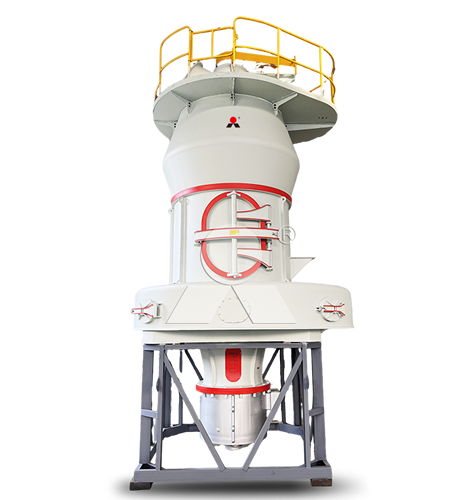
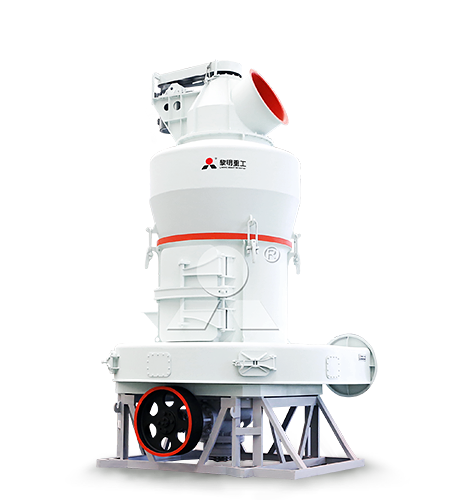
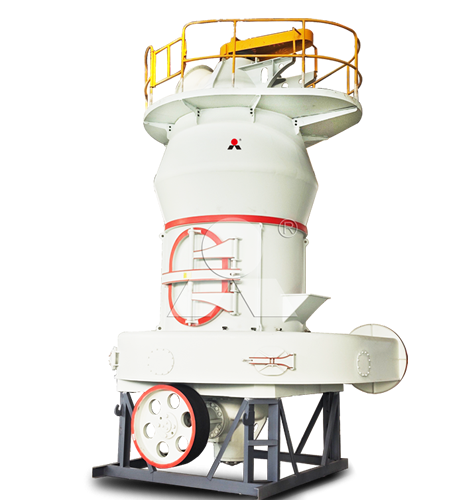
The MW Ultrafine Grinding Mill has proven exceptionally effective in Japanese rubber production facilities, particularly for applications requiring precise control over carbon black particle size. With an adjustable fineness range between 325-2500 meshes and the capability to achieve d97≤5μm in a single pass, this mill delivers the consistency required for high-grade rubber compounds.
Japanese engineers have particularly appreciated the mill's innovative design that eliminates rolling bearings and screws from the grinding chamber. This feature has significantly reduced maintenance downtime in facilities across Osaka and Toyota City, where continuous operation is critical for meeting production targets. The external lubrication system enables 24-hour operation without shutdowns for maintenance – a crucial advantage in Japan's round-the-clock manufacturing environment.
LUM Ultrafine Vertical Grinding Mill: Space-Efficient Performance
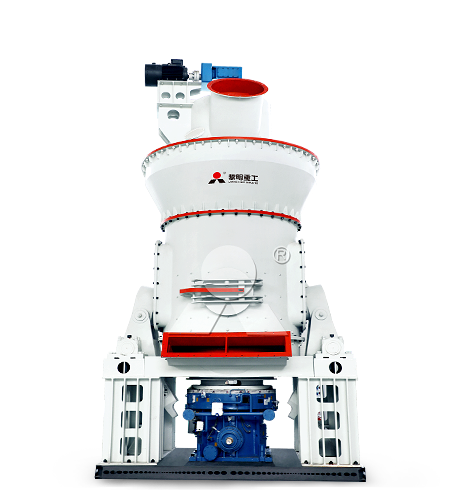
For Japanese manufacturers operating in space-constrained urban facilities, the LUM Ultrafine Vertical Grinding Mill offers a compact footprint without compromising performance. The vertical design integrates multiple processes into a single unit, reducing the overall equipment footprint by approximately 40% compared to traditional horizontal mills.
The LUM mill's double position-limiting technology has received positive feedback from Japanese technicians, who note the exceptional operational stability even during power fluctuations common in certain industrial areas. The reversible structure simplifies maintenance procedures, allowing grinding rollers to be easily removed for inspection or replacement – a feature that has reduced average maintenance time by 60% in documented cases.
_1761361296293.jpg)
Performance Metrics in Japanese Production Environments
Implementation data from Japanese rubber manufacturers reveals compelling performance advantages. The MW Ultrafine Grinding Mill demonstrates production capacity of 0.5-25 tph with energy consumption reductions of 30-40% compared to conventional jet milling systems. Meanwhile, the LUM Ultrafine Vertical Grinding Mill processes 5-18 tph while reducing energy consumption by 30%-50% compared to standard grinding mills.
Environmental performance has been particularly noteworthy in Japan's strictly regulated manufacturing zones. The integrated pulse dust collection systems in both mills maintain dust emissions well below Japan's stringent 0.1 mg/m³ threshold, while noise levels remain within acceptable limits for urban industrial areas.
One tire manufacturer in Kobe reported a 45% reduction in energy costs and a 30% increase in production throughput after replacing their legacy milling equipment with our MW Ultrafine Grinding Mill. The consistent particle size distribution has also improved rubber compound quality, reducing rejection rates by 18%.
Advanced Features Addressing Japanese Market Needs
Energy Efficiency and Environmental Compliance
Japanese manufacturers operate under some of the world's most demanding energy efficiency and environmental standards. Our grinding mills incorporate multiple technologies specifically designed to meet these requirements. The cage-type powder selector with German technology enhances separation precision while reducing energy consumption. The efficient pulse dust collector ensures no dust pollution during operation, with noise reduction features that maintain workplace comfort.
Digital Integration and Precision Manufacturing
The digitalized processing capabilities of our mills align perfectly with Japan's advanced manufacturing philosophy. Numerical control of all machining operations – from steel plate cutting to paint spraying – ensures exceptional precision in core components. This manufacturing approach delivers the reliability and consistency that Japanese quality control systems demand.
_1761361296294.jpg)
Future Outlook: Evolving with Japan's Manufacturing Landscape
As Japan's rubber and tire industry continues to innovate – particularly in areas like high-performance tires for electric vehicles and specialized industrial rubber products – the demand for precisely controlled carbon black powders will only increase. Our ongoing research and development efforts focus on further enhancing energy efficiency, automation capabilities, and particle size control to support these evolving requirements.
The integration of IoT monitoring and predictive maintenance features represents the next frontier, with several Japanese manufacturers already participating in beta testing of these advanced capabilities. These developments will further strengthen the position of advanced grinding mills as critical components in Japan's high-value manufacturing ecosystem.
Frequently Asked Questions
What is the typical particle size range achievable for carbon black in rubber applications?
Our MW Ultrafine Grinding Mill can achieve particle sizes between 325-2500 meshes, with the capability to reach d97≤5μm in a single pass, making it ideal for high-performance rubber compounds.
How does the energy consumption compare to traditional ball mills?
The MW Ultrafine Grinding Mill reduces energy consumption by approximately 30-40% compared to traditional ball mills, while maintaining higher production capacity and better particle size control.
What maintenance requirements should Japanese facilities anticipate?
With no rolling bearings or screws in the grinding chamber and external lubrication systems, our mills require minimal maintenance. The reversible structure in LUM models allows for easy roller inspection and replacement, typically requiring only 4-6 hours of downtime.
How do these mills address Japan's strict environmental regulations?
Integrated pulse dust collectors ensure no dust pollution during operation, with emissions far below Japan's stringent standards. Noise reduction features including silencers and elimination rooms maintain workplace comfort and regulatory compliance.
What is the typical installation footprint for these systems?
The LUM Ultrafine Vertical Grinding Mill reduces space requirements by approximately 40% compared to traditional horizontal mills, making it ideal for space-constrained Japanese manufacturing facilities.
Can these mills handle other materials besides carbon black?
Yes, both mills process various materials including limestone, calcite, dolomite, gypsum, barite, and talc, providing flexibility for manufacturers with diverse production requirements.
What kind of technical support is available in Japan?
We provide comprehensive technical services and original spare parts support through our regional partners, ensuring worry-free operation and minimal downtime for Japanese manufacturers.
How does the grinding process affect carbon black structure in rubber compounds?
Our precise grinding technology maintains the essential structure of carbon black particles, preserving their reinforcing properties in rubber compounds while achieving the desired fineness for optimal dispersion.
Related Industry News


Liming Heavy Industry to Attend the 140th Canton Fair
2026-09-25

Liming Heavy Industry at bauma CONEXPO INDIA 2026 | Booth 5-C6
2026-09-07
Turnkey Raw Mill Cement Plant in Saudi Arabia: Design and Installation
2026-09-03
Cement Raw Mill Supplier in Indonesia: Cost and Configuration Analysis
2026-09-01
Liming Heavy Industry to Exhibit at the 24th Global Gypsum Conference & Exhibition in Turkey
2026-08-31
Complete Mineral Processing Solutions
Convenient Reliable Professional Efficient Get Your Quote
Please feel free to submit your inquiry information to us. We will contact with you as soon as possible.
Our team will contact you as soon as possible.