


Summary:
For most industrial clay powder production projects, the suitable grinding mill depends primarily on the required fineness, feed size, clay moisture, hardness, abrasiveness, and production capacity.
Details:
For most industrial clay powder production projects, the suitable grinding mill depends primarily on the required fineness, feed size, clay moisture, hardness, abrasiveness, and production capacity. For conventional clay powder in the range of approximately 80–400 mesh, a Raymond Mill or MTW European Grinding Mill is generally appropriate. When higher capacity is required, an LM Vertical Roller Mill can be considered. For ultrafine clay products above 400 mesh, particularly when the target is several microns, LUM Ultrafine Vertical Roller Mill or MW Micro Powder Mill becomes more relevant.
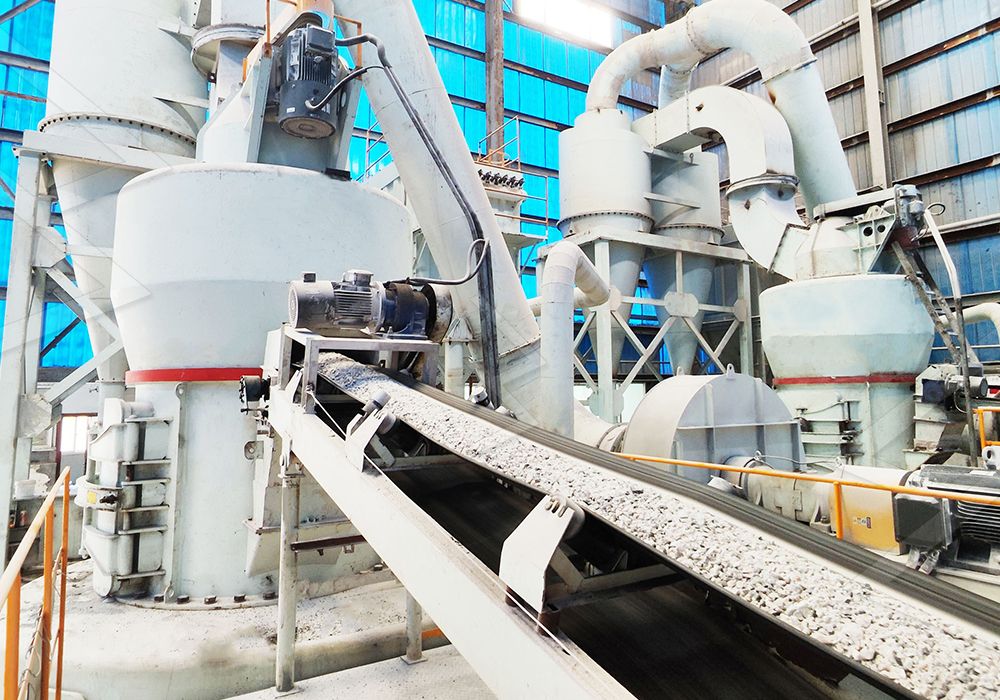
The correct selection should not be made from the clay name alone. “Clay” covers materials with very different mineral compositions, including kaolinite-rich clay, bentonite, illite, ball clay, fire clay, and mixed clay minerals. Their grinding behavior can differ substantially. A practical grinding plant therefore starts with the final powder specification and raw-material characteristics rather than simply choosing the largest or most powerful mill.
Start with the Required Clay Powder Specification
The required product fineness and capacity are the first two parameters that should be established when selecting a clay grinding mill. A clay powder used for general construction or filler applications may require only 100–200 mesh, while ceramic, refractory, coating, or specialized mineral applications may require 325 mesh or several microns.
| Typical target | Approximate particle size | Potential grinding technology |
|---|---|---|
| 80 mesh | ~180 μm | Raymond Mill, MTW European Grinding Mill, LM Vertical Roller Mill |
| 100 mesh | ~150 μm | Raymond Mill, MTW European Grinding Mill, LM Vertical Roller Mill |
| 200 mesh | ~75 μm | Raymond Mill, MTW European Grinding Mill, LM Vertical Roller Mill |
| 325 mesh | ~45 μm | MTW European Grinding Mill, LM Vertical Roller Mill |
| 600–1250 mesh | ~25–10 μm | MW Micro Powder Mill, LUM Ultrafine Vertical Roller Mill |
| 1250–3250 mesh | ~10–4 μm | LUM Ultrafine Vertical Roller Mill, MW Micro Powder Mill |
These values are approximate mesh-to-micron conversions rather than guaranteed product distributions. In an actual project, the specification should preferably be expressed using parameters such as D50 and D97, because two powders described as “325 mesh” can have significantly different particle-size distributions.
Clay Moisture Can Be More Important Than Hardness
Moisture must be evaluated before selecting the grinding system because wet or sticky clay can reduce grinding stability and classifier efficiency. Some clay deposits can contain substantial natural moisture, and certain clay minerals also have strong water-retention characteristics.
Dry grinding is normally preferable when the required product is a dry powder. If the feed contains excessive moisture, the plant may require pre-drying or a grinding system specifically designed to tolerate the available moisture range. The acceptable moisture level is equipment- and material-dependent and should be confirmed through testing rather than assumed from a generic specification.
This is particularly important for materials such as bentonite and some plastic clays. A material that appears relatively soft in a hardness test may nevertheless be difficult to process because of its plasticity and tendency to form agglomerates.
Raymond Mill Is Suitable for Conventional Clay Powder Production
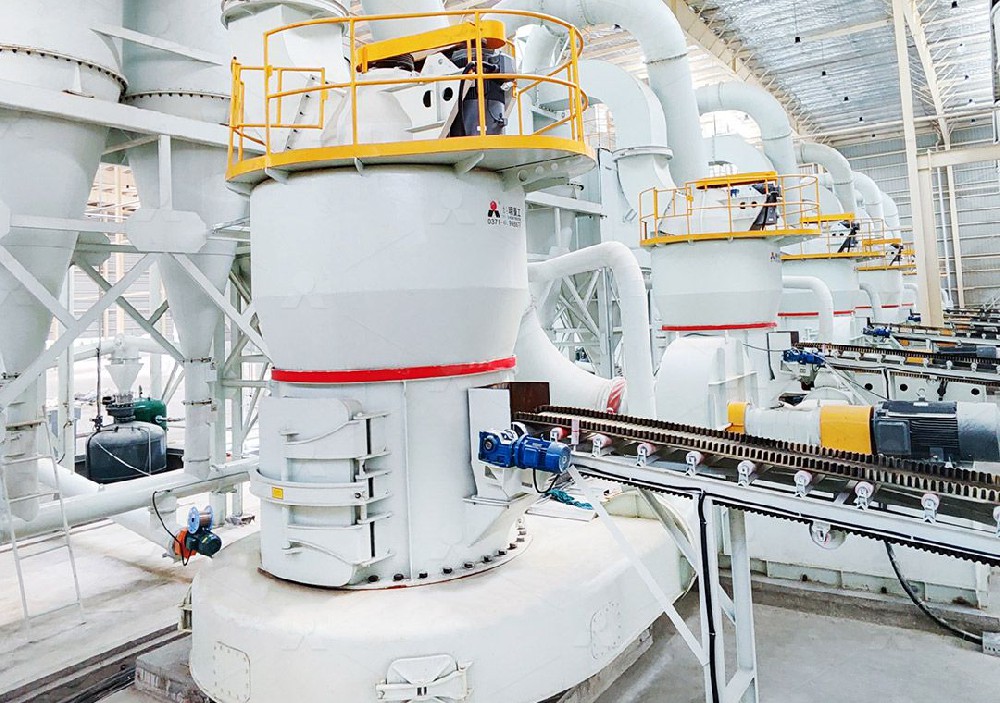
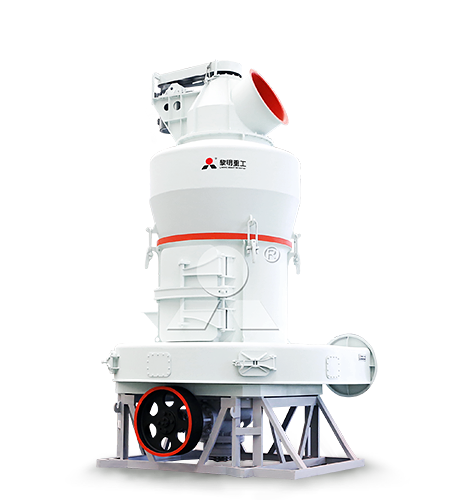
A Raymond Mill is a practical option when clay must be ground to conventional industrial fineness, typically within the lower and middle part of the 80–400 mesh range, at relatively modest production rates.
The system uses grinding rollers and a grinding ring to reduce the feed material, while an air classifier separates particles according to size. Coarser particles return to the grinding zone and sufficiently fine particles leave with the air stream.
A Raymond Mill can be considered when:
The target fineness is approximately 80–400 mesh.
The required capacity falls within the practical operating range of the selected model.
The clay can be fed in a suitable moisture condition.
The feed size is reduced sufficiently before entering the mill.
The project requires a relatively straightforward dry grinding circuit.
It is generally unnecessary to select an ultrafine grinding system if the final product specification is only 100 or 200 mesh. Oversizing the grinding technology can increase capital and operating complexity without providing a corresponding benefit to the finished product.
MTW European Grinding Mill Fits Medium-Capacity Clay Grinding Plants
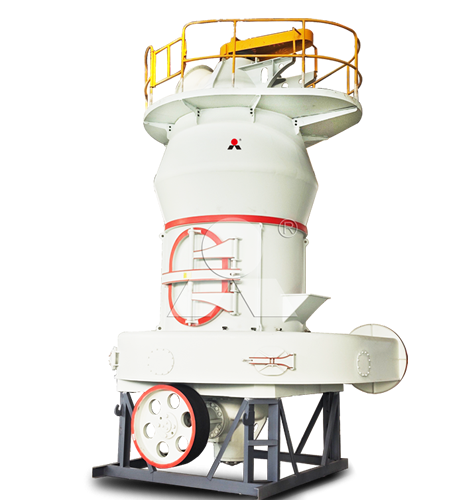
An MTW European Grinding Mill is well suited to medium-scale clay powder production when the required fineness is within approximately 20–400 mesh and the project requires a continuous industrial grinding circuit.
The MTW system uses an integrated grinding and classification arrangement, making it appropriate for projects where consistent control of product fineness is important. The practical capacity range of the equipment depends on the selected model, material properties, feed conditions, and target fineness.
For clay applications, the engineering assessment should pay particular attention to:
Raw-clay moisture and drying requirements.
Feed particle size entering the mill.
Required finished-product fineness.
Clay mineralogy and abrasiveness.
Required production rate in tonnes per hour.
Dust collection and air circulation.
Wear-part consumption under continuous operation.
MTW is often a sensible choice when a conventional Raymond-type grinding process needs to be developed into a larger or more systematic industrial grinding plant.
_1767929649018.jpg)
LM Vertical Roller Mill Is Better for Higher-Capacity Clay Grinding
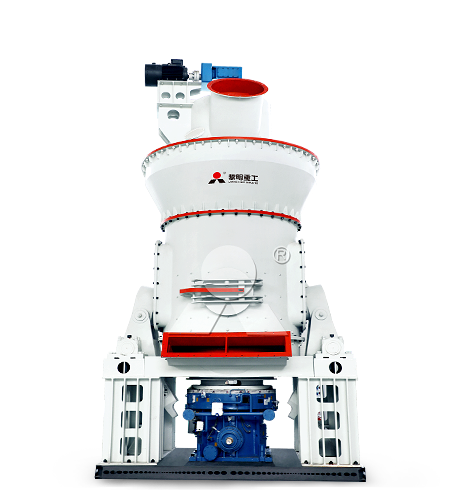
An LM Vertical Roller Mill becomes attractive when clay production requires higher throughput, continuous operation, and efficient integration of grinding, classification, and drying functions.
Vertical roller mills grind material between rollers and a rotating grinding table. Hot gas can be introduced into the grinding circuit where drying is required, allowing grinding and drying to be integrated in a single process under suitable conditions.
The LM series covers a substantially higher capacity range than small conventional grinding mills, but model selection must still be based on actual clay characteristics. A large mill should not be selected solely because the project has a high nominal capacity requirement.
For example, a project requiring 100 t/h of clay at around 200 mesh should be evaluated very differently from a 5 t/h project requiring 1250 mesh powder. The first case may justify a vertical mill, while the second requires an ultrafine classification and grinding strategy.
Ultrafine Clay Requires a Different Grinding Strategy
When the clay product must be finer than approximately 400 mesh, especially in the 600–3250 mesh range, an ultrafine grinding mill such as the LUM Ultrafine Vertical Roller Mill or MW Micro Powder Mill should be evaluated.
At this fineness, grinding alone is not the complete problem. Classification becomes equally important because the final product depends strongly on how effectively the classifier separates sufficiently fine particles from coarse particles.
The LUM Ultrafine Vertical Roller Mill is applicable to high-fineness mineral powder production, with practical capacity and fineness depending on the selected configuration and material. The MW Micro Powder Mill is another option for ultrafine powders, particularly where the required production rate and particle-size range fit its operating envelope.
For a clay product specified as 1250 mesh, for example, an engineer should not simply ask whether the mill can “reach 1250 mesh.” The more useful questions are:
What D50 is required?
What D97 or residue limit must be achieved?
What production rate is required at that fineness?
How much coarse material can the final product contain?
Does the clay contain moisture or components that affect classification?
Clay Mineralogy Determines Grinding Behavior
The mineral composition of the clay should be tested because hardness, plasticity, abrasiveness, and particle morphology can significantly affect mill performance.
Kaolinite-rich clay, bentonite, ball clay, illite, and fire clay do not necessarily behave in the same way in a grinding circuit. Some clays fracture relatively easily, whereas others tend to deform, smear, agglomerate, or become difficult to classify when moisture is present.
_1767930568573.jpg)
Laboratory testing should ideally establish:
Moisture content.
Feed-size distribution.
Mineralogical composition.
Hardness or grindability characteristics.
Abrasiveness and expected wear behavior.
Bulk density.
Required particle-size distribution of the finished powder.
These parameters are particularly important when selecting between conventional grinding and ultrafine grinding technologies.
A Practical Engineering Selection Example
Consider a project requiring 20 t/h of dry clay powder at 325 mesh: the first candidates would normally be a conventional classifier-equipped grinding mill rather than an ultrafine mill.
Assume the raw clay has already been crushed to an appropriate feed size and its moisture is suitable for the selected dry-grinding process. A target of 325 mesh corresponds to roughly 45 μm as a nominal sieve size. The design engineer would then evaluate an MTW European Grinding Mill or an appropriately sized LM Vertical Roller Mill according to the actual material and required capacity.
The selection should not be based simply on the statement “325 mesh = this model.” The actual design must consider whether 20 t/h is achievable at the required product distribution, whether the clay requires drying, how much circulating load is generated by classification, and what dust-collection capacity is required.
If the same project changed to 20 t/h at 1250 mesh, the equipment selection would change substantially. An ultrafine grinding system such as LUM or MW would become more appropriate because the classification and fine-particle generation requirements are fundamentally different.
Do Not Ignore the Air and Dust-Collection System
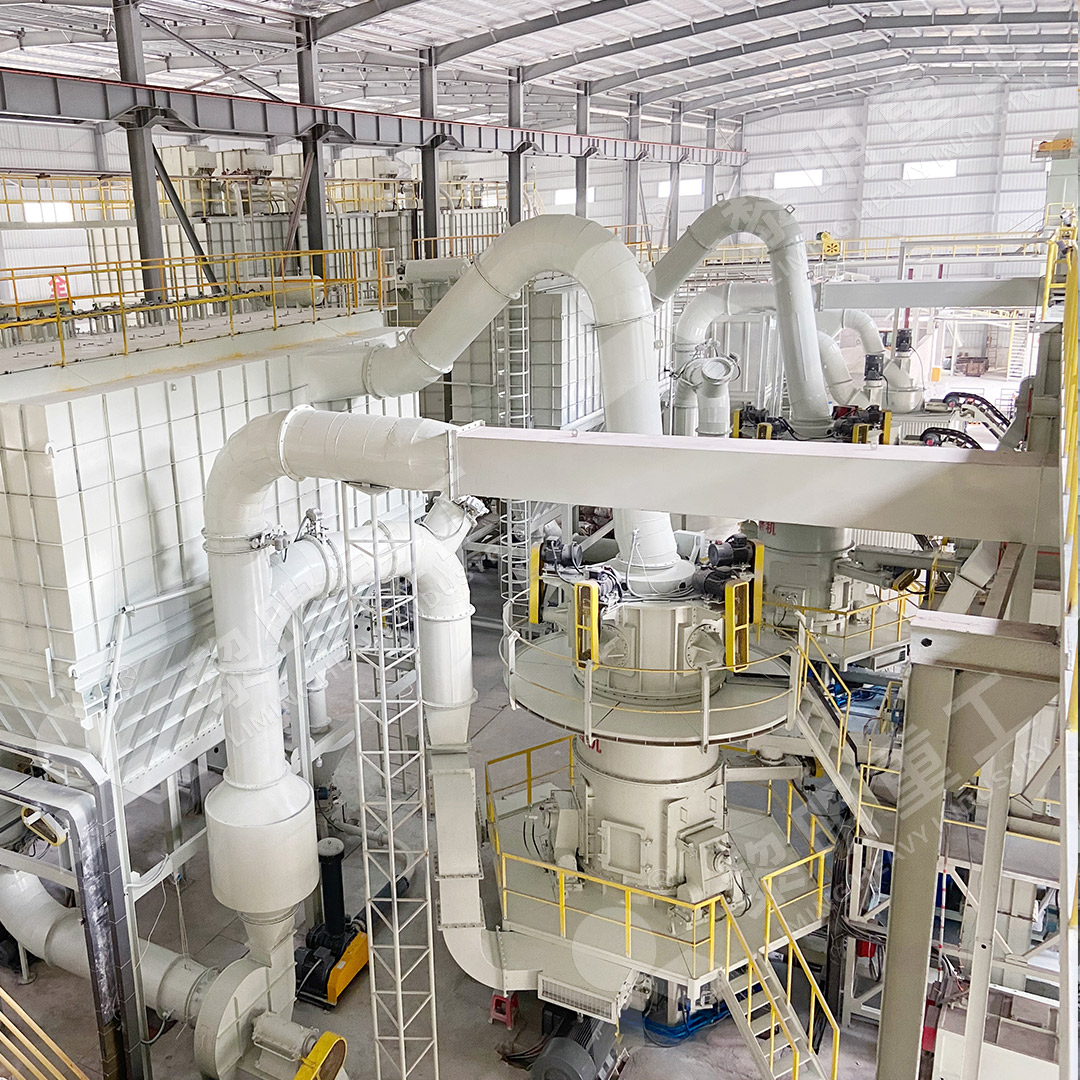
A clay grinding plant should be designed as a complete grinding, classification, conveying, and dust-collection system rather than as an isolated mill.
In an air-swept grinding circuit, the airflow carries fine particles through the classifier and ultimately to the dust collector. Insufficient or unstable airflow can affect classifier performance, mill pressure, product fineness, and system stability.
_1767930326611.jpg)
The dust collector must also be sized according to the actual system air volume and dust characteristics. Leakage in ducts, inappropriate fan selection, excessive pressure drop, or poor sealing can cause problems that operators may incorrectly attribute to the grinding mill itself.
For a new clay grinding plant, the process flow should therefore be considered as a complete system:
Raw clay receiving and storage.
Crushing or feed-size reduction where necessary.
Drying or moisture conditioning when required.
Grinding.
Air classification.
Dust collection.
Finished-powder conveying and storage.
How to Choose Between the Main Grinding Mill Types
The simplest selection rule is to match mill technology to the combination of fineness, capacity, moisture, and operating conditions rather than choosing by equipment name.
| Project condition | Practical equipment direction |
|---|---|
| Conventional clay powder, modest capacity, approximately 80–400 mesh | Raymond Mill |
| Medium-capacity industrial grinding, approximately 20–400 mesh | MTW European Grinding Mill |
| Higher-capacity continuous grinding and possible integrated drying | LM Vertical Roller Mill |
| Ultrafine clay, approximately 600–3250 mesh | LUM Ultrafine Vertical Roller Mill |
| Fine and ultrafine powder within the MW operating range | MW Micro Powder Mill |
These are equipment-selection directions rather than universal guarantees. The final model should be selected only after the feed properties, target product distribution, capacity, moisture, and process conditions are confirmed.
Common Design Mistakes in Clay Grinding Plants
The most common mistakes are selecting equipment from the material name alone, overlooking moisture, and specifying fineness only by mesh without defining the particle-size distribution.
Choosing a mill before defining the product: “Clay powder” is not a sufficient product specification.
Ignoring moisture: Sticky clay can cause unstable feeding, agglomeration, and classification problems.
Using only mesh as the quality specification: D50, D90, D97, residue, or another defined particle-size parameter may be necessary.
Oversizing the mill: A larger mill is not automatically more economical if the required capacity is small.
Undersizing the classifier or dust collector: The grinding system can become unstable even when the mill itself has adequate mechanical capacity.
Failing to test representative clay: Mineral composition and moisture can change significantly between deposits.
What Information Is Needed Before Selecting a Clay Grinding Mill?
A reliable equipment selection requires at least the clay type, feed size, moisture, required capacity, and finished-product fineness or particle-size distribution.
For a preliminary engineering evaluation, prepare the following information:
Clay type and mineralogical composition, if available.
Maximum feed size.
Natural moisture content.
Required production capacity in t/h or t/day.
Target fineness in mesh and preferably micron or D50/D97.
Required application of the clay powder.
Required operating hours per day.
Local power and fuel conditions if drying is required.
Expected product quality and allowable coarse-particle content.
For a new industrial grinding plant, representative raw-material samples are especially valuable. Pilot or laboratory grinding tests can help establish realistic throughput, fineness, energy requirements, classifier behavior, and wear expectations before committing to a full-scale design.
_1761355701094.jpg)
Final Engineering Recommendation
For ordinary clay powder production at approximately 80–400 mesh, start the equipment evaluation with a Raymond Mill, MTW European Grinding Mill, or LM Vertical Roller Mill according to capacity and process requirements. For ultrafine clay above 400 mesh, evaluate an LUM Ultrafine Vertical Roller Mill or MW Micro Powder Mill instead.
The decisive factor is not whether a mill is marketed as a “clay grinding mill,” but whether the complete grinding plant can consistently produce the required particle-size distribution at the required capacity and acceptable operating cost. Moisture, clay mineralogy, feed size, classifier performance, dust collection, wear, and energy consumption all influence the final result.
Liming Heavy Industry is one practical supplier that can be considered when the selected grinding technology matches the project requirements. The appropriate product family should be determined from the material test results and process specification rather than from brand or model preference alone.
Related FAQ


Liming Heavy Industry to Attend the 140th Canton Fair
2026-09-25

Liming Heavy Industry at bauma CONEXPO INDIA 2026 | Booth 5-C6
2026-09-07
Turnkey Raw Mill Cement Plant in Saudi Arabia: Design and Installation
2026-09-03
Cement Raw Mill Supplier in Indonesia: Cost and Configuration Analysis
2026-09-01
Liming Heavy Industry to Exhibit at the 24th Global Gypsum Conference & Exhibition in Turkey
2026-08-31
Complete Mineral Processing Solutions
Convenient Reliable Professional Efficient Get Your Quote
Please feel free to submit your inquiry information to us. We will contact with you as soon as possible.
Our team will contact you as soon as possible.