


Summary:
For grinding calcium carbonate into plastic filler masterbatch, the correct equipment is almost always an ultrafine milling system—typically a LUM Ultrafine Vertical Roller Mill, an MW Micro Powder Mill, or a stirred bead mill circuit—because the plastic industry requires narrow particle size distribution (PSD) with D50 values between 2 and 10 microns and tight control of the top cut (D97).
Details:
For grinding calcium carbonate into plastic filler masterbatch, the correct equipment is almost always an ultrafine milling system—typically a LUM Ultrafine Vertical Roller Mill, an MW Micro Powder Mill, or a stirred bead mill circuit—because the plastic industry requires narrow particle size distribution (PSD) with D50 values between 2 and 10 microns and tight control of the top cut (D97). A standard Raymond Mill or MTW European Grinding Mill can produce coarser filler (e.g., 200–400 mesh) used in high-volume, low-end PVC pipes, but for high-quality polypropylene (PP), polyethylene (PE), and advanced PVC compounding, you must use ultrafine equipment to achieve the 800–2500+ mesh specifications required to maintain plastic impact strength and surface finish.
The engineering challenge in producing ground calcium carbonate (GCC) for plastics is not just achieving a fine average size, but eliminating the coarse tail (oversize particles) that causes stress concentrators, tear defects in films, and surface roughness in molded parts. Furthermore, ultrafine GCC for plastics is usually surface-treated (e.g., with stearic acid or aluminate coupling agents) after grinding to prevent agglomeration and improve compatibility with the hydrophobic polymer matrix.
_1767930326611.jpg)
Understanding Plastic Grade Calcium Carbonate Requirements
Unlike construction or basic paint fillers, plastic filler masterbatch uses GCC as an active compound component. When compounded into PP or PE (often at 20% to 60% loading by weight), the calcium carbonate particles act as "islands" within the polymer matrix. If the particles are too large, they weaken the plastic; if they are too fine but poorly dispersed, they agglomerate and cause processing failures.
| Particle Size (Approx. Mesh) | Typical Micron Reference | Application in Plastics | Recommended Milling Technology |
|---|---|---|---|
| 200–400 Mesh | 38–75 µm top cut | Low-end PVC pipes, thick-walled unpressurized profiles, floor tiles. Used strictly for volume cost reduction. | MTW European Grinding Mill or Raymond Mill |
| 800–1250 Mesh | D50: 8–15 µm / D97: <18 µm | Standard PP/PE masterbatch, injection molding, general automotive parts. Balances cost and rigidity. | MW Micro Powder Mill or LUM Ultrafine Vertical Roller Mill |
| 1500–2500 Mesh | D50: 3–5 µm / D97: <10 µm | High-performance PP masterbatch, thin films, high-end PVC profiles, appliances. Maintains impact strength. | LUM Ultrafine Vertical Roller Mill or MW Micro Powder Mill with precision air classifier |
| 2500–5000 Mesh | D50: 1–2.5 µm / D97: <5 µm | Ultra-thin PE breathable films, high-transparency plastics, premium wire/cable insulation. | LUM Ultrafine Mill, Stirred Media Mill, or Ball Mill with multi-stage high-efficiency classifiers |
For modern masterbatch production, 1250 to 2500 mesh (roughly 3 to 10 micron median size) is the commercial sweet spot. In a recent industrial study on PP filled masterbatch, moving from a 1500-mesh to a 2500-mesh GCC significantly reduced the D50 by 39% and narrowed the D97, resulting in improved rigidity and strength potential, though it required stricter extrusion processing to ensure dispersion.
Equipment Selection for Ultrafine GCC
Grinding calcite or marble to sub-10 micron sizes is highly energy-intensive. Engineers select equipment based on the required capacity, energy efficiency (kWh/t), and the precision of the dynamic air classifier.
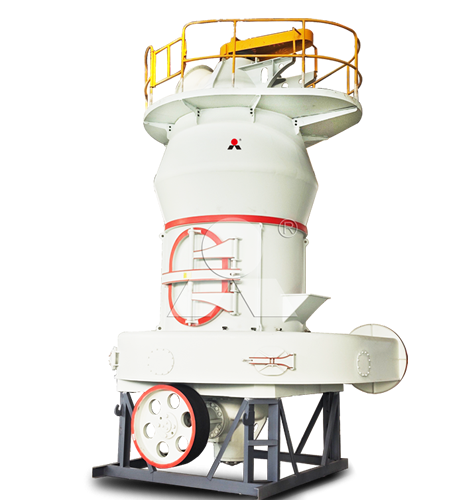
LUM Ultrafine Vertical Roller Mill
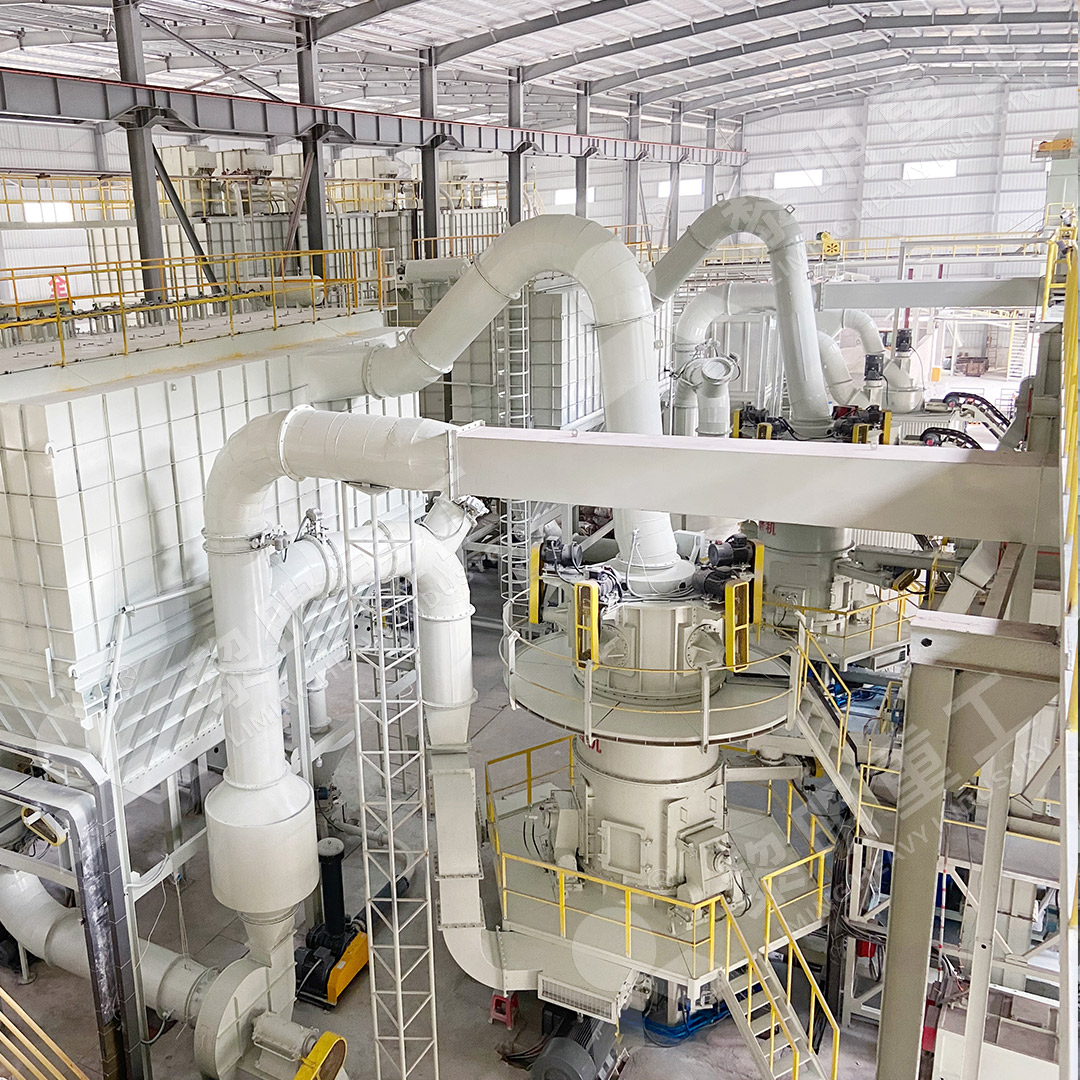
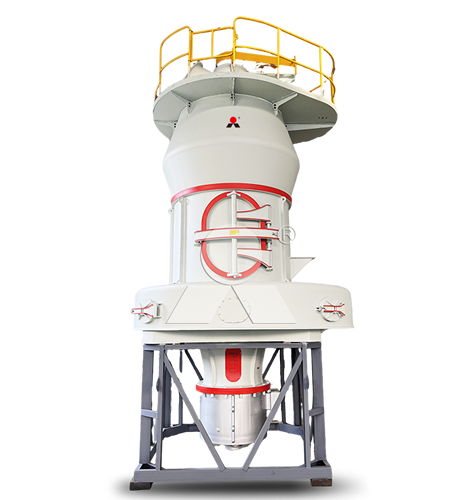
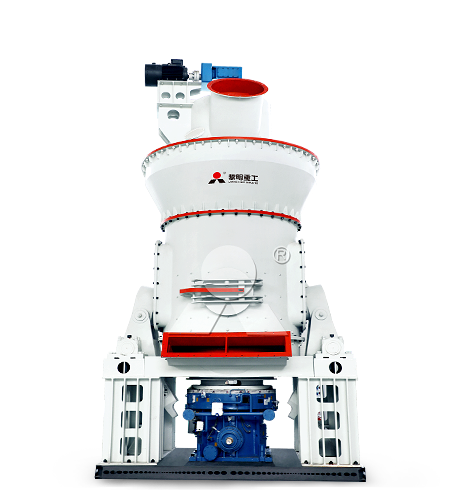
The LUM Ultrafine Vertical Mill is the primary recommendation for large-scale, high-efficiency production of 1250–2500 mesh GCC. It integrates grinding, classification, and conveying into a single unit. The principle of bed grinding between specially profiled rollers and a rotating table is significantly more energy-efficient than attrition milling, often reducing energy consumption by 30% compared to traditional mills. More importantly, it features a multi-rotor dynamic classifier that delivers sharp particle size cuts, completely rejecting the coarse powder contamination that ruins plastic films.
MW Micro Powder Mill
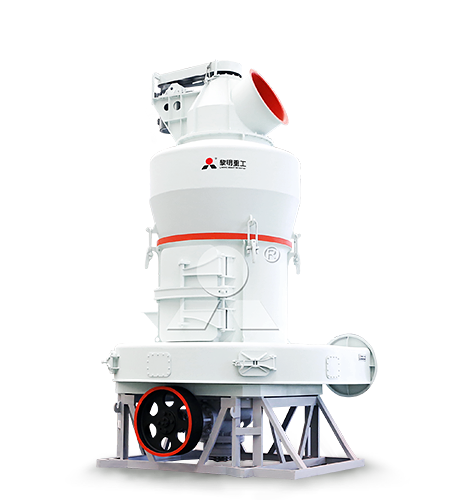
For small to medium-capacity operations, or projects with a lower initial capital budget, the MW Micro Powder Mill is highly effective. It uses a ring-and-roller principle but is engineered specifically for the 325–2500 mesh range. It produces excellent particle shape and allows operators to adjust the product fineness simply by changing the speed of the inverter-controlled classifier. This flexibility is ideal for a plant producing multiple masterbatch grades (e.g., switching between 800 mesh for thick molding and 1500 mesh for standard films).
_1761355701097.jpg)
Ball Mill + Air Classifier Systems
For the absolute highest capacities and when targeting the 2500–5000 mesh range, a continuous ball mill paired with a multi-rotor high-efficiency air classifier is a classic industrial solution. By maintaining a high circulating load (300%–500%), the ball mill prevents overgrinding while the classifier extracts the exact sub-5 micron fraction required for premium masterbatches. However, this setup requires a large footprint and high capital investment.
Moisture Control: A Critical Processing Parameter
Moisture is the enemy of plastic compounding. During extrusion, moisture turns to steam, causing voids, bubbles, and surface defects in the polymer. Therefore, the grinding process must ensure that the final GCC powder has a moisture and volatile matter content strictly below 0.3%.
Drying during grinding: The LUM Vertical Roller Mill has a distinct advantage here, as hot air can be introduced directly into the mill body, allowing simultaneous grinding and drying of raw materials with up to 5% initial moisture.
Pre-drying: If using an MW Micro Powder Mill, raw materials with elevated moisture must pass through a rotary dryer before entering the grinding circuit.
The Surface Modification Step
Grinding the GCC to 2 µm is only half the process for plastic applications. Natural calcium carbonate is hydrophilic (water-loving), while polymers like PP and PE are hydrophobic (water-repelling). Without treatment, ultrafine GCC will clump together in the extruder rather than dispersing.
Immediately after classification, the ultrafine GCC is routed to a high-speed continuous modifying machine (often a pin mill or high-shear mixer). Here, the powder is heated to approximately 100°C to remove residual surface moisture, and a coupling agent—typically stearic acid or an aluminate/titanate coupling agent—is sprayed onto the powder. This coats each individual particle, lowering its oil absorption value and drastically improving its interfacial compatibility with the plastic resin. A plant design must include this modification circuit to sell directly to masterbatch manufacturers.
Checklist for Designing a Plastic-Grade GCC Plant
When engineering a calcium carbonate grinding line specifically for the plastic filler market, observe these process rules:
Raw Material Purity: Select high-whiteness calcite or marble (CaCO3 > 98%). High silica or iron impurities will not only dull the color of the plastic but will aggressively wear out the precision classifier blades, ruining the top-cut (D97) control.
Pre-Crushing: Use a jaw crusher followed by a hammer crusher to provide a stable feed size (usually < 10 mm) to the ultrafine mill. Unstable feed size causes mill vibration and fluctuating powder fineness.
Classifier Tuning: Do not rely on catalog settings. The classifier speed must be tuned onsite using a laser particle size analyzer to ensure the D97 meets the exact specifications of the masterbatch customer.
Dust Collection: Because the product is so fine, pulse-jet baghouse filters with 99.9% efficiency are mandatory. Inadequate filtration means you lose your most valuable sub-micron product out the exhaust stack.
Pneumatic Conveying: Use dense-phase pneumatic conveying to move the finished powder to silos. High-velocity conveying will cause product degradation and pipeline wear.
For commercial production of plastic-grade GCC, do not compromise by using standard mid-fineness mills. Equip your plant with a LUM Ultrafine Vertical Roller Mill or an MW Micro Powder Mill, integrate a reliable heating and surface modification circuit, and maintain strict control over D97 and moisture to meet the demanding requirements of the polymer compounding industry.
Related FAQ


Liming Heavy Industry to Attend the 140th Canton Fair
2026-09-25

Liming Heavy Industry at bauma CONEXPO INDIA 2026 | Booth 5-C6
2026-09-07
Turnkey Raw Mill Cement Plant in Saudi Arabia: Design and Installation
2026-09-03
Cement Raw Mill Supplier in Indonesia: Cost and Configuration Analysis
2026-09-01
Liming Heavy Industry to Exhibit at the 24th Global Gypsum Conference & Exhibition in Turkey
2026-08-31
Complete Mineral Processing Solutions
Convenient Reliable Professional Efficient Get Your Quote
Please feel free to submit your inquiry information to us. We will contact with you as soon as possible.
Our team will contact you as soon as possible.