


Summary:
Dolomite grinding normally uses a complete production line rather than one machine: a crusher prepares mill feed, an industrial grinding mill reduces the material to the required powder size, a classifier controls the final particle-size distribution, and a dust-collection system recovers fines.
Details:
Dolomite grinding normally uses a complete production line rather than one machine: a crusher prepares mill feed, an industrial grinding mill reduces the material to the required powder size, a classifier controls the final particle-size distribution, and a dust-collection system recovers fines. For most 80-400 mesh dolomite powder projects, a Raymond Mill or MTW European Grinding Mill is the practical choice; for high-capacity plants or moist feed, an LM Vertical Roller Mill is usually more suitable; and for 800-3000 mesh ultrafine grades, a LUM Ultrafine Vertical Roller Mill or MW Micro Powder Mill is required.
_1761355927036.jpg)
The correct equipment depends primarily on target fineness, required capacity in tph, feed moisture, dolomite purity, abrasive silica content, and the final application. Dolomite is generally a relatively soft carbonate mineral, but quartz, chert, iron-bearing minerals, and other gangue can substantially change wear rates and operating cost. Grinding is required once crushing alone can no longer economically reduce the material below roughly 5-20 mm, while classification controls the fine powder delivered to the finished-product silo.
Equipment in a Dolomite Grinding Plant
A standard dolomite powder production line includes crushing, storage and metered feeding, grinding and classification, powder collection, and finished-product handling. Each unit must be sized around the design throughput rather than selected independently.
| Process Stage | Main Equipment | Engineering Function |
|---|---|---|
| Primary crushing | Jaw crusher | Reduces quarry stone, commonly up to 300-500 mm, into manageable material for secondary crushing. |
| Secondary crushing | Hammer crusher, impact crusher, or fine jaw crusher | Produces a controlled mill feed, commonly below 20-50 mm depending on the selected mill. |
| Feed handling | Hopper, belt conveyor, bucket elevator, vibrating feeder or weigh feeder | Delivers stable feed to the mill; feed-rate fluctuation causes unstable mill current, variable fineness, and reduced throughput. |
| Grinding | Raymond Mill, MTW European Grinding Mill, LM Vertical Roller Mill, LUM Ultrafine Vertical Roller Mill, or MW Micro Powder Mill | Reduces dolomite to the specified mesh or micron range. |
| Classification | Internal classifier or external dynamic air classifier | Separates on-spec fine powder from coarse particles returned for further grinding. |
| Powder collection | Cyclone separator and pulse-jet baghouse | Recovers airborne fine powder and controls plant dust emissions. |
| Finished product handling | Silo, screw conveyor, pneumatic conveying system, packing machine, or bulk-loading station | Stores and dispatches powder while minimizing contamination and segregation. |
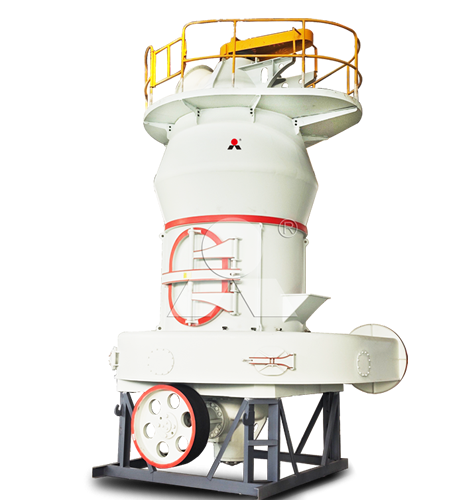
Raymond Mill for Standard Dolomite Powder
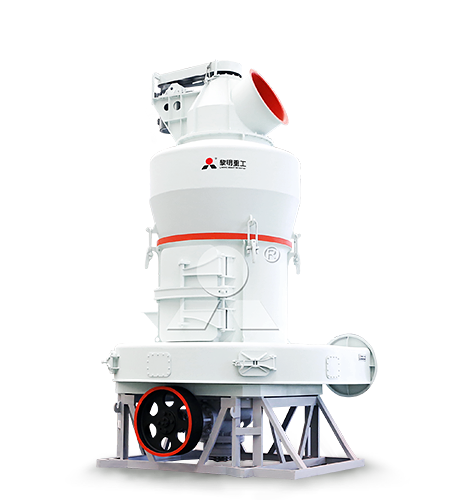
A Raymond Mill is normally recommended for small- to medium-capacity dolomite grinding lines producing approximately 80-400 mesh powder. It is a suitable choice for general filler, putty, construction material, ceramic, glass, and agricultural applications where the customer does not require an ultrafine particle-size distribution.
In a typical dry process, crushed dolomite below the mill’s permitted feed size enters the grinding chamber through a controlled feeder. Grinding rollers apply pressure to the material against the grinding ring, while airflow carries qualified particles to the classifier. Coarse particles return to the grinding zone, and accepted powder moves to the cyclone and bag filter.
_1761355701097.jpg)
The main advantage of a Raymond Mill is its relatively simple process layout and moderate capital cost. Its limitation is that it is not the preferred final grinding system when the project requires a tight sub-10-micron D97, very high capacity, or several distinctly different ultrafine grades from one production line.
MTW Mill for 100-400 Mesh Production
An MTW European Grinding Mill is generally the better choice when a project needs more stable operation, higher throughput, and improved maintenance access than a conventional Raymond Mill can provide. It is particularly suitable for commercial dolomite powder plants producing 100, 200, 325, or 400 mesh products in sustained production campaigns.
For a plant supplying several conventional grades, an MTW mill can be paired with an adjustable classifier and automated feeder. Operators can move between products by changing classifier rotor speed, air volume, and feed rate, although each grade change must be verified by sieve analysis or laser particle-size measurement before finished powder is transferred to the product silo.
MTW equipment is a sensible choice when the business case is based on regular sales of 200-400 mesh dolomite rather than specialty ultrafine material. It should not be selected merely because a supplier lists a fine mesh range; the required tph at the actual product specification is the key design figure.
LM Vertical Roller Mill for Large Plants
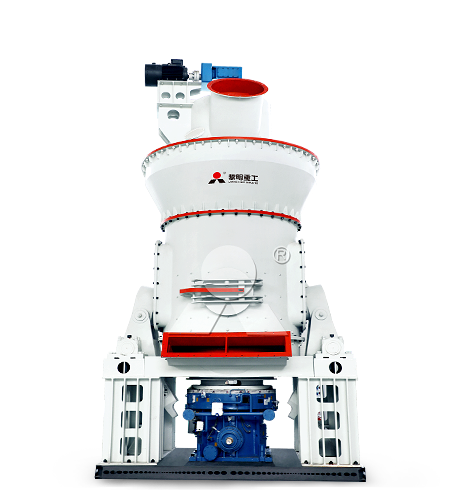
An LM Vertical Roller Mill is recommended when a dolomite grinding plant needs high single-line capacity, compact layout, or simultaneous drying and grinding. Vertical roller mills combine grinding, air classification, material transport, and—in suitable configurations—thermal drying in one system, which can simplify the overall flowsheet.
This arrangement becomes particularly useful when feed moisture is too high for stable operation in a pendulum-type mill. Wet dolomite can coat rollers and liners, restrict powder flow, and interfere with classifier performance. Where the feed contains several percent moisture, the plant may use hot air from a suitable heat source, with final design based on feed moisture, evaporation requirement, air temperature, and allowable product temperature.
LM Vertical Roller Mill selection should be based on a capacity study, because the economic advantage comes from replacing multiple smaller lines or integrating drying with grinding. For a low-tonnage 200 mesh project using dry feed, the additional capital and process complexity may not be justified.
LUM and MW Mills for Ultrafine Dolomite
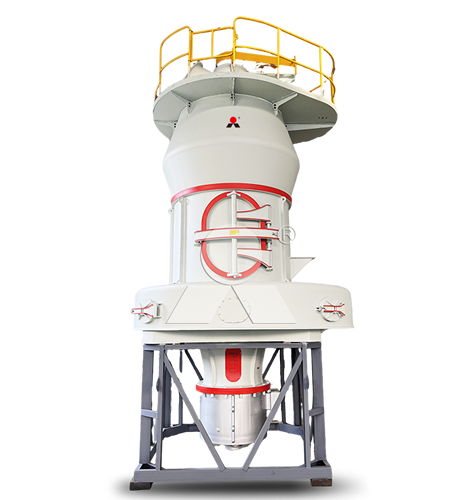
LUM Ultrafine Vertical Roller Mill and MW Micro Powder Mill are used when the required product is finer than conventional 400 mesh dolomite, particularly for 800-3000 mesh grades, typically involving D97 values in the low-micron range. Such products are used in higher-value plastics, rubber compounds, coatings, sealants, engineered composites, and selected functional filler applications.
At these fineness levels, classification quality becomes as important as grinding force. A coarse tail in the finished powder can create surface defects, poor dispersion, or processing problems in downstream polymer and coating systems. The mill therefore needs a stable feed, carefully controlled airflow, correctly selected classifier speed, and reliable dust collection.
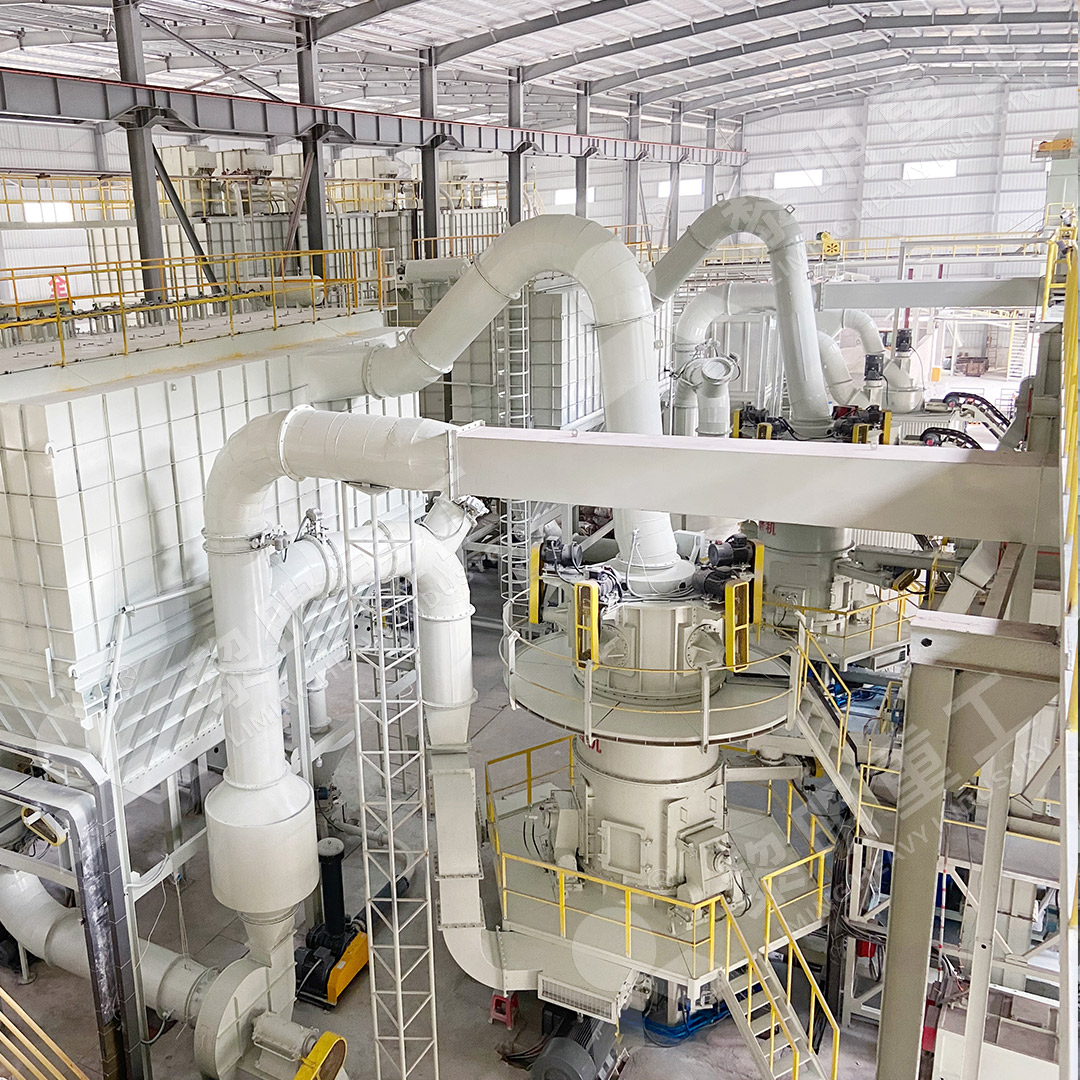
Ultrafine grinding also has higher energy consumption per tonne than standard 200-400 mesh production. A project should therefore confirm the market premium for fine material before choosing LUM or MW equipment. Producing a 200 mesh dolomite product on an ultrafine mill usually increases capital and operating cost without adding customer value.
Mill Selection by Product Requirement
The most reliable way to select dolomite grinding equipment is to begin with the final powder specification and work backward through capacity, raw material condition, and process layout. The following matrix provides a practical starting point; final model selection requires feed testing and supplier-specific sizing.
| Target Product | Typical Application | Recommended Equipment | Selection Reason |
|---|---|---|---|
| 80-200 mesh | Construction additives, agriculture, basic ceramic and glass feed | Raymond Mill or MTW European Grinding Mill | Provides adequate fineness at moderate capital cost and straightforward operation. |
| 200-400 mesh | Putty, coatings, plastics, rubber, ceramic bodies, general industrial filler | MTW European Grinding Mill; Raymond Mill for smaller capacity | Offers stable fine powder production with adjustable classification and reasonable operating cost. |
| 200-400 mesh at high tph or elevated moisture | Large-volume industrial filler and integrated grinding plants | LM Vertical Roller Mill | Combines grinding, classification, conveying, and potentially drying in a compact high-capacity arrangement. |
| 800-1250 mesh | Fine polymer filler, coatings, rubber, specialty compounds | LUM Ultrafine Vertical Roller Mill or MW Micro Powder Mill | Provides the finer classifier cut and particle-size control unavailable from conventional mills. |
| 1250-3000 mesh | High-value functional fillers and advanced materials | LUM Ultrafine Vertical Roller Mill or MW Micro Powder Mill | Designed for ultrafine grinding and narrow PSD control in the micron range. |
Raw Material Conditions Control Equipment Choice
Dolomite grade and physical properties can change the equipment recommendation even when the target mesh is unchanged. Before ordering a mill, the plant should establish mineral composition, MgO and CaO balance, silica content, iron content, moisture, feed-size distribution, bulk density, whiteness, and abrasion characteristics.
Feed size: Crushing must produce material within the mill’s maximum feed size. Oversize feed can cause vibration, lower throughput, and damage to internal components.
Moisture: Dry feed is easiest to grind. When moisture exceeds the stable operating range of the selected mill, pre-drying or an LM vertical mill with hot-air drying should be considered.
Silica and quartz: High silica content increases wear on rollers, rings, liners, classifier blades, elbows, and pneumatic conveying lines.
Whiteness: Dolomite for paint, plastics, and putty must be selected first for optical quality; grinding equipment cannot correct a low-whiteness ore source.
Required PSD: Mesh alone is insufficient for fine grades. The purchase specification should state D50, D97, oversize limit, and, where relevant, residue on a defined sieve.
Application: A 325 mesh construction filler and a 325 mesh polymer filler may need different PSD control, moisture limits, contamination control, and surface-treatment arrangements.
A Practical 325 Mesh Example
Consider a plant requirement of 12 tph of 325 mesh dolomite powder for wall putty and general coating filler. The raw dolomite is crushed to below 25 mm, has moisture below 4%, and contains limited abrasive silica. In this case, an MTW European Grinding Mill with a dynamic classifier, cyclone separator, pulse-jet baghouse, finished-product silo, and automatic bagging system is normally the most balanced solution.
If the same plant expects feed moisture of 8-10% during the rainy season, the original design may become unstable without drying. The engineering response is not simply to increase mill motor power. The plant must evaluate a drying stage or an LM Vertical Roller Mill configuration that can introduce controlled hot air, evaporate moisture, and maintain a stable gas balance through the classifier and dust collector.
_1761361296294.jpg)
Commissioning Checks That Prevent Off-Spec Powder
Most dolomite grinding problems are caused by unstable feed, poor classifier adjustment, moisture variation, or an undersized dust-collection and air system rather than by the mill alone. The following checks should be completed during commissioning and repeated after major maintenance.
Verify that crusher discharge remains within the mill’s specified feed-size limit.
Calibrate the feeder so actual tph matches the control-room setting.
Establish baseline mill current, differential pressure, fan current, classifier speed, and product PSD for each saleable grade.
Confirm the baghouse air-to-cloth ratio and pulse-cleaning performance under full production conditions.
Check cyclone, ductwork, rotary valves, and conveying lines for air leakage, as leakage can disturb classifier performance and reduce collection efficiency.
Measure product moisture, mesh residue, D50, and D97 at regular intervals rather than relying only on mill operating parameters.
Track roller, ring, liner, and classifier wear against processed tonnes, especially when raw material silica content varies.
Recommended Equipment Configuration
For most commercial dolomite powder projects in the 200-400 mesh range, select an MTW European Grinding Mill with crushing equipment, metered feeding, an integrated classifier, cyclone, pulse-jet baghouse, product silo, and packing system. A Raymond Mill remains appropriate for smaller-capacity, dry-feed projects where investment cost is the primary constraint.
Use an LM Vertical Roller Mill where capacity is high or feed drying must be integrated into the grinding plant. Select a LUM Ultrafine Vertical Roller Mill or MW Micro Powder Mill only when the sales specification genuinely requires ultrafine 800-3000 mesh material and a controlled micron-scale PSD. Liming Heavy Industry is one practical supplier of these product families, but the final equipment decision should follow verified raw-material testing, target production capacity, and downstream product specification rather than a standard equipment list.
Related FAQ


Liming Heavy Industry to Attend the 140th Canton Fair
2026-09-25

Liming Heavy Industry at bauma CONEXPO INDIA 2026 | Booth 5-C6
2026-09-07
Turnkey Raw Mill Cement Plant in Saudi Arabia: Design and Installation
2026-09-03
Cement Raw Mill Supplier in Indonesia: Cost and Configuration Analysis
2026-09-01
Liming Heavy Industry to Exhibit at the 24th Global Gypsum Conference & Exhibition in Turkey
2026-08-31
Complete Mineral Processing Solutions
Convenient Reliable Professional Efficient Get Your Quote
Please feel free to submit your inquiry information to us. We will contact with you as soon as possible.
Our team will contact you as soon as possible.