


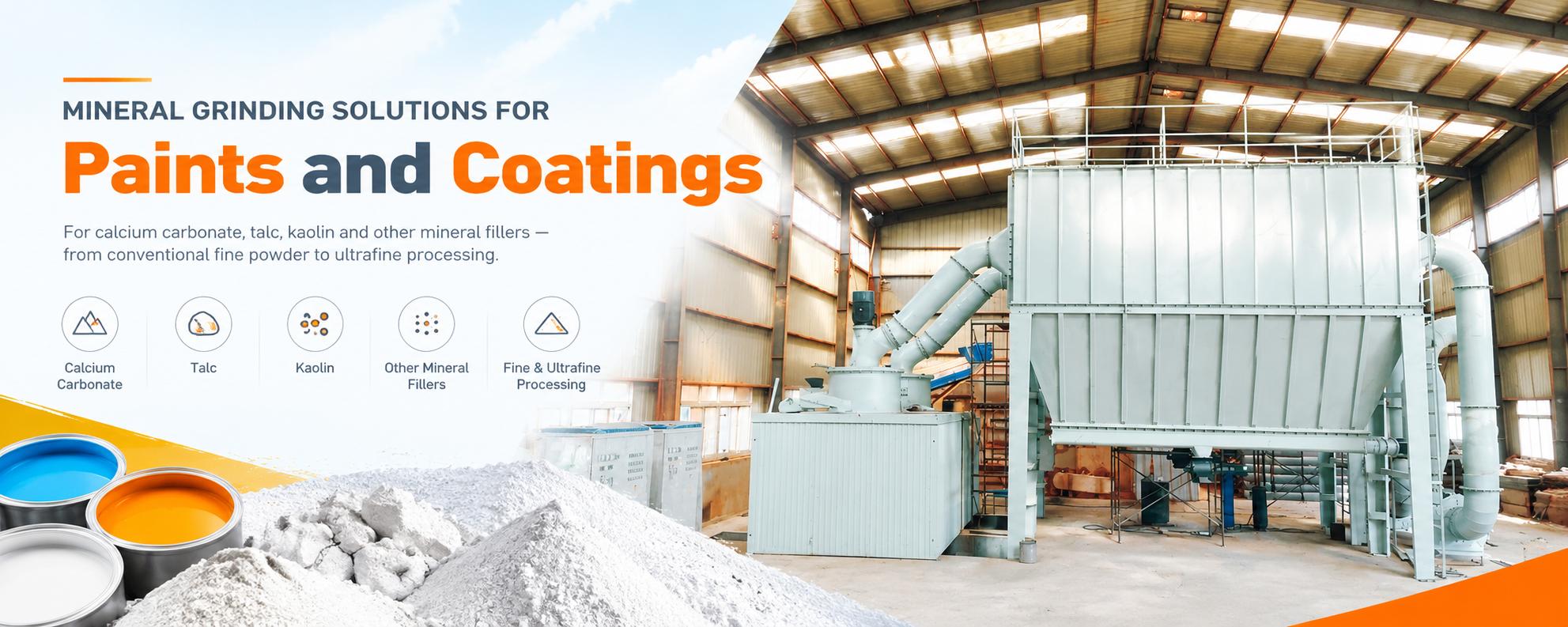
Plan a mineral powder grinding plant around the quantity of approved powder customers need, the grades they require, and the production hours realistically available. The correct capacity is not simply the mill's maximum hourly output. It is the sustained output of acceptable product across the actual production schedule.
For coating fillers, finer grades, strict coarse-residue limits, raw-material variation, cleaning, and product changes can all affect that output. A practical capacity plan connects demand, grinding performance, quality control, storage, and dispatch before equipment is selected.
Begin with a Demand Schedule by Grade
An annual sales target is a useful starting point, but it does not reveal how the plant must operate. Separate demand by mineral, particle-size specification, packaging format, and delivery period.
A plant supplying one calcium carbonate grade continuously has a different workload from a plant producing calcium carbonate, talc, and kaolin in short campaigns. Even when annual tonnage is identical, changeovers and different grinding rates can create very different equipment requirements.
| Planning item | Information to establish | Why it matters |
|---|---|---|
| Annual demand | Expected tonnes for each approved grade | Defines the production workload |
| Peak-period demand | Monthly or weekly delivery requirements | Reveals whether average annual capacity is sufficient |
| Product specification | Distribution, coarse residue, moisture, color, and other acceptance limits | Determines the quality standard at which output must be demonstrated |
| Order pattern | Typical lot size and frequency | Influences campaign length, cleaning, and storage |
| Delivery format | Bags, bulk bags, or bulk loading | Determines packaging and dispatch requirements |
Separate confirmed demand from potential future demand. This allows the initial installation and expansion provision to be assessed without treating every possible order as guaranteed production.
Translate the Operating Calendar into Real Grinding Hours
Calendar hours are not the same as productive hours. Start with the intended shifts and working days, then allow for activities that prevent the line from producing approved powder.
Scheduled maintenance and inspections.
Cleaning and mineral changes.
Classifier adjustment and stabilization between grades.
Startup, shutdown, and transition material.
Unplanned mechanical or electrical interruptions.
Feed shortages, utility interruptions, and downstream stoppages.
Keep these allowances transparent. If downtime has already been removed from available hours, do not apply another broad allowance that counts the same losses again. Likewise, distinguish downtime from reduced running speed and rejected product.
An illustrative single-grade starting point
Suppose a project needs 24,000 tonnes of approved filler annually and expects 4,000 productive grinding hours after the stated stoppages and transitions have been accounted for. The initial requirement is an average of 6 tonnes of approved powder per productive hour.
This is a planning baseline, not a mill recommendation. The project must still demonstrate that the selected line can sustain that output at the required particle-size distribution, moisture, and residue limits. Peak demand and recovery after interruptions also need consideration.
For Several Grades, Plan the Time Each One Consumes
A shared line should be assessed using the verified output of each grade. Do not apply the capacity of the easiest product to the entire annual tonnage.
The following hypothetical example shows why a grade-by-grade schedule is more useful than one average capacity figure.
| Product | Annual requirement | Assumed approved-product output | Productive hours required |
|---|---|---|---|
| Fine filler grade | 12,000 tonnes | 8 tonnes per hour | 1,500 hours |
| Finer filler grade | 8,000 tonnes | 5 tonnes per hour | 1,600 hours |
| Specialty ultrafine grade | 4,000 tonnes | 4 tonnes per hour | 1,000 hours |
| Total | 24,000 tonnes | Grade-dependent | 4,100 hours |
These assumed rates are for illustration only and are not equipment performance claims. They show that this product mix would require 4,100 productive hours before adding any changeover time not already included in the operating calendar. A plan offering only 4,000 productive hours would therefore need revision.
Possible responses include increasing available shifts, selecting a different configuration, changing campaign lengths, or dedicating another line to a demanding grade. The best response depends on demand certainty and operating constraints.
Define Capacity as Accepted Powder, Not Internal Circulation
Grinding circuits can move more material internally than they discharge as finished product. Coarse particles rejected by the classifier may return to the mill several times before meeting the product requirement.
The capacity that matters is saleable output: powder that meets every agreed acceptance criterion. Internal circulation, gross feed, and product requiring rework should not be confused with that figure.
For coatings, define acceptance using more than a mesh label. Include the required particle-size distribution, coarse residue, moisture, color, and any application-critical properties. A high production rate is not useful if the powder fails in the customer's coating.
Test the Conditions That Can Reduce Output
Finer specifications and tighter coarse-end limits
A finer target can increase grinding demand and the amount of material returned by the classifier. A strict residue requirement may also restrict the usable operating window. Ask for capacity at the complete specification rather than at the median size alone.
Moisture and drying duty
A wetter feed adds a moisture-removal requirement and can affect flow, buildup, and classification. Identify whether quoted tonnage refers to wet incoming feed or finished powder at the agreed moisture content.
For a line with integrated drying, evaluate normal and higher-moisture feed conditions. Drying capability must be supported by the available heat, airflow, and collection arrangement.
Mineral composition and feed variation
Harder accessory minerals, changes in ore texture, and inconsistent feed size can alter grinding behavior and wear. Test representative material rather than relying only on an unusually clean sample.
Application-sensitive properties
For talc or kaolin, maintaining useful particle characteristics may limit how aggressively the material should be ground. Maximum throughput at nominal fineness is not the correct objective if the resulting powder no longer performs acceptably in paint.
Check the Whole Plant for Bottlenecks
A larger mill will not increase shipped output if another stage cannot support it. Review the complete route at the proposed production rate.
Raw-material preparation: Can receiving, crushing, drying, and blending maintain the required feed?
Feeding: Can hoppers and feeders supply material steadily without bridging or interruptions?
Classification and collection: Can they handle the required airflow and solids loading while maintaining product quality?
Powder discharge and conveying: Can collected material leave the system continuously?
Storage: Is there space for approved grades, material awaiting release, and transitions?
Packaging and loading: Can dispatch keep pace with production over the actual working schedule?
Utilities: Are electrical supply, compressed air, and any thermal services adequate?
Different working schedules matter. A grinding line operating around the clock may need substantial buffer storage if packaging operates only one shift. Conversely, a large packaging machine cannot compensate for insufficient annual grinding time.
Use Storage to Manage Timing, Not to Hide a Capacity Shortfall
Finished-product inventory can bridge short production interruptions and support peak deliveries. It cannot permanently compensate for demand exceeding sustainable production.
Size storage by grade and dispatch pattern. A large total silo volume may still be inadequate if most space is occupied by a slow-moving product while a high-demand grade has nowhere to go.
Convert required storage mass into usable volume using representative bulk-density data and the silo's practical filling limits. Do not use the mineral's solid density as a substitute for powder bulk density.
Longer campaigns can reduce changeovers but increase inventory. Shorter campaigns improve scheduling flexibility but consume more transition time. Assess this tradeoff before finalizing the number and size of silos.
Match the Liming Heavy Industry Configuration to the Schedule
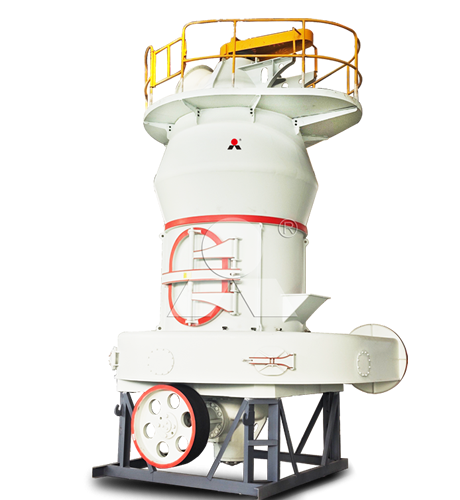
Liming Heavy Industry offers vertical roller, trapezium, and micro powder grinding equipment. These equipment families provide different starting points for a project, but the final choice should follow the required product mix and verified operating duty.
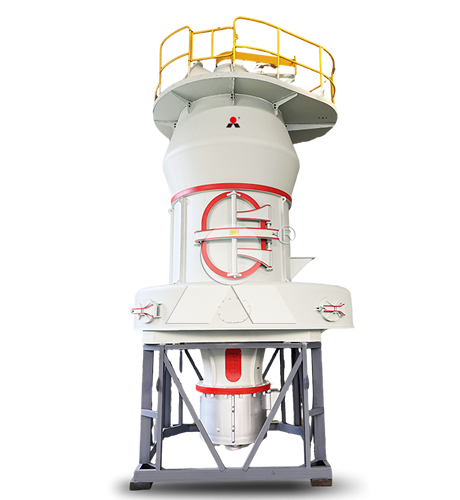
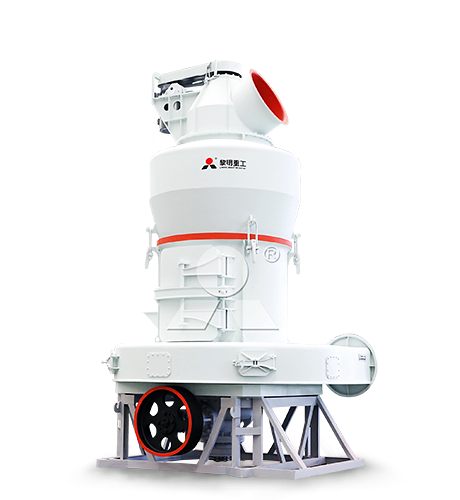
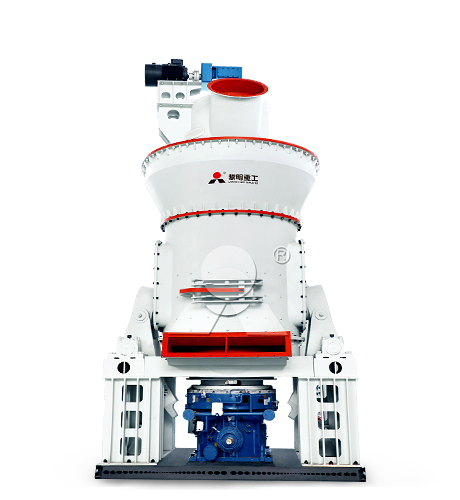
For a capacity study, shortlist the appropriate Liming Heavy Industry MTW European Grinding Mill, LM Vertical Mill, LUM Ultrafine Vertical Mill, or MW Micro Powder Mill configuration. Then request a grade-specific performance basis covering:
Representative feed composition, size, and moisture.
Accepted output at each required powder specification.
Electrical consumption and any drying-energy requirement.
Expected operating constraints and maintenance requirements.
Grade-change procedures and transition handling.
The evidence supporting performance estimates and scale-up.
Do not select a model simply because the upper end of its published capacity range exceeds the project target. That range may cover different materials, configurations, and product specifications.
Plan a Defined Reserve and a Practical Expansion Route
Capacity reserve should respond to identifiable risks: peak orders, recovery after downtime, normal feed variation, or credible demand growth. There is no single reserve percentage suitable for every mineral grinding project.
Compare a base-demand case with a peak-demand case and a constrained-operation case. This shows whether extra capacity is needed immediately or whether additional shifts, inventory, or a later line can address the requirement.
For phased expansion, preserve suitable space, access, electrical provision, and material routes. Check shared collectors, conveyors, silos, and loading equipment as well; these can become the limiting stages when another mill is installed.
Prepare a Capacity Brief Before Requesting a Proposal
Provide Liming Heavy Industry with annual and peak demand by grade, the operating calendar, representative feed samples, complete powder specifications, packaging requirements, and available utilities. Include expected changeover frequency, storage constraints, and future expansion plans.
The resulting proposal should connect three measurable commitments: the quality of the accepted powder, the sustained output at that quality, and the operating conditions under which it will be produced. That is a more reliable foundation for investment than a standalone tonnes-per-hour figure.
Related Mineral Grinding for Paints & Coatings


LIMING at MiningMetals Uzbekistan 2026 | Booth B94
2026-10-22

LIMING Heavy Industry at MINEXPO Africa 2026 | Booth 133
2026-10-22
Liming Heavy Industry to Exhibit at bauma CHINA 2026 – Visit Us at Booth E6.510
2026-10-15
Meet Liming Heavy Industry at the 140th Canton Fair 2026
2026-10-13
Liming Heavy Industry to Attend the 140th Canton Fair
2026-09-25
Complete Mineral Processing Solutions
Convenient Reliable Professional Efficient Get Your Quote
Please feel free to submit your inquiry information to us. We will contact with you as soon as possible.
Our team will contact you as soon as possible.