


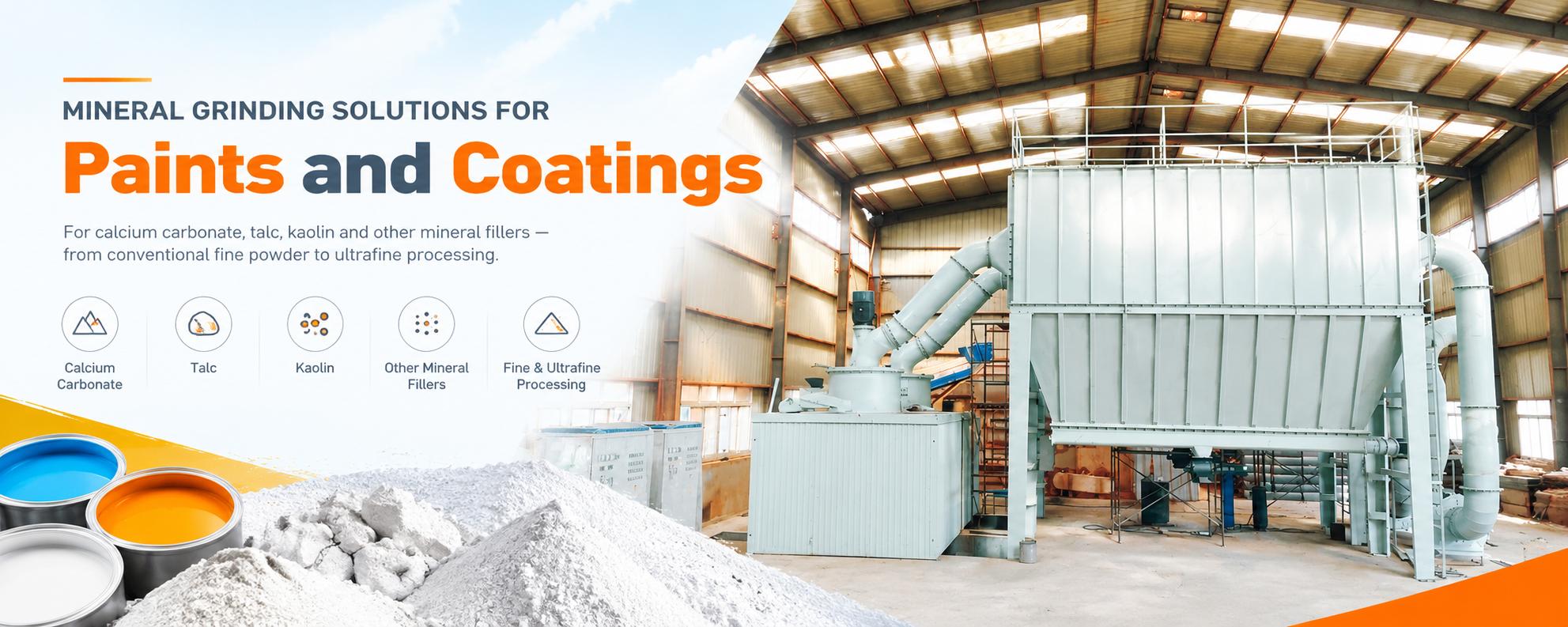
Before requesting a mineral grinding plant quote, prepare a clear description of the raw material, finished-powder specification, required output, installation conditions, and scope of supply. These details determine whether the proposal covers a suitable production system or only a mill that may need substantial additional equipment.
For mineral fillers used in paints and coatings, a request such as “10 tonnes per hour of fine powder” leaves important questions unanswered. The supplier also needs to know which mineral will be processed, how the powder will be tested, and whether drying, classification, clean storage, or specialized packaging is required.
Separate a Budget Estimate from a Purchase-Ready Proposal
An early budget estimate can help assess project feasibility before every detail is available. However, the assumptions behind it should be stated clearly. A purchase-ready proposal requires more complete information, representative material testing where necessary, and defined equipment interfaces.
Mark unknown information as “to be confirmed” rather than replacing it with an optimistic assumption. This is particularly important for feed moisture, product fineness, usable operating hours, and site utilities.
Liming Heavy Industry identifies capacity, fineness, raw-material moisture, drying, dust collection, storage, automation, and packaging as factors affecting the investment in a mineral grinding line. The main machine price alone does not describe the complete project cost.
1. Describe the Material That Will Actually Enter the Plant
Begin with the mineral name and its condition on arrival. Calcium carbonate lumps, moist kaolin filter cake, dry talc, and previously calcined powder require different preparation and handling arrangements.
Provide the following information where available:
Mineral type, deposit or supply source, and relevant chemical or mineralogical analysis.
Whether the feed is raw, washed, beneficiated, dried, calcined, or surface-treated.
Typical and maximum incoming particle size.
Normal moisture and the expected upper moisture range.
Hardness, abrasive impurities, clay content, and flow behavior.
Color, whiteness, and known variation between deliveries.
Relevant safety data and contaminant-testing records.
State where these properties were measured. Material delivered to the site may differ from the prepared feed entering the mill. If crushing or drying equipment already exists, describe its actual output and limitations.
Supply a representative sample
A sample should reflect normal production feed, not only the cleanest portion of the deposit. If supply varies significantly, discuss testing more than one sample.
Ask Liming Heavy Industry to confirm the required sample quantity and preparation before shipment. Label samples with their source, processing history, moisture condition, and the grade they are intended to produce.
2. Define the Powder the Coating Customer Will Accept
The finished-product specification is the foundation of a useful quote. “Ultrafine,” “high whiteness,” and commercial mesh labels are not sufficiently precise on their own.
| Requirement | Information to provide | Why it affects the proposal |
|---|---|---|
| Particle-size distribution | Target median and relevant fine- and coarse-end limits, with the measurement basis | Influences grinding duty, classification, and achievable output |
| Coarse residue | Maximum permitted residue and the agreed test procedure | Helps define control of particles that could cause coating defects |
| Moisture | Maximum finished-powder moisture | Affects drying and storage requirements |
| Color | Whiteness or brightness method, undertone limits, and reference sample | Affects raw-material acceptance, contamination control, and product segregation |
| Application-critical properties | Morphology, oil absorption, dispersion, or other agreed characteristics | May limit suitable processing conditions or require additional testing |
| Intended coating | Matte wall paint, smooth decorative coating, primer, protective coating, or another defined use | Provides context for evaluating whether the powder specification is sufficient |
If a customer has approved an existing filler, provide that reference powder and its test results. It is often easier to evaluate a proposed process against a defined material than against broad descriptive terms.
For talc and kaolin, explain whether platelet characteristics are important. Also distinguish hydrous kaolin from calcined kaolin: ordinary moisture removal in a grinding circuit is not a substitute for controlled calcination.
3. State Capacity by Grade and Operating Schedule
Specify required tonnes per hour and tonnes per year for each product. Include working days, shifts, available operating hours, and expected frequency of grade changes.
The relevant capacity is saleable powder meeting the complete specification. It is not the amount circulating inside the grinding circuit or the maximum feed rate under an easier fineness target.
Where several grades are planned, provide a production split. A line producing mostly conventional fine powder has a different workload from one spending much of its time on a demanding ultrafine grade.
Liming Heavy Industry notes that practical output varies with material characteristics, feed size, finished fineness, and moisture. Model selection should therefore be based on project-specific conditions rather than nameplate capacity alone.
4. Identify What Is Included—and What Already Exists
Two quotes can look very different because they cover different boundaries. Define the point at which the proposed system receives material and the point at which responsibility ends.
For each item below, mark whether it is required from the supplier, supplied by the buyer, already installed, or outside the project:
Receiving hopper, crusher, screening, and feed preparation.
Drying equipment and heat source, where necessary.
Feed storage, metering, and conveying.
Grinding mill and classifier.
Process fans, ducting, collection, and local dust extraction.
Finished-powder conveying and silos.
Bagging, bulk-bag filling, or bulk loading.
Control panels, instrumentation, and electrical interfaces.
Platforms, access structures, and maintenance provisions.
Installation supervision, commissioning, training, and initial spare parts.
For existing equipment, provide drawings, capacity information, operating condition, and connection details. Its suitability should be checked rather than assumed.
5. Describe the Installation Site and Utilities
A suitable process still needs a workable installation. Supply a site drawing showing available space, building height, access routes, existing structures, and the proposed positions of receiving and dispatch areas.
Electrical supply
State voltage, frequency, available power, and any site-specific electrical requirements. Clarify responsibility for transformers, distribution, cabling, earthing, and connections outside the supplier's equipment boundary.
Heat and compressed air
If drying is required, identify available fuels or other heat sources. Provide compressed-air availability and quality requirements for pulse cleaning and pneumatic devices.
Climate and civil conditions
Include relevant temperature, humidity, altitude, outdoor exposure, and site constraints. Foundation design also requires appropriate civil and geotechnical information; it should not be finalized from equipment weight alone.
Maintenance access
Allow space for inspection, component removal, lifting equipment, and safe servicing. A compact layout that prevents practical maintenance can create avoidable downtime later.
6. Include Storage, Packaging, and Cleanliness Requirements
State how many finished grades must remain separate, how long powder may wait for laboratory release, and the required storage quantity for each grade.
Identify packaging sizes and expected filling rates. If grinding and packaging operate different shifts, the proposal needs sufficient buffer storage between them.
For white coating fillers, explain any restrictions on product carryover or shared equipment. Cleaning after darker minerals, maintenance, or grade changes may affect both layout and production planning.
Recovered dust should also have a defined destination. Material from a dedicated process collector may be part of the product stream, while dust from shared local extraction may require separate evaluation before reuse.
7. Provide Environmental and Safety Requirements Early
Identify applicable exhaust limits, workplace exposure requirements, noise restrictions, and any required permits or documentation. Do not rely on a general description such as “environmentally compliant” without defining the relevant conditions.
Disclose hazardous constituents and any combustible materials, organic treatments, or mixed dust streams. These details can affect collection, monitoring, and protection measures.
Clarify who is responsible for local approvals, exposure testing, emissions testing, and final verification. These responsibilities should be visible in the project scope.
8. Let the Requirements Determine the Liming Heavy Industry Mill
The quote request does not need to begin with a fixed model. Ask Liming Heavy Industry to assess the appropriate grinding platform against the documented duty.
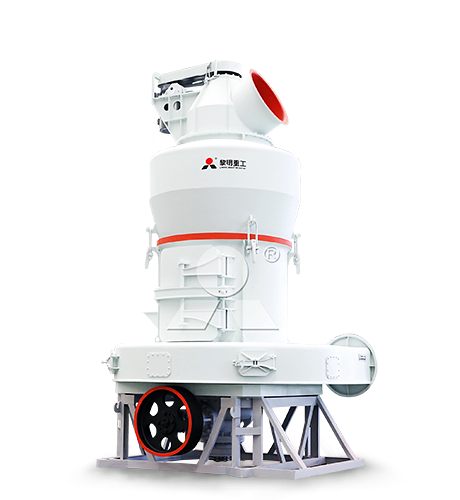
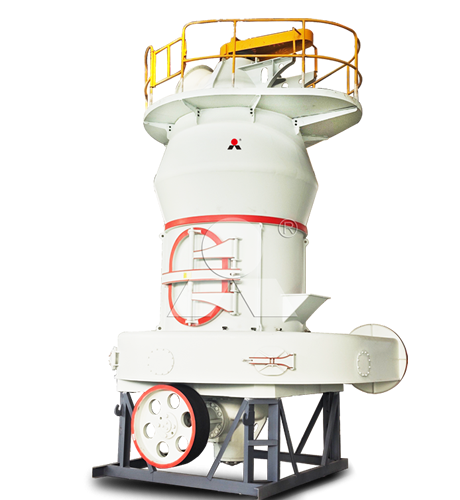
MTW European Grinding Mill: Consider for conventional fine-powder requirements within the verified operating range.
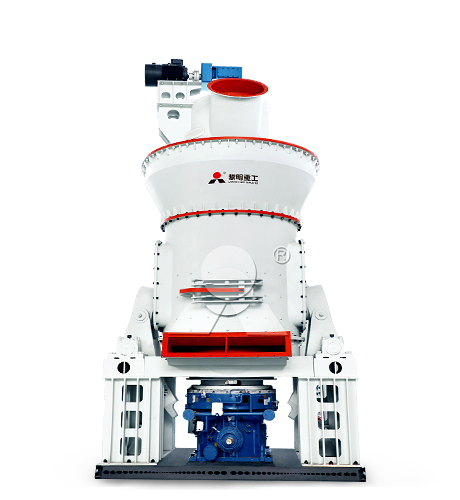
LM Vertical Mill: Consider where drying and continuous production requirements make an integrated arrangement worth evaluating.
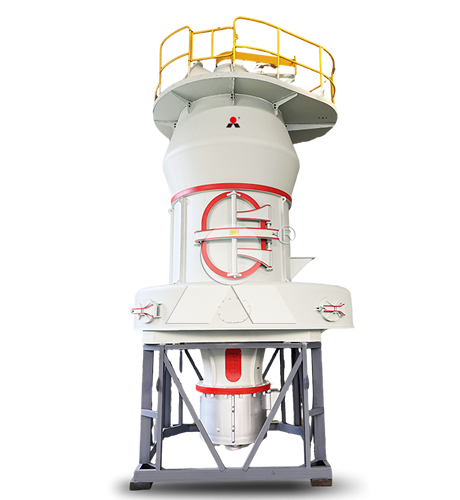
LUM Ultrafine Vertical Mill: Consider for ultrafine filler production requiring coordinated grinding and classification.
MW Micro Powder Mill: Consider as another fine and ultrafine dry-processing option, subject to material and product testing.
If a preferred model has already been identified, still provide the full process information. The supplier should confirm its suitability rather than build a proposal around an unverified assumption.
Agree on Acceptance Before Comparing Prices
Request a clear performance basis covering the feed conditions, finished-powder requirements, sustained output, and operating limits. Distinguish demonstrated trial results from engineering estimates.
The acceptance procedure should identify sampling locations, test methods, test duration, and the treatment of startup or transition material. For coatings, include formulation testing where powder measurements alone do not establish suitability.
Also request a clear equipment list, exclusions, utility requirements, delivery terms, installation responsibilities, commissioning scope, spare-parts provision, and quotation validity. This allows competing configurations to be evaluated on equivalent boundaries.
A Concise Brief to Send with the Inquiry
Project location and whether the work is a new plant, expansion, or replacement.
Mineral analysis, representative samples, feed size, and moisture range.
Finished-powder specifications and intended coating applications.
Required output by grade and annual operating schedule.
Existing equipment and requested scope of supply.
Site drawings, utilities, and installation constraints.
Storage, packaging, dust-control, and cleanliness requirements.
Acceptance criteria, target schedule, and future expansion needs.
When information is incomplete, list the open questions alongside the available data. A transparent preliminary brief gives Liming Heavy Industry a practical basis for identifying tests, defining assumptions, and preparing a proposal that can develop into a workable coating-filler production plant.
Related Mineral Grinding for Paints & Coatings


LIMING at MiningMetals Uzbekistan 2026 | Booth B94
2026-10-22

LIMING Heavy Industry at MINEXPO Africa 2026 | Booth 133
2026-10-22
Liming Heavy Industry to Exhibit at bauma CHINA 2026 – Visit Us at Booth E6.510
2026-10-15
Meet Liming Heavy Industry at the 140th Canton Fair 2026
2026-10-13
Liming Heavy Industry to Attend the 140th Canton Fair
2026-09-25
Complete Mineral Processing Solutions
Convenient Reliable Professional Efficient Get Your Quote
Please feel free to submit your inquiry information to us. We will contact with you as soon as possible.
Our team will contact you as soon as possible.