


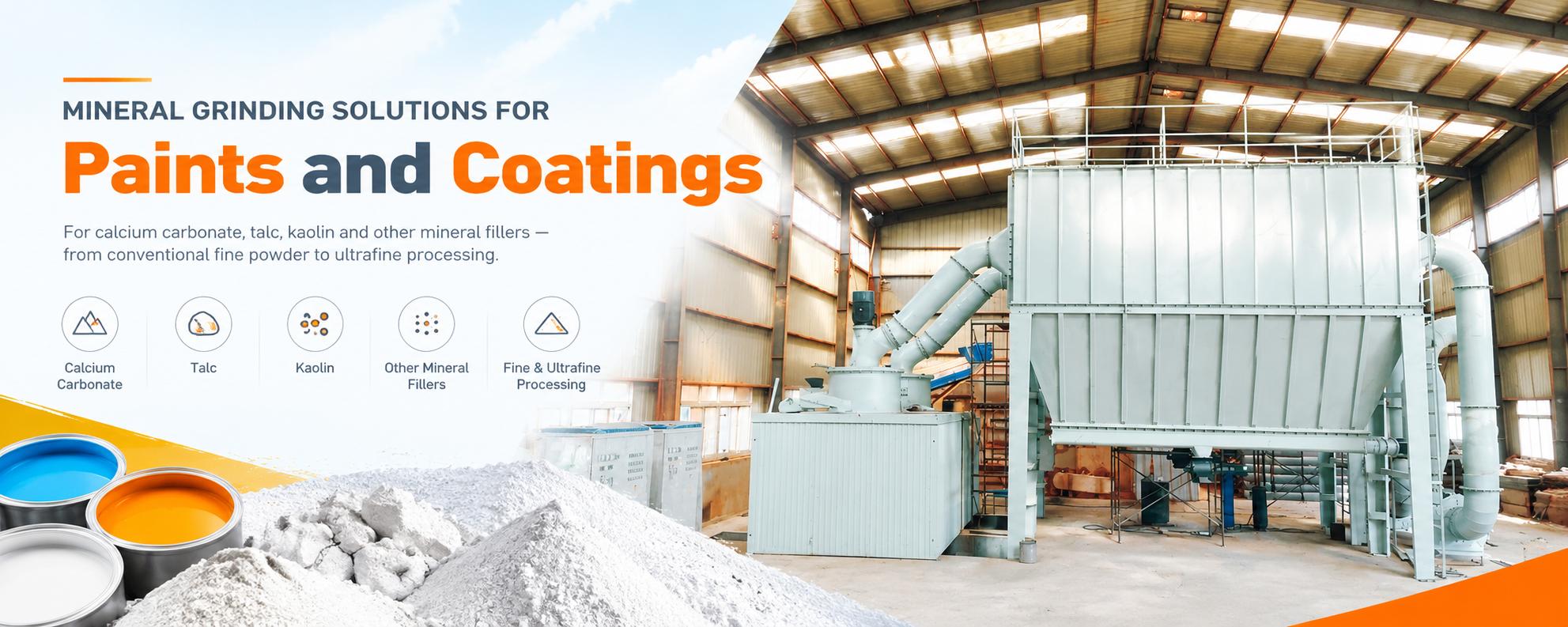
An integrated mineral powder grinding plant connects raw-material preparation, controlled feeding, grinding, classification, powder collection, storage, and dispatch into one coordinated production system. For coating fillers, the purpose is to deliver consistent powder—not merely to keep the mill running.
Calcium carbonate, talc, kaolin, and barite each place different demands on the process. A successful plant therefore starts with the customer's powder specification and builds the equipment arrangement around it. Particle-size distribution, coarse residue, color, moisture, and application performance must remain under control from incoming mineral to finished shipment.
What Integration Means in Daily Production
A production line is not fully integrated simply because its machines are connected by conveyors. Its operating capacities, material flows, controls, and quality checks must also work together.
For example, a mill may produce the required powder, but the plant will still struggle if the collector cannot discharge continuously, the packaging station cannot handle the output, or the finished silo mixes an approved batch with transition material from a grade change.
Effective integration coordinates three flows:
Material flow: The mineral moves through preparation, grinding, collection, and storage without uncontrolled contamination or bottlenecks.
Airflow: The grinding, classification, conveying, and filtration systems operate within compatible conditions.
Information flow: Operators can connect feed identity, operating settings, laboratory results, and finished-product batches.
This coordination makes it easier to maintain stable output and investigate a quality change before it reaches the customer.
Design Backward from the Finished Coating Filler
Begin with a product schedule rather than a single headline capacity. List every planned grade, its acceptance requirements, and its expected share of production.
| Product requirement | What it changes in the plant design |
|---|---|
| Fine median size with strict coarse-residue control | Grinding duty, classifier selection, sampling, and quality-release procedures |
| High whiteness and stable undertone | Raw-material selection, contact-material assessment, cleaning, and grade segregation |
| Low finished-powder moisture | Feed conditioning, drying requirements, temperature control, and storage protection |
| Critical platelet characteristics | Grinding intensity, morphology checks, and application trials |
| Frequent grade changes | Adjustable operating settings, transition-material handling, cleaning access, and separate silos |
| Several packaging formats | Buffer storage, filling capacity, weighing, local extraction, and dispatch layout |
The required output should refer to powder meeting all acceptance criteria. Capacity at a coarser grade should not be used as the production estimate for the finest product.
Build the Process Around Seven Connected Stages
1. Receive, identify, and prepare the mineral
Incoming-material control sets the limits of the finished product. Verify mineral composition, moisture, color, feed size, and relevant impurities before material enters shared storage.
Preparation may include sorting, crushing, screening, blending, or drying. Some ores require beneficiation before final grinding; the grinding circuit should not be expected to remove every discoloring or abrasive impurity.
For kaolin, identify whether the feed is raw, beneficiated, hydrous, or calcined. For talc, establish mineral purity and appropriate contaminant documentation. These distinctions affect the process route as well as product suitability.
2. Buffer and meter the feed
A feed hopper and controlled feeder help separate short-term variation in upstream handling from the grinding circuit. Stable feeding supports repeatable mill loading and classification.
Hopper geometry and discharge equipment must suit the actual material. A fine, cohesive feed does not necessarily flow like a dry crushed mineral. Design against bridging and erratic discharge rather than relying on operators to correct them manually.
3. Grind to the required product characteristics
The mill must reduce particle size without introducing unacceptable contamination or changing application-critical characteristics unnecessarily.
For calcium carbonate, distribution and coarse-particle control may dominate the specification. For talc and some kaolin grades, morphology and dispersion behavior may also require close attention. Increasing grinding intensity is not a universal route to better coating performance.
4. Classify and return the coarse fraction
Classification determines which particles leave as finished powder and which return for additional grinding. Feed rate, airflow, classifier settings, and grinding conditions must be adjusted as a system.
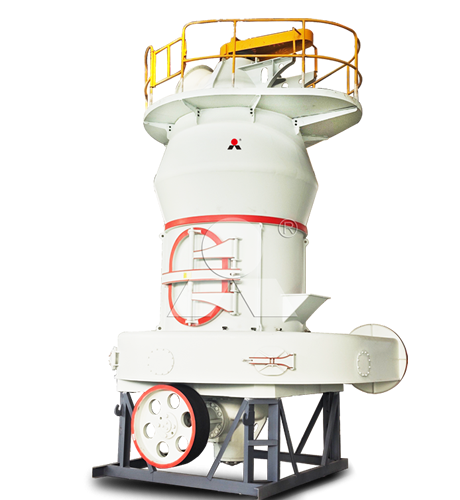
Liming Heavy Industry describes this closed-circuit arrangement in its MTW grinding line: material is ground, carried to the separator by airflow, and either collected as acceptable powder or returned for further grinding. The listed line components include feeding, grinding, separation, airflow, collection, and electrical equipment.
5. Collect powder and control dust
Process collection separates the manufactured powder from the conveying air. Local extraction addresses releases at receiving points, transfers, silos, and filling stations. These duties should be identified separately even when they form part of the same overall project.
Collector pressure loss and discharge reliability can affect production. A blocked hopper or unstable airflow is not simply a housekeeping issue; it can interfere with the grinding circuit.
6. Store approved grades separately
Finished silos provide a buffer between continuous grinding and intermittent packaging or loading. Their usable capacity should reflect the production schedule, laboratory release time, and dispatch pattern.
Where several grades are produced, include a route for startup and transition material. Do not send every tonne directly into an approved-product silo before its quality has been established.
7. Package, identify, and dispatch
Bagging, bulk-bag filling, and bulk loading have different space, handling, and extraction requirements. Match dispatch capacity to the grinding schedule so that a full silo does not repeatedly stop the line.
Batch identification should connect the shipped powder to its raw-material source, production period, operating record, and laboratory results.
Choosing the Liming Heavy Industry Grinding Platform
The mill is the central processing unit, but its selection should follow the product and feed requirements. For coating-filler projects, assess the following Liming Heavy Industry options as part of the complete line.
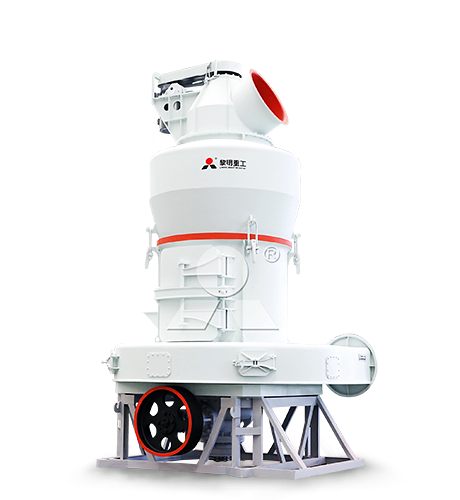
MTW European Grinding Mill: Evaluate for conventional fine-powder duties where the selected configuration can meet the required distribution and residue limits.
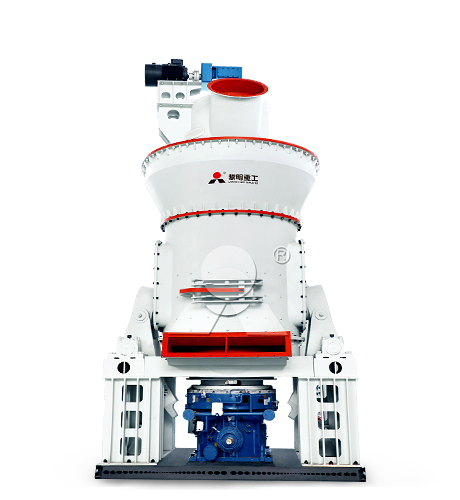
LM Vertical Mill: Evaluate where drying, continuous throughput, and coordinated grinding and classification are important. Confirm the actual moisture-removal requirement rather than assuming separate drying is unnecessary.
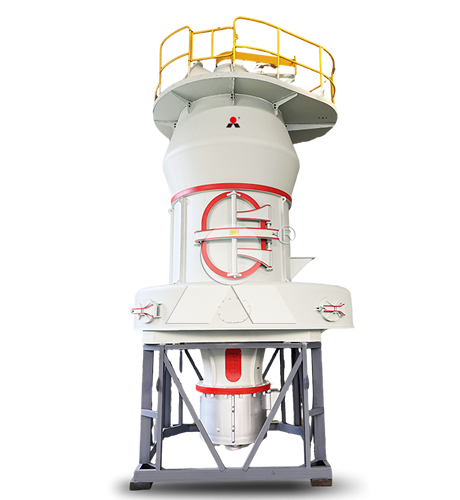
LUM Ultrafine Vertical Mill: Evaluate for ultrafine mineral-filler production. Liming Heavy Industry describes the LUM as integrating ultrafine grinding, classification, and conveying.
MW Micro Powder Mill: Evaluate as another fine and ultrafine dry-processing option, using representative material and the same finished-product acceptance standard.
No equipment family should be treated as suitable for every coating filler. Representative trials should confirm achievable quality, output, operating consumption, and any critical morphology requirements before the configuration is finalized.
One Flexible Line or Several Dedicated Lines?
A shared line can reduce duplicated equipment, but flexibility has an operating cost. Product changes may require cleaning, setting adjustments, stabilization, and separate handling of off-specification or transition powder.
| Arrangement | Potential advantage | Main consideration |
|---|---|---|
| One mineral, several fineness grades | Shared preparation and grinding equipment | Output by grade, classifier adjustment, transition losses, and silo segregation |
| Several minerals on one line | Lower equipment duplication for suitable production schedules | Cleanability, cross-contamination, different grinding behavior, and changeover time |
| Dedicated lines for critical grades | Reduced changeover burden and clearer product segregation | Higher installed equipment requirements and adequate demand for each line |
For appearance-sensitive white fillers, even small amounts of carryover may be unacceptable. Where cleanliness or morphology requirements are particularly strict, a dedicated route may be more practical than frequent changeovers.
Controls Should Protect the Process, Not Just Start the Motors
An integrated control system should coordinate startup, normal production, shutdown, and fault response. Feeding should depend on the readiness of the equipment needed to grind, transport, collect, and discharge the powder.
Useful operating information includes:
Feed rate and mill loading.
Classifier settings and relevant airflow indicators.
Temperatures where drying or condensation control matters.
Collector differential pressure and discharge status.
Finished-silo levels and packaging availability.
Alarm history and production-batch identity.
Automation helps maintain repeatable conditions, but it does not replace sampling or laboratory testing. A line can operate steadily while producing the wrong distribution if the target settings or feed assumptions are incorrect.
Accept the Complete Plant Under Real Production Conditions
Commissioning should demonstrate repeatability across the entire route, from representative feed to packaged or bulk-loaded powder.
Agree on the acceptance basis before installation. It should define:
The feed characteristics and operating conditions covered by the test.
The required quality and sustained saleable output for each tested grade.
Sampling frequency, laboratory methods, and retained reference samples.
Electrical and thermal consumption boundaries.
Collection, conveying, storage, and packaging performance.
Applicable emissions, workplace, and equipment-safety checks.
Procedures for grade changes, shutdown, and restart where relevant.
Validate trial powder in representative coatings as well. Particle measurements alone do not confirm viscosity, dispersion, hiding, sheen, or storage behavior in the customer's formulation.
Information Needed for a Practical Plant Proposal
Provide Liming Heavy Industry with representative mineral samples, feed analysis, moisture and size ranges, target powder specifications, output by grade, and the intended coating applications. Include an approved reference filler wherever possible.
The project brief should also cover annual operating hours, utilities, site dimensions, maintenance access, storage capacity, packaging formats, environmental requirements, and expected expansion. Clarify the scope of supply and responsibility for interfaces such as civil works, electrical distribution, compressed air, and downstream loading.
With these details established, the plant can be designed around a coordinated production duty: converting the available mineral into consistent coating filler, storing it without contamination, and delivering it at the quality and rate the customer requires.
Related Mineral Grinding for Paints & Coatings


LIMING at MiningMetals Uzbekistan 2026 | Booth B94
2026-10-22

LIMING Heavy Industry at MINEXPO Africa 2026 | Booth 133
2026-10-22
Liming Heavy Industry to Exhibit at bauma CHINA 2026 – Visit Us at Booth E6.510
2026-10-15
Meet Liming Heavy Industry at the 140th Canton Fair 2026
2026-10-13
Liming Heavy Industry to Attend the 140th Canton Fair
2026-09-25
Complete Mineral Processing Solutions
Convenient Reliable Professional Efficient Get Your Quote
Please feel free to submit your inquiry information to us. We will contact with you as soon as possible.
Our team will contact you as soon as possible.