


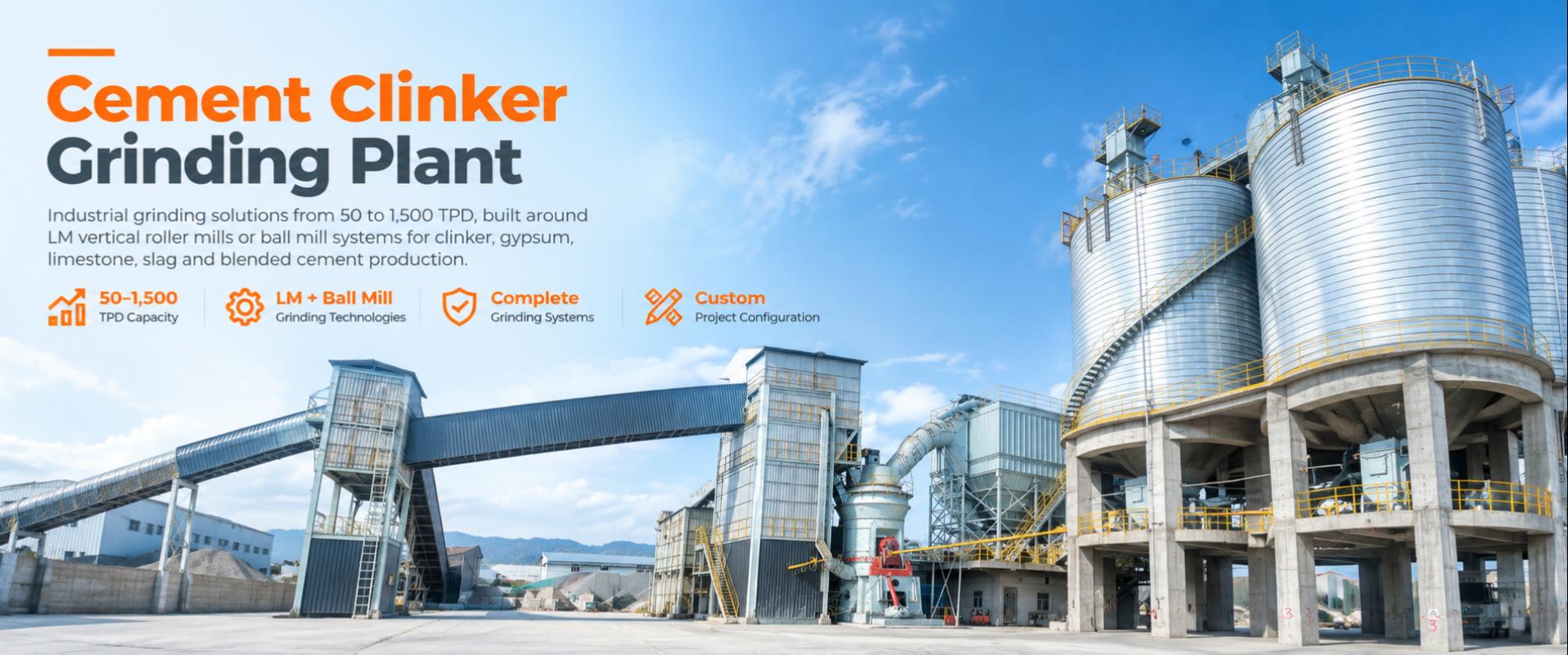
Portland cement grinding is the final production stage in which cement clinker is ground with a controlled quantity of gypsum to produce finished cement. Depending on the required cement type and applicable standard, limestone, slag, fly ash, pozzolan, or other suitable mineral additions may also be ground with clinker and gypsum.
The grinding process determines cement fineness, particle size distribution, setting behavior, strength development, production capacity, specific power consumption, and operating cost. Liming Heavy Industry provides LM Vertical Roller Mill and cement ball mill solutions for Portland cement grinding. For integrated cement production projects, the company can also provide rotary kilns, calcining kilns, and supporting equipment for clinker production, material handling, storage, packing, and dispatch.
What Is Portland Cement Grinding?
Portland cement is produced by finely grinding cooled cement clinker with gypsum. Clinker is the hard, nodular intermediate material created when prepared raw meal is processed at high temperature in a rotary kiln. Gypsum is added during final grinding to regulate cement setting behavior.
Without controlled gypsum addition, clinker compounds can react rapidly with water and cause excessively fast setting. The gypsum dosage should be selected according to clinker chemistry, sulfate balance, cement fineness, required setting time, strength-development target, and local cement standards.
Different Portland cement products can be produced by changing the proportion of clinker, gypsum, and suitable mineral additives. For example, Portland limestone cement may include limestone as a mineral addition, while slag or fly ash may be incorporated in suitable blended cement formulations.
Portland Cement Grinding Process
A Portland cement grinding plant is designed as a continuous process system. It starts with clinker receiving and ends with finished cement stored in silos for bagging or bulk dispatch.
Receive and store cement clinker.
Store gypsum and mineral additives separately.
Crush oversized clinker or gypsum where required.
Measure clinker, gypsum, and additives through controlled dosing equipment.
Feed the material mix to an LM Vertical Roller Mill or cement ball mill.
Grind the material to the required cement fineness.
Classify fine cement and return coarse particles for further grinding where required.
Collect cement through bag filters and process-air handling equipment.
Convey finished cement to storage silos.
Pack cement into bags or load it as bulk cement for dispatch.
Raw Materials for Portland Cement
| Material | Main Role |
|---|---|
| Cement clinker | The primary cementitious component that develops strength when hydrated |
| Gypsum | Added to regulate cement setting behavior and sulfate balance |
| Limestone | Used as a mineral addition in suitable Portland limestone cement products |
| Granulated blast-furnace slag | Used in suitable slag and blended cement formulations |
| Fly ash | Used as a supplementary cementitious material where permitted and suitable |
| Natural pozzolan | Used in suitable blended cement products to adjust performance and clinker factor |
Each material should be stored separately and fed through controlled weighing equipment. Stable clinker, gypsum, and additive proportions are necessary to maintain cement chemistry, setting behavior, strength development, product consistency, and compliance with the required cement specification.
LM Vertical Roller Mill for Portland Cement
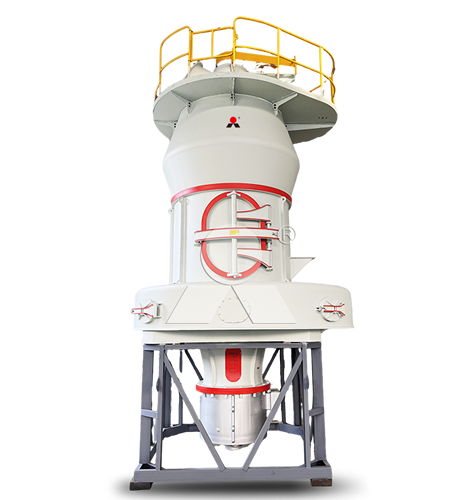
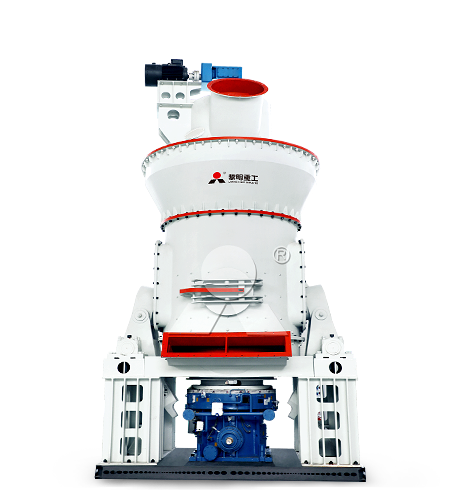
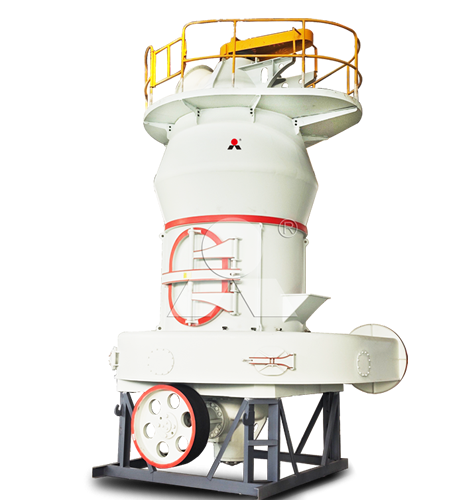
The LM Vertical Roller Mill from Liming Heavy Industry is a compact solution for Portland cement and blended cement grinding. Clinker, gypsum, and suitable additives enter the mill and fall onto the center of a rotating grinding table. Centrifugal force moves the material outward to the grinding zone.
Grinding rollers apply pressure to the material bed, reducing particles through compression and shearing. Process air transports ground material upward to the integrated dynamic classifier. Fine cement that meets the required fineness exits with the gas stream and is collected by the bag filter, while coarse material is rejected and returns internally to the grinding table for further grinding.
The integrated grinding and classification arrangement can simplify plant layout and reduce the need for a separate external separator. Where suitable hot gas is available, the LM Vertical Roller Mill can also support simultaneous drying and grinding for moist gypsum, limestone, slag, or other mineral additives.
LM Vertical Roller Mill Features
Integrated grinding and dynamic classification in one main process system.
Suitable for clinker, gypsum, limestone, slag, fly ash, and other suitable cement additives.
Compact vertical process arrangement that can reduce plant footprint.
No large steel grinding-media charge required for the primary grinding process.
Flexible cement fineness adjustment through classifier speed and process control.
Can support drying and grinding when appropriate hot gas is available.
Suitable for new Portland cement grinding plants and selected modernization projects.
PLC-based monitoring of feed rate, grinding pressure, vibration, airflow, temperature, separator speed, and power demand.
Cement Ball Mill for Portland Cement
A cement ball mill is a proven and widely used solution for Portland cement grinding. The mill is a horizontal rotating cylinder containing steel grinding media. As the cylinder rotates, the grinding balls are lifted by mill liners and then cascade onto clinker, gypsum, and additives, reducing the material through impact, friction, and attrition.
For Portland cement production, the ball mill is normally configured in a closed circuit with a high-efficiency separator. The separator receives the mill discharge and divides the material into fine and coarse fractions. Fine cement is collected as finished product, while coarse particles return to the ball mill for additional grinding.
Ball mills can be designed with two or more grinding compartments. Larger grinding media in the first compartment perform coarse grinding, while smaller media in later compartments perform fine grinding. Mill liners and diaphragms guide material and grinding-media movement through the mill.
Cement Ball Mill Features
Proven technology for Portland cement clinker and gypsum grinding.
Suitable for ordinary Portland cement and selected blended cement products.
Compatible with high-efficiency separators in closed-circuit grinding systems.
Can be configured for different production capacities and fineness requirements.
Practical for projects with existing ball mill foundations, buildings, and conveying systems.
Suitable for operations with established grinding-media, liner, diaphragm, and mechanical maintenance capability.
Reliable operation when mill feed, grinding-media charge, ventilation, and separator performance are properly controlled.
LM Vertical Roller Mill vs Cement Ball Mill
| Comparison Factor | LM Vertical Roller Mill | Cement Ball Mill |
|---|---|---|
| Grinding principle | Compression and shearing between grinding rollers and a rotating grinding table | Impact and attrition from steel grinding media inside a rotating cylinder |
| Classification | Integrated dynamic classifier | Separate high-efficiency separator in a closed-circuit system |
| Plant layout | Compact vertical grinding and classification configuration | Conventional horizontal mill circuit with separate separator and return equipment |
| Grinding media | Does not require a large steel-ball charge for primary grinding | Requires steel grinding balls and periodic media replenishment |
| Moisture handling | Can support drying and grinding when suitable hot gas is available | May require a separate drying arrangement for higher-moisture materials |
| Maintenance focus | Grinding rollers, grinding table, classifier, hydraulic system, gearbox, and wear parts | Grinding balls, liners, diaphragms, bearings, gears, lubrication system, and separator |
| Suitable project condition | New plants, compact layouts, integrated process design, and suitable blended cement applications | Conventional grinding systems and sites with compatible existing infrastructure |
Both technologies can produce Portland cement that meets required quality standards when properly selected and operated. The best choice depends on capacity, clinker grindability, additive composition, target fineness, feed moisture, available site area, electricity cost, maintenance strategy, existing infrastructure, and total project economics.
Cement Fineness and Quality Control
Cement fineness is a major control parameter in Portland cement grinding. Finer cement generally has more surface area available for hydration, which can influence early strength development. However, excessive grinding can increase electricity consumption, raise cement temperature, reduce mill output, and create an unnecessarily high operating cost.
Finished cement is commonly evaluated through Blaine surface area, sieve residue, particle size distribution, setting time, soundness, compressive strength, chemical composition, sulfur trioxide content, and other applicable standard requirements. The grinding plant should include a laboratory and quality-control program to verify that every cement batch meets the required specification.
In a technical comparison of industrial vertical roller mill and ball mill grinding, Portland cement mixes ground to similar Blaine fineness showed different gypsum comminution behavior and setting-time results. This illustrates why cement quality should be verified through laboratory testing rather than relying only on one fineness measurement or one equipment type. [104]
Closed-Circuit Portland Cement Grinding
Modern Portland cement grinding is commonly operated as a closed-circuit process. In a closed circuit, coarse particles are returned to the mill for further grinding while qualified fine cement is removed as product. This reduces unnecessary overgrinding and improves control of finished-cement fineness.
An LM Vertical Roller Mill has an integrated dynamic classifier. Coarse material is rejected by the classifier and returns internally to the grinding table. Fine cement leaves the mill with the process air and is collected through the dust-control system.
A cement ball mill uses a separate high-efficiency separator. The separator classifies the mill discharge, sends fine cement to the bag filter and cement silo, and returns coarse particles to the ball mill through a bucket elevator, conveyor, or air-slide system.
Dust Collection and Process Air
Dust collection is essential in Portland cement grinding because fine cement powder is generated throughout material feeding, grinding, classification, conveying, storage, packing, and bulk loading. Bag filters are normally installed at mill outlets, separators, transfer points, silos, packing machines, and loading stations.
The dust-control system recovers fine cement while maintaining safe working conditions and supporting environmental compliance. Process fans, ducts, dampers, air locks, and dust-return conveyors should be designed to maintain stable airflow and prevent dust leakage.
In LM Vertical Roller Mill systems, airflow transports material from the grinding table to the classifier and bag filter. In cement ball mill systems, ventilation helps remove heat, transport fine material, control mill temperature, and support separator performance.
Finished Cement Storage and Dispatch
After grinding and collection, finished Portland cement is conveyed to cement silos. The silo arrangement should match plant capacity, product range, storage duration, packing demand, bulk loading volume, and market-dispatch schedule.
Each cement grade may require a separate silo to avoid product mixing. Silo systems can include aeration equipment, level indicators, pressure-relief valves, silo filters, discharge gates, flow-control devices, air slides, and blending equipment.
Finished cement can be dispatched in bags or as bulk cement. A bagged-cement section may include rotary packing machines, valve bag packers, bag conveyors, loading stations, and warehouse space. Bulk cement can be loaded directly from silos into bulk trucks, railcars, ships, or terminal systems.
Integrated Portland Cement Production
Portland cement grinding can be operated as a stand-alone grinding station that purchases clinker, or it can form part of an integrated cement plant. In an integrated plant, raw materials are crushed, proportioned, ground into raw meal, preheated, calcined, and processed in a rotary kiln to form clinker.
The clinker is cooled, stored, and transferred to the Portland cement grinding section. Liming Heavy Industry can provide rotary kilns and calcining kilns for suitable clinker production and industrial calcination applications, together with LM Vertical Roller Mills, cement ball mills, material handling, storage, dust collection, packing, and automation equipment.
For an integrated project, the rotary kiln capacity, clinker cooler capacity, clinker storage volume, cement grinding capacity, finished-cement silo capacity, packing capacity, bulk loading capacity, fuel supply, and electrical system should be designed as one balanced production chain.
Information Needed for Equipment Selection
To select the right Portland cement grinding system, Liming Heavy Industry requires detailed project and material information. This allows the LM Vertical Roller Mill or cement ball mill configuration to match real production conditions and required cement quality.
Required finished-cement output in tonnes per hour, tonnes per day, and tonnes per year.
Planned operating hours, operating days, and required equipment availability.
Clinker source, feed size, moisture, hardness, chemistry, and grindability data.
Gypsum source, sulfate content, moisture, particle size, and target addition ratio.
Required cement type and proportions of limestone, slag, fly ash, pozzolan, or other additives.
Target Blaine fineness, sieve residue, particle size distribution, setting time, and strength class.
Available installation area, building height, foundation conditions, and transport access.
Local electricity conditions, power cost, automation requirement, and environmental requirements.
Required clinker storage, cement silo capacity, packing output, bulk loading capacity, and dispatch method.
Whether the project requires a stand-alone grinding plant or an integrated rotary kiln clinker production line.
Conclusion
Portland cement grinding transforms clinker and gypsum into finished cement through controlled storage, dosing, grinding, classification, dust collection, storage, and dispatch. The right process configuration helps maintain cement quality, stable capacity, energy efficiency, and reliable long-term operation.
Liming Heavy Industry provides LM Vertical Roller Mill solutions for compact integrated Portland cement grinding and cement ball mill solutions for conventional closed-circuit grinding systems. The final selection should be based on capacity, clinker properties, gypsum characteristics, additive ratio, target fineness, site layout, electricity cost, maintenance resources, and total project requirements.
For complete Portland cement production projects, Liming Heavy Industry can also provide rotary kilns, calcining kilns, and supporting equipment for clinker production, cement grinding, finished-cement storage, packing, and dispatch.
Related Cement Clinker Grinding Plant


LIMING at MiningMetals Uzbekistan 2026 | Booth B94
2026-10-22

LIMING Heavy Industry at MINEXPO Africa 2026 | Booth 133
2026-10-22
Liming Heavy Industry to Exhibit at bauma CHINA 2026 – Visit Us at Booth E6.510
2026-10-15
Meet Liming Heavy Industry at the 140th Canton Fair 2026
2026-10-13
Liming Heavy Industry to Attend the 140th Canton Fair
2026-09-25
Complete Mineral Processing Solutions
Convenient Reliable Professional Efficient Get Your Quote
Please feel free to submit your inquiry information to us. We will contact with you as soon as possible.
Our team will contact you as soon as possible.