


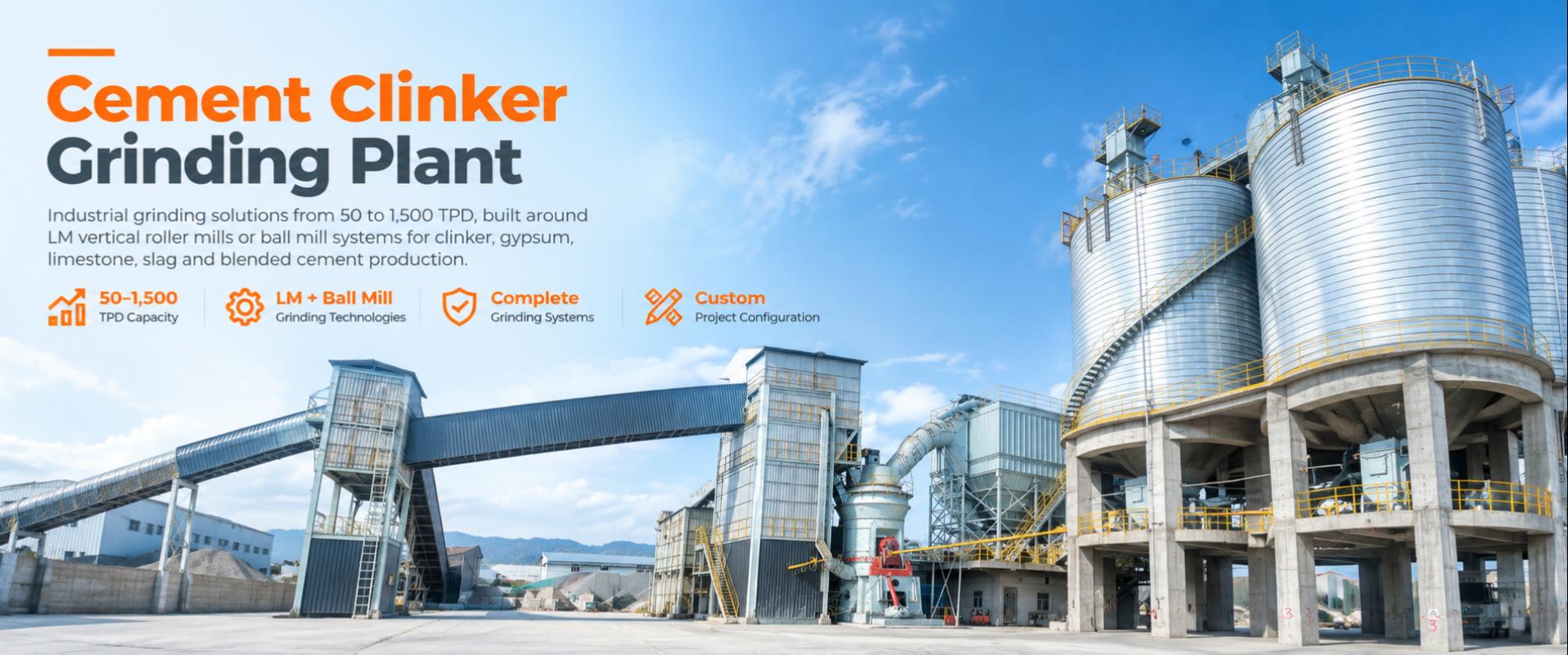
A cement ball mill is a proven grinding solution for producing finished cement from clinker, gypsum, limestone, slag, fly ash, and other suitable mineral additives. It is widely used in closed-circuit cement grinding systems and can be configured for new cement grinding plants, capacity expansions, equipment upgrades, and integrated cement production projects.
Liming Heavy Industry supplies cement ball mill solutions for clinker grinding, together with supporting equipment such as feeding and dosing systems, separators, bucket elevators, conveyors, bag filters, process fans, cement silos, packing systems, and automation controls. For broader cement production projects, rotary kilns and calcining kilns can also be included as part of a coordinated plant solution.
What Is a Cement Ball Mill?
A cement ball mill is a horizontal rotating cylinder used to grind cement clinker and other cementitious materials into fine powder. The mill contains steel grinding media, commonly known as grinding balls. As the mill rotates, the balls are lifted and then fall or cascade onto the material, reducing particle size through impact, compression, and attrition.
In a typical cement grinding plant, clinker is mixed with gypsum and, depending on the target cement product, limestone, slag, fly ash, or other suitable additives. The mixed material enters the ball mill, where it is ground to the required fineness. The ground material is then sent to a separator, which separates qualified fine cement from coarse particles. Coarse material is returned to the mill for further grinding, while the finished cement is collected and conveyed to storage silos.
How a Cement Ball Mill Works
The cement grinding process begins with material receiving, storage, and proportioning. Clinker, gypsum, and additives are stored separately and fed through weighing or dosing equipment to maintain the required cement formulation. The blended feed enters the cement ball mill through the mill inlet system.
Inside the rotating mill cylinder, grinding media and material move together. The rotation of the mill lifts the grinding balls to a certain height before gravity causes them to fall onto the clinker and additives. This repeated impact and friction gradually reduces the material to fine cement powder.
After grinding, the material leaves the mill and enters the classification system. In a closed-circuit arrangement, a dynamic separator or high-efficiency separator identifies particles that meet the required fineness. Fine cement is collected by the dust collection system and transferred to cement silos. Coarse particles are returned to the ball mill through the circulation system for additional grinding.
Main Components
| Component | Main Function |
|---|---|
| Mill cylinder | Rotating shell that contains the grinding media and material |
| Grinding media | Steel balls that grind clinker and additives through impact and attrition |
| Mill liners | Protect the mill shell and influence the movement of grinding media |
| Mill inlet | Receives clinker, gypsum, and additive feed into the grinding chamber |
| Diaphragm | Separates grinding compartments and controls material movement through the mill |
| Mill outlet | Discharges ground material to the separator or conveying system |
| Main drive system | Provides rotational power through the motor, gearbox, pinion, and girth gear |
| Lubrication system | Supplies lubricant to bearings, gears, and other rotating components |
| Separator | Separates finished fine cement from coarse material in a closed-circuit system |
| Bag filter | Collects fine cement particles and controls dust emissions |
Advantages of Cement Ball Mill Grinding
Cement ball mills remain an important choice for clinker grinding because they are based on a well-established operating principle and can be adapted to different cement types and plant configurations. They are especially suitable for conventional closed-circuit grinding systems and projects where compatible ball mill infrastructure already exists.
Proven grinding technology for cement clinker and blended cement production.
Suitable for grinding clinker with gypsum, limestone, slag, fly ash, and other appropriate additives.
Can be configured for a range of production capacities and cement fineness requirements.
Compatible with high-efficiency separators for closed-circuit cement grinding.
Practical for new projects, plant expansions, and modernization of existing grinding systems.
Suitable for sites with existing ball mill buildings, foundations, conveying systems, or maintenance experience.
Provides stable operation when feed composition, grinding media, ventilation, and separator performance are properly controlled.
Can be integrated with cement storage, packing, bulk loading, and automated process control systems.
Suitable Materials for Clinker Grinding
A cement ball mill can be configured to grind clinker together with different mineral components according to the required cement specification. The material mix should be selected according to local cement standards, raw-material availability, required strength development, setting behavior, product fineness, and market demand.
| Material | Typical Function |
|---|---|
| Cement clinker | Main cementitious component used to produce finished cement |
| Gypsum | Added to help regulate cement setting behavior |
| Limestone | Used as a mineral addition in suitable blended cement products |
| Granulated blast-furnace slag | Used in slag cement and other blended cement applications |
| Fly ash | Used as a supplementary cementitious material where suitable |
| Other mineral additives | Selected according to material compatibility and final cement requirements |
Typical Cement Ball Mill Grinding Circuit
A complete cement ball mill plant includes more than the mill itself. Every system must be correctly matched to ensure stable feeding, sufficient grinding capacity, accurate product classification, effective dust control, and reliable cement dispatch.
Clinker receiving, unloading, storage, and conveying system.
Gypsum, limestone, slag, fly ash, and additive storage facilities.
Weigh feeders, belt feeders, screw feeders, and dosing equipment.
Cement ball mill with grinding media, liners, diaphragm, drive, and lubrication system.
High-efficiency separator or dynamic classification system.
Bucket elevators, belt conveyors, screw conveyors, air slides, and transfer equipment.
Process fans, ducts, dampers, and mill ventilation equipment.
Bag filters and dust collection systems.
Finished-cement silos with discharge, aeration, and level-monitoring equipment.
Cement packing machine, bag conveying system, and palletizing equipment where required.
Bulk cement loading system for trucks, railway wagons, terminals, or other dispatch methods.
Electrical controls, variable-frequency drives, PLC automation, instrumentation, and central control room systems.
Ball Mill and Separator Performance
The separator is a critical part of a closed-circuit cement ball mill system. It determines which particles are collected as finished cement and which particles are returned to the mill for additional grinding. Separator efficiency affects cement fineness, mill circulation load, production capacity, power consumption, and final product quality.
If the separator returns too much fine material to the mill, the grinding circuit may consume unnecessary energy and reduce output. If the separator allows too many coarse particles into the finished cement, product fineness and cement performance may not meet the required specification. Correct separator adjustment helps maintain the balance between throughput, fineness, and specific power consumption.
The main operating parameters normally monitored include separator rotor speed, airflow volume, material feed rate, mill ventilation, separator differential pressure, finished-product fineness, and circulating load. A stable material feed and well-maintained separator help the ball mill operate more efficiently.
Ball Mill vs. LM Vertical Roller Mill
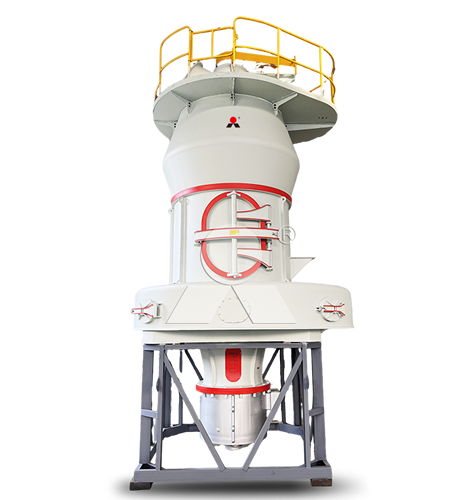
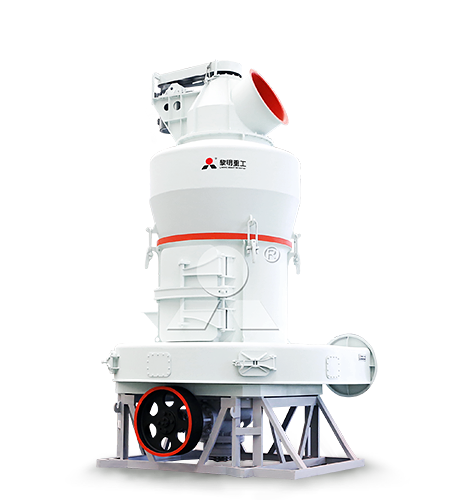
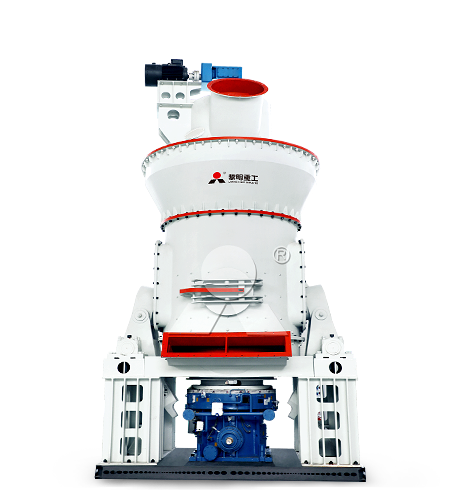
Both cement ball mills and LM Vertical Roller Mills from Liming Heavy Industry can be used for cement clinker and blended cement grinding. The best choice depends on the complete project requirements, including production capacity, material properties, cement type, target fineness, available site area, existing infrastructure, maintenance capability, and investment strategy.
| Factor | Cement Ball Mill | LM Vertical Roller Mill |
|---|---|---|
| Grinding principle | Impact and attrition from steel grinding media | Compression and shearing between rollers and grinding table |
| Classification | Usually uses a separate separator in a closed circuit | Uses an integrated dynamic classifier |
| Grinding media | Requires steel balls and regular grinding-media management | Does not rely on a large steel-ball charge for main grinding |
| Plant arrangement | Conventional horizontal grinding system with related auxiliary equipment | Compact vertical configuration integrating grinding and classification |
| Maintenance focus | Grinding balls, liners, diaphragms, bearings, gearbox, and separator | Grinding rollers, grinding table, hydraulic system, classifier, gearbox, and wear parts |
| Suitable project conditions | Conventional grinding plants and sites with existing ball mill infrastructure | Projects seeking an integrated grinding and classification arrangement |
A cement ball mill can be a strong choice for conventional clinker grinding operations, especially where the project has an existing ball mill foundation, building, conveying system, or maintenance team familiar with grinding media and liner replacement. An LM Vertical Roller Mill may be more suitable where a compact layout and integrated classification are priorities.
Factors That Affect Ball Mill Capacity
The output of a cement ball mill is affected by the properties of the materials being ground and by the operating condition of the complete grinding circuit. A mill should be selected according to the actual production target rather than only the nominal motor power or mill diameter.
Clinker hardness, grindability, particle size, and moisture content.
Gypsum quality, additive proportion, and moisture level.
Required cement type and target fineness.
Grinding media size distribution and total ball charge.
Mill liner design, liner wear condition, and diaphragm performance.
Mill ventilation, process-air volume, and temperature control.
Separator efficiency and circulating load.
Feed stability and accuracy of the material dosing system.
Motor power, drive-system condition, and available electrical supply.
Operator experience, maintenance quality, and automation performance.
Higher cement fineness usually requires additional grinding energy and may reduce mill throughput. Hard clinker, high moisture, poor separator efficiency, worn grinding media, and unstable feed conditions can also reduce capacity. A technical evaluation of the raw materials and production requirement is therefore necessary before selecting the ball mill model and auxiliary equipment.
Maintenance and Operating Considerations
Regular maintenance is essential for stable ball mill operation. The grinding media must be monitored and replenished to maintain an appropriate ball charge and size distribution. When the grinding balls become excessively worn, grinding efficiency may decline, and the mill can consume more power for the same production output.
Mill liners protect the shell and affect the lifting and cascading motion of the grinding media. Worn liners can change media movement, reduce grinding efficiency, and increase the risk of damage to the mill shell. Diaphragms must also be kept in good condition because they control material movement between compartments and help maintain the intended grinding process.
The main bearings, lubrication system, girth gear, pinion, gearbox, motor, coupling, separator, fans, and conveying equipment should be inspected according to a preventive maintenance schedule. Monitoring bearing temperature, lubrication condition, vibration, motor current, mill sound, separator performance, and cement fineness can help operators identify abnormal conditions before they cause a major shutdown.
Ball Mill for Integrated Cement Production
A cement ball mill can be part of a stand-alone grinding station or an integrated cement production line. In a stand-alone grinding plant, clinker is purchased from an external supplier and ground with gypsum and additives to produce finished cement. In an integrated plant, clinker is produced on site before it enters the cement grinding system.
Liming Heavy Industry can also provide rotary kilns and calcining kilns for suitable clinker production and industrial calcination applications. In a complete cement production line, raw materials are crushed, proportioned, ground into raw meal, heated through preheating and calcination, processed in a rotary kiln to form clinker, cooled, stored, and then ground in a cement ball mill or LM Vertical Roller Mill.
Coordinated design of the rotary kiln, calcining kiln, clinker storage system, cement ball mill, cement silos, packing line, and dispatch system helps ensure that clinker production capacity and cement grinding capacity remain properly balanced. This is important for continuous production, stable inventory management, and efficient plant operation.
How to Select a Cement Ball Mill
To select the right cement ball mill for clinker grinding, Liming Heavy Industry needs detailed project information. This allows the grinding circuit, separator, conveying system, dust collection equipment, and finished-product handling system to be configured around the actual production target.
Required cement production capacity in tons per hour or tons per day.
Annual production target and planned operating hours.
Clinker source, feed size, moisture content, hardness, and grindability information.
Required cement types and proportions of gypsum, limestone, slag, fly ash, or other additives.
Target cement fineness, Blaine value, residue requirement, or other product-quality specifications.
Available site area, building dimensions, foundation conditions, and layout limitations.
Local electrical conditions and preferred automation level.
Required cement storage capacity, packing capacity, and bulk loading arrangement.
Whether the project is a new plant, expansion, replacement, or upgrade of an existing grinding line.
Whether a rotary kiln, calcining kiln, or complete clinker production line is also required.
Conclusion
A cement ball mill is a reliable and proven solution for clinker grinding and finished cement production. It can grind clinker together with gypsum, limestone, slag, fly ash, and other suitable additives, then work with a separator to control product fineness in a closed-circuit grinding system.
Liming Heavy Industry provides cement ball mill solutions for clinker grinding plants, as well as LM Vertical Roller Mills for projects requiring an integrated vertical grinding and classification arrangement. Rotary kilns, calcining kilns, and related equipment can also be supplied for clinker production and integrated cement plant projects.
The final cement ball mill configuration should be selected according to required capacity, cement type, clinker properties, additive ratio, product fineness, local plant conditions, existing infrastructure, and long-term operating requirements.
Related Cement Clinker Grinding Plant


LIMING at MiningMetals Uzbekistan 2026 | Booth B94
2026-10-22

LIMING Heavy Industry at MINEXPO Africa 2026 | Booth 133
2026-10-22
Liming Heavy Industry to Exhibit at bauma CHINA 2026 – Visit Us at Booth E6.510
2026-10-15
Meet Liming Heavy Industry at the 140th Canton Fair 2026
2026-10-13
Liming Heavy Industry to Attend the 140th Canton Fair
2026-09-25
Complete Mineral Processing Solutions
Convenient Reliable Professional Efficient Get Your Quote
Please feel free to submit your inquiry information to us. We will contact with you as soon as possible.
Our team will contact you as soon as possible.