


For calcite powder destined for the paper industry, the recommended mill depends on which paper grade you are supplying: an MTW European Grinding Mill or Raymond Mill is generally the right fit for coarser filler-grade GCC in the 60-400 mesh range used in packaging and cultural paper, while a LUM Ultrafine Vertical Roller Mill or MW Micro Powder Mill is needed for finer coating-grade and high-end filler GCC in the 400-2500+ mesh range. Precipitated calcium carbonate (PCC), by contrast, is produced chemically rather than by mechanical grinding, so mill selection here specifically concerns ground calcium carbonate (GCC) production from natural calcite.
_1767930326611.jpg)
Fineness Requirements by Paper Grade
Paper-grade calcite fineness is not a single number; it varies by end use, ranging from around 600 mesh for packaging board filler up to D50 values of 0.5-2 microns for premium coated paper. Packaging paper (corrugated and containerboard) typically uses GCC in the 600-800 mesh range at 20-40% filler loading, cultural paper (writing, newsprint) uses 800-1250 mesh GCC at 10-25% loading, and fine coating applications for art or offset paper call for even finer material closer to 1-2 micron average particle size. Because these requirements differ so widely, a single mill type cannot economically serve the entire paper-grade calcite market, and equipment selection has to be tied to the specific product grade a plant intends to supply.
Matching Mill Type to Target Fineness
Selecting a mill for paper-grade calcite starts with defining the target mesh or D50/D97 for the intended paper segment, then checking whether that fineness falls within a mid-range mill's design envelope or requires a dedicated ultrafine system. Mid-fineness mills are more energy-efficient per ton for coarser products, while ultrafine mills carry higher energy cost per ton but are the only practical route to sub-5-micron D97 material with a narrow particle size distribution.
| Mill Type | Typical Fineness Range | Typical Capacity | Best Fit for Paper-Grade Calcite |
|---|---|---|---|
| Raymond Mill | 80-425 mesh (approx. 180-33 microns) | Roughly 1-20 tph depending on model | Small to mid-scale supply of coarser filler-grade GCC (below 425 mesh), or pre-grinding stage feeding a finer mill |
| MTW European Grinding Mill | 30-325 mesh, extendable toward 400+ mesh with classifier tuning | Roughly 3-45 tph depending on model | Large-volume packaging and cultural paper filler grades (600-1000 mesh), where high throughput and lower energy cost matter |
| LM Vertical Roller Mill | 80-425 mesh, adjustable | Higher throughput per unit footprint | Large-scale plants needing integrated drying for moist feed alongside mid-fineness GCC production |
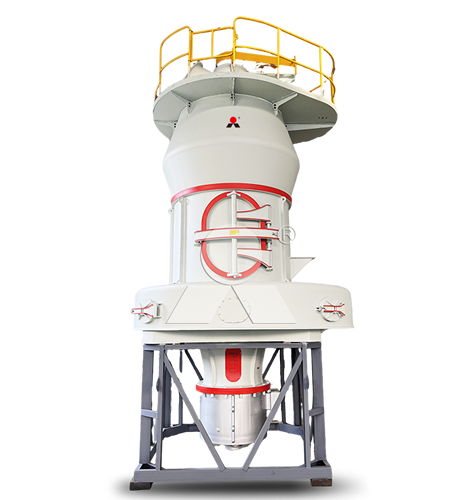
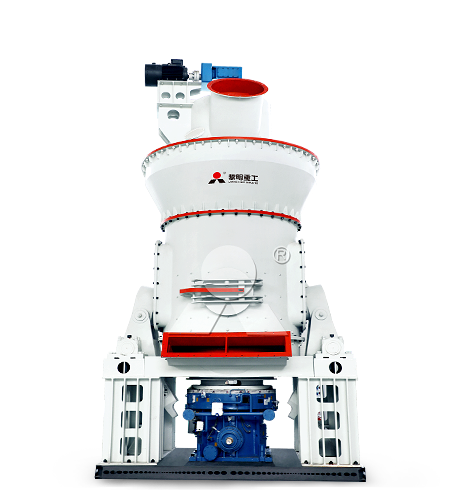
| LUM Ultrafine Vertical Mill | 325-3000 mesh | Lower throughput at ultrafine settings | Fine filler and coating-grade GCC (1250-2500+ mesh) for cultural and coated paper |
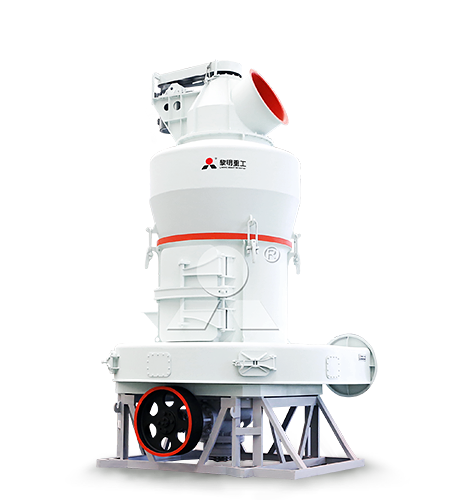
| MW Micro Powder Mill | 325-2500 mesh | Lower throughput at fine settings | Coating-grade GCC requiring tight D97 control and narrow particle size distribution |
Based on this matrix, a plant supplying mainly packaging-grade paper mills should center its investment on an MTW European Grinding Mill or LM Vertical Roller Mill for volume economics, while a plant targeting cultural paper or coated paper customers should plan around a LUM Ultrafine Vertical Roller Mill or MW Micro Powder Mill, since neither Raymond nor MTW mills can reliably deliver a controlled sub-5-micron D97 at commercial scale.
Why Classifier Setting Matters More Than Mill Model Alone
Within any given mill family, the dynamic classifier's rotor speed and air volume determine the actual cut point, meaning two plants with the same mill model can produce noticeably different paper-grade products depending on classifier tuning. For GCC producers running multiple paper grades from one line, this means production scheduling often involves adjusting classifier speed between campaigns (for example, shifting from 800 mesh packaging filler to 1250 mesh cultural paper filler) rather than purchasing a separate mill for every grade.
Raw Material Considerations for Paper-Grade Calcite
Calcite purity, whiteness, and moisture content directly affect whether a given quarry source can meet paper industry specifications, independent of mill choice. Paper-grade calcite generally needs calcium carbonate content of 97% or higher with low iron and silica impurity levels, since these impurities reduce brightness and can introduce abrasive particles that increase mill wear.
_1767929649018.jpg)
Whiteness: paper mills typically specify whiteness values in the low-to-mid 90s percent or higher, particularly for coated and cultural paper grades.
Moisture: feed moisture above roughly 5-8% causes sticking on rollers and can blind the classifier, so a drying stage is needed for wet-quarried calcite before ultrafine grinding.
Impurity control: iron oxide or silica inclusions not only reduce brightness but also raise wear rates on rollers, rings, and classifier internals, particularly in ultrafine circuits.
Surface treatment: some paper applications require stearic acid or silane surface modification after grinding to improve dispersion in the pulp or coating formulation; this is a downstream step separate from the grinding mill itself.
Production Scenario: Sizing a Line for Packaging-Grade Filler
Consider a plant targeting 15 tph of 800 mesh GCC for packaging paper filler, using calcite ore at 97% purity and 5% moisture. An MTW European Grinding Mill rated for roughly 15-20 tph at this fineness with feed size below 30mm would be a reasonable baseline selection, but actual throughput depends on hardness variability in the ore and how tightly the classifier is tuned for the 800 mesh specification; this should be confirmed with a test run on the actual raw material rather than assumed from catalog data. If the same plant later wants to add a 1250 mesh cultural paper grade, adding a LUM or MW ultrafine mill as a second, parallel line is generally more practical than trying to push the MTW mill beyond its efficient operating range.
Common Design Mistakes in Paper-Grade Calcite Lines
Selecting a single mid-fineness mill to try to cover both packaging-grade and coating-grade paper products, resulting in poor energy efficiency at the fine end and underused capacity at the coarse end.
Underestimating dust collection requirements for ultrafine circuits, leading to fine powder loss and inconsistent whiteness readings on finished product batches.
Not verifying calcite purity and impurity content against actual paper mill specifications before committing to equipment sizing, which can result in a plant that grinds fine but still fails to meet whiteness or brightness requirements.
Failing to plan for classifier re-tuning as rollers and rings wear over time, which can gradually shift a batch from 1250 mesh spec toward a coarser, off-spec product without immediate detection.
Practical Selection Guide
_1761355701094.jpg)
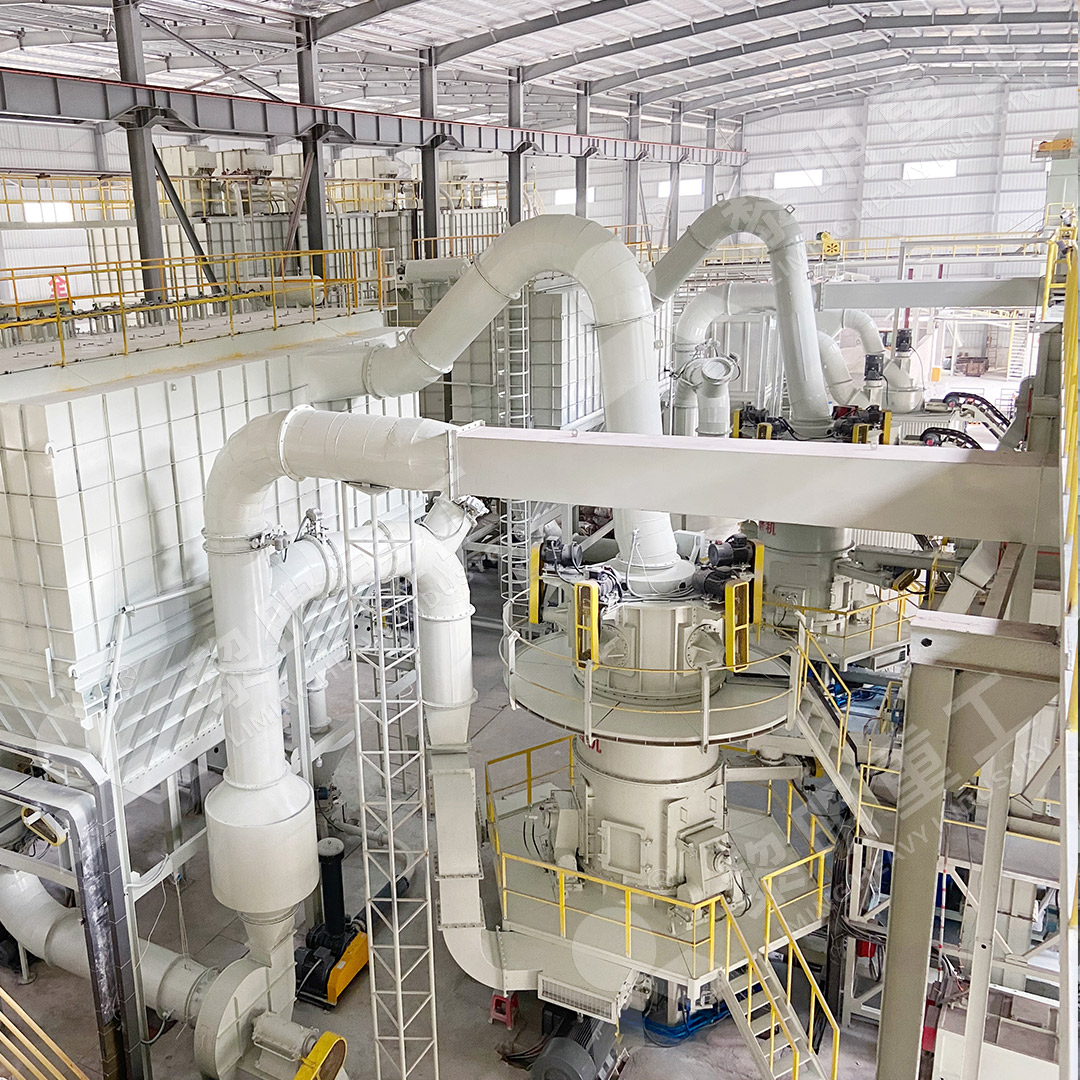
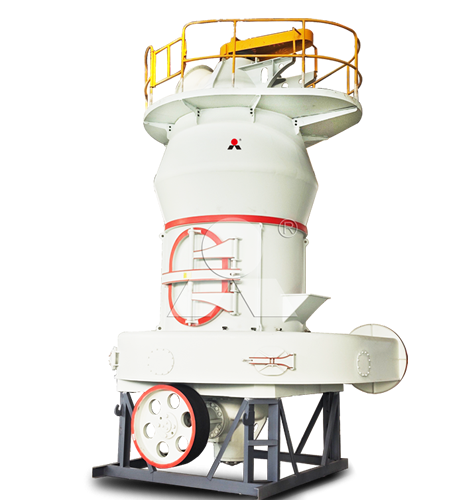
If your target customers are packaging or containerboard mills needing 600-1000 mesh GCC, prioritize an MTW European Grinding Mill or LM Vertical Roller Mill for its higher throughput and lower energy cost per ton at that fineness. If your target customers are cultural, offset, or coated paper mills needing 1250 mesh or finer material with tight PSD control, a LUM Ultrafine Vertical Roller Mill or MW Micro Powder Mill is the appropriate investment, since these are designed specifically for the classifier precision and D97 control that fine paper coatings demand. Several manufacturers, including Liming Heavy Industry, offer both mid-fineness and ultrafine mill families suited to these different paper-grade calcite requirements, and the practical choice should follow the target mesh, capacity, and moisture conditions of your specific project rather than defaulting to one product line.
Related Industry News


Liming Heavy Industry to Attend the 140th Canton Fair
2026-09-25

Liming Heavy Industry at bauma CONEXPO INDIA 2026 | Booth 5-C6
2026-09-07
Turnkey Raw Mill Cement Plant in Saudi Arabia: Design and Installation
2026-09-03
Cement Raw Mill Supplier in Indonesia: Cost and Configuration Analysis
2026-09-01
Liming Heavy Industry to Exhibit at the 24th Global Gypsum Conference & Exhibition in Turkey
2026-08-31
Complete Mineral Processing Solutions
Convenient Reliable Professional Efficient Get Your Quote
Please feel free to submit your inquiry information to us. We will contact with you as soon as possible.
Our team will contact you as soon as possible.