


Summary:
A raw mill in an Egyptian cement plant should be considered for upgrading when it has become a persistent production bottleneck, consumes more energy than necessary, cannot maintain the required raw meal fineness, experiences repeated vibration or operational trips, or has insufficient drying and gas-handling capacity for the current raw materials.
Details:
A raw mill in an Egyptian cement plant should be considered for upgrading when it has become a persistent production bottleneck, consumes more energy than necessary, cannot maintain the required raw meal fineness, experiences repeated vibration or operational trips, or has insufficient drying and gas-handling capacity for the current raw materials. An upgrade is particularly attractive when the kiln or clinker line has already been expanded but the existing raw mill cannot deliver the additional raw meal required.
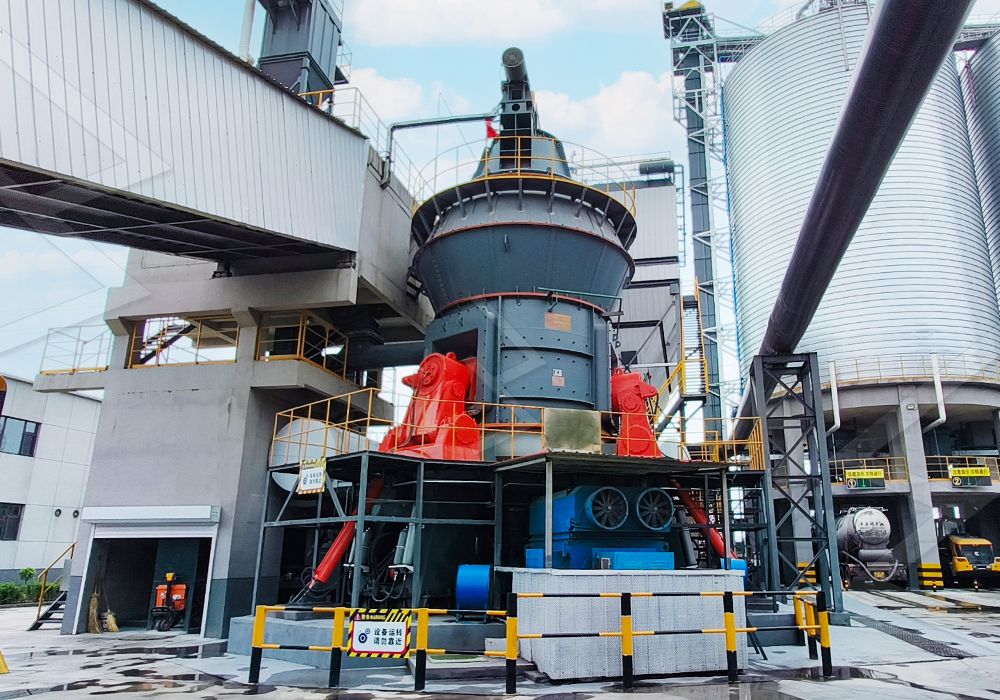
However, low production alone does not prove that the mill itself needs modification. Feed-size problems, high raw material moisture, poor classifier performance, false air, inadequate fan capacity, worn grinding components, unstable power supply, or poor process control can all restrict output. The first step should therefore be a system audit that separates an actual equipment limitation from an operating or process problem.
Start With the Bottleneck: What Is Preventing the Plant From Producing More?
The raw mill is one part of the raw meal preparation circuit. Its effective capacity is determined by the interaction of the grinding table and rollers, separator, fan, gas circuit, drying system, feed system, dust collector, and downstream kiln requirement.
If the kiln can produce more clinker but the raw mill cannot supply enough raw meal, the mill becomes a production bottleneck. This situation is well recognized in cement plant modernization: increasing kiln capacity without addressing raw meal grinding can simply move the production constraint upstream. Capacity upgrades can sometimes be achieved by modifying existing mill components rather than replacing the complete mill.
The correct question is therefore not simply, "Is the raw mill old?" It is "Which part of the raw meal grinding system is limiting the required production rate?"
Six Signs That a Raw Mill Upgrade Deserves Serious Evaluation
1. The kiln has available capacity, but the raw mill cannot keep up
This is one of the clearest reasons to investigate an upgrade. If the kiln and preheater system have been modified for higher clinker production but raw meal production remains near the old design limit, additional grinding capacity may be required.
Before specifying a larger mill, calculate the actual raw meal requirement at the new clinker production rate and compare it with the mill's sustainable operating rate. The comparison should use the same raw mix, fineness, moisture, and operating schedule.
A useful diagnostic is to compare:
Required raw meal tph at the current kiln output
Actual stable raw mill tph
Mill feed rate during short-term peaks
Long-term average production
Frequency and duration of mill trips
Available operating hours per day
If the mill can briefly reach the required rate but cannot sustain it because of vibration, high differential pressure, excessive circulating load, or thermal limitations, the problem may be an upgrade opportunity rather than simply a demand for a larger mill.
2. Specific power consumption has increased
Aging grinding equipment does not automatically become inefficient, but increasing specific power consumption can indicate deteriorating grinding conditions or an underperforming classification system.
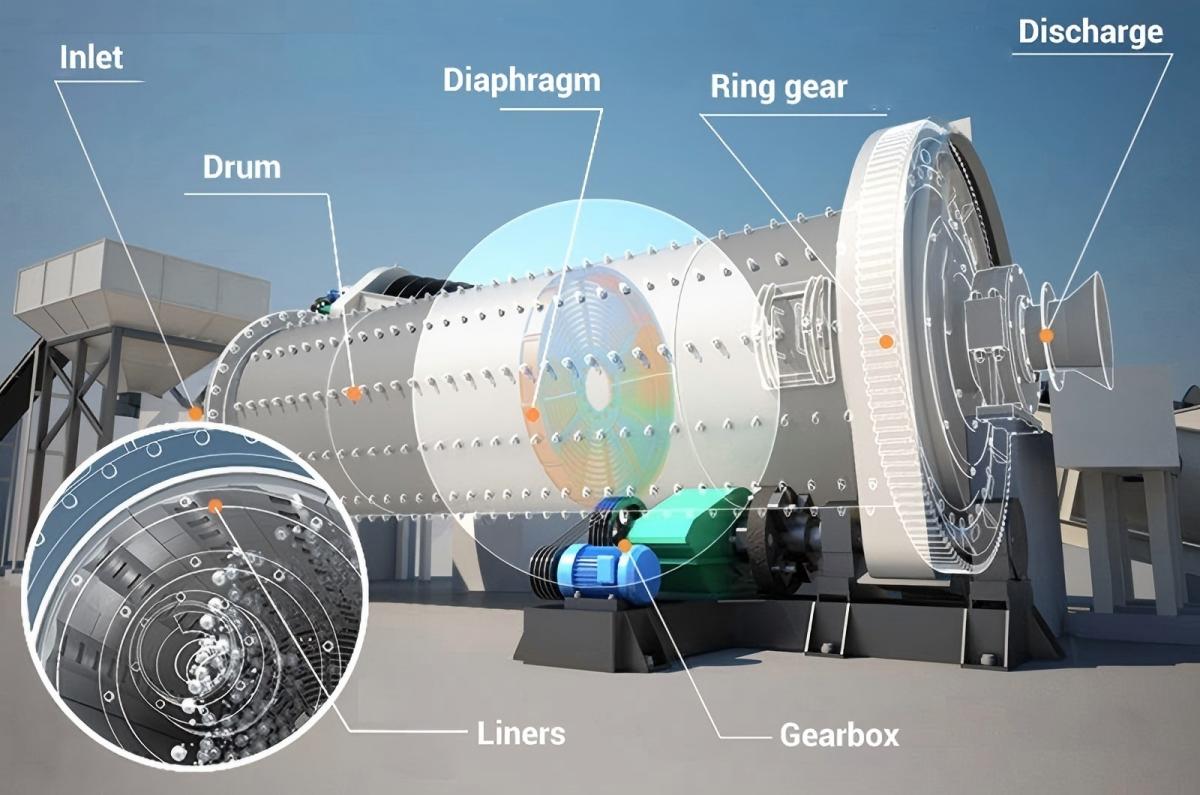
The correct metric is kWh per tonne of acceptable raw meal, not the motor's installed power. A mill consuming more electrical power while producing less acceptable product has a very different efficiency problem from a mill whose power draw has increased because production has also increased.
Before replacing major equipment, establish whether the increase comes from worn grinding components, poor separator efficiency, excessive internal circulation, inappropriate airflow, increased material hardness, higher moisture, or changes in operating conditions.
Energy analysis of raw mills has shown that ambient conditions and raw-material moisture can materially affect grinding-system performance, which is particularly relevant when evaluating a plant under changing seasonal conditions.
3. The classifier has become the real bottleneck
In many vertical raw mills, increasing grinding force alone does not solve a capacity problem. If the separator cannot efficiently remove sufficiently fine particles from the grinding circuit, material circulates repeatedly inside the system.
The result can be higher mill loading, increased fan demand, unstable operation, and declining throughput.
For this reason, classifier modernization should be considered before complete mill replacement when the grinding table and rollers still have adequate mechanical capacity.
High-efficiency classification has historically been identified as an effective raw-meal grinding improvement because better separation can increase usable throughput while improving product-size control. The actual improvement available from a retrofit depends on the existing separator, mill, fan, raw material, and operating point.
4. Repeated vibration and mill trips are restricting production
A mill that frequently trips cannot deliver reliable production even if its theoretical grinding capacity is sufficient.
Common causes should be investigated systematically:
Unstable material bed formation
Excessive or inconsistent feed size
Changes in raw material grindability
High moisture or sticky material
Incorrect grinding pressure
Incorrect dam-ring or material-bed conditions
Worn grinding components
Improper airflow
Excessive circulating load
Control-system limitations
Automatic process control can sometimes reduce avoidable vibration-related interruptions without physically enlarging the mill. Industry energy-efficiency guidance has documented cases in which improved raw-meal process control increased throughput while reducing specific energy consumption.
_1761355701097.jpg)
This leads to an important engineering distinction: a mill that trips frequently may need process optimization before it needs more grinding capacity.
5. Raw material moisture has increased beyond the original design condition
Raw materials do not always remain identical throughout the life of a quarry or plant. Changes in quarry benches, raw mix proportions, clay sources, or seasonal conditions can increase moisture and alter grinding behavior.
For a vertical raw mill, this can become a thermal problem as much as a mechanical grinding problem. The mill must provide sufficient heat and airflow to evaporate the incoming water while maintaining appropriate outlet temperature and stable material transport.
If grinding performance declines mainly during periods of high moisture, the appropriate upgrade may involve the hot-gas circuit, gas flow, sealing, fan capacity, or drying arrangement rather than replacing the grinding table.
6. The existing mill no longer matches the plant's production strategy
An older raw mill may have been correctly sized for the original clinker production rate but become undersized after a kiln modernization, capacity expansion, or change in plant utilization.
This is a different situation from mechanical deterioration. The mill may be operating normally, yet its design capacity is simply no longer adequate.
In this case, the economic comparison should include three alternatives:
Optimize the existing system without major modification
Upgrade selected components of the existing mill
Install a new raw grinding system
The least expensive technical modification is not necessarily the best solution if it leaves another component as the new bottleneck.
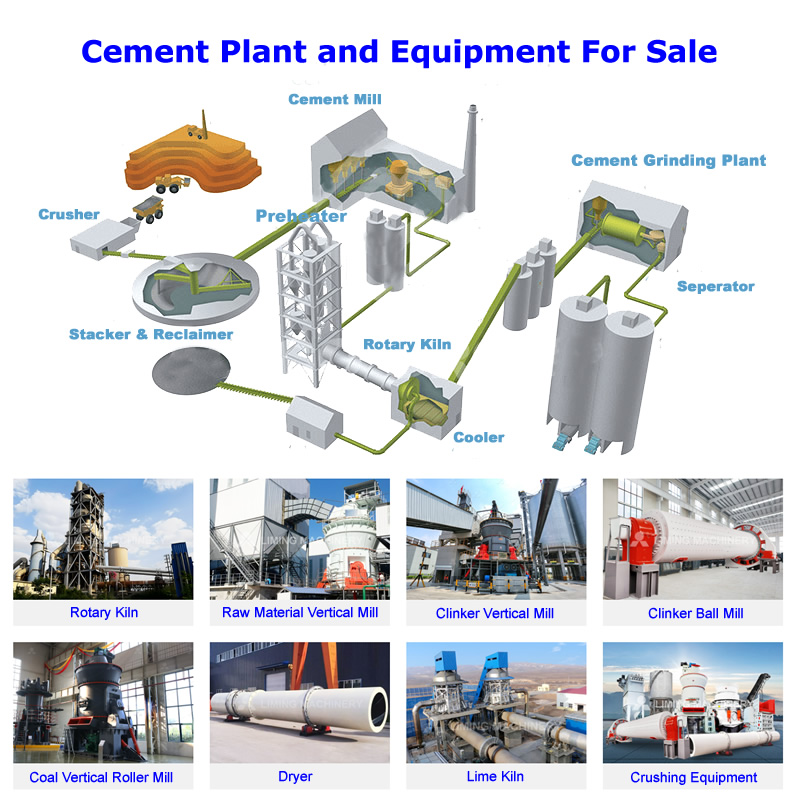
Upgrade the Mill or Replace It?
The decision depends on where the limitation exists and how much additional capacity is required.
| Observed condition | Potential first response | When a larger intervention may be justified |
|---|---|---|
| Separator limits throughput | Evaluate classifier modernization and airflow optimization | When the existing mill or fan also lacks capacity |
| Grinding components are heavily worn | Inspect and refurbish rollers, table, liners, and related components | When structural or drive limitations prevent the required output |
| High mill differential pressure | Check airflow, separator, material circulation, and dust collection | When the gas circuit is fundamentally undersized |
| High raw-material moisture | Evaluate drying and hot-gas capacity | When the existing system cannot provide the required drying duty |
| Frequent vibration trips | Review feed, grinding pressure, material bed, airflow, and control strategy | When mechanical or control limitations remain after optimization |
| Kiln capacity has increased substantially | Calculate new raw meal demand and identify the bottleneck | When the existing mill cannot economically reach the new required rate |
Why an Egyptian Cement Plant Should Evaluate the Gas Circuit Carefully
Raw mill performance is strongly connected to gas flow. In a vertical raw mill, the gas stream performs several jobs simultaneously: it contributes heat for drying, transports fine particles, influences the separator, and carries dust toward the collection system.
If the fan cannot provide the required airflow at the necessary pressure, increasing grinding pressure or mill feed may not produce the expected capacity increase. Likewise, excessive false air can reduce thermal efficiency and change the gas balance through the system.
For an Egyptian plant, the assessment should therefore consider both the raw material condition and the local operating environment. Ambient temperature, seasonal conditions, dust loading, available heat from the kiln system, and the condition of fans and ductwork can all influence the practical operating point.
The gas circuit should be measured rather than assumed. A useful audit includes fan performance, system pressure, airflow, temperatures, false-air locations, dust-collector resistance, and mill outlet conditions.
What About a Ball Mill That Is Still Mechanically Serviceable?
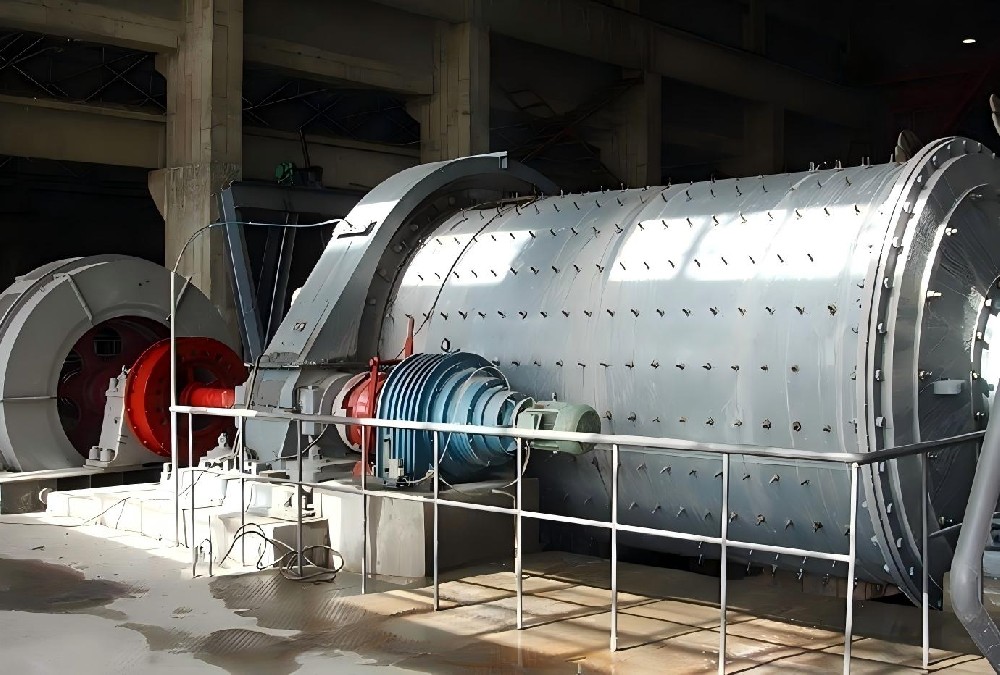
If an existing cement plant uses a conventional ball-mill-based raw grinding system, the decision becomes broader. A mechanically sound ball mill does not automatically justify replacement with a vertical roller mill.
The economic case should compare the complete systems rather than the mills alone. This includes electrical consumption, drying requirements, classifiers, fans, dust collection, maintenance, civil modifications, spare parts, downtime, and the expected production increase.
Replacing older grinding technology with a more efficient system can reduce energy consumption, but the actual benefit is highly dependent on the existing circuit and material. International cement energy-efficiency guidance identifies vertical roller mills and high-pressure grinding technologies among measures that can improve grinding efficiency compared with older systems, while emphasizing the importance of project-specific economics.
A Raw Mill Audit Should Come Before an Upgrade Proposal
Before selecting an upgrade package, collect operating data over a sufficiently representative period. A single shift is rarely enough to identify the real bottleneck.
The audit should examine:
Raw mill feed rate and raw meal production
Clinker production and kiln utilization
Raw material composition
Feed size distribution
Raw material moisture
Raw meal fineness and particle-size distribution
Mill main-drive power
Specific electrical energy consumption
Mill differential pressure
Separator speed and operating condition
Circulating fan performance
Gas temperature and airflow
Dust collector pressure drop
Mill vibration and trip history
Grinding roller and table condition
False-air leakage
Control-system performance
The most valuable result of such an audit is not a list of worn components. It is a cause-and-effect map showing which variable is actually limiting production.
When a Liming Heavy Industry LM Vertical Roller Mill May Be Considered
If the existing raw grinding system requires complete replacement rather than a limited retrofit, an LM Vertical Roller Mill can be evaluated for cement raw meal grinding. The appropriate model and configuration depend on the required raw meal capacity, raw material characteristics, moisture, fineness, drying duty, and gas-system conditions.
_1767930055775.jpg)
The important point is that a new mill should be selected against the plant's actual duty rather than simply replacing an old mill with a larger nominal model. The existing raw material preparation, feeding, hot-gas system, separator, fan, dust collector, conveying equipment, and electrical infrastructure should all be checked for compatibility.
Liming Heavy Industry should therefore be considered as one potential equipment supplier during the technical comparison, alongside other qualified grinding-system suppliers. Final selection should be based on the verified process specification and the commercial and technical evaluation of competing proposals.
A Practical Upgrade Decision for Plant Owners
If the raw mill is producing below target, use the following decision sequence before approving major capital expenditure:
Confirm the production gap. Determine whether the shortfall is real and persistent rather than caused by temporary operating conditions.
Identify the bottleneck. Determine whether grinding, classification, airflow, drying, feed preparation, or control is limiting output.
Correct low-cost process problems first. Address feed size, false air, separator settings, airflow, material-bed stability, and control issues where appropriate.
Evaluate component upgrades. Consider separator, grinding components, fan, gas circuit, or control-system modifications where they can remove the identified limitation.
Recalculate the complete process balance. Confirm that the proposed modification will not simply transfer the bottleneck to another part of the system.
Compare retrofit and replacement economics. Include production gain, energy consumption, maintenance, shutdown time, civil work, and remaining equipment life.
Verify the design with representative material data. This is particularly important when raw material quality or moisture has changed significantly.
Final Engineering Assessment
A raw mill upgrade in an Egyptian cement plant is justified when the existing system can no longer economically provide the required raw meal production, quality, or operating stability. The strongest upgrade candidates are plants where the kiln has additional capacity, the raw mill is a demonstrated bottleneck, or persistent efficiency and reliability problems remain after normal process optimization.
_1761355927036.jpg)
The upgrade should not automatically mean replacing the entire mill. A more effective approach may be to improve the classifier, grinding components, airflow system, fan, drying circuit, sealing, or process controls. In other cases, particularly where the production requirement has increased substantially or the existing mill has reached its mechanical and process limits, a new high-capacity vertical raw mill may be the more rational investment.
The key engineering principle is simple: upgrade the component or system that limits the sustainable production rate, not merely the component that appears oldest. A properly executed raw mill audit can reveal whether the plant needs optimization, a targeted retrofit, or a completely new grinding system. That distinction can have a much greater effect on project economics than the choice of mill model alone.
Related FAQ


Liming Heavy Industry to Attend the 140th Canton Fair
2026-09-25

Liming Heavy Industry at bauma CONEXPO INDIA 2026 | Booth 5-C6
2026-09-07
Turnkey Raw Mill Cement Plant in Saudi Arabia: Design and Installation
2026-09-03
Cement Raw Mill Supplier in Indonesia: Cost and Configuration Analysis
2026-09-01
Liming Heavy Industry to Exhibit at the 24th Global Gypsum Conference & Exhibition in Turkey
2026-08-31
Complete Mineral Processing Solutions
Convenient Reliable Professional Efficient Get Your Quote
Please feel free to submit your inquiry information to us. We will contact with you as soon as possible.
Our team will contact you as soon as possible.