


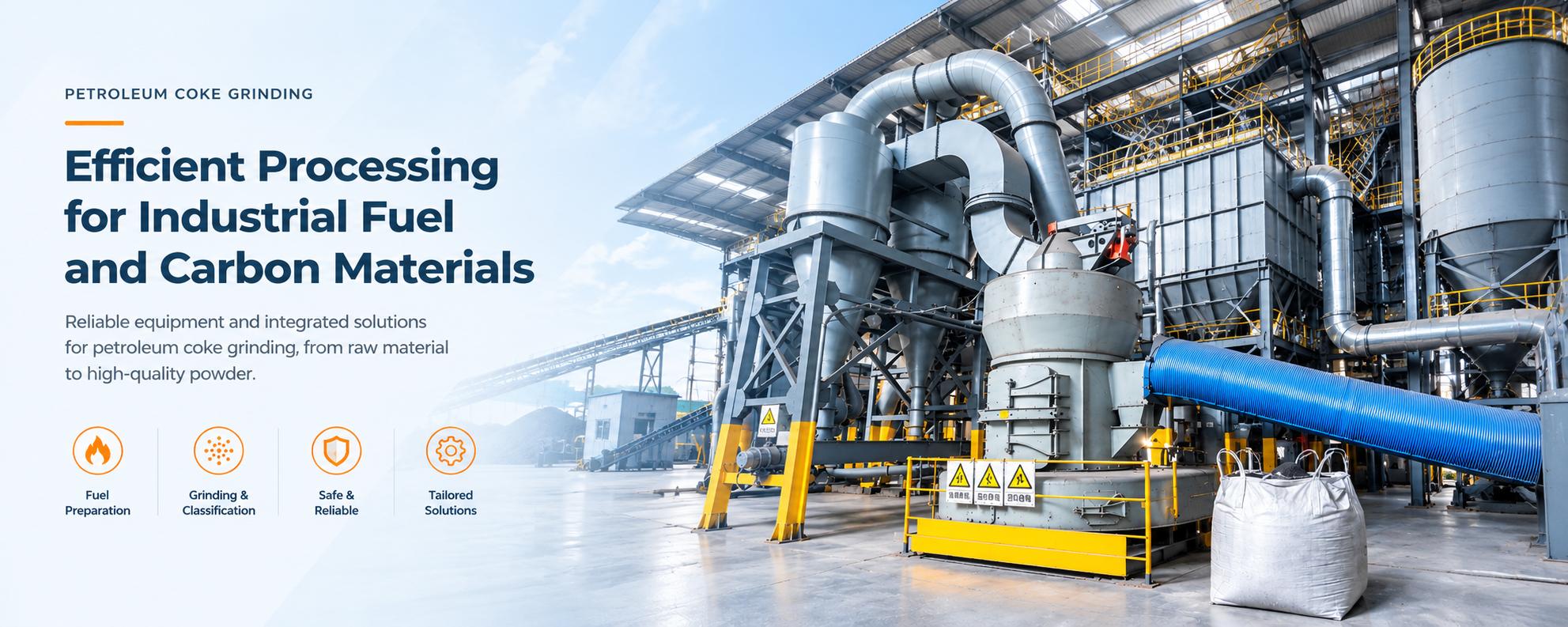
Petroleum coke is an important raw material for aluminum anodes, graphite products, and selected metallurgical carbon applications. Processing typically involves qualifying the feedstock, applying the required thermal treatment, and preparing controlled particle sizes for downstream manufacture. The route depends on the finished product: coke suitable for an aluminum anode is not automatically suitable for a graphite electrode or battery-related graphite material.
The central requirement is qualification. Crushing and grinding prepare the material physically, but they do not establish its chemical suitability or replace calcination and other required thermal treatments.
Different Carbon Products Require Different Processing Routes
Before designing a petroleum coke processing line, identify the product being manufactured and its raw-material acceptance criteria. “Carbon materials” is too broad a description to define an equipment duty.
| Product Direction | Role of Petroleum Coke | Processing Priority |
|---|---|---|
| Aluminum carbon anodes | Suitable calcined coke provides a principal carbon raw material; pitch serves as a binder | Qualified coke properties and controlled preparation for the anode formulation |
| Graphite electrodes | Qualified specialty coke, including petroleum needle coke, provides feedstock for demanding electrode applications | Feedstock structure, impurities, and properties relevant to the electrode grade |
| Synthetic graphite for battery anodes | Selected specialty petroleum coke serves as an upstream precursor | Compatibility with the manufacturer’s complete graphite-production route |
| Metallurgical carbon additions | Selected calcined coke supplies carbon to the receiving process | Application-specific chemistry and particle-size requirements |
These markets are established uses of petroleum-derived carbon, but they should not be combined into one universal grade specification. The finished-product manufacturer must define what is acceptable.
Begin with Feedstock Selection, Not Mill Selection
A processing project should start with representative samples and a written raw-material specification. Establish whether the plant will receive green petroleum coke for further treatment or calcined petroleum coke for size preparation.
For supplier qualification, request the characteristics relevant to the intended product:
Processing condition and traceable material origin.
Sulfur, ash, and relevant metals.
Moisture and volatile matter.
Required density or other application-specific physical properties.
Delivered particle-size distribution.
Permitted variation between batches.
Specialty graphite applications can impose additional requirements. Petroleum needle coke, for example, is selected for characteristics associated with graphite-electrode performance, including low thermal expansion, conductivity, and graphitizability. A low sulfur result alone does not describe all of those properties.
Make the supplier approval process separate from equipment selection. A grinding system should be designed around qualified feedstock, not expected to correct unsuitable raw material.
Calcination Develops the Carbon Feedstock
Calcination converts suitable green petroleum coke into calcined petroleum coke through controlled high-temperature treatment. The main changes include drying, release of residual hydrocarbons, and densification. A commercial calcination route may reach a finishing temperature of about 1,350°C, although the required conditions depend on the product and process.
For project planning, distinguish three operations:
Drying removes moisture.
Calcination removes residual hydrocarbons and develops material properties through heat treatment.
Grinding reduces particle size.
A mill with a drying function does not replace a calciner. Likewise, producing fine powder from green petroleum coke does not turn it into calcined coke. These operations have different duties and should have separate performance requirements.
Particle Preparation Is More Than Producing the Finest Powder
After the required thermal treatment, petroleum coke may need crushing and grinding before use in carbon-product manufacture. Liming Heavy Industry describes calcined petroleum coke preparation for graphite products using crushing followed by grinding, including an application producing 200-mesh powder.
That example should not become a default specification for every carbon material. Establish which particle fractions the downstream formulation requires and whether the plant needs one powder grade or several separately controlled fractions.
Crushing Prepares the Mill Feed
Define the maximum acceptable feed size for the selected mill, then specify upstream size reduction accordingly. Include inspection and handling arrangements for unwanted material rather than treating the crusher as the only feed-preparation requirement.
Grinding Produces the Required Fine Fraction
The grinding duty should state finished fineness and throughput together. Identify the accepted feed condition, including moisture and incoming size, so that the equipment proposal has a clear operating basis.
Classification Controls the Product Range
Where classification forms part of the proposed system, define the required product through measurable particle-size limits. The acceptance requirement should describe the powder leaving the process—not merely a classifier setting or a nominal mesh designation.
Grinding Equipment for Calcined Petroleum Coke
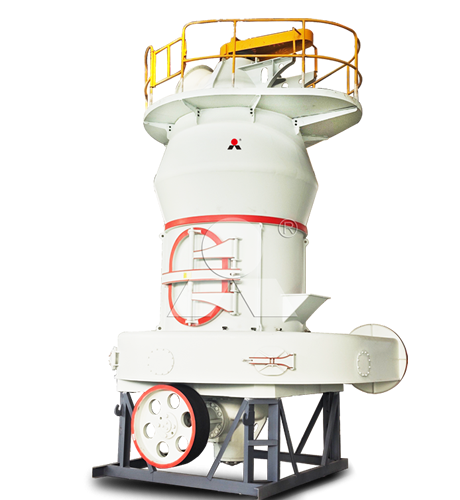
The Liming Heavy Industry MTW European Type Grinding Mill is a candidate for evaluating calcined petroleum coke powder preparation. Liming Heavy Industry reports an MTW installation serving a graphite-production enterprise and identifies calcined petroleum coke grinding among its graphite-related applications.
The published application establishes a relevant reference, but not a universal performance guarantee. Before selecting a model, provide:
A representative calcined petroleum coke sample.
The required finished particle-size distribution.
Normal and maximum incoming particle size.
The expected moisture range.
Required hourly output and operating schedule.
Product contamination limits and approved testing methods.
Collection, transfer, and storage requirements.
Request a proposal that identifies the conditions supporting the stated output. Avoid accepting claims that grinding alone increases chemical purity unless a separate, validated separation or purification operation is explicitly included.
Protect Material Quality Through the Whole Line
For carbon-material production, define contamination control as a project requirement rather than an assumption. Review every product-contact stage, including receiving, crushing, feeding, grinding, collection, conveying, and storage.
The equipment specification should address:
Permitted contamination from product-contact components.
Material compatibility and wear-part selection.
Segregation of different feedstocks and finished grades.
Cleaning requirements when changing products.
Sampling locations for checking material before and after processing.
If contamination limits are commercially important, include them in the acceptance procedure. Compare representative incoming and finished samples using agreed laboratory methods rather than relying only on a general equipment description.
Keep Powder Preparation Separate from Finished-Product Manufacturing
Prepared coke powder is an intermediate material. Aluminum-anode production also uses a binder, while graphite-product manufacture requires further processing beyond coke size reduction. Specialty petroleum coke supplied into the battery industry likewise remains part of a wider manufacturing chain rather than a finished battery-anode material.
A clear equipment scope should therefore identify the handover point:
Qualified coke is received under an agreed material specification.
Required thermal treatment is completed within the relevant process scope.
Crushing, grinding, and classification produce the specified particle fractions.
Prepared material is collected, identified, and transferred to downstream manufacture.
The downstream process qualifies the material against its product requirements.
This separation prevents a powder-preparation proposal from being mistaken for a complete carbon-material production line.
Acceptance Testing Should Connect Powder Quality to Production Duty
Before commissioning, agree the feed conditions, test duration, sampling procedure, and performance boundaries. Test the system using representative material rather than an unusually easy-to-process sample.
The acceptance criteria should include:
Sustained throughput at the required finished fineness.
Particle-size distribution and coarse-fraction limits.
Finished moisture where applicable.
Contamination limits where specified.
Energy consumption within a clearly defined measurement boundary.
Collection, transfer, and product-identification performance.
For a Liming Heavy Industry grinding project, this approach connects equipment selection to the customer’s actual carbon-material requirements. The objective is not simply to make petroleum coke finer, but to deliver a consistent, traceable intermediate material that the downstream manufacturing process can accept.
Related Petroleum Coke Grinding & Processing Solutions


LIMING at MiningMetals Uzbekistan 2026 | Booth B94
2026-10-22

LIMING Heavy Industry at MINEXPO Africa 2026 | Booth 133
2026-10-22
Liming Heavy Industry to Exhibit at bauma CHINA 2026 – Visit Us at Booth E6.510
2026-10-15
Meet Liming Heavy Industry at the 140th Canton Fair 2026
2026-10-13
Liming Heavy Industry to Attend the 140th Canton Fair
2026-09-25
Complete Mineral Processing Solutions
Convenient Reliable Professional Efficient Get Your Quote
Please feel free to submit your inquiry information to us. We will contact with you as soon as possible.
Our team will contact you as soon as possible.