


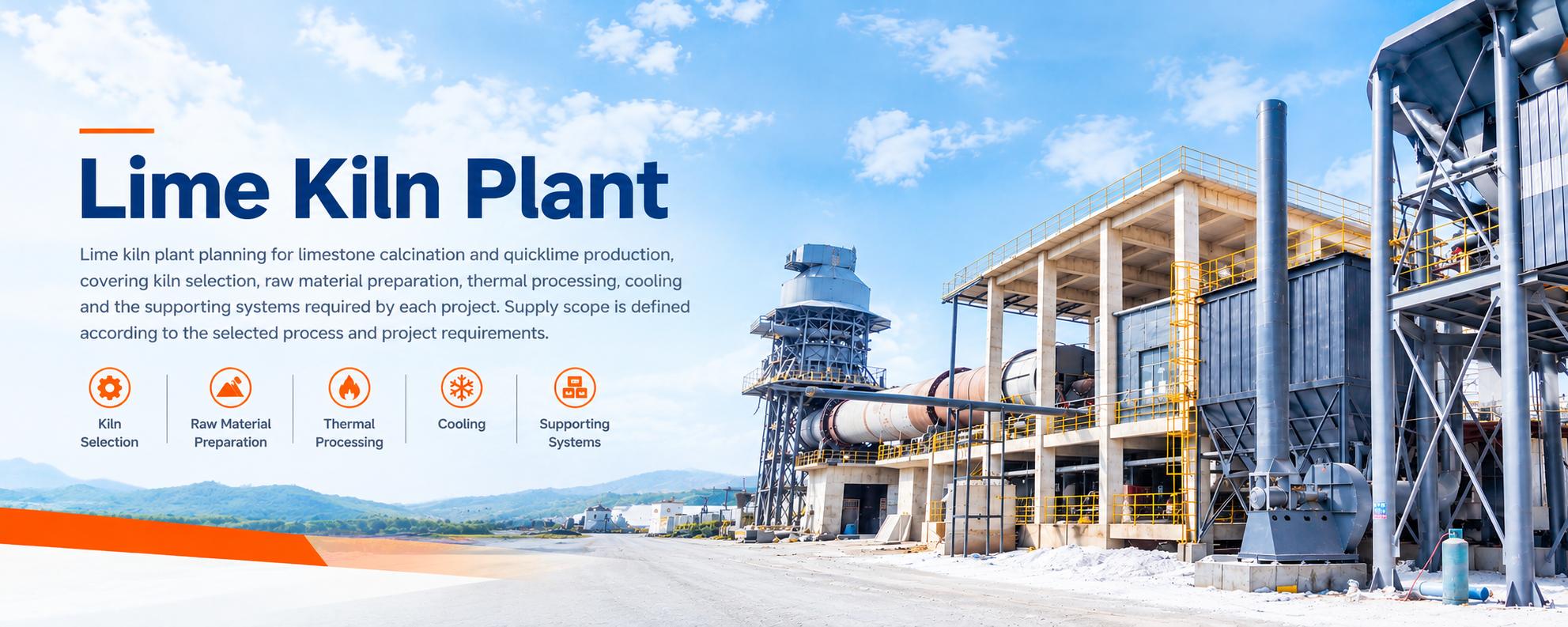
Limestone crushing and screening prepare quarry stone for controlled feeding into a lime kiln. Crushing reduces oversized rock, while screening separates acceptable kiln feed from material that is too large or too small. The objective is not to produce the smallest possible stone, but to supply a consistent size distribution that suits the selected kiln and supports uniform calcination.
A preparation plant can meet its hourly tonnage target and still deliver unsuitable kiln feed. Excess fines, oversized pieces, or changing proportions of different sizes can create problems downstream. The most useful performance measure is therefore the quantity of acceptable stone delivered to the kiln—not simply the quantity passing through the crushing section.
Define the Kiln Feed Before Designing the Crushing Circuit
The starting point is a written feed specification from the kiln supplier. A single maximum size is not enough. The specification should describe the full acceptable size range and the permitted amounts of material outside that range.
For a Liming Heavy Industry vertical shaft kiln, rotary lime kiln, or twin-shaft lime kiln project, confirm the following before finalizing the preparation arrangement:
The minimum and maximum acceptable limestone sizes.
The target distribution within that size range.
The permitted undersize and oversize content.
The feed requirements of any upstream preheater.
The required continuous feed rate and expected operating range.
Limits relating to moisture, clay contamination, and stone breakdown.
Different kiln arrangements require different prepared feed. Vertical kilns are particularly sensitive to the permeability of the material column, while rotary kiln systems can generally accommodate smaller limestone fractions. Neither arrangement should be assigned a universal feed size without checking its specific design.
Why the Full Size Distribution Matters
Large and Small Stones Do Not Calcine at the Same Rate
Heat must reach the interior of each limestone particle. When a feed contains widely different sizes, the stones do not progress through calcination uniformly. Narrower, controlled size gradations help make the thermal treatment more consistent.
This is why “all material below the maximum size” is an incomplete acceptance rule. A feed dominated by smaller stones can behave differently from one dominated by larger stones, even when both satisfy the same top-size limit.
Fines Affect More Than Product Yield
In a shaft kiln, process gases must pass through the spaces between stones. Excess fine material can reduce bed permeability and disturb gas distribution. Stone that breaks down during handling or heating can therefore create difficulties even if its original screened size was acceptable.
Removing undersize material is not simply a housekeeping measure. It helps protect the operating conditions on which the kiln’s output and product quality depend.
A Practical Material Route from Quarry to Kiln
The exact arrangement depends on the quarry feed, but a useful preparation concept separates the material into three destinations: acceptable kiln feed, oversize for further reduction, and undersize for a separately planned outlet.
Receive and Regulate the Quarry Feed
Record the incoming rock-size distribution rather than designing around the largest block alone. Also assess variations between quarry areas, the amount of naturally occurring fines, and contamination introduced during excavation or loading.
A controlled feed rate allows the crushing and screening stages to operate against a defined duty. During commissioning, the preparation section should be checked under realistic quarry-feed conditions, not only under a short period of unusually clean or uniform material.
Reduce Oversized Rock Without Unnecessary Reprocessing
Limestone may require primary crushing followed by additional reduction, depending on the incoming rock and the required kiln-feed size. Industrial lime preparation commonly combines crushing with screening to produce the necessary fractions.
The arrangement should preserve material that already meets the specification wherever practical. Sending acceptable stone through another reduction stage can create additional undersize without increasing the amount of usable kiln feed.
Separate the Required Fractions
Screening establishes which material can proceed to the kiln-feed stockpile and which material needs another destination. Screens should be selected and operated for the actual feed condition, required separation sizes, and production duty.
| Screened Fraction | Intended Route | Operating Check |
|---|---|---|
| Within the approved kiln-feed range | Transfer to dedicated storage or the kiln-feed system. | Verify the complete size distribution, not only the maximum size. |
| Oversize | Return for further size reduction where the circuit is designed to do so. | Track the return load and investigate persistent oversize production. |
| Undersize and fines | Keep separate for an approved alternative use or processing route. | Prevent uncontrolled blending back into lump kiln feed. |
Check the Stone Again Near the Kiln
Acceptable stone can generate new fines during stockpiling, reclaiming, conveying, and transfer. A final screening stage close to kiln charging can remove material created after the main preparation section. This is especially important for shaft kilns, where fines adversely affect the material bed.
The location matters: a screen positioned far upstream cannot remove fines generated by all the handling operations that follow it.
Protect Prepared Feed During Storage and Transfer
Feed preparation continues after the main screen. The material delivered to the kiln should still resemble the material approved at the screening outlet.
Include the following checks in the handling plan:
Keep kiln-feed fractions separate from fines and other quarry products.
Inspect transfer points for excessive stone breakage.
Check whether stockpile reclaim changes the size distribution reaching the kiln.
Prevent clay, soil, and other materials from entering prepared-feed storage.
Sample the material at the kiln-feed point as well as at the preparation plant.
Where washing is considered to remove adhering contamination, include the resulting water and moisture conditions in the process review. Washing can form part of limestone preparation, but it should be justified by the actual raw material rather than added automatically.
Troubleshooting: What the Feed Can Tell You
| Observed Problem | Preparation Checks |
|---|---|
| Oversized stones repeatedly reach kiln charging. | Inspect screen condition, bypass routes, separation performance, and oversize-return arrangements. |
| Fines are acceptable after screening but excessive at the kiln. | Compare samples along the handling route and inspect storage, reclaim, and transfer points for degradation. |
| The kiln receives changing proportions of large and small stone. | Review quarry-feed variation, screen performance, stockpile segregation, and reclaim practice. |
| Preparation tonnage is high, but usable kiln feed is low. | Measure the split between accepted feed, circulating oversize, and rejected undersize. |
| Stone breaks down substantially during heating. | Investigate thermal decrepitation through representative material testing rather than relying on cold sizing alone. |
Thermal decrepitation means that limestone breaks into smaller pieces as it is heated. It can alter the size distribution inside the kiln and reduce the permeability of a shaft-kiln bed. This makes limestone behavior during calcination an important part of feed assessment.
Plan an Outlet for Fines Before the Plant Starts
Undersize limestone should be included in the project’s material balance. Its quantity affects quarry utilization, storage needs, and the cost of producing acceptable kiln feed.
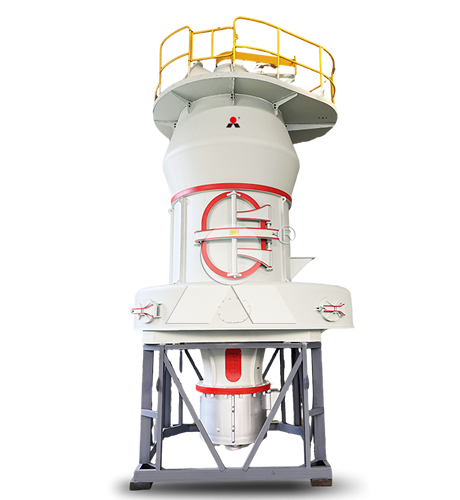
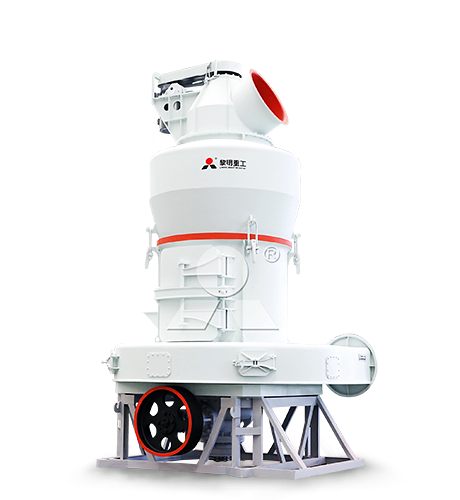
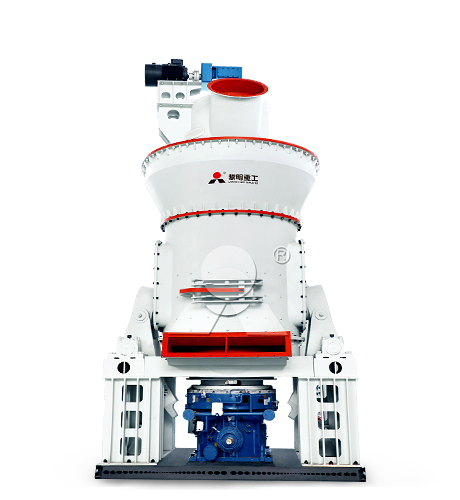
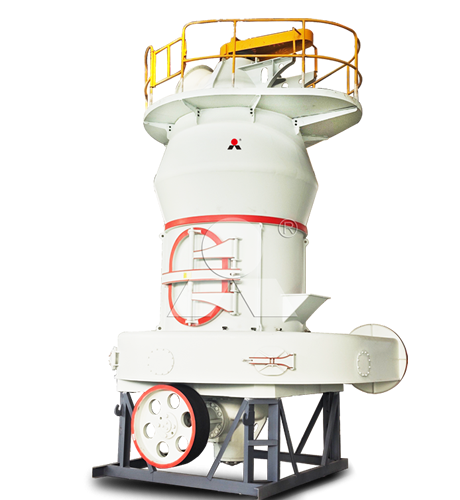
If a separate limestone-powder product is technically and commercially suitable, a Liming Heavy Industry grinding mill can be evaluated for that duty. Selection should be based on the fines’ composition, moisture, feed size, required powder fineness, and throughput.
This is a separate processing route. Grinding limestone produces limestone powder; it does not convert the material into quicklime. Likewise, adding rejected fines back into a lump-feed kiln should not be used as a substitute for a properly designed outlet.
Measure Success at the Kiln Inlet
The most important preparation target is consistency. Track accepted kiln-feed production, undersize generation, oversize return, and the size distribution actually reaching the charging system.
For a new lime plant, provide representative limestone samples and quarry sizing data alongside the proposed kiln duty. For an existing plant, compare samples before screening, after screening, and at kiln charging. Those checks help distinguish a preparation problem from degradation during handling.
A well-matched crushing and screening arrangement preserves usable stone, separates unsuitable fractions, and supplies the kiln with the feed it was designed to process. That creates a more dependable starting point for stable quicklime production than increasing preparation tonnage alone.
Related Lime Kiln Plant


LIMING Heavy Industry to Participate in SIREXE 2026 in Abidjan, Côte d'Ivoire
2026-10-26

LIMING at MiningMetals Uzbekistan 2026 | Booth B94
2026-10-22
LIMING Heavy Industry at MINEXPO Africa 2026 | Booth 133
2026-10-22
Liming Heavy Industry to Exhibit at bauma CHINA 2026 – Visit Us at Booth E6.510
2026-10-15
Meet Liming Heavy Industry at the 140th Canton Fair 2026
2026-10-13
Complete Mineral Processing Solutions
Convenient Reliable Professional Efficient Get Your Quote
Please feel free to submit your inquiry information to us. We will contact with you as soon as possible.
Our team will contact you as soon as possible.