


Powdered activated carbon (PAC) is a fine adsorbent material produced for applications where rapid contact with contaminants is required. It is widely used in drinking-water treatment, wastewater treatment, decolorization, odor removal, pharmaceutical purification, food and beverage processing, chemical refining, and flue-gas treatment.
Unlike granular activated carbon used in fixed-bed filters, powdered activated carbon is normally dosed directly into a liquid or gas-treatment process and then separated by filtration, sedimentation, or another downstream treatment step. Its small particle size shortens diffusion distance and can improve adsorption speed, but it also makes dust collection, classification, conveying, storage, and dosing more demanding. PAC commonly falls within a fine-powder range, although the required particle-size distribution must be determined by the target application and the customer’s performance specification.
What Determines PAC Performance?
Activated carbon is not judged by particle size alone. The raw material, activation method, pore structure, surface chemistry, ash content, moisture, bulk density, and adsorption index all influence final performance. However, particle size remains one of the most controllable variables in a PAC finishing line.
When activated carbon particles are reduced in size, the external surface area increases and the distance that contaminants must travel to reach internal adsorption sites becomes shorter. This can accelerate adsorption, particularly where contact time is limited. Research on dissolved organic matter found that reducing PAC particle size from 76.0 μm to 19.1 μm increased removal performance by 83.3% under the study conditions, largely because of improved accessible surface area and reduced diffusion distance.
Finer powder is not automatically better in every project. Excessive grinding can increase energy consumption, reduce product yield through ultrafine dust losses, complicate filtration, increase handling difficulty, and create a wider gap between laboratory performance and practical plant operation. The target should therefore be a controlled particle-size distribution that matches the intended use.
Typical Production Routes
PAC can be produced through two main routes. The first is direct production, in which a carbonaceous raw material is converted into activated carbon and then ground to the required powder grade. The second is post-processing, in which granular or formed activated carbon is crushed and milled into powdered product.
The direct route is common where the plant uses wood, sawdust, peat, coconut shell, coal, or other carbon-rich feedstock as the starting material. The post-processing route is often used when a plant already produces granular activated carbon and wants to supply powdered grades from selected material or recycled qualified fractions.
A typical powdered activated carbon production line includes the following functional stages:
Raw material receiving → crushing or preliminary size reduction → drying when necessary → carbonization → activation → cooling → washing and neutralization when required → drying → coarse crushing → fine grinding → air classification or screening → dust collection → quality inspection → packing.
Raw Material Preparation
Raw material preparation establishes the basis for stable carbonization and activation. Coal, coconut shell, wood, sawdust, biomass char, petroleum coke, and other suitable carbonaceous materials should be inspected before processing. Important feed characteristics include initial moisture, ash, sulfur or chlorine content where relevant, volatile matter, particle size, hardness, and contamination level.
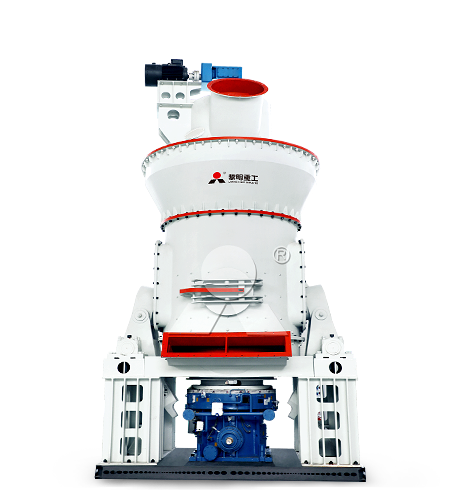
Coal-based PAC requires controlled coal powder preparation before forming or thermal treatment when the line uses briquetting, extrusion, pelletizing, or granulation. In this case, the LM Vertical Coal Mill from Liming Heavy Industry is suitable for coal grinding because it combines drying, grinding, and classification in one system. Stable coal powder fineness supports more uniform mixing, more reliable forming, and consistent furnace feed.
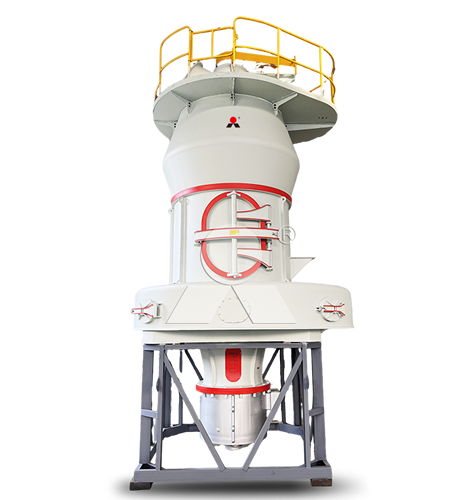
For non-coal carbonaceous materials and activated carbon finishing operations, the LM Vertical Roller Mill from Liming Heavy Industry can be used for controlled powder processing. It is suitable for materials such as activated carbon, coconut-shell char, wood-based char, biomass carbon, petroleum coke, and other non-coal mineral or carbonaceous powders that require stable grinding and classification.
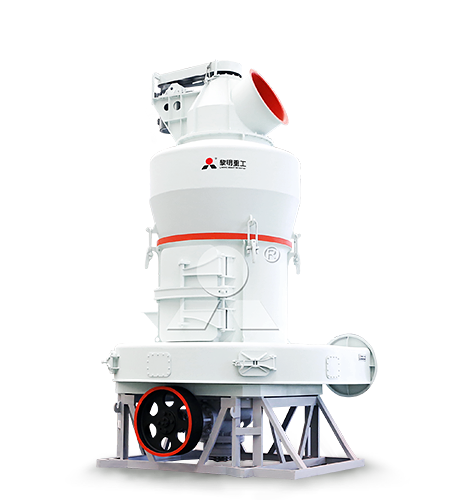
The MTW European Trapezium Grinding Mill from Liming Heavy Industry is another option for powdered activated carbon processing where a separate grinding system is required. It can be configured with powder collection and classification equipment to produce activated carbon powder in a controlled fineness range.
Carbonization and Activation Before Fine Grinding
Fine grinding normally takes place after the carbonization and activation stages. During carbonization, the feedstock is heated under oxygen-limited conditions to remove moisture and volatile components while retaining a carbon-rich char structure. The char is then activated to develop the pore system responsible for adsorption.
Physical activation generally uses steam, carbon dioxide, or a combination of activating gases at elevated temperature. Chemical activation uses a chemical activating agent and requires subsequent washing to remove residual chemicals and soluble impurities. The selected route depends on the raw material, final product requirements, wastewater treatment arrangement, and the required balance of micropores, mesopores, and macropores.
Grinding cannot compensate for poor activation. A finely milled carbon with insufficient pore development may have limited adsorption capacity, while a properly activated carbon ground to an unsuitable particle size may create unnecessary handling and separation challenges. The thermal process and powder-processing section must therefore be designed as one connected production route.
Crushing Before Fine Milling
Activated carbon discharged from the activation, washing, cooling, and drying sections may be present as irregular lumps, granules, pellets, or coarse fragments. Before entering the fine grinding mill, the material is commonly reduced by a crusher to a stable feed size.
Pre-crushing helps protect the grinding system, improves feeding uniformity, and reduces fluctuations in mill loading. A properly designed crushing stage also helps prevent large particles from entering the classifier and reduces the amount of material returned through the internal circulation system.
Carbon material can be relatively brittle, but product hardness varies substantially by feedstock and activation condition. Coconut-shell activated carbon is typically harder than many wood-based products, while highly activated material may become more fragile as burn-off increases. The crushing system should therefore be selected according to the actual feed properties rather than only the nominal production capacity.
Fine Grinding and Air Classification
The fine grinding section converts activated carbon into a powder with the required particle-size distribution. A complete PAC milling system normally includes a feed hopper, sealed feeder, grinding mill, air classifier, cyclone collector, pulse-jet dust collector, induced-draft fan, and finished-product storage or packing equipment.
In an air-classification system, ground material is carried by airflow to the classifier. Fine particles that meet the target cut size are collected as product, while coarse particles are returned to the grinding zone for further size reduction. This closed-circuit arrangement allows the line to control fineness more effectively than open-loop grinding.
Particle-size control should not rely only on a single mesh value. A product specification may include D10, D50, D90, residue on a designated sieve, specific surface area, bulk density, moisture, and adsorption indicators. For example, a PAC grade may require a fine median size for fast adsorption, while also imposing an upper-size limit to prevent coarse particles from settling too quickly in a dosing tank or reducing treatment efficiency.
| Particle-Size Condition | Likely Processing Result | Potential Application Effect |
|---|---|---|
| Particles too coarse | Lower grinding cost and reduced dust, but slower adsorption kinetics | May be unsuitable for short contact-time treatment systems |
| Controlled fine powder | Balanced grinding energy, flowability, adsorption rate, and collection efficiency | Suitable for many PAC dosing and purification applications |
| Excessive ultrafine fraction | Higher energy use, more dust loading, possible agglomeration, and more difficult separation | May improve initial adsorption rate but can complicate handling and downstream filtration |
| Wide particle-size distribution | Inconsistent powder behavior and less predictable product quality | Can create variable dosing, settling, and adsorption performance |
Smaller particles generally improve adsorption rate because contaminants can reach adsorption sites through a shorter diffusion path. At the same time, the pore structure must remain accessible and appropriate for the molecules being removed. A smaller particle size does not replace the need for suitable pore-size distribution and activation quality.
How to Control Particle Size
Stable PAC fineness is achieved through coordinated control of feed material, mill operation, airflow, classifier speed, and collection efficiency. The following factors should be monitored during operation:
Feed size and feed-rate stability before the mill.
Feed moisture and drying performance.
Grinding pressure, grinding time, and mill loading.
Classifier rotor speed or classification setting.
System airflow and negative-pressure stability.
Dust-collector operating condition and filter resistance.
Return ratio of coarse particles in the closed circuit.
Finished-product moisture, bulk density, and particle-size distribution.
Higher classifier speed generally produces a finer product because larger particles are rejected and returned for further grinding. Lower classifier speed normally allows a coarser cut. However, changes in classifier settings should be coordinated with airflow and feed rate. Adjusting only one parameter can create excessive circulating load, reduced output, unstable product fineness, or increased wear.
Moisture is also important. Activated carbon with excessive moisture may adhere to equipment surfaces, reduce classification efficiency, increase pressure drop in the system, and interfere with accurate packaging. Dry material flows more consistently and is easier to collect in cyclones and bag filters.
Particle Size and End Use
The required PAC grade should be defined according to the treatment process rather than selected solely for maximum fineness. A water-treatment plant, for example, may require fast adsorption within a limited contact period. A decolorization process may focus more on the relationship between carbon pore structure and the molecular size of color bodies. A flue-gas treatment system may require a powder grade that can be injected uniformly and captured efficiently by downstream filtration equipment.
PAC is generally regarded as a fine activated carbon product, with many commercial and application references placing it below approximately 100 μm or defining it through a specified sieve-passing requirement. In water-treatment guidance, PAC is described as crushed or ground carbon in which 95–100% passes designated sieves, while granular activated carbon is retained on a 50-mesh sieve, equivalent to 0.297 mm.
Common particle-size checks include laser diffraction analysis, air-jet sieving, wet sieving where appropriate, and dry sieve analysis for coarser fractions. The testing method should be agreed together with the product specification because different methods can report particle size differently, especially for irregular and porous activated carbon particles.
Preventing Over-Grinding
Over-grinding is one of the main risks in powdered activated carbon production. It can create an excessive ultrafine fraction that increases dust emissions, raises power consumption, lowers bulk density, and reduces product-handling efficiency. Very fine powder may also create difficulties in pneumatic conveying, bagging, dosing, and downstream solid-liquid separation.
Research indicates that reducing particle size within the micron range can enhance adsorption kinetics and, in some cases, adsorption capacity. However, further reduction into the submicron range does not always continue this improvement. One study reported that adsorption capacities increased as particle diameter decreased in the micron range but declined with further size reduction in the submicron range, associated with changes in carbon surface properties during intensive micro-milling.
For this reason, a PAC line should be designed to produce the requested distribution consistently, not simply to achieve the smallest possible particle size. The objective is controlled fineness, stable output, high product recovery, and reliable adsorption performance.
Dust Collection and Safe Handling
Powdered activated carbon is a fine, lightweight material that can generate dust during crushing, grinding, conveying, storage, and packing. An effective dust-collection system is essential for product recovery, clean operation, and safer material handling.
Key equipment may include enclosed conveyors, sealed rotary valves, negative-pressure conveying lines, cyclone separators, pulse-jet bag filters, explosion-relief arrangements where required by project safety assessment, and dust-tight finished-product silos. The design should consider the specific properties of the carbon product, including particle size, moisture, bulk density, dust concentration, and the potential presence of combustible dust.
Good housekeeping remains important even when dust collection is installed. Carbon dust should not be allowed to accumulate around mills, elevators, packing stations, electrical equipment, or hot surfaces. Process equipment should be grounded where needed to manage static electricity, and the plant should follow its applicable safety, fire-protection, and dust-hazard-control requirements.
Final Inspection and Packaging
Before packing, each PAC batch should be checked against the agreed product specification. Depending on the market and application, testing may include particle-size distribution, sieve residue, iodine number, methylene blue value, molasses number, ash content, moisture, bulk density, pH, water-soluble matter, and adsorption performance for a designated target substance.
Finished PAC can be packed in moisture-resistant valve bags, paper bags with inner liners, woven polypropylene bags, jumbo bags, or customized bulk packaging. A sealed and dry packing arrangement helps preserve the product’s moisture specification and prevents powder loss during transportation.
A well-configured powdered activated carbon line links activation quality with accurate final milling. With suitable crushing, controlled fine grinding, air classification, dust collection, and inspection, the plant can produce PAC grades tailored to different purification and treatment requirements. For coal-based feed preparation, the LM Vertical Coal Mill is the appropriate solution; for non-coal carbon materials and final activated carbon powder processing, the LM Vertical Roller Mill or MTW European Trapezium Grinding Mill provides a practical route to stable, controlled fineness.
Related Powder Processing for Activated Carbon


Liming Heavy Industry at bauma CONEXPO INDIA 2026 | Booth 5-C6
2026-09-07

Turnkey Raw Mill Cement Plant in Saudi Arabia: Design and Installation
2026-09-03
Cement Raw Mill Supplier in Indonesia: Cost and Configuration Analysis
2026-09-01
Liming Heavy Industry to Exhibit at the 24th Global Gypsum Conference & Exhibition in Turkey
2026-08-31
Complete Calcium Carbonate Grinding and Coating Plant Solution
2026-08-29
Complete Mineral Processing Solutions
Convenient Reliable Professional Efficient Get Your Quote
Please feel free to submit your inquiry information to us. We will contact with you as soon as possible.
Our team will contact you as soon as possible.