


Choosing an activated carbon grinding mill begins with the finished-product specification, not with the mill model. The correct equipment must match the carbon source, feed size, moisture, hardness, required particle-size distribution, production capacity, collection method, and plant safety arrangement.
Activated carbon may be supplied as granular material, pellets, coarse crushed carbon, or fine powder. A mill selected for producing a moderate fineness product for wastewater treatment may not be suitable for a fine powdered activated carbon grade used for rapid adsorption, decolorization, or chemical purification. The practical objective is stable output with a controlled particle-size distribution, reliable powder collection, low product loss, and clean operation.
Start With the Final Product
The intended application defines the grinding target. Before selecting equipment, determine whether the plant will produce powdered activated carbon, fine carbon powder for blending, granular-product fines, or a customized grade for a specific adsorption process.
| Finished Product Requirement | Key Grinding Requirement | Typical Process Focus |
|---|---|---|
| Coarse activated carbon powder | Stable coarse-to-medium grinding with controlled sieve residue | Lower power use, reduced ultrafine dust, easier handling |
| Standard powdered activated carbon | Consistent fine grinding and controlled classification | Balanced adsorption speed, product recovery, and operating cost |
| Fine PAC for short-contact treatment | Narrow particle-size distribution and efficient air classification | Improved contact efficiency and faster adsorption kinetics |
| Customized carbon powder | Flexible adjustment of fineness, output, and classifier settings | Product development for specialty purification or industrial processes |
Powdered activated carbon is usually supplied as a fine ground material, often defined through a designated sieve-passing rate or particle-size distribution. Water-treatment guidance distinguishes PAC from granular activated carbon by describing PAC as crushed or ground carbon in which 95–100% passes a specified sieve, while granular carbon is retained on a 50-mesh sieve.
Smaller particles can improve adsorption speed because they reduce the distance that molecules must travel to reach internal pore surfaces. However, very fine powder also increases dust loading, power consumption, material loss risk, and downstream handling difficulty. The most suitable product is therefore not necessarily the finest product; it is the product with a particle-size distribution that fits the actual treatment process.
Evaluate the Feed Material
Activated carbon is not a single material. Its grinding behavior changes according to its precursor, activation intensity, moisture condition, particle shape, and final density. A proper equipment selection should start with a sample test or a complete material data sheet.
Important feed characteristics include:
Carbon source, such as coal, coconut shell, wood, sawdust, biomass char, petroleum coke, or regenerated carbon.
Feed particle size and the maximum particle size entering the grinding system.
Moisture content after washing, cooling, drying, or storage.
Hardness, brittleness, abrasion behavior, and tendency to generate fines.
Ash content, residual chemicals, salts, and possible corrosive components.
Bulk density and flowability through hoppers, feeders, and conveyors.
Target particle-size distribution, including sieve residue or D10, D50, and D90 values.
Required hourly capacity and annual operating time.
Coconut-shell activated carbon is generally hard and mechanically strong, making it suitable for many granular applications but requiring reliable crushing and grinding components. Wood-based activated carbon often has a lower density and different pore structure. Coal-based activated carbon may be produced as crushed material, granules, or formed pellets, while recycled or regenerated carbon may contain residual contaminants that require special consideration before grinding.
Moisture deserves particular attention. Wet or insufficiently dried activated carbon can adhere to feeders and mill internals, reduce classification efficiency, increase pressure drop in the system, and make stable packaging difficult. Where necessary, the plant should include a drying section before fine grinding.
Choose the Correct Mill Configuration
For activated carbon powder processing, the grinding system should be selected according to the material being processed and the required fineness. The core mill must work together with feeding, classification, dust collection, conveying, storage, and packing equipment.
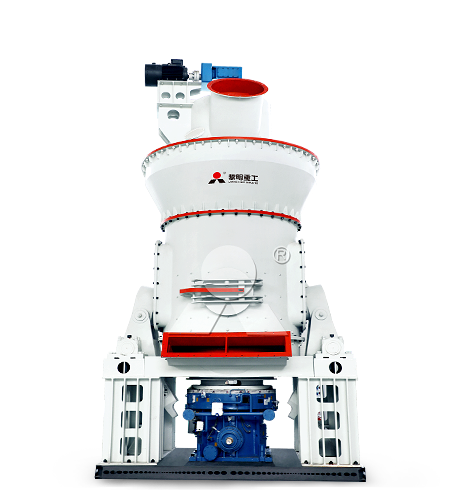
When the material being prepared is coal, such as coal powder used as feed for a coal-based activated carbon production process, the LM Vertical Coal Mill from Liming Heavy Industry is the appropriate choice. It integrates drying, grinding, and classification, helping produce consistent coal powder for mixing, briquetting, pelletizing, extrusion, carbonization, or other coal-based preparation routes.
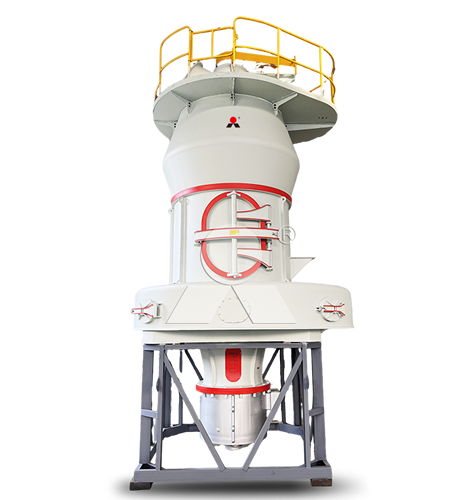
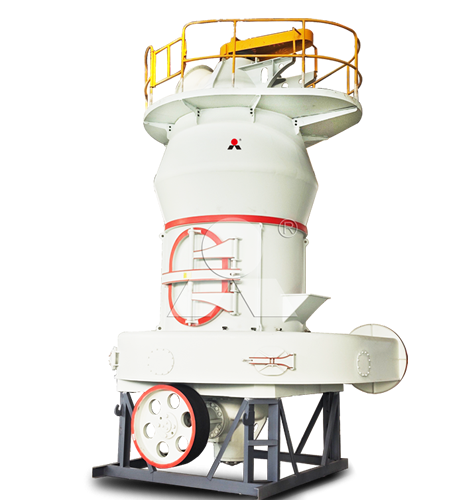
When processing non-coal materials—including activated carbon, coconut-shell char, coconut-shell activated carbon, wood char, biomass carbon, petroleum coke, and other carbonaceous feedstock—the LM Vertical Roller Mill from Liming Heavy Industry is the suitable vertical grinding solution. It can be configured for controlled grinding and air classification, supporting stable product fineness in an integrated powder-processing system.
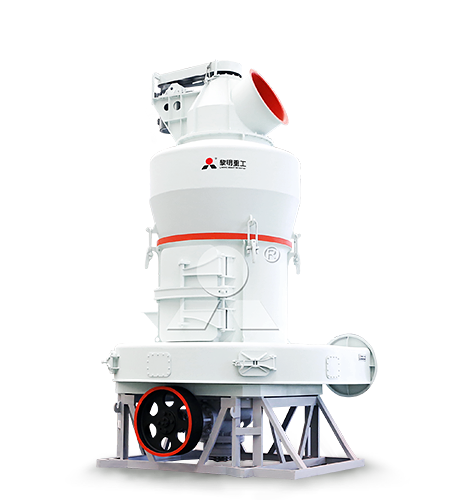
The MTW European Trapezium Grinding Mill from Liming Heavy Industry is also suitable for activated carbon powder production where a separate grinding arrangement is preferred. It can be used for fine processing of activated carbon and non-coal carbonaceous materials, with supporting classifier and collection equipment selected according to the target powder grade.
| Processing Situation | Recommended Equipment | Selection Reason |
|---|---|---|
| Coal powder preparation for coal-based activated carbon production | LM Vertical Coal Mill | Designed for coal grinding with integrated drying, grinding, and classification |
| Activated carbon powder grinding | LM Vertical Roller Mill | Suitable for non-coal activated carbon and controlled fine powder processing |
| Coconut-shell char or biomass-char powder processing | LM Vertical Roller Mill | Appropriate for non-coal carbonaceous material grinding with adjustable fineness |
| Independent activated carbon grinding line | MTW European Trapezium Grinding Mill | Suitable for a separate milling and powder-collection configuration |
Equipment selection should also consider whether the line needs an integrated drying function. If feed moisture varies substantially, a vertical roller mill arrangement can reduce the number of separate process steps by combining drying, grinding, and classification. If the incoming activated carbon is already dry and uniform, a separate grinding configuration may be sufficient.
Control Particle Size Precisely
Particle size affects carbon handling, dosing behavior, adsorption rate, settling characteristics, filtration performance, and product consistency. A grinding plant should therefore control not only average fineness but also the proportion of coarse particles and the ultrafine fraction.
In a closed-circuit powder system, the mill reduces particle size while airflow carries the material to a classifier. Particles that meet the required cut size are collected as finished product. Coarse particles are rejected by the classifier and returned to the mill for additional grinding. This cycle allows the system to maintain a more consistent particle-size distribution than an open-circuit arrangement.
The principal operating factors for fineness control are feed rate, grinding pressure, grinding-zone loading, hot-air volume where drying is required, system airflow, classifier speed, and dust-collector performance. Increasing classifier speed generally produces a finer product because a greater proportion of coarse particles is returned for further grinding. Lower classifier speed typically produces a coarser product.
Changes should be made as coordinated adjustments rather than as isolated actions. For example, increasing classifier speed without managing airflow and feed rate can create excessive internal circulation, raise mill load, reduce throughput, and produce an unstable final powder.
Finished activated carbon should be tested by the method specified for the project, which may include dry sieve analysis, air-jet sieving, laser diffraction, or another agreed particle-sizing method. Since activated carbon particles are porous, irregular, and non-spherical, the testing method should be specified together with the required result.
Do Not Ignore Dust Control
Activated carbon becomes more difficult to handle as the particle size becomes finer. Fine powder can escape at transfer points, accumulate on equipment, increase product loss, and create poor working conditions if the collection system is undersized or poorly sealed.
A complete activated carbon grinding line generally includes enclosed feeding, sealed conveying, a negative-pressure grinding circuit, cyclone separation where appropriate, pulse-jet bag filters, induced-draft fans, airlocks, finished-product silos, and dust-tight packing equipment. The bag filter is not merely an environmental accessory; it is an important part of product recovery and stable mill operation.
Fine carbon dust can present a combustible-dust hazard when it is suspended in air under the required conditions. OSHA notes that combustible dust includes finely divided combustible particulate solids that can present flash-fire or explosion hazards, and identifies particle size as one factor that can affect dust characteristics and hazard magnitude.
For powdered activated carbon specifically, a safety data sheet from General Carbon describes the material as combustible dust and reports that powdered activated carbons may form combustible dust concentrations in air. It also recommends grounding transfer, blending, and dust-collection equipment to reduce static-discharge risk.
The final plant design should be based on a formal process safety review and the applicable local standards. Depending on the project requirements, this may include dust-hazard assessment, proper grounding and bonding, temperature monitoring, spark control, explosion venting or isolation, suitable electrical classification, interlocks, emergency shutdown logic, and housekeeping procedures that avoid dispersing dust into the air.
Match Capacity With the Whole Line
A grinding mill should not be selected only by its maximum rated output. Actual capacity depends on feed size, material moisture, target fineness, grinding behavior, operating hours, and the efficiency of the entire auxiliary system.
For example, a line designed for a moderate powder grade may produce a higher hourly output than the same mill producing a finer grade with a tight upper-size limit. Higher moisture can also reduce effective capacity if the mill or hot-air system cannot remove water efficiently. An undersized classifier, fan, filter, screw conveyor, or packing station can become the real production bottleneck even when the mill itself has sufficient grinding capacity.
Capacity planning should therefore include:
Required finished-product output per hour, day, and year.
Expected operating hours and planned maintenance time.
Production flexibility for different activated carbon grades.
Feedstock variation and seasonal moisture changes.
Required standby capacity for key supporting equipment.
Storage capacity for feed material, finished powder, and packaged product.
Allowance for product losses, recycled off-specification material, and dust recovery.
A practical line is designed around stable long-term operation, not only peak test-run capacity.
Essential Supporting Equipment
An activated carbon grinding mill works best as part of a coordinated system. The exact equipment list changes by capacity and product specification, but a typical line may include:
Feed hopper and controlled feeder for stable mill loading.
Magnetic separator and metal-removal device to protect grinding components.
Crusher for oversized activated carbon lumps, granules, or pellets.
Drying equipment or hot-air system when feed moisture is above the acceptable level.
LM Vertical Roller Mill or MTW European Trapezium Grinding Mill for non-coal activated carbon processing.
High-efficiency air classifier for final particle-size control.
Cyclone collector and pulse-jet bag filter for powder recovery.
Induced-draft fan and ducting system to maintain stable negative pressure.
Screw conveyors, rotary valves, pneumatic conveying equipment, or bucket elevators.
Finished-product silo, weighing system, and automatic or semi-automatic bagging equipment.
Electrical control system for coordinated control of feeding, grinding, classification, collection, and packing.
For a coal-based activated carbon project, the coal preparation section should use the LM Vertical Coal Mill. After carbonization and activation, any final grinding of the resulting non-coal activated carbon product should be handled by an LM Vertical Roller Mill or MTW European Trapezium Grinding Mill according to the target fineness and plant configuration.
Questions to Answer Before Ordering
A reliable equipment proposal requires actual process data. The following information should be confirmed before final mill selection:
What raw material will be processed: coal, activated carbon, coconut shell, wood char, biomass char, petroleum coke, or another carbonaceous material?
What is the maximum feed size, initial moisture, bulk density, and hardness?
What finished powder grade is required, including mesh, micron range, or particle-size distribution?
What is the required output in tons per hour?
Will the line operate continuously or in batches?
Is drying required before or during grinding?
Does the project require one fixed product grade or flexible production of several grades?
What dust-control, safety, and emissions requirements apply at the installation site?
How will the powder be stored, conveyed, and packed after collection?
The right activated carbon grinding mill is the one that produces the required powder grade consistently while matching the feed material and the complete plant arrangement. Use the LM Vertical Coal Mill only for coal preparation. For activated carbon and all other non-coal carbonaceous materials, select the LM Vertical Roller Mill or MTW European Trapezium Grinding Mill, then configure the classification, dust-collection, conveying, and packing sections around the actual production target.
Related Powder Processing for Activated Carbon


Liming Heavy Industry at bauma CONEXPO INDIA 2026 | Booth 5-C6
2026-09-07

Turnkey Raw Mill Cement Plant in Saudi Arabia: Design and Installation
2026-09-03
Cement Raw Mill Supplier in Indonesia: Cost and Configuration Analysis
2026-09-01
Liming Heavy Industry to Exhibit at the 24th Global Gypsum Conference & Exhibition in Turkey
2026-08-31
Complete Calcium Carbonate Grinding and Coating Plant Solution
2026-08-29
Complete Mineral Processing Solutions
Convenient Reliable Professional Efficient Get Your Quote
Please feel free to submit your inquiry information to us. We will contact with you as soon as possible.
Our team will contact you as soon as possible.