


Particle size is one of the most important variables in powdered activated carbon applications. It affects how quickly contaminants reach the internal pore network, how efficiently the carbon can be mixed into water or process streams, how easily it can be removed after treatment, and how the powder behaves during storage, conveying, dosing, and filtration.
Smaller PAC particles usually adsorb contaminants faster because molecules travel a shorter distance from the liquid phase to the adsorption sites inside the carbon particle. However, reducing particle size also increases grinding demand, dust generation, filtration resistance, and the risk that fine carbon particles pass through downstream separation equipment. The best PAC grade is therefore the one that balances adsorption speed with practical process operation.
Why Smaller Particles React Faster
Activated carbon adsorbs contaminants through a network of micropores, mesopores, and larger transport pores. In a liquid-treatment process, contaminants must first move from the water to the outer surface of the carbon particle and then diffuse inward through the pore structure.
When particle diameter is reduced, the diffusion path becomes shorter. This usually improves adsorption kinetics, especially during short contact times. The carbon does not necessarily gain more internal adsorption capacity simply because it has been ground finer; instead, its existing pore structure becomes accessible more quickly to the target molecules.
Research comparing conventional PAC with superfine powdered activated carbon found that superfine material with an average particle diameter of about 1 μm adsorbed micropollutants faster than conventional PAC with average particle sizes of approximately 17–37 μm. The study also reported that the smaller material could reduce required contact time, contact-tank volume, or carbon dosage for selected micropollutant-removal targets.
Another study of carbamazepine removal found that superfine pulverization improved adsorption kinetics, particularly at contact times below six hours. At the same time, the parent carbon showed higher equilibrium adsorption capacity in several tested water matrices, illustrating why particle-size selection must consider both adsorption speed and total process performance.
PAC Size Ranges
| PAC Category | Indicative Particle Size | Primary Characteristic | Typical Process Consideration |
|---|---|---|---|
| Coarse powdered activated carbon | Often tens to more than 100 μm, depending on the product specification | Lower dust loading and easier separation | May require longer contact time to achieve the same adsorption result |
| Conventional PAC | Commonly around 10–50 μm mean particle size | Balances adsorption rate, dosing behavior, recovery, and grinding cost | Widely used for water and wastewater treatment |
| Fine PAC | Often below conventional PAC ranges | Faster adsorption and improved use in short-contact systems | Requires stronger dust collection and careful downstream separation |
| Superfine PAC | Approximately 0.1–1 μm | Very short diffusion paths and rapid adsorption kinetics | Can increase filtration resistance and particle carryover risk |
Commercial PAC is commonly reported in the 10–50 μm range, while superfine PAC is generally described as material in the approximate 0.1–1 μm range. The exact product specification should define the measurement method, such as sieve residue, laser diffraction, D10, D50, D90, or a combination of these parameters.
Particle-size values should not be compared without confirming the test method. Activated carbon particles are irregular, porous, and non-spherical, so a sieve result, a laser diffraction result, and a microscopic particle measurement may not produce the same numerical value for the same sample.
Effect on Water Treatment
In drinking-water and wastewater applications, PAC is often dosed into a mixing tank, contact basin, clarifier, filter influent, membrane process, or another treatment stage. Particle size affects the time needed for adsorption and the way the carbon interacts with the downstream treatment process.
Smaller PAC particles can be advantageous when the available contact time is limited. This may occur when a water-treatment plant needs to respond quickly to taste-and-odor compounds, pesticides, pharmaceutical residues, industrial organics, or other dissolved contaminants. Fine PAC can reach adsorption equilibrium more rapidly than coarser material because intraparticle diffusion resistance is lower.
A water-treatment evaluation reported that smaller PAC particles generally had higher adsorption rates and could benefit systems with short retention times. The same evaluation noted a practical lower size limit because very fine particles can penetrate through rapid sand filters.
For micropollutant removal in treated wastewater, a study comparing approximately 1 μm superfine PAC with conventional 17–37 μm PAC found substantially faster adsorption kinetics for the superfine material. In the tested wastewater, the superfine PAC also achieved up to two times greater dissolved organic carbon removal than conventional PAC in some cases.
| Water-Treatment Condition | Particle-Size Preference | Reason |
|---|---|---|
| Short contact time | Fine PAC or superfine PAC | Shorter diffusion paths can improve adsorption speed |
| Conventional coagulation, settling, and filtration | Conventional PAC with controlled fine fraction | Balances adsorption performance with particle removal and handling |
| Rapid sand filtration after PAC dosing | Avoid excessive ultrafine fraction unless separation performance is verified | Very fine particles may pass through the filtration system |
| Membrane pretreatment or PAC pre-coating | Fine PAC selected together with membrane and hydraulic conditions | Can improve dissolved-organic-matter removal but may raise filtration resistance |
| Emergency taste-and-odor response | Fine PAC with rapid dispersion characteristics | Supports quick adsorption under changing water conditions |
Effect on Membrane Processes
Particle size has a dual effect in membrane filtration systems. Finer PAC can improve adsorption of dissolved organic matter before contaminants reach the membrane surface. At the same time, fine particles can form a denser carbon layer, increase hydraulic resistance, and affect flux behavior.
A 2026 study of PAC pre-coating before microfiltration compared PAC size fractions of 22–44 μm, 44–63 μm, and 63–88 μm. The smaller 22–44 μm fraction achieved higher dissolved-organic-carbon and UV-absorbing organic-matter removal than the larger fractions, but finer particles also created denser and more compressible coating layers that could increase hydraulic resistance.
This means that membrane projects should not select PAC by adsorption performance alone. The selected carbon must also be compatible with membrane pore size, crossflow or dead-end filtration conditions, cake-layer behavior, backwashing strategy, and the plant’s ability to retain spent carbon particles.
Effect on Dosage and Contact Time
Particle size can influence the amount of PAC required to reach a treatment target. If a smaller particle reaches adsorption sites more rapidly, a plant may achieve the target removal with a shorter contact time or, in some cases, a lower dosage. The benefit depends on the contaminant, water matrix, carbon pore structure, temperature, pH, background dissolved organic matter, and mixing conditions.
For hydrophobic pesticides, one investigation found that reducing PAC from around 38 μm to approximately 1 μm increased adsorption rates by as much as twenty times. The same work identified roughly 6 μm as a practical compromise between adsorption speed and particle penetration in the tested treatment scenario. It also found no statistically significant relationship between particle size and the maximum adsorption capacity for the tested pesticides, reinforcing the difference between kinetics and equilibrium capacity.
In practical operation, a plant can use this relationship in several ways:
Use a finer PAC when the contact tank is small or treatment time is limited.
Use a conventional PAC grade when the plant needs balanced adsorption, filtration, handling, and operating cost.
Consider superfine PAC for difficult micropollutant removal only after verifying downstream solid separation.
Adjust PAC dosage based on raw-water variation, contaminant concentration, treatment target, and available contact time.
Confirm performance through laboratory testing, pilot trials, or operating data from comparable water conditions.
A smaller particle size cannot solve every adsorption challenge. If the pore structure is not compatible with the target contaminant, if dissolved organic matter competes strongly for adsorption sites, or if the carbon dosage is inadequate, further grinding may provide limited benefit.
Particle Size and Carbon Type
The effect of particle size depends on the activated carbon itself. Coal-based, coconut-shell, wood-based, and biomass-based carbons can have different pore-size distributions, ash contents, densities, hardness levels, and adsorption characteristics. Two PAC products with the same D50 may perform differently because their internal pore structures and surface chemistry are different.
Coconut-shell activated carbon often has a high micropore volume and can be suitable for adsorption of relatively small molecules. Wood-based activated carbon may contain a greater proportion of larger transport pores, which can support adsorption of larger organic molecules. Coal-based activated carbon can be designed with a broader pore structure, depending on coal rank and activation conditions.
For this reason, particle-size selection should be evaluated together with iodine number, methylene blue value, molasses number, ash, moisture, bulk density, surface chemistry, and application-specific adsorption testing. A fine powder with unsuitable pore structure may not outperform a coarser carbon with a more suitable pore network.
Grinding Requirements for PAC Grades
Producing different PAC particle sizes requires controlled crushing, fine grinding, classification, and powder collection. Activated carbon should first be dry enough to flow consistently through the feeding and milling system. Large granules, pellets, or carbon lumps may require pre-crushing before fine grinding.
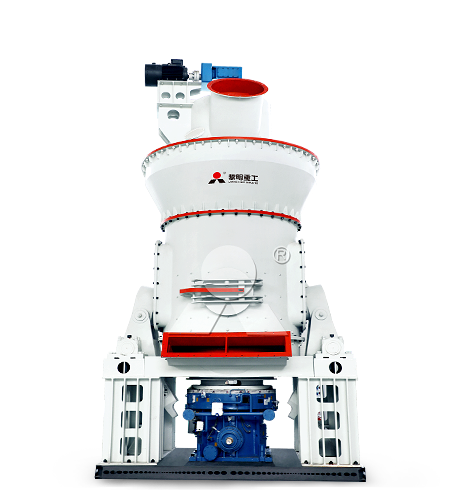
For activated carbon and other non-coal carbon materials, the LM Vertical Roller Mill from Liming Heavy Industry can be used to produce controlled activated carbon powder. Its integrated grinding and classification arrangement supports continuous processing, while coarse particles can be returned for further grinding until they meet the selected fineness requirement.
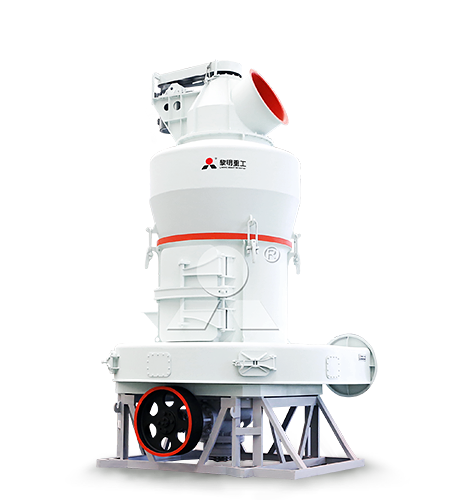
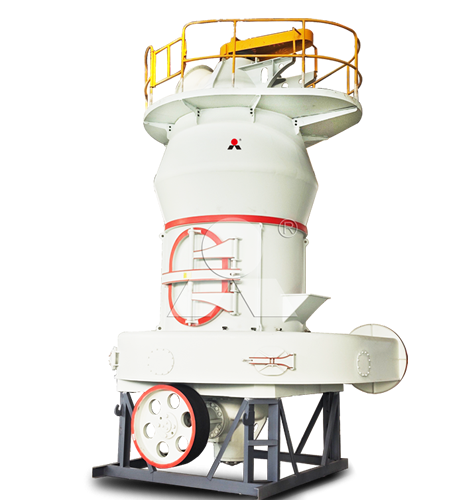
The MTW European Trapezium Grinding Mill from Liming Heavy Industry is also suitable for activated carbon powder processing, especially for applications requiring an independent grinding, classification, and collection section. It can be configured to produce activated carbon powder with adjustable fineness according to the specified PAC grade.
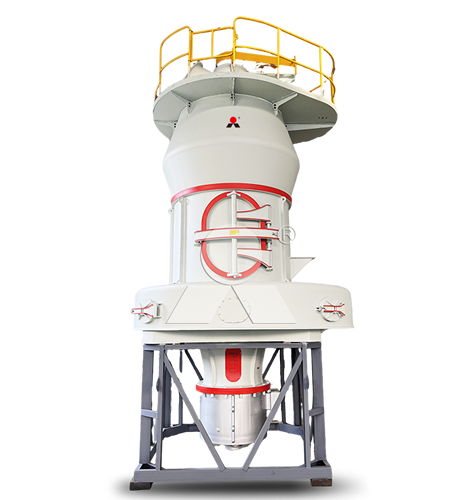
When the material to be processed is coal before carbonization, pelletizing, or activation, the LM Vertical Coal Mill should be selected for coal powder preparation. After thermal processing has converted the feed into activated carbon, the final PAC grinding stage should use the LM Vertical Roller Mill or MTW European Trapezium Grinding Mill.
Choosing a Practical PAC Grade
The appropriate PAC particle size should be selected from the complete treatment process. The goal is to obtain sufficient adsorption within the available contact time without creating excessive dust, energy consumption, particle carryover, filtration resistance, or separation difficulty.
| Selection Factor | Why It Matters |
|---|---|
| Target contaminant | Different molecules require different pore structures and adsorption conditions |
| Contact time | Shorter contact time generally increases the value of finer PAC |
| Water quality | Dissolved organic matter and competing contaminants can reduce PAC efficiency |
| Mixing intensity | Good dispersion improves contact between PAC particles and contaminants |
| Downstream separation | Filters, clarifiers, membranes, or sludge systems must capture spent PAC effectively |
| Dust-control arrangement | Finer PAC requires enclosed conveying, collection, and packing systems |
| Grinding and operating cost | Finer powder generally requires more energy and tighter classification control |
Activated carbon particle size primarily changes the speed at which PAC can use its adsorption pore structure. Fine and superfine powders can be valuable for short-contact treatment and difficult micropollutant removal, but they require stronger control of grinding, dust collection, dosing, filtration, and solids separation. A well-designed PAC production line should therefore produce the particle-size distribution required by the customer’s treatment process rather than simply pursuing the smallest possible powder size.
Related Powder Processing for Activated Carbon


Liming Heavy Industry at bauma CONEXPO INDIA 2026 | Booth 5-C6
2026-09-07

Turnkey Raw Mill Cement Plant in Saudi Arabia: Design and Installation
2026-09-03
Cement Raw Mill Supplier in Indonesia: Cost and Configuration Analysis
2026-09-01
Liming Heavy Industry to Exhibit at the 24th Global Gypsum Conference & Exhibition in Turkey
2026-08-31
Complete Calcium Carbonate Grinding and Coating Plant Solution
2026-08-29
Complete Mineral Processing Solutions
Convenient Reliable Professional Efficient Get Your Quote
Please feel free to submit your inquiry information to us. We will contact with you as soon as possible.
Our team will contact you as soon as possible.