


An activated carbon grinding plant should be selected from three connected parameters: required capacity, finished-powder fineness, and feed moisture. These factors determine the mill configuration, drying requirement, classifier arrangement, fan capacity, dust collector size, conveying method, storage system, and practical operating cost.
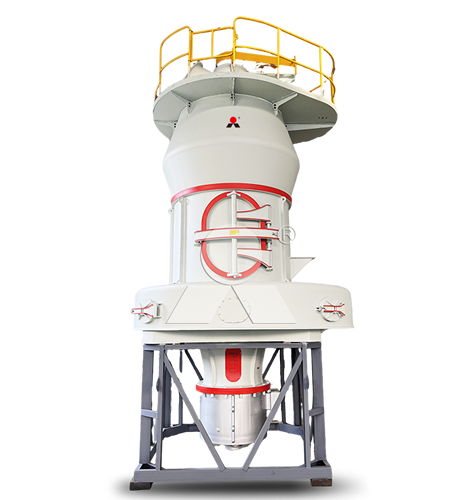
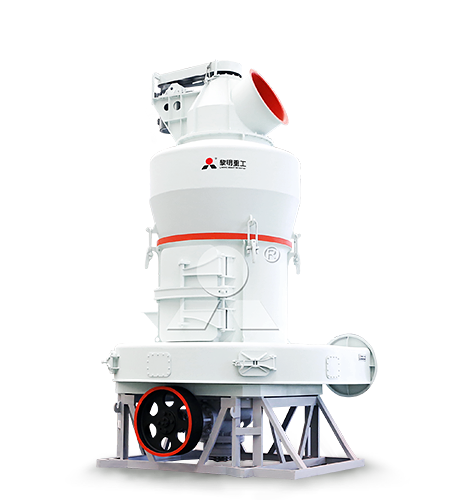
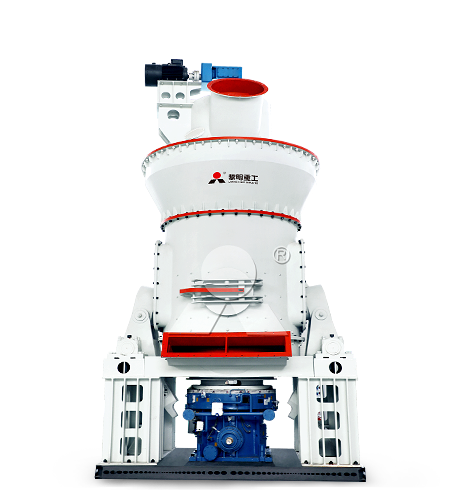
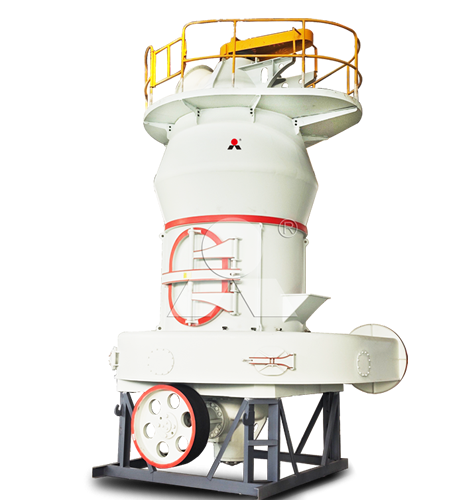
For activated carbon powder and other non-coal carbonaceous materials, select the LM Vertical Roller Mill or MTW European Trapezium Grinding Mill from Liming Heavy Industry. If the material being ground is raw coal before carbonization, pelletizing, or activation, use the LM Vertical Coal Mill. Once the material has been activated, it should be treated as activated carbon and processed by the LM Vertical Roller Mill or MTW European Trapezium Grinding Mill.
Begin With the Product Specification
The finished activated carbon powder must be defined before equipment is selected. A request for “fine powder” does not provide enough information to size a grinding line. The plant designer needs a measurable target for particle size, output, moisture, adsorption performance, and packaging.
A complete product specification can include:
Required fineness in mesh or microns.
Percentage passing through a designated sieve.
Maximum sieve residue or oversize content.
D10, D50, and D90 particle-size values when laser diffraction is used.
Required output in tons per hour, tons per day, or tons per year.
Initial feed moisture and maximum finished-product moisture.
Feed material type, such as activated carbon granules, pellets, coconut-shell activated carbon, wood-based carbon, biomass carbon, or carbon fines.
Maximum feed size entering the grinding section.
Bulk density, ash content, hardness, and flowability.
Required adsorption indicators, such as iodine number, methylene blue value, molasses number, or application-specific test results.
Required bag type, bulk-bag format, silo storage time, and transportation conditions.
Particle size should be specified using an agreed test method. Mesh values are based on sieve openings, while D10, D50, and D90 values describe a particle-size distribution measured by a selected instrument. Because activated carbon particles are porous and irregular in shape, the same product can show different numerical values when tested by dry sieving, air-jet sieving, or laser diffraction.
Capacity Is Not One Fixed Number
Grinding-plant capacity is the mass of finished activated carbon powder produced per hour at a defined product specification. It is not simply the maximum feed rate entering the mill. A mill may process more material when producing a coarse powder and less material when producing a finer powder with a narrow upper-size limit.
Actual output is influenced by feed size, moisture, hardness, bulk density, target fineness, classifier setting, airflow, system pressure, grinding pressure, product collection efficiency, and operating stability. The crusher, feeder, classifier, fan, bag filter, screw conveyor, product silo, and packing machine must all be sized to match the selected mill.
| Capacity Factor | Effect on Actual Output | Selection Implication |
|---|---|---|
| Finer finished powder | Usually reduces hourly output because more grinding and classification are required | Select a mill based on the required fineness, not only the highest listed capacity |
| Higher feed moisture | Can reduce output and increase energy demand for drying | Evaluate pre-drying, hot-air supply, and total thermal capacity |
| Larger feed size | Increases mill loading and can cause unstable operation | Install a crusher or adjust the pre-crushing stage |
| Variable feed rate | Causes mill-load fluctuations and inconsistent final particle size | Use a controlled feeder and a buffer bin |
| High dust loading | Can increase filter resistance and reduce airflow stability | Size cyclone, bag filter, and fan for the actual powder grade |
| Wide product range | Requires more adjustment of classifier, airflow, and storage arrangements | Select a flexible system with suitable automation and product-change procedures |
For example, a project requiring 10 t/h of 200-mesh activated carbon powder should not select equipment using a capacity figure quoted for a coarser 80-mesh product. The proposal should confirm the expected output at the requested 200-mesh grade, with the actual feed moisture, feed size, and material type.
Liming Heavy Industry’s activated carbon grinding information lists the LM Vertical Roller Mill and MTW European Type Trapezium Mill as suitable equipment options. It reports an indicative LM system fineness range of 0.84–0.037 mm and capacity range of 10–400 t/h, while the MTW system is listed at 0.045–1.6 mm and 3–55 t/h. Actual selection must be confirmed against the material test, target fineness, and complete system configuration.
Fineness Determines the Grinding Circuit
Particle size affects adsorption rate, dispersion, powder flow, packing density, filtration behavior, and suitability for the final application. Smaller activated carbon particles generally provide faster adsorption kinetics because contaminants travel a shorter distance to reach internal pores. However, producing excessively fine powder can increase energy use, dust loading, product loss, and downstream separation difficulty.
PAC is often supplied as a fine powder, such as minus 100 mesh or minus 200 mesh, and is commonly used in batch treatment or response to short-term contaminant changes because it adsorbs rapidly. Granular activated carbon, by contrast, is normally retained in a fixed bed.
| Finished Product Target | Typical Plant Priority | Grinding-System Requirement |
|---|---|---|
| Coarse activated carbon powder | High output, simple handling, low ultrafine fraction | Moderate grinding intensity and controlled coarse classification |
| Standard powdered activated carbon | Balanced adsorption speed, output, flowability, and collection efficiency | Stable grinding, air classification, cyclone recovery, and bag filtration |
| Fine PAC | Fast adsorption and low oversize content | Tighter classifier control, stable airflow, and increased fine-powder recovery capacity |
| Customized particle-size distribution | Specific dosing, adsorption, mixing, or filtration behavior | Product testing, adjustable classifier settings, and separate product storage where required |
For activated carbon, the LM Vertical Roller Mill is suitable when the plant requires an integrated grinding and classification system. Material is fed to the grinding table, reduced between rollers and table, lifted by airflow, and separated by the integrated classifier. Qualified powder moves to the collection system, while coarse particles return to the grinding zone for further size reduction.
The MTW European Trapezium Grinding Mill is suitable when the project requires a separate pendulum-type grinding arrangement. It can be connected with a classifier, cyclone, pulse-jet bag filter, fan, product silo, and packing equipment to produce activated carbon powder with adjustable fineness.
For raw coal powder preparation in a coal-based activated carbon project, the LM Vertical Coal Mill is the appropriate equipment. Its role ends at the coal preparation stage. Activated carbon generated after carbonization and activation should be milled by the LM Vertical Roller Mill or MTW European Trapezium Grinding Mill.
Moisture Determines Drying Demand
Moisture strongly affects grinding efficiency and material flow. Activated carbon with excessive water content can bridge in storage hoppers, adhere to crusher surfaces, accumulate in transfer chutes, reduce the grinding efficiency of the mill, interfere with classification, and create unstable finished-product moisture.
Moisture may be introduced through water washing after chemical activation, cooling systems, high humidity during storage, outdoor transportation, or insufficient drying after the activation section. The plant should measure actual feed moisture instead of assuming a value based on the raw material name.
| Feed Moisture Condition | Likely Process Effect | Recommended Arrangement |
|---|---|---|
| Low and stable moisture | Good hopper flow, stable grinding, efficient classification | Direct feeding to the grinding line may be suitable after feed-size control |
| Moderate moisture | Potential reduction in output and powder flow; drying support may be required | Use controlled hot-air support or integrated drying when suitable for the system |
| High or variable moisture | Bridging, buildup, poor classifier performance, unstable output, packing difficulty | Install a dedicated pre-drying section before crushing and fine grinding |
| Excessively dry fine powder | Higher dust generation and electrostatic handling concerns | Maintain sealed conveying, controlled airflow, grounding, and effective collection |
Vertical roller mill technology can combine drying, grinding, and classification when the material moisture and thermal conditions are suitable. A published vertical-roller-mill reference describes integrated drying and grinding for feed moisture up to approximately 10%, while another example lists certain vertical mill configurations handling up to 15% feed moisture. These values are equipment-specific and should not be treated as a universal limit for activated carbon.
When activated carbon has high moisture or large moisture fluctuations, install a dedicated dryer before the fine-grinding mill. A rotary dryer, belt dryer, flash dryer, or other suitable drying system can reduce moisture to a stable level. The drying system should include temperature control, residence-time control, dust collection, and safeguards appropriate for carbonaceous materials.
How Capacity, Fineness, and Moisture Interact
Capacity, fineness, and moisture cannot be selected independently. They form a three-way operating balance.
Increasing product fineness usually requires more grinding energy and higher classification accuracy, which can lower output. Increasing feed moisture adds drying duty and can lower grinding efficiency. Increasing production capacity requires larger equipment and greater airflow, but excessive airflow can carry more fines to the dust collector and may affect classifier cut size.
For this reason, the same activated carbon mill can produce very different output figures under different operating conditions. A realistic plant design should define one operating point, such as:
“Process dried coconut-shell activated carbon with a maximum feed size of 10 mm and feed moisture below 3%, producing 8 t/h of powder with 95% passing 200 mesh, collected through a cyclone and pulse-jet bag filter, then packed in 25 kg valve bags.”
With this information, the equipment supplier can size the crusher, feeder, mill, classifier, cyclone, bag filter, fan, silo, and packing equipment around the actual requirement.
Auxiliary Equipment Must Match the Mill
A grinding plant will not operate reliably if its auxiliary equipment is undersized. The main mill is only one part of the production line.
Feed hopper and feeder: Maintain stable supply and prevent sudden mill-load changes.
Magnetic separator: Removes metal fragments before they reach the crusher or mill.
Crusher: Reduces activated carbon lumps, pellets, or coarse granules to the required feed size.
Dryer or hot-air system: Controls feed moisture and supports stable powder processing.
Classifier: Determines whether the final powder meets the specified particle-size distribution.
Cyclone collector: Separates much of the finished powder from the airflow.
Pulse-jet bag filter: Captures fine activated carbon powder and maintains system airflow.
Induced-draft fan: Creates the airflow required for classification, conveying, and negative-pressure operation.
Product silo: Buffers finished powder between milling and packing.
Packing machine: Fills and seals bags accurately while reducing dust release.
Fine activated carbon powder should be transferred in sealed equipment. Rotary valves, screw conveyors, flexible sealed connections, pneumatic conveyors, product silos with vent filters, and dust-tight bagging stations help reduce powder loss and support cleaner operation.
Plant Layout and Safety
The grinding plant should be compact enough to avoid excessive duct length, pressure loss, and powder settlement, while still providing safe access for inspection and maintenance. The mill, classifier, collector, fan, silo, and packing machine should be arranged as a coordinated closed system.
Fine activated carbon powder can create a combustible-dust hazard under certain conditions. The final plant should be designed around a site-specific dust-hazard assessment of the actual material. The assessment should evaluate particle size, moisture, dust concentration, minimum ignition energy, equipment confinement, dust accumulation, potential ignition sources, and interconnection between vessels and ducting.
Depending on the assessment and applicable local requirements, the plant may require grounded and bonded equipment, temperature monitoring, spark prevention, explosion venting, explosion isolation, dust-tight equipment, suitable electrical components, emergency shutdown interlocks, and formal housekeeping procedures.
Do not determine safety provisions solely from nominal production capacity. A small line producing a very fine, dry activated carbon powder may require more rigorous dust-control measures than a larger line producing a coarse and moist material.
Selection Checklist
Before choosing an activated carbon grinding plant, confirm the following process data:
Material name and source: activated carbon, coconut-shell carbon, wood-based carbon, biomass carbon, petroleum coke, or raw coal.
Maximum feed size and required crusher discharge size.
Minimum, average, and maximum feed moisture.
Hardness, bulk density, ash content, and powder flow behavior.
Target fineness, sieve-passing percentage, particle-size distribution, and test method.
Required finished-product capacity at the target fineness.
Operating hours per day, working days per year, and maintenance allowance.
Need for one fixed grade or several adjustable powder grades.
Required product moisture, storage method, and packing format.
Available power, hot-air source, plant space, and installation conditions.
Dust-control requirements and the results of the material-specific safety assessment.
The correct activated carbon grinding plant is not defined by the largest mill or the finest possible powder. It is the system that produces the specified activated carbon grade at the required capacity while maintaining stable moisture, controlled particle size, high powder recovery, reliable storage, and safe operation.
Related Powder Processing for Activated Carbon


Liming Heavy Industry at bauma CONEXPO INDIA 2026 | Booth 5-C6
2026-09-07

Turnkey Raw Mill Cement Plant in Saudi Arabia: Design and Installation
2026-09-03
Cement Raw Mill Supplier in Indonesia: Cost and Configuration Analysis
2026-09-01
Liming Heavy Industry to Exhibit at the 24th Global Gypsum Conference & Exhibition in Turkey
2026-08-31
Complete Calcium Carbonate Grinding and Coating Plant Solution
2026-08-29
Complete Mineral Processing Solutions
Convenient Reliable Professional Efficient Get Your Quote
Please feel free to submit your inquiry information to us. We will contact with you as soon as possible.
Our team will contact you as soon as possible.