


A dust collection system is a core part of every activated carbon powder plant. It recovers valuable product, maintains stable mill airflow, limits workplace dust release, and helps control the risks associated with fine combustible carbonaceous powder.
For activated carbon processing, dust collection must cover receiving, crushing, grinding, classification, conveying, silo filling, and packaging. A complete arrangement usually combines source enclosures, local extraction hoods, cyclone separation, pulse-jet bag filtration, induced-draft fans, sealed discharge equipment, and project-specific fire and explosion safeguards.
Why Dust Collection Is Essential
Activated carbon is light, porous, and easily broken into fines. During grinding, classifier separation, air conveying, and bag filling, small particles can become suspended in air or settle on floors, machine surfaces, structural steel, cable trays, and equipment ledges.
Fine activated carbon dust can form combustible dust concentrations in air. Safety data for activated carbon notes that finely dispersed dust may ignite and that activated carbon dust can be sensitive to static discharge.
OSHA states that local exhaust ventilation should be designed to prevent dust and other airborne contaminants from dispersing into workplace air at concentrations that may cause harmful exposure. In an activated carbon plant, this means dust should be captured at the point where it is created, rather than relying on general building ventilation after the powder has escaped.
The system should be designed as part of the production line. An undersized collector can reduce negative pressure, cause leakage at transfer points, overload filter bags, destabilize classification, increase product loss, and create repeated cleaning work.
Typical System Layout
A common dry activated carbon powder circuit is arranged as follows:
Receiving hopper and enclosed feeder → magnetic separation → pre-crusher when required → LM Vertical Roller Mill or MTW European Trapezium Grinding Mill → classifier → cyclone collector → pulse-jet bag filter → induced-draft fan → clean-air discharge.
Collected powder is discharged from the cyclone and bag-filter hoppers through rotary valves or other sealed airlock devices. It is then transferred by enclosed screw conveyors or pneumatic conveying equipment to a finished-product silo and dust-tight packing system.
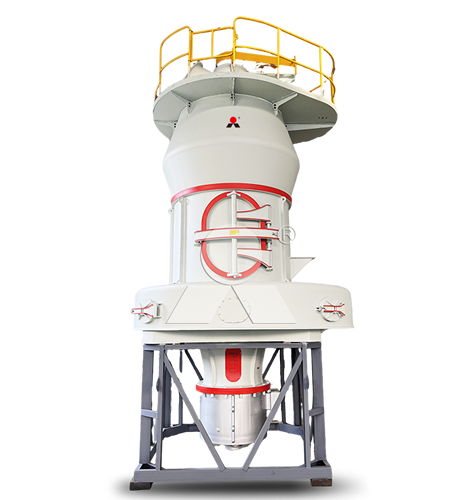
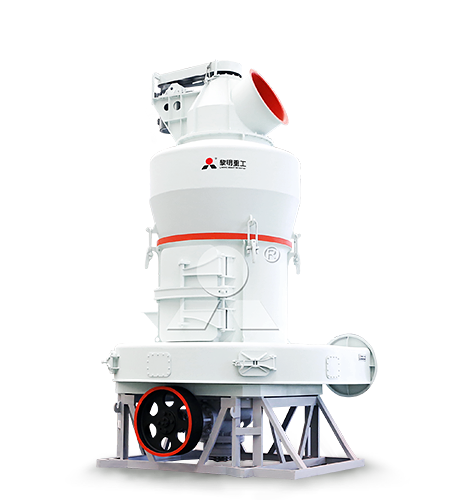
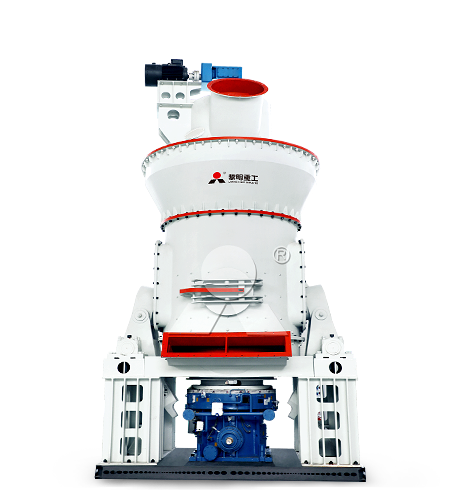
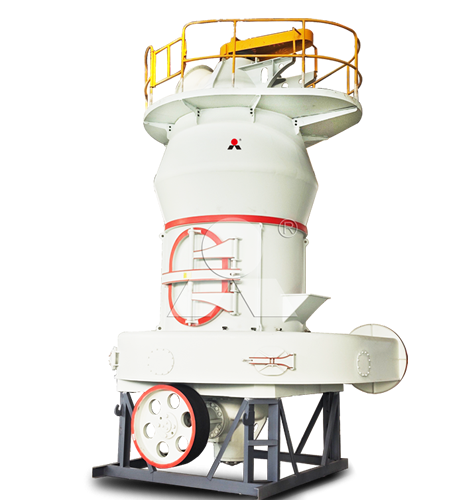
For activated carbon and other non-coal carbonaceous materials, use the LM Vertical Roller Mill or MTW European Trapezium Grinding Mill in the milling section. If raw coal must be ground before carbonization or forming in a coal-based activated carbon project, use the LM Vertical Coal Mill for that separate coal-preparation stage.
| Production Area | Dust-Collection Connection | Main Purpose |
|---|---|---|
| Bag unloading and receiving | Receiving enclosure and local extraction hood | Capture dust released during bag opening, bulk-bag discharge, and hopper charging |
| Crusher and screening section | Closed crusher cover, sealed chute extraction, screen enclosure | Control dust from impact, material drop, and particle breakage |
| Mill feed system | Sealed hopper, feeder connection, aspiration point | Prevent powder escape at the feed inlet and stabilize mill pressure |
| Grinding mill and classifier | Closed negative-pressure circuit | Carry ground powder to classification and prevent leakage from the process system |
| Cyclone collector | Gas-tight cyclone, discharge airlock, connected ductwork | Recover the main portion of product powder from the air stream |
| Pulse-jet bag filter | Fine-dust filtration and controlled hopper discharge | Recover remaining fine carbon dust and protect the fan and exhaust point |
| Product silo | Silo vent filter or dedicated aspiration connection | Control displaced air and powder release during silo filling |
| Bagging station | Filling-head enclosure and local exhaust hood | Capture dust generated during weighing, filling, bag removal, and sealing |
Core Equipment
Cyclone Collector
A cyclone collector is commonly installed as the first powder-recovery stage after the mill and classifier. The air-powder mixture enters the cyclone tangentially, creating a rotating flow. Centrifugal force moves larger and heavier particles toward the wall, where they fall into the discharge hopper.
For activated carbon grinding, the cyclone can recover a substantial portion of the qualified powder and reduce the loading on the bag filter. It is especially useful when processing medium-fine activated carbon powder. However, it normally cannot capture all fine particles, so it should be followed by a high-efficiency bag filter.
Cyclone collectors are often used with pulse-jet bag filters because they remove larger particle fractions during crushing, screening, and milling, reducing the dust burden on the final filtration stage.
Pulse-Jet Bag Filter
The pulse-jet bag filter captures fine activated carbon particles that remain in the airflow after cyclone separation. Process air enters the filter housing, passes through filter bags or cartridges, and exits as cleaned air. Periodic compressed-air pulses remove accumulated dust from the filter media, allowing it to fall into the hopper for controlled discharge.
For activated carbon powder, the bag filter should be selected according to actual airflow, dust concentration, particle-size distribution, operating temperature, moisture, dust resistivity, and required collection efficiency. Filter media should also be evaluated for static-control performance where the dust-hazard assessment requires conductive or antistatic materials.
Important operating indicators include filter differential pressure, pulse-cleaning frequency, compressed-air pressure, hopper material level, filter-bag condition, fan current, airflow stability, and visible dust emissions. Rapidly rising differential pressure may indicate blinding, moisture-related buildup, insufficient pulse cleaning, excessive dust loading, damaged bags, or a discharge problem below the hopper.
Induced-Draft Fan and Ductwork
The induced-draft fan creates the airflow required to carry powder from the mill to the classifier and collection system. It also helps maintain negative pressure throughout the grinding circuit. The fan must be sized for the full system resistance, including mill pressure drop, classifier resistance, cyclone, bag filter, ductwork, dampers, elbows, hoods, and clean-air discharge equipment.
Ductwork should be routed to minimize long horizontal runs, sharp bends, dead zones, and locations where powder can settle. Settled carbon dust can reduce airflow, create blockages, increase fire risk, and make cleaning difficult. Duct diameters should maintain sufficient transport velocity for the actual powder while avoiding unnecessarily high pressure loss or abrasion.
Every major dust-generation point should have a properly designed hood or enclosure. A hood installed too far from the source may fail to capture the powder before it enters the working area. The goal is to contain and extract dust at the crusher, screen, feeder, product discharge, silo vent, and bagging head.
Rotary Valves and Sealed Discharge
Cyclone and bag-filter hoppers require a controlled discharge system. Rotary valves are commonly used because they allow powder to leave the hopper while reducing unwanted air leakage into the negative-pressure system.
Poorly maintained airlocks can cause several problems: unstable airflow, dust leakage, powder backup in the hopper, mill pressure fluctuations, loss of classification accuracy, and increased maintenance demand. Rotary valves, screw conveyors, flexible connections, and product-transfer equipment should be inspected routinely for wear, blockage, and leakage.
Designing for Fine Powder
The required dust collection capacity increases as activated carbon becomes finer. Fine PAC grades contain a larger proportion of lightweight particles that are easily entrained in air. The collection system must therefore be matched to the product fineness rather than copied from a line processing coarse granules.
| Powder Condition | Dust-Collection Requirement | Design Priority |
|---|---|---|
| Coarse activated carbon granules | Dust control mainly at crushing, screening, transfer, and packing points | Capture abrasion fines and prevent product loss |
| Standard powdered activated carbon | Cyclone plus pulse-jet bag filter with sealed conveying | Reliable powder recovery and stable negative pressure |
| Fine PAC | High-efficiency final filtration, balanced airflow, dust-tight equipment | Control fine-particle escape and maintain classifier performance |
| Very fine or low-bulk-density carbon powder | Careful collector sizing, hopper design, anti-bridging discharge, and static control | Prevent filter overload, powder buildup, and handling instability |
Fine activated carbon can accumulate in filter hoppers and silos if material flow is poor. Hopper angle, wall finish, vibration aids, air-pulse devices, rotary-valve sizing, and discharge-conveyor capacity should be evaluated according to the actual bulk density and flow properties of the powder.
The filter and downstream conveying equipment should be sized to receive the total recovered material. If a bag-filter hopper cannot discharge properly, powder can back up into the collector, increase pressure drop, reduce air volume, and disturb the entire milling system.
Fire and Explosion Considerations
Dust collection equipment can concentrate fine dust within a confined volume. For this reason, the collector, ducts, mill, silo, and connected vessels require careful engineering when handling activated carbon powder.
A dust hazard analysis should be completed using the actual activated carbon material, not only generic product information. The assessment should evaluate whether the dust is combustible or explosible, along with particle size, moisture, dust concentration, minimum ignition energy, maximum explosion pressure, deflagration index, ignition temperature, equipment confinement, possible ignition sources, and dust accumulation locations.
Guidance on combustible-dust management recommends completing a dust hazard analysis first, then selecting prevention and protection measures based on the identified risks. OSHA also maintains standards covering multiple aspects of combustible-dust hazards in general-industry workplaces.
Depending on the results of testing and the applicable local requirements, the plant may require:
Explosion venting for the bag filter, silo, mill, or other enclosed equipment.
Flameless venting where conventional outdoor venting is not suitable.
Explosion suppression systems.
Explosion isolation between the dust collector and upstream process equipment.
Spark detection and extinguishing equipment in the duct system.
Temperature monitoring on mills, bearings, collectors, and conveyors.
Magnetic separation and metal detection before crushing and grinding.
Grounding and bonding of ducts, filter housings, conveyors, silos, and packing equipment.
Conductive or antistatic filter media where required.
Suitable electrical equipment for the classified area.
Emergency shutdown interlocks and alarm systems.
These measures cannot be selected by a standard checklist alone. The final arrangement must be engineered for the actual material, collector location, equipment size, duct network, building layout, and applicable rules at the installation site.
Static Electricity Control
Activated carbon powder moving through ducts, bags, hoppers, screw conveyors, and flexible connectors can generate electrostatic charge. Static discharge can become an ignition source if combustible dust conditions are present.
All conductive process components should be electrically bonded and grounded according to the site’s design requirements. This can include the mill, cyclone, bag-filter housing, ductwork, fan, silo, rotary valves, packing machine, platform structures, and flexible conductive connections.
Grounding connections should be inspected and tested as part of scheduled maintenance. Painted surfaces, corrosion, loose clamps, nonconductive gaskets, damaged bonding straps, and unverified flexible hoses can interrupt electrical continuity.
Activated carbon safety data specifically identifies static-discharge sensitivity and recommends precautions against static discharge during powder handling.
Housekeeping and Maintenance
Dust collection is not effective if recovered carbon is allowed to accumulate in the plant. Deposited fines can be disturbed by airflow, vibration, equipment failure, maintenance activity, or an initial ignition event, creating a secondary dust cloud.
A written housekeeping program should define where dust may accumulate, how often each area is inspected, what cleaning method is approved, and where recovered material is sent. Cleaning should use equipment suitable for combustible dust service, such as an approved industrial vacuum system. Avoid dry sweeping and compressed-air blowdown because both can disperse fine carbon dust into the air.
Routine inspection should include:
Filter differential pressure and pulse-cleaning performance.
Bag or cartridge condition, including leakage and wear.
Cyclone condition, hopper discharge, and rotary-valve sealing.
Fan vibration, temperature, current, and airflow performance.
Duct corrosion, abrasion, material buildup, and flange leakage.
Grounding and bonding continuity.
Explosion vents, isolation devices, alarms, and interlocks where installed.
Dust deposits on floors, beams, ledges, ducts, cable trays, and machine tops.
Condition of enclosure seals around crushers, screens, feeders, and packing equipment.
Maintenance work should follow lockout and tagout procedures. Before opening a mill, dust collector, duct, conveyor, or silo, isolate power, confirm that moving parts have stopped, manage residual powder, and verify safe atmospheric conditions where confined-space entry may be involved.
Layout Example
In a typical activated carbon powder plant, dried carbon granules are discharged from a sealed hopper through a variable-speed feeder. A magnetic separator removes metal fragments before the feed reaches a crusher. The crushed material enters an LM Vertical Roller Mill or MTW European Trapezium Grinding Mill through an enclosed connection.
Ground powder is lifted by process air to the classifier. Fine material moves to a cyclone collector, where most of the powder is separated and discharged through an airlock to a sealed product conveyor. The remaining fine particles enter a pulse-jet bag filter and are recovered through a second sealed discharge point. The induced-draft fan pulls cleaned air through the circuit and maintains negative pressure at the mill and transfer points.
Both recovered powder streams move to a finished-product silo equipped with level monitoring and a vent filter. The final powder is discharged through a controlled packing system with local extraction at the bag-filling point. This arrangement maximizes powder recovery while minimizing open handling.
Design Information Needed
A dust collection system should be sized from verified operating data. The following information is needed before final equipment selection:
Activated carbon source and physical form.
Maximum feed size and finished powder fineness.
Particle-size distribution, bulk density, and flow behavior.
Minimum, average, and maximum material moisture.
Required production capacity and operating hours.
Mill type, classifier arrangement, and expected process airflow.
Number and location of dust-generation points.
Plant layout, duct lengths, elevation changes, and available installation space.
Available power and compressed-air supply.
Actual dust test data and dust-hazard assessment findings.
Applicable local safety, fire-protection, and emissions requirements.
Finished-product storage and packing method.
A properly designed dust collection system protects more than the surrounding work area. It supports powder recovery, consistent classification, stable mill output, reliable packing, and safer activated carbon production. The best results come from designing the collector, ductwork, airlocks, fan, silo venting, and milling equipment as one integrated closed process.
Related Powder Processing for Activated Carbon


Liming Heavy Industry at bauma CONEXPO INDIA 2026 | Booth 5-C6
2026-09-07

Turnkey Raw Mill Cement Plant in Saudi Arabia: Design and Installation
2026-09-03
Cement Raw Mill Supplier in Indonesia: Cost and Configuration Analysis
2026-09-01
Liming Heavy Industry to Exhibit at the 24th Global Gypsum Conference & Exhibition in Turkey
2026-08-31
Complete Calcium Carbonate Grinding and Coating Plant Solution
2026-08-29
Complete Mineral Processing Solutions
Convenient Reliable Professional Efficient Get Your Quote
Please feel free to submit your inquiry information to us. We will contact with you as soon as possible.
Our team will contact you as soon as possible.