


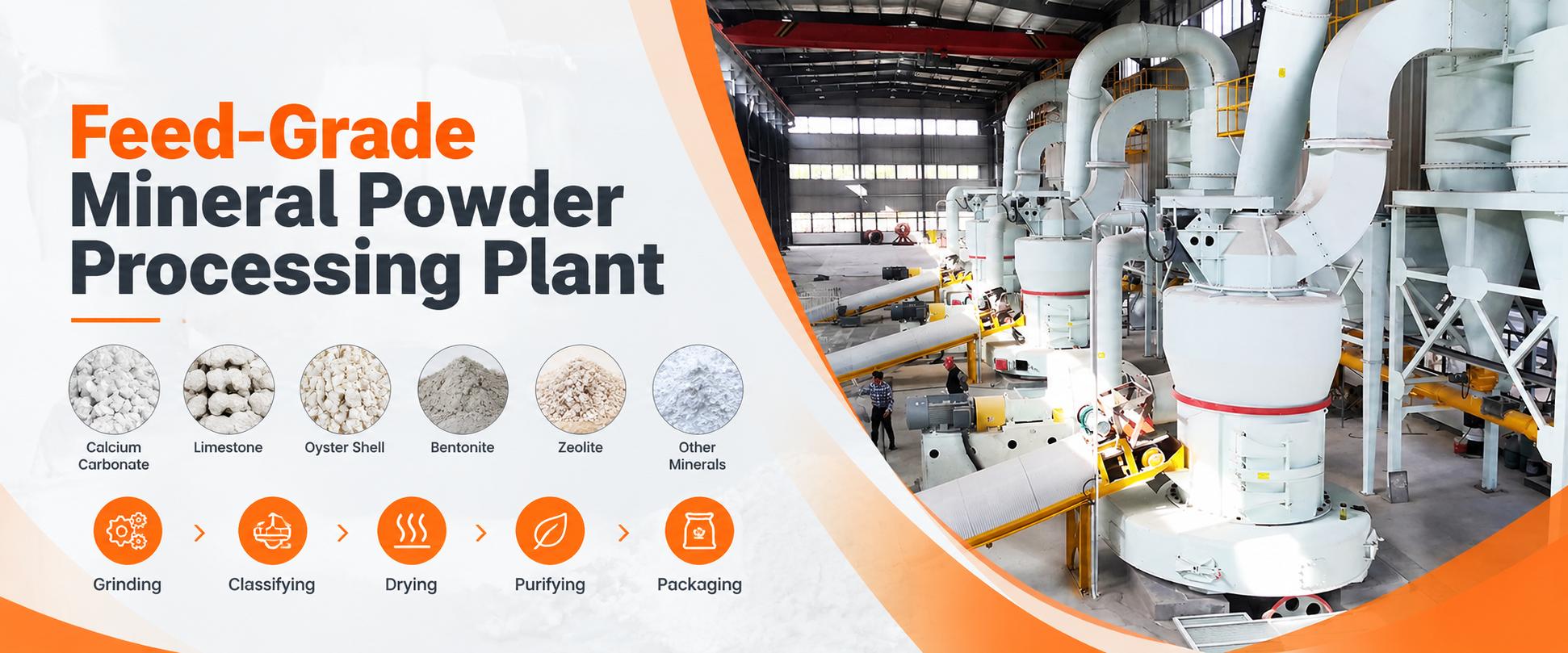
A zeolite powder processing line for animal feed additive suppliers should be designed around a qualified mineral source and a clearly defined finished product. Crushing and grinding prepare the material physically, but mineral identity, composition, permitted use, and batch consistency determine whether the powder is suitable for the intended feed-additive application.
The first purchasing decision is therefore not the mill model. It is the exact zeolite material the supplier intends to produce and sell. Clinoptilolite of sedimentary origin, for example, has specific requirements for its use as a binder and anticaking agent in the European Union. That authorization should not be interpreted as approval for every material sold under the general name “zeolite.”
Turn “Feed-Grade Zeolite” into a Measurable Specification
A supplier needs a product definition that purchasing staff, laboratory personnel, plant operators, and customers can all use. A description such as “natural zeolite powder, fine grade” leaves important questions unanswered.
Before selecting equipment, document:
The zeolite mineral and its geological origin.
The required mineral content and limits on associated minerals.
Applicable contaminant and feed-safety requirements.
The intended additive function and destination market.
The particle-size distribution and measurement method.
The agreed moisture condition and reporting method.
Packaging, labeling, storage, and traceability requirements.
For a concrete example, the European Union’s renewed authorization for clinoptilolite of sedimentary origin specifies at least 80% clinoptilolite and no more than 20% clay minerals, with the stated characterization free of fibres and quartz. These are requirements for that particular authorized material, not a universal specification for all natural zeolites.
The practical priority is identity. A powder can meet a mesh target while failing the mineral specification that defines the product.
What Should the Supplier Claim the Product Does?
Keep the intended function specific. Clinoptilolite of sedimentary origin has been authorized in the European Union within the technological-additive category for binder and anticaking functions. Its permitted use is subject to the conditions of the authorization.
Do not turn that status into unsupported claims that the powder removes every mycotoxin, improves growth in every animal species, or replaces other nutritional ingredients. Feed-additive evaluation considers a defined material, function, and set of use conditions. In the European Union, placing an additive on the market requires authorization following the applicable assessment process.
This distinction affects plant planning. If a customer requires a particular functional property beyond the basic physical specification, agree on the test and acceptance criteria before equipment is ordered. Grinding trials should then assess whether the proposed process delivers that specification consistently.
A Processing Line Built Around Product Control
A practical dry-processing concept begins with approved stone and ends with released powder. The equipment arrangement should provide identifiable material movement through receiving, preparation, grinding, classification, collection, storage, and packing.
| Process Stage | Design Objective | Decision to Resolve |
|---|---|---|
| Receiving and quarantine | Keep incoming material identifiable until accepted | Where will untested, approved, and rejected deliveries be held? |
| Preliminary preparation | Prepare a suitable feed for downstream equipment | Are crushing, screening, or foreign-material controls required? |
| Moisture conditioning, where necessary | Bring the material into the validated operating range | Can the proposed system handle the actual incoming moisture variation? |
| Controlled feeding and grinding | Produce powder at a stable rate | What output is achievable with the representative mineral? |
| Classification and collection | Meet the agreed particle-size distribution | How will oversize, accepted powder, and collected material be managed? |
| Storage and dispatch | Preserve product identity and release status | How will grades, lots, and packaging formats remain distinguishable? |
Treat this as a design framework rather than a fixed equipment package. The final route should follow raw-material testing, the required product, and the site’s operating conditions.
Qualify the Deposit Before Optimizing the Mill
Mineralogical analysis belongs at the beginning of a zeolite project. For clinoptilolite of sedimentary origin, the analytical method identified in the European authorization framework includes X-ray diffraction for determining clinoptilolite in the additive.
Use a sampling program that represents the supply the plant will actually receive. An attractive hand-selected sample is useful for preliminary discussion, but it should not become the sole basis for a long-term supply specification.
Build an incoming-material acceptance file
For each approved source, retain the supplier details, sampling information, mineralogical results, relevant chemical and contaminant analyses, and physical-property observations. Establish how changes in extraction area or supplier will trigger review.
Also record incoming lump size and moisture variation. These observations help the equipment supplier assess preparation, feeding, and any drying duty without confusing process suitability with feed-additive qualification.
Do not assume classification will purify the mineral
Screening and air classification should be specified for defined separation duties. Do not promise that a particle-size separation will raise clinoptilolite content or remove unwanted associated minerals unless representative testing demonstrates that result.
If the source does not meet the intended mineral specification, changing the classifier setting is not an adequate corrective action by itself.
Select Fineness with the Customer’s Process in Mind
There is no single fineness that should be assigned to every zeolite feed-additive product. Start with the customer’s ingredient specification and the process in which the powder will be used.
Ask the customer to clarify:
Whether acceptance is based on sieve results, laser diffraction, or another method.
The allowable coarse fraction.
Any restriction on excessive fines.
The required handling and incorporation characteristics.
Whether functional performance must be demonstrated in the customer’s feed.
A nominal mesh description is useful for early discussion, but the final specification should state the sieve standard, aperture, required passing percentage, and test procedure where sieving is used. For a distribution-based specification, define the reporting basis and sample-preparation method.
Avoid specifying ultrafine powder simply because a mill can produce it. Establish the customer requirement first, then evaluate the processing cost and handling consequences of meeting it.
Evaluating Liming Heavy Industry Grinding Equipment
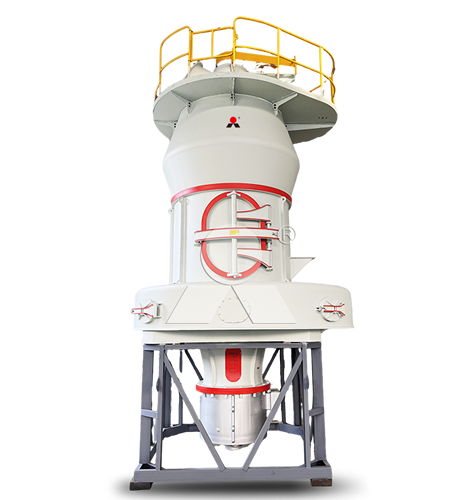
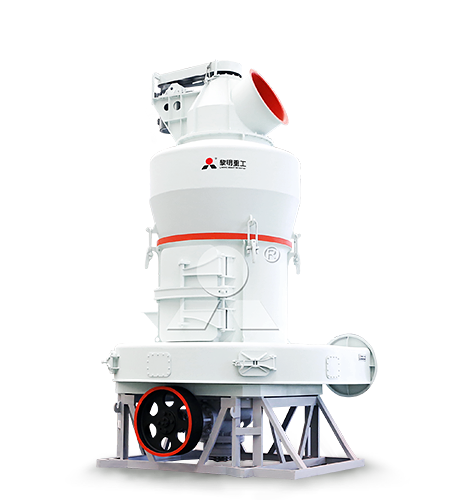
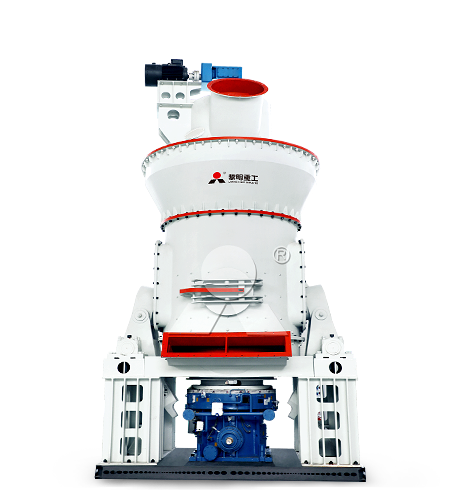
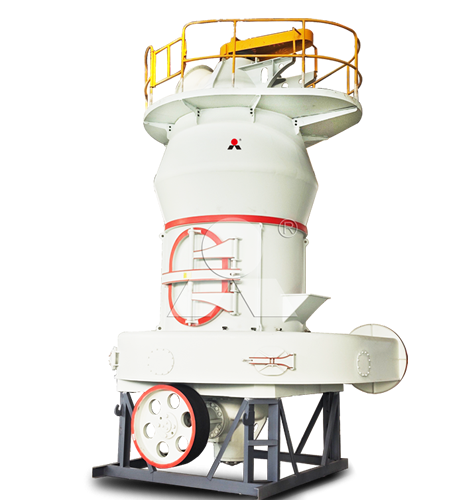
Liming Heavy Industry’s equipment portfolio includes the MTW European Type Grinding Mill and LM Vertical Roller Mill. These provide starting points for a project-specific grinding assessment, but the equipment listing alone does not establish performance with a particular zeolite deposit.
| Option to Evaluate | Required Assessment | Evidence to Request |
|---|---|---|
| Liming Heavy Industry MTW European Type Grinding Mill | Suitability for the required fine-powder duty | Representative-material results showing output, particle-size distribution, and operating conditions |
| Liming Heavy Industry LM Vertical Roller Mill | Suitability of a vertical grinding arrangement within the complete plant | Material testing, system layout, utility requirements, maintenance provisions, and any proposed drying capability |
Request a technical proposal based on the actual zeolite sample rather than choosing a model from nominal capacity alone. State the incoming size and moisture range, target distribution, required accepted-product output, operating schedule, and site constraints.
Review product-contact components, wear materials, lubrication separation, inspection access, and cleaning arrangements separately. A mineral grinding mill does not, by its model name, establish that the complete installation or finished product complies with feed-additive requirements.
Add Drying Only When the Material Requires It
Determine the need for drying from the actual supply conditions and the proposed grinding system’s validated operating range. Do not include a dryer automatically, but do not omit it based only on one dry sample.
Where drying is required, the design brief should identify:
The expected incoming moisture range, including seasonal conditions.
The required condition at the mill inlet and in the finished powder.
The available heat source and any direct contact between gases and product.
Temperature-monitoring and operating-control requirements.
The tests needed to confirm that processed material still meets its specification.
Keep ordinary moisture removal distinct from any activation or modification process. If treatment changes the product’s characteristics or identity, assess the resulting material against the intended specification and regulatory requirements before offering it for feed use.
Dust Control Must Include Packing and Maintenance
For clinoptilolite of sedimentary origin, the latest European assessment identifies inhalation and dermal exposure risks and considers the additive a skin and respiratory sensitiser. The renewed authorization calls for appropriate measures to protect users.
Build exposure controls into the complete handling route, including powder collection, silo discharge, bag filling, sampling, and maintenance. These locations should be assessed alongside the mill itself.
The site-specific occupational assessment should determine enclosure, extraction, housekeeping, monitoring, work procedures, and protective equipment. Do not use the absence of a visible dust cloud as the sole acceptance criterion.
Release Batches Against More Than Particle Size
A supplier’s certificate of analysis should reflect the agreed product specification. Fineness is one part of that specification, not a substitute for mineral identity or safety checks.
| Release Area | What to Confirm |
|---|---|
| Identity and composition | The batch corresponds to the approved mineral source and required mineral specification |
| Safety requirements | Applicable contaminant and other acceptance criteria have been met |
| Physical properties | Particle-size distribution and agreed moisture condition are acceptable |
| Functional requirements | Any customer-required performance test has been completed |
| Dispatch readiness | Packaging, identification, release status, and documentation are correct |
Set the testing frequency according to applicable requirements, source variability, customer agreements, and the supplier’s control plan. Connect every dispatched lot to incoming material records, processing records, and release results.
Plan Capacity Around Released, Packaged Product
Define the production target as accepted material ready for dispatch. This keeps the project from being sized around mill discharge while overlooking storage, laboratory holds, packing interruptions, or loading capacity.
During commissioning, verify the complete route with representative material. Record the achieved output, particle-size results, moisture condition, relevant operating settings, and the performance of collection and packing systems. Test the agreed product rather than accepting a trial conducted at a different fineness or under unusually favorable feed conditions.
Information Needed for a Useful Plant Proposal
Prepare a project brief containing the zeolite’s geological origin, mineralogical analysis, relevant safety results, incoming size and moisture range, finished-product specification, intended additive function, destination markets, required output, operating hours, packaging formats, and available utilities.
With that information, a Liming Heavy Industry grinding system can be evaluated against a defined duty. The resulting line should deliver an identifiable, consistently specified zeolite ingredient—not merely a finely ground mineral carrying a general feed-grade description.
Related Feed Mineral Processing


Liming Heavy Industry to Exhibit at bauma CHINA 2026 – Visit Us at Booth E6.510
2026-10-15

Meet Liming Heavy Industry at the 140th Canton Fair 2026
2026-10-13
Liming Heavy Industry to Attend the 140th Canton Fair
2026-09-25
Liming Heavy Industry at bauma CONEXPO INDIA 2026 | Booth 5-C6
2026-09-07
Turnkey Raw Mill Cement Plant in Saudi Arabia: Design and Installation
2026-09-03
Complete Mineral Processing Solutions
Convenient Reliable Professional Efficient Get Your Quote
Please feel free to submit your inquiry information to us. We will contact with you as soon as possible.
Our team will contact you as soon as possible.