


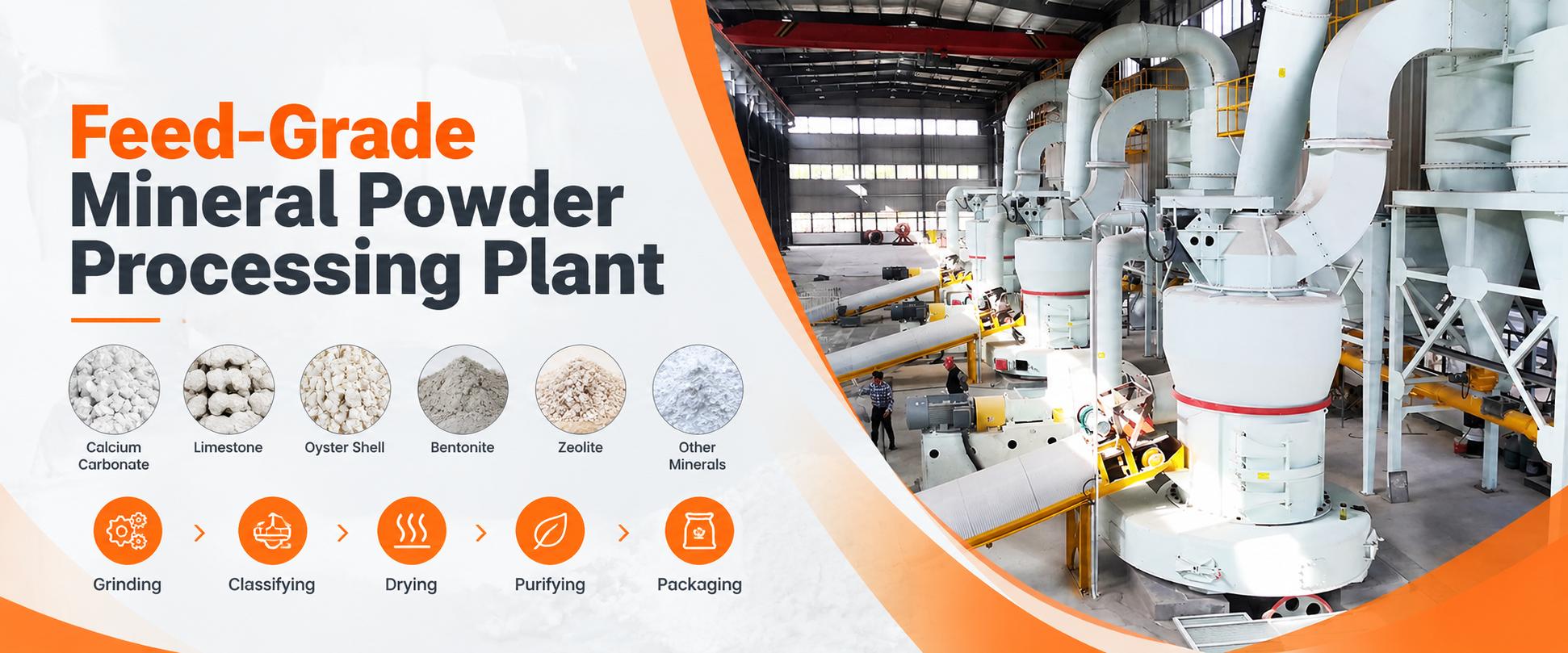
A feed-grade mineral powder processing plant must do more than reduce rock to a fine powder. It must turn an approved mineral source into a consistent feed ingredient with controlled composition, particle size, contamination risk, and batch traceability. The most important planning principle is simple: define the finished product before selecting the grinding mill.
For a limestone-based calcium ingredient, this means confirming the mineral’s suitability for animal feeding, agreeing on the customer’s product specification, and designing the handling, grinding, classification, storage, and packing systems around that specification. Grinding alone cannot make an unsuitable mineral source feed-grade. Undesirable substances must be identified and controlled throughout the feed supply chain.
Start with the Product You Need to Deliver
“Feed-grade mineral powder” is not a single product specification. A fine limestone powder intended for incorporation into compound feed may have different requirements from a coarse calcium product supplied to laying-hen operations. Even when both products come from the same deposit, they may require different processing routes.
Limestone provides calcium carbonate, but its performance also depends on purity, consistency, and particle size. Coarser limestone particles can serve a different nutritional purpose from fine particles, particularly in laying-hen feeding programs. A plant should therefore avoid treating maximum fineness as the universal production objective.
Before requesting equipment proposals, prepare a product specification covering:
Mineral identity and intended use in animal feeding.
Required nutrient content and acceptable composition variability.
Contaminant limits applicable to the destination market and customer.
Particle-size distribution, including allowable oversize and excessive fines.
Moisture, bulk density, and handling requirements.
Delivery format, such as bulk loading, small bags, or bulk bags.
Sampling, testing, labeling, and batch-release requirements.
Define particle size using an agreed test method and measurable acceptance limits rather than relying only on a mesh description. A specification such as “fine powder” leaves too much room for disagreement between the plant operator and the customer.
Approve the Mineral Source Before Investing in the Production Line
A mineral deposit that is suitable for construction materials is not automatically suitable for feed ingredients. Feed safety guidance identifies heavy metals and other undesirable substances as hazards that require control. Applicable limits depend on the ingredient, its use, and the relevant regulatory framework.
The raw-material qualification program should establish both average composition and variability. Samples should represent the material the plant will actually receive, including different extraction areas or supplier batches where relevant.
| Check | What It Establishes | Plant-Design Implication |
|---|---|---|
| Mineral identity and chemical composition | Whether the material meets the intended ingredient specification | Determines which sources can enter the approved supply chain |
| Relevant contaminants | Whether the source is suitable for the intended feed application | Supports acceptance limits, testing frequency, and rejection procedures |
| Moisture and seasonal variation | How consistently the material can be stored and processed | Informs covered storage, feeding arrangements, and any drying requirement |
| Feed size, hardness, and abrasiveness | How the material behaves during crushing and grinding | Informs crusher selection, mill testing, wear allowances, and maintenance planning |
| Grinding and classification behavior | Whether the target particle-size distribution is practical | Supports equipment sizing and product-quality acceptance criteria |
Do not assume that additional grinding will remove chemical contamination. Size reduction changes particle dimensions; it is not a substitute for approving the source and verifying finished-product compliance.
Build the Process Around a Clear Material Route
For an approved limestone source, a practical dry-powder production route typically includes raw-material receiving, inspection, crushing where necessary, controlled feeding, grinding, classification, powder collection, finished-product storage, and packing or bulk dispatch. Liming Heavy Industry describes limestone grinding systems using crushing, metered feeding, grinding, and classification, with material outside the required fineness returned for further grinding.
Receiving and preliminary preparation
Provide a clearly identified receiving area with enough space to inspect deliveries and separate materials awaiting approval from released stock. Covered storage should be considered where rain exposure could create inconsistent moisture or handling problems.
Install preliminary size reduction only when the incoming material requires it. The crusher discharge must suit the selected mill’s actual inlet specification; it should not be based on a generic value copied from another project.
Foreign-material controls also belong near the beginning of the process. Receiving grates, screening, and magnets are established measures for reducing physical hazards in feed-processing systems, although each device addresses a different type of unwanted material.
Grinding and classification
Feed the mill at a controlled rate rather than allowing large fluctuations from the storage bin. The grinding system and classifier should be selected together so the line can achieve the required output and particle-size distribution under the agreed raw-material conditions.
In a closed-circuit arrangement, material that does not meet the classifier’s size cut returns for further grinding, while accepted powder proceeds to collection. Liming Heavy Industry uses this grinding-and-classification approach in its limestone processing descriptions.
Collection, storage, and dispatch
Plan powder transfer and storage as part of the production line, not as equipment added after the mill is purchased. The project specification should address enclosed transfer, dust extraction, inspection access, product identification, and the separation of approved and unreleased batches.
Collected dust also needs a defined disposition. Return it to saleable production only when its identity, cleanliness, and effect on the product specification have been assessed. Feed safety controls must account for contamination and carryover rather than assuming that every recovered powder stream is automatically suitable for reuse.
Which Liming Heavy Industry Grinding Mill Should You Consider?
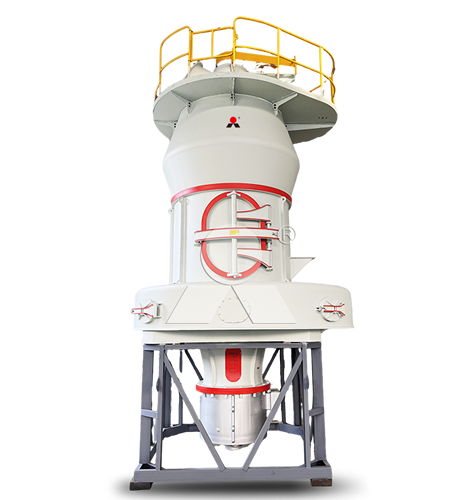
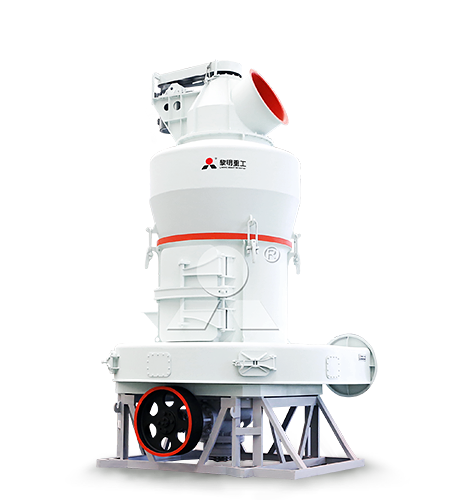
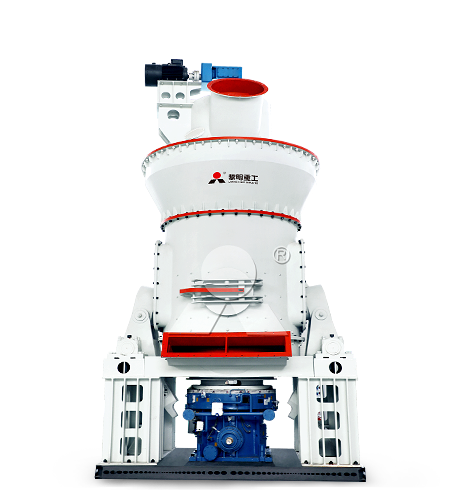
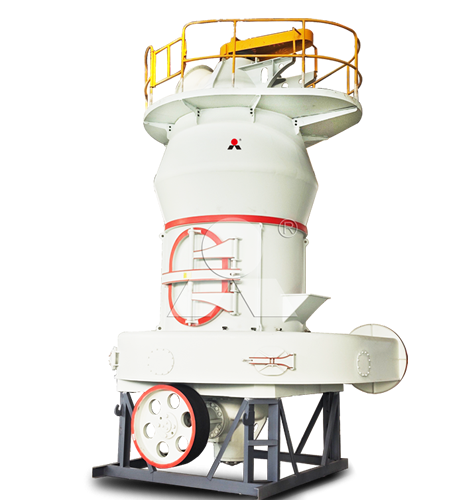
For limestone and calcium carbonate projects, Liming Heavy Industry lists MTW European Type Grinding Mills and LM Vertical Roller Mills among its fine-powder options, while LUM Ultrafine Vertical Mills and MW Micro Powder Mills serve finer processing requirements. These are mineral-processing equipment options; their listing does not by itself establish feed-grade certification or approval for a particular installation.
| Project Requirement | Liming Heavy Industry Mill to Evaluate | What to Confirm Before Selection |
|---|---|---|
| Conventional fine limestone powder | MTW European Type Grinding Mill | Output at the specified fineness, inlet conditions, classifier performance, and cleaning access |
| A project considering an integrated vertical grinding arrangement | LM Vertical Roller Mill | Material suitability, required output, airflow arrangement, moisture conditions, and maintenance access |
| A customer specification requiring ultrafine powder | LUM Ultrafine Vertical Mill or MW Micro Powder Mill | Whether the finer product is genuinely required, achievable particle-size distribution, handling behavior, and operating cost |
These mill families are identified by Liming Heavy Industry for limestone or related mineral processing; the final model and configuration should follow material testing and a project-specific technical review.
Ask for a proposal based on your representative material and finished-product specification. The proposal should state the conditions behind any capacity commitment, including feed size, moisture, target fineness, and the boundaries of the supplied system. Avoid comparing mills using maximum catalog capacity when the quoted capacities refer to different products or operating conditions.
For feed applications, also request a review of product-contact materials, wear components, lubrication isolation, inspection points, cleaning procedures, and possible carryover. These issues form part of the plant’s contamination-control assessment rather than being resolved by the mill model name alone.
Keep Fine Powder and Coarse Calcium Products Separate
A frequent planning mistake is designing one grinding route for every calcium product. If the intended product range includes both fine mineral powder and coarse limestone particles, evaluate separate crushing, screening, and grinding paths rather than sending all material through a fine-powder mill.
The distinction matters because limestone particle size influences handling and nutritional behavior. Fine material can support rapid calcium availability, while coarser particles may remain in the digestive system longer and support calcium supply during overnight eggshell formation. The required balance should come from the customer’s feeding specification, not from the finest setting available on the mill.
A practical design review should therefore ask two separate questions: what particle sizes must the plant produce, and which processing route can produce each size without unnecessary reprocessing?
Design Quality Control into the Layout
Feed safety cannot depend on a final laboratory result alone. Good feed-manufacturing practice requires control of incoming materials, storage, processing, contamination risks, and records throughout the operation. Carryover between products also needs specific management.
Include the following provisions in the layout and operating plan:
Identified locations for incoming-material and finished-product sampling.
Separate status identification for quarantined, released, and rejected material.
Access to equipment and transfer points for inspection and cleaning.
Documented procedures for product changes and maintenance work.
Protection of approved product during storage, packing, and loading.
Records connecting incoming lots, production batches, test results, and dispatched product.
Build the testing plan around the actual risks and customer requirements. Relevant checks may include nutrient composition, contaminants, moisture, and particle-size distribution. Sampling must represent the batch being assessed; a convenient sample from one accessible point is not necessarily representative of the full lot.
Size the Whole Plant, Not Just the Mill
Begin capacity planning with the quantity of accepted finished product required over the available production schedule. Allow for maintenance, product changes, inspections, and other planned interruptions rather than treating every scheduled hour as productive milling time.
Then check each part of the line against the same operating scenario:
Can receiving and crushing supply the required material consistently?
Can the feeder maintain stable mill operation?
Can the classifier achieve the specification at the proposed throughput?
Can powder collection and conveying handle the resulting flow?
Is there enough finished-product storage during packing interruptions?
Can the packing or bulk-loading system dispatch production without creating a bottleneck?
Ask suppliers to identify the expected bottleneck and state how performance will be verified. A larger mill does not resolve undersized storage, slow packing, or an unsuitable product specification.
Commission Against Saleable Product
Commissioning should demonstrate that the complete line can repeatedly produce an acceptable ingredient, not simply that the machinery runs.
Confirm equipment installation, instrumentation, safety provisions, and inspection access.
Verify cleanliness and remove installation debris before introducing approved material.
Establish stable feeding, grinding, classification, and collection conditions.
Check finished-product particle size and the other agreed quality characteristics.
Confirm packing weights, identification, records, and release procedures.
Record accepted output, operating conditions, energy use, and maintenance observations during the agreed trial.
The acceptance protocol should connect mechanical performance with the feed ingredient specification. Feed-manufacturing guidance places product safety and quality controls across the production chain, so commissioning records should support the same approach.
Prepare a Useful Project Brief
Before selecting a Liming Heavy Industry grinding system, assemble a concise project brief containing the mineral type, representative analysis, contaminant results, incoming size, moisture range, required particle-size distribution, annual demand, operating schedule, packaging method, site conditions, and destination-market requirements.
For limestone projects, that information provides a sound basis for evaluating an MTW or LM grinding arrangement, or an LUM or MW system where an ultrafine specification genuinely requires it. Final selection should remain conditional on material suitability, achievable product quality, and the installation’s feed-safety requirements.
Related Feed Mineral Processing


Liming Heavy Industry to Exhibit at bauma CHINA 2026 – Visit Us at Booth E6.510
2026-10-15

Meet Liming Heavy Industry at the 140th Canton Fair 2026
2026-10-13
Liming Heavy Industry to Attend the 140th Canton Fair
2026-09-25
Liming Heavy Industry at bauma CONEXPO INDIA 2026 | Booth 5-C6
2026-09-07
Turnkey Raw Mill Cement Plant in Saudi Arabia: Design and Installation
2026-09-03
Complete Mineral Processing Solutions
Convenient Reliable Professional Efficient Get Your Quote
Please feel free to submit your inquiry information to us. We will contact with you as soon as possible.
Our team will contact you as soon as possible.