


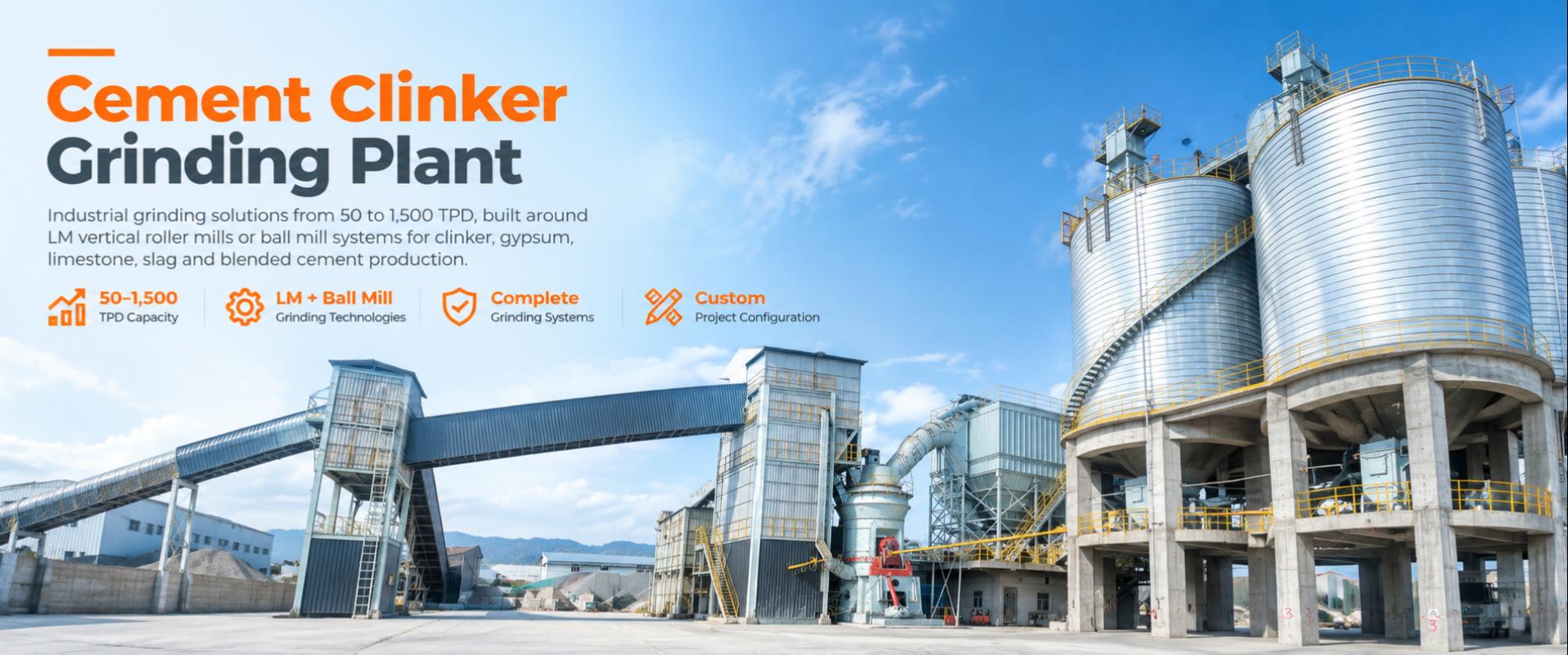
Pozzolan cement grinding is the process of grinding cement clinker, gypsum, and pozzolanic materials to produce blended cement. Suitable pozzolans can include natural volcanic materials, pumice, volcanic ash, trass, calcined clay, and other supplementary cementitious materials that react with calcium hydroxide during cement hydration.
Liming Heavy Industry provides LM Vertical Roller Mill and cement ball mill solutions for pozzolan cement grinding. The LM Vertical Roller Mill is generally the recommended option for projects that require integrated drying, grinding, and classification, especially when natural pozzolan has elevated moisture. Cement ball mills remain a proven choice for dry or pre-dried pozzolan grinding in conventional closed-circuit systems. Liming Heavy Industry also provides rotary kilns and calcining kilns for clinker production and suitable pozzolan calcination applications.
What Is Pozzolan Cement?
Pozzolan cement is a blended cement made by grinding clinker, gypsum, and a controlled proportion of pozzolanic material. A pozzolan is a siliceous or siliceous-aluminous material that can react with calcium hydroxide in the presence of water to form additional cementitious compounds.
Natural pozzolans can include volcanic ash, pumice, tuff, trass, diatomaceous earth, and other naturally occurring reactive mineral materials. Calcined clays can also be used as pozzolanic supplementary cementitious materials when their mineral composition and calcination process are suitable.
Portland cement hydration produces calcium hydroxide. Pozzolanic materials react with this calcium hydroxide to form additional binding phases, which can contribute to the long-term performance of cement and concrete. The practical performance of a pozzolan cement depends on the pozzolan chemistry, reactivity, fineness, clinker quality, gypsum dosage, additive ratio, curing conditions, and final product specification. [126]
Why Use Pozzolans in Cement?
Pozzolans can be used to produce blended cement products with a lower clinker factor than ordinary Portland cement. They may also help cement producers use locally available mineral resources and develop products for specific performance, cost, and sustainability requirements.
Reduce the clinker factor in suitable blended cement formulations.
Use locally available natural pozzolan, volcanic ash, pumice, trass, or calcined clay resources.
Produce Portland pozzolan cement and other blended cement products.
Support lower-carbon cement strategies where product standards and performance requirements permit.
Adjust cement properties through controlled material proportioning and fineness.
Expand the cement product portfolio for regional construction markets.
Use suitable mineral materials that may otherwise have limited industrial value.
The allowable pozzolan content depends on local standards, cement classification, material quality, and required performance. Natural pozzolans vary widely in composition and grindability, so laboratory evaluation is necessary before finalizing a cement formulation or selecting grinding equipment.
Pozzolan Characteristics
Pozzolanic materials do not all behave the same way in a grinding plant. Natural pozzolans can vary from soft and easy-to-grind materials to hard, abrasive volcanic materials. Moisture can also vary significantly, which affects storage, conveying, drying demand, mill capacity, and overall operating cost.
| Pozzolan Characteristic | Effect on Grinding | Design Consideration |
|---|---|---|
| Variable hardness | Can change mill throughput, power demand, and wear rate | Test material grindability before selecting mill capacity |
| Abrasiveness | Can increase wear on rollers, grinding tables, liners, separators, chutes, and conveyors | Use suitable wear protection and establish preventive maintenance plans |
| High moisture | Can reduce mill output, cause buildup, and complicate material handling | Use covered storage and integrated or separate drying capacity |
| Variable chemical composition | Can affect reactivity, cement performance, and blending ratio | Confirm chemical composition and activity through laboratory testing |
| Required high fineness | Can increase grinding energy demand and reduce throughput | Use a suitable classifier and optimize the fineness target |
| Different particle shape | Can influence flowability, separator performance, and water demand in concrete | Evaluate particle size distribution and product performance during trials |
Natural pozzolans can have moisture levels up to approximately 25%, depending on the material source and storage conditions. Under-cover storage can reduce moisture before grinding. When feed moisture is too high for stable mill operation, drying is required before or during grinding. [127][129]
Pozzolan Cement Grinding Process
The pozzolan cement grinding process begins with separate receiving and storage of clinker, gypsum, and pozzolan. The materials are proportioned according to the cement formulation, dried where required, ground to the target fineness, classified, collected by dust-control equipment, and transferred to finished-cement silos.
Receive natural pozzolan, calcined clay, volcanic ash, pumice, trass, or other suitable pozzolanic material.
Store pozzolan under cover to limit moisture increase and protect material quality.
Remove oversized material, foreign material, and metal contamination where required.
Store clinker, gypsum, limestone, slag, fly ash, and other additives separately.
Measure clinker, gypsum, pozzolan, and other components through controlled dosing equipment.
Feed the material mixture to an LM Vertical Roller Mill or cement ball mill system.
Dry moist pozzolan during grinding or before grinding, depending on the selected configuration.
Grind the materials to the required cement fineness.
Classify fine pozzolan cement and return coarse particles for additional grinding.
Collect finished cement through bag filters and transfer it to cement silos.
Pack finished cement into bags or load bulk cement for dispatch.
Material Storage and Preparation
Pozzolans should be stored under cover whenever possible. Rain and ambient humidity can increase moisture content, making conveying and grinding more difficult. Covered storage also helps maintain a more consistent feed condition and can reduce the thermal energy required for drying.
Natural pozzolan may arrive in different particle-size ranges. Coarse volcanic rock, pumice, trass, or other materials may require crushing before grinding. A crushing stage can include a hopper, feeder, crusher, screen, conveyor, magnetic separator, and dust collector.
Foreign materials and tramp metal should be removed before the pozzolan enters the grinding circuit. Metal detectors and magnetic separators can protect the mill, grinding components, separator, conveyors, and other downstream equipment from damage.
Clinker, gypsum, and pozzolan should be stored separately before controlled dosing. This allows the plant to adjust formulations, produce more than one cement type, and maintain the required product quality.
LM Vertical Roller Mill for Pozzolan Cement
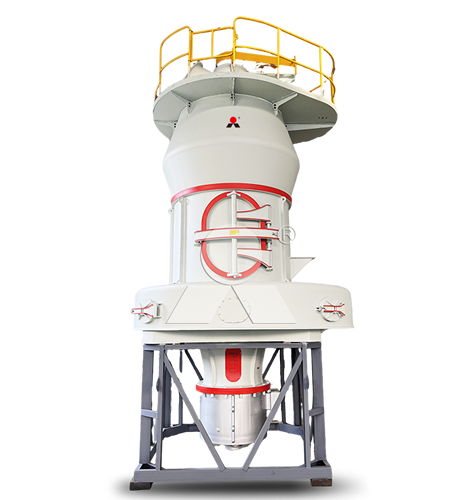
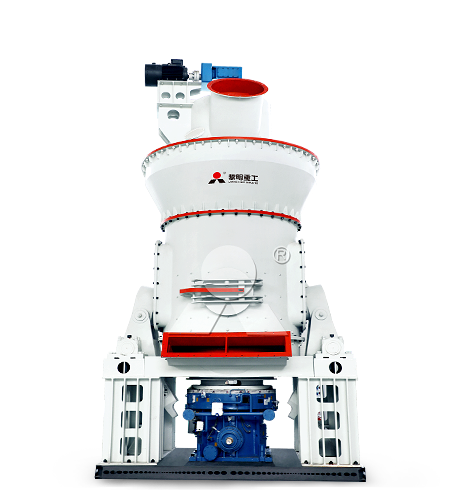
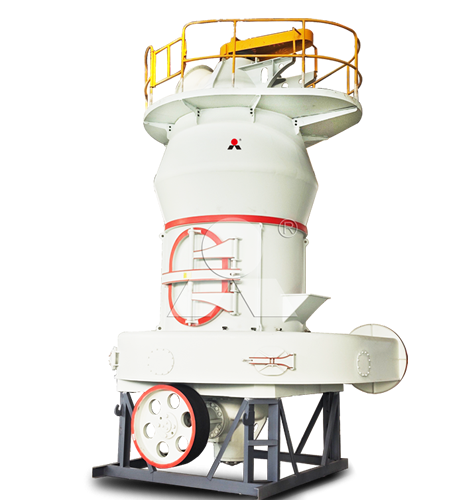
The LM Vertical Roller Mill from Liming Heavy Industry is suitable for pozzolan cement grinding because it combines drying, grinding, classification, and material transport in one integrated vertical process system. This is particularly useful when natural pozzolan has elevated moisture or when the project requires a compact plant layout.
Clinker, gypsum, and pozzolan enter the mill and fall onto the center of a rotating grinding table. Centrifugal force moves the material outward and forms a grinding bed. Hydraulic grinding rollers apply pressure to the material, reducing particle size through compression and shearing.
Hot process gas can enter the mill to evaporate moisture from the pozzolan. The gas stream lifts the fine ground material to the integrated dynamic classifier. Fine cement leaves the mill with the gas stream and is collected by the bag filter. Coarse particles are rejected by the classifier and return internally to the grinding table for further grinding.
Vertical roller mills are generally more suitable for materials that require simultaneous drying and grinding. Published industry guidance reports that vertical roller mills can process materials with approximately 15% moisture under suitable hot-gas conditions, while ball mills are generally more suitable for feed moisture near 5% unless separate drying equipment is installed. [125][129]
LM Vertical Roller Mill Benefits
Integrated drying, grinding, dynamic classification, and material transport in one main process system.
Suitable for clinker, gypsum, natural pozzolan, calcined clay, volcanic ash, pumice, trass, limestone, slag, fly ash, and other suitable additives.
Can use hot process gas to remove moisture during grinding.
Compact vertical arrangement that can reduce plant footprint.
No large steel-ball charge is required for the main grinding process.
Flexible cement fineness control through classifier speed and operating parameters.
Suitable for Portland pozzolan cement, blended cement, and separate pozzolan powder grinding.
PLC-based control of feed rate, grinding pressure, material bed, vibration, airflow, temperature, classifier speed, and power consumption.
Cement Ball Mill for Pozzolan Cement
A cement ball mill can also be configured for pozzolan cement grinding. In this system, clinker, gypsum, and pozzolan are ground inside a horizontal rotating cylinder containing steel grinding media. The grinding balls reduce material size through impact, friction, and attrition.
The ball mill normally operates as a closed-circuit system with a separate high-efficiency separator. Fine cement that meets the required fineness is collected as product, while coarse material is returned to the ball mill for additional grinding.
A ball mill can be suitable for dry or pre-dried pozzolan. When pozzolan moisture is high, the system may require a separate dryer, hot gas generator, drying chamber, or other pre-drying arrangement. Without adequate drying, wet material can reduce mill capacity, create buildup, block conveying equipment, and affect separator performance.
For some hard natural pozzolans, a ball mill may provide a practical grinding option because it uses impact and attrition from grinding media. However, mill selection should be based on real material testing. Some highly abrasive or hard volcanic pozzolans can be difficult to grind in both ball mill and vertical roller mill systems, especially if a stable material bed cannot be maintained in the vertical mill. [124]
Cement Ball Mill Benefits
Proven grinding technology for clinker, gypsum, dry pozzolan, and blended cement materials.
Suitable for Portland pozzolan cement and other selected blended cement products.
Compatible with high-efficiency separators in closed-circuit grinding systems.
Practical for projects with existing ball mill foundations, buildings, separators, and conveying equipment.
Can be configured for different product fineness targets and pozzolan proportions.
Suitable for dry or pre-dried pozzolan grinding applications.
Can be used in plant upgrades, replacement projects, and conventional grinding-system modernization.
LM Vertical Roller Mill vs Cement Ball Mill
| Comparison Factor | LM Vertical Roller Mill | Cement Ball Mill |
|---|---|---|
| Grinding principle | Compression and shearing between grinding rollers and a rotating grinding table | Impact and attrition from steel grinding media inside a rotating cylinder |
| Drying capability | Integrated drying and grinding with suitable hot gas | Normally requires separate drying equipment for higher-moisture pozzolan |
| Suitable moisture condition | Suitable for pozzolan with elevated moisture under appropriate hot-gas and process conditions | More suitable for dry or pre-dried pozzolan |
| Classification | Integrated dynamic classifier | Separate high-efficiency separator in a closed-circuit arrangement |
| Plant layout | Compact vertical configuration combining drying, grinding, and classification | Conventional horizontal circuit with a separate separator and drying system where required |
| Grinding media | No large steel-ball charge required for primary grinding | Requires steel grinding balls and periodic media replenishment |
| Hard or abrasive pozzolan | Requires stable material-bed formation and wear-resistant grinding components | Can provide impact grinding, but media, liner, and power consumption must be evaluated |
| Maintenance focus | Grinding rollers, grinding table, classifier, hydraulic system, gearbox, and wear protection | Grinding balls, liners, diaphragms, bearings, gears, separator, and drying equipment where installed |
| Suitable project condition | Moist pozzolan, compact layouts, integrated drying needs, and new blended cement plants | Dry pozzolan, conventional grinding circuits, and projects with compatible ball mill infrastructure |
Pozzolan Drying Requirements
Drying is often a decisive factor in pozzolan cement grinding. If the pozzolan has high moisture, it can reduce grinding efficiency and create handling problems. The selected drying method depends on the feed moisture, required capacity, available heat source, fuel type, site arrangement, and environmental requirements.
For an LM Vertical Roller Mill system, hot gas can be introduced directly into the mill. The material is dried while it is ground and transported to the classifier. This integrated arrangement can reduce the need for a separate dryer and simplify the plant layout.
For a ball mill system, pre-drying may be required when moisture exceeds the level that the mill circuit can handle. The plant may use a rotary dryer, flash dryer, hot gas generator, or another suitable drying system before the ball mill. This adds equipment, heat demand, dust collection, conveying equipment, and maintenance requirements.
Process-gas temperature must be monitored carefully. High-moisture pozzolan produces water vapor during drying. If gas temperature drops below the dew point in ducts, elevators, filters, chutes, or pneumatic conveying equipment, condensation may cause material buildup and blockages. Proper insulation, gas-flow design, and temperature monitoring are important for stable plant operation. [129]
Pozzolan Fineness and Quality Control
Pozzolan reactivity is strongly influenced by chemical composition, mineral structure, glass content, particle size, and fineness. Grinding to a finer particle size can increase surface area and improve pozzolanic reaction potential, but excessive grinding raises power consumption and may reduce plant throughput.
The target fineness should be determined through laboratory testing of the actual pozzolan, clinker, gypsum, and final cement formulation. Typical quality-control parameters may include Blaine surface area, sieve residue, particle size distribution, moisture, chemical composition, loss on ignition, sulfur trioxide content, activity index, setting time, soundness, compressive strength, and durability-related performance tests.
Natural pozzolans can vary widely in grindability and reactivity. Some may require finer grinding because of hard volcanic glass particles, while others may be softer and easier to process. The grinding system should therefore be selected based on material testing rather than a general capacity estimate.
Pozzolan Cement Product Options
A pozzolan grinding plant can produce several types of cementitious products. The preferred product range depends on local standards, pozzolan supply, clinker availability, customer demand, and the plant’s storage and dispatch arrangement.
| Product Option | Typical Material Configuration | Main Application |
|---|---|---|
| Portland pozzolan cement | Clinker, gypsum, and controlled natural pozzolan or calcined clay proportion | General construction applications subject to applicable product standards |
| Blended cement | Clinker, gypsum, pozzolan, limestone, slag, fly ash, or other suitable components | Flexible cement product portfolio for regional market requirements |
| Ground pozzolan powder | Finely ground natural pozzolan or calcined clay | Supplementary cementitious material for concrete, mortar, and cement blending |
| Multi-component cement | Clinker, gypsum, pozzolan, slag, limestone, fly ash, or other suitable mineral additions | Projects requiring product diversification and controlled clinker reduction |
Rotary Kiln and Calcining Kiln Applications
Some pozzolanic materials require thermal treatment before grinding. Calcined clay is produced by heating suitable clay materials to develop pozzolanic reactivity. Other natural pozzolans may also be dried or thermally treated where material characteristics, moisture, organic content, or desired reactivity require it.
Liming Heavy Industry can provide rotary kilns and calcining kilns for suitable clinker production and industrial calcination applications. A calcination project may include material crushing, drying, homogenization, feeding, preheating, calcination, cooling, grinding, dust collection, product storage, and dispatch systems.
For integrated cement production, a rotary kiln produces clinker from prepared raw meal. The clinker can then be ground with gypsum and pozzolan in an LM Vertical Roller Mill or cement ball mill to produce Portland pozzolan cement or other blended cement products.
Information Needed for Equipment Selection
To configure a suitable pozzolan cement grinding plant, Liming Heavy Industry needs complete material, production, and product-quality information. This allows the LM Vertical Roller Mill or cement ball mill configuration to match actual operating conditions.
Required output in tonnes per hour, tonnes per day, and tonnes per year.
Planned operating hours, operating days, and required equipment availability.
Pozzolan source, type, moisture, feed size, hardness, abrasiveness, chemical composition, and grindability data.
Whether the pozzolan is natural volcanic material, pumice, trass, volcanic ash, calcined clay, or another suitable material.
Required product type, including Portland pozzolan cement, blended cement, or separately ground pozzolan powder.
Clinker source, feed size, moisture, hardness, chemistry, and grindability data where clinker is included.
Gypsum source, moisture, sulfate content, particle size, and required addition ratio.
Proportions of pozzolan, clinker, gypsum, limestone, slag, fly ash, or other suitable additives.
Target Blaine fineness, sieve residue, particle size distribution, activity index, setting time, and required strength class.
Available heat source, hot gas temperature, fuel type, and required drying or calcination capacity.
Available site area, building height, electrical conditions, storage capacity, packing requirement, and dispatch method.
Whether the project requires only a grinding plant or an integrated clinker production and calcination line with rotary kiln equipment.
Conclusion
Pozzolan cement grinding produces Portland pozzolan cement, blended cement, and ground pozzolan powder by processing clinker, gypsum, and suitable pozzolanic materials in controlled proportions. The plant design must account for pozzolan moisture, hardness, abrasiveness, reactivity, target fineness, drying requirement, and product-quality control.
Liming Heavy Industry provides LM Vertical Roller Mill solutions for integrated pozzolan drying, grinding, and classification, as well as cement ball mill solutions for dry or pre-dried pozzolan grinding. For moist natural pozzolan, the LM Vertical Roller Mill is generally the preferred solution because it can combine drying and grinding in one compact process system.
For complete cement and calcination projects, Liming Heavy Industry can also provide rotary kilns, calcining kilns, material handling systems, dust collection equipment, finished-product silos, packing systems, and bulk loading solutions.
Related Cement Clinker Grinding Plant


LIMING at MiningMetals Uzbekistan 2026 | Booth B94
2026-10-22

LIMING Heavy Industry at MINEXPO Africa 2026 | Booth 133
2026-10-22
Liming Heavy Industry to Exhibit at bauma CHINA 2026 – Visit Us at Booth E6.510
2026-10-15
Meet Liming Heavy Industry at the 140th Canton Fair 2026
2026-10-13
Liming Heavy Industry to Attend the 140th Canton Fair
2026-09-25
Complete Mineral Processing Solutions
Convenient Reliable Professional Efficient Get Your Quote
Please feel free to submit your inquiry information to us. We will contact with you as soon as possible.
Our team will contact you as soon as possible.