


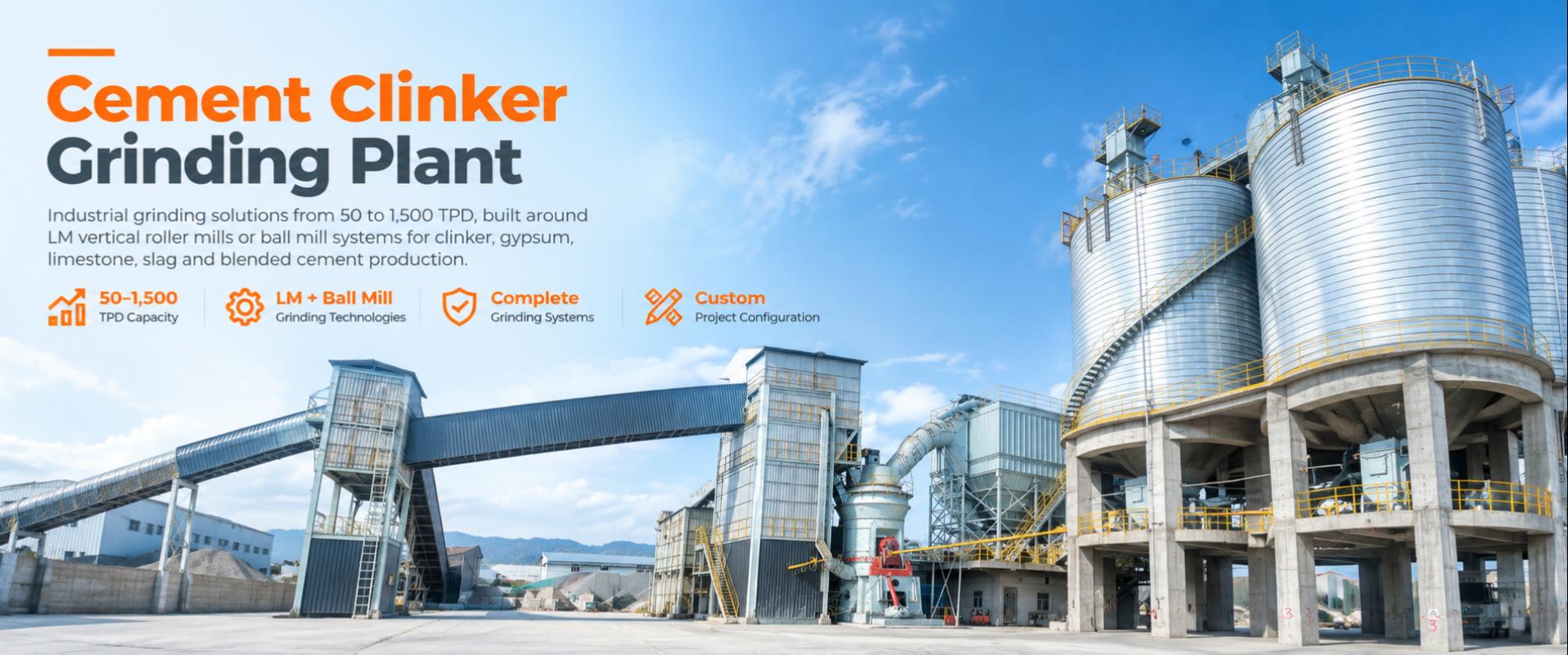
The cost of a cement clinker grinding plant depends on far more than the price of the main grinding machine. A complete project normally includes raw-material storage and dosing, clinker grinding, classification, dust collection, material conveying, cement storage, electrical control, automation, installation, and civil works. Because every plant is designed around a specific production target and local operating condition, there is no single fixed price for a cement clinker grinding plant.
For investors and cement producers, the most practical approach is to evaluate total project cost rather than focusing only on the initial purchase price of a grinding mill. The right equipment configuration can affect power consumption, maintenance requirements, product quality, operating stability, plant footprint, and long-term production cost.
Main Factors That Affect Cement Clinker Grinding Plant Cost
The required production capacity is one of the first factors that determines investment. A small cement grinding station designed for regional supply will require less equipment than a large-scale plant operating continuously at high output. Capacity is commonly evaluated in tons per day or tons per hour, but the final configuration must also account for the cement type, operating hours, raw-material characteristics, and expected utilization rate.
The grinding technology selected for the project also has a major influence on total cost. For cement clinker and blended cement production, Liming Heavy Industry can provide LM vertical roller mills and ball mill grinding systems. Each option has different process layouts, auxiliary equipment requirements, maintenance considerations, and operating characteristics.
Material properties should be assessed before selecting equipment. Clinker hardness, feed size, moisture content, abrasiveness, gypsum proportion, limestone content, slag content, fly ash addition, and target cement fineness can all affect the grinding system design. A plant producing ordinary Portland cement may require a different configuration from one producing slag cement, limestone cement, or other blended cement products.
LM Vertical Roller Mill Cost Considerations
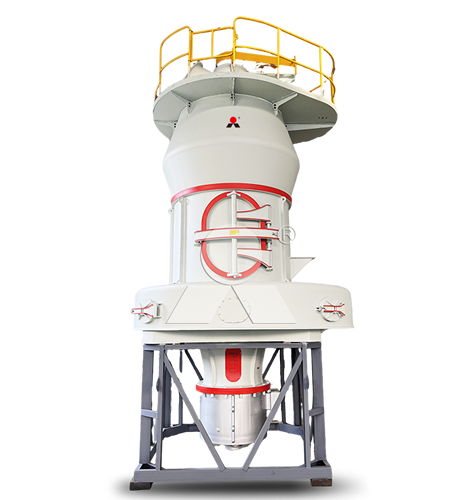
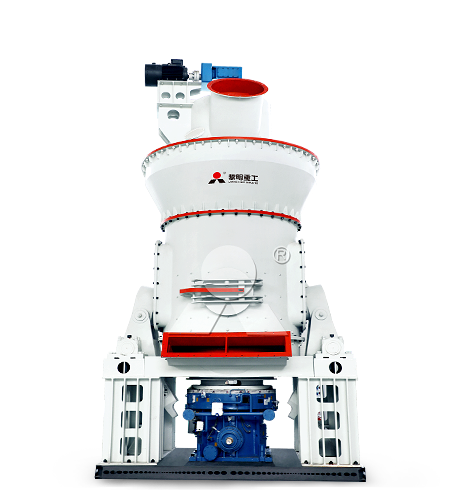
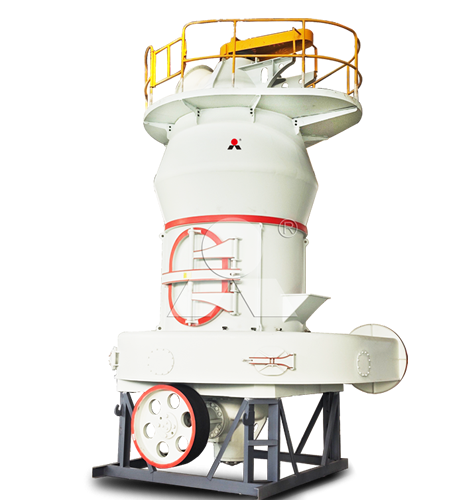
An LM vertical roller mill is a compact grinding solution that combines grinding, drying where required, and dynamic classification in one process arrangement. For suitable cement clinker and blended cement applications, the integrated design can reduce the number of separate process units and help optimize plant layout.
The total investment for an LM vertical roller mill project depends on the required throughput, product fineness, material moisture, grinding pressure, process fan capacity, dust collection system, feeding equipment, conveying system, electrical system, and automation level. The mill itself is only one part of the complete cement grinding plant.
LM vertical roller mills are often considered when a project requires a compact layout, efficient grinding performance, and integrated classification. However, the final decision should be based on a complete technical and economic comparison, including capacity, cement quality, raw-material composition, local power cost, maintenance conditions, installation space, and expected operating schedule.
Ball Mill Grinding Plant Cost Considerations
A ball mill remains an important and proven option for cement clinker grinding. In a typical closed-circuit cement grinding system, the ball mill works together with a separator, bucket elevators, conveyors, dust collectors, fans, and finished-cement storage equipment.
The cost of a ball mill grinding plant depends on the mill size, grinding media requirement, liner configuration, separator type, circulation load, conveying arrangement, dust-control equipment, and control system. Projects that already have compatible ball mill infrastructure, buildings, or auxiliary systems may find that a ball mill solution fits their existing site conditions well.
When comparing a ball mill with an LM vertical roller mill, it is important to compare the full grinding circuit rather than only the price of the main machine. This includes the required auxiliary equipment, civil works, electrical load, maintenance parts, labor demand, product quality requirements, and long-term operating expenditure.
Auxiliary Equipment Included in the Project Budget
A complete cement clinker grinding plant requires coordinated auxiliary systems. These systems can represent a significant part of total project investment, especially for higher-capacity plants or projects requiring a high level of automation.
Typical equipment and systems include clinker storage and handling equipment, gypsum and additive feeding systems, weighing and dosing units, bucket elevators, belt conveyors, screw conveyors, air slides, separators, bag filters, process fans, cement silos, bulk loading systems, packing machines, electrical cabinets, PLC automation, and central control systems.
If the project includes cement packing and dispatch, the budget should also account for finished-product silos, packing equipment, truck loading, bulk cement loading, and related dust-control measures. Where site conditions require it, civil works, steel structures, foundations, workshops, utility systems, and installation services must also be included in the overall investment plan.
Raw Materials and Cement Type
A cement grinding plant can be configured to process clinker together with gypsum and suitable mineral additives such as limestone, slag, fly ash, or other supplementary cementitious materials. The required cement type directly affects the material dosing system, grinding capacity, separator settings, and finished-product storage arrangement.
For example, a plant producing multiple cement grades may require separate material storage bins, additional dosing equipment, a flexible control system, and more than one finished-cement silo. These requirements can increase initial investment but may provide greater production flexibility and allow the plant to serve different market segments.
Related Cement Plant Equipment
For projects extending beyond cement grinding, Liming Heavy Industry can also provide equipment solutions for related thermal and material-processing stages. These may include rotary kilns, calcining kilns, and supporting equipment for cement clinker production, mineral calcination, and industrial processing applications.
A rotary kiln is a key piece of equipment in clinker production lines, where properly prepared raw meal is heated at high temperature to produce cement clinker. Calcining kilns can also be configured for suitable material-processing applications, depending on the feed material, required temperature, production capacity, fuel arrangement, emission-control requirements, and final product specification.
When a project requires both clinker production and cement grinding, integrating kiln and grinding-system planning from the beginning can help coordinate material flow, storage capacity, power supply, dust control, process control, and future expansion requirements.
How to Estimate Your Cement Grinding Plant Investment
To receive an accurate quotation, prepare the main project parameters before selecting the equipment. The most important information includes required production capacity, clinker source and properties, moisture content, cement type, additive proportions, target fineness, available installation area, local power conditions, expected operating hours, and whether cement packing and dispatch systems are required.
You should also identify whether the project is a new plant, an expansion of an existing cement grinding station, or an equipment upgrade. Existing infrastructure such as buildings, silos, conveyors, electrical systems, and ball mill circuits can substantially affect the preferred technical solution and total investment.
Liming Heavy Industry can recommend a suitable LM vertical roller mill or ball mill configuration according to your cement production target and plant conditions. For projects involving clinker production or material calcination, rotary kiln and calcining kiln equipment can also be considered as part of a coordinated plant solution.
Request a Project-Specific Quotation
There is no universal price for a cement clinker grinding plant because capacity, grinding technology, cement type, auxiliary equipment, automation, installation conditions, and local requirements vary from project to project. The most reliable way to determine cost is to develop a project-specific equipment configuration and technical proposal.
Send your required capacity, clinker properties, cement type, target fineness, additive ratio, plant location, and available site information. Based on these details, Liming Heavy Industry can recommend an LM vertical roller mill or ball mill grinding solution and provide a quotation for the required project scope.
Related Cement Clinker Grinding Plant


LIMING at MiningMetals Uzbekistan 2026 | Booth B94
2026-10-22

LIMING Heavy Industry at MINEXPO Africa 2026 | Booth 133
2026-10-22
Liming Heavy Industry to Exhibit at bauma CHINA 2026 – Visit Us at Booth E6.510
2026-10-15
Meet Liming Heavy Industry at the 140th Canton Fair 2026
2026-10-13
Liming Heavy Industry to Attend the 140th Canton Fair
2026-09-25
Complete Mineral Processing Solutions
Convenient Reliable Professional Efficient Get Your Quote
Please feel free to submit your inquiry information to us. We will contact with you as soon as possible.
Our team will contact you as soon as possible.