


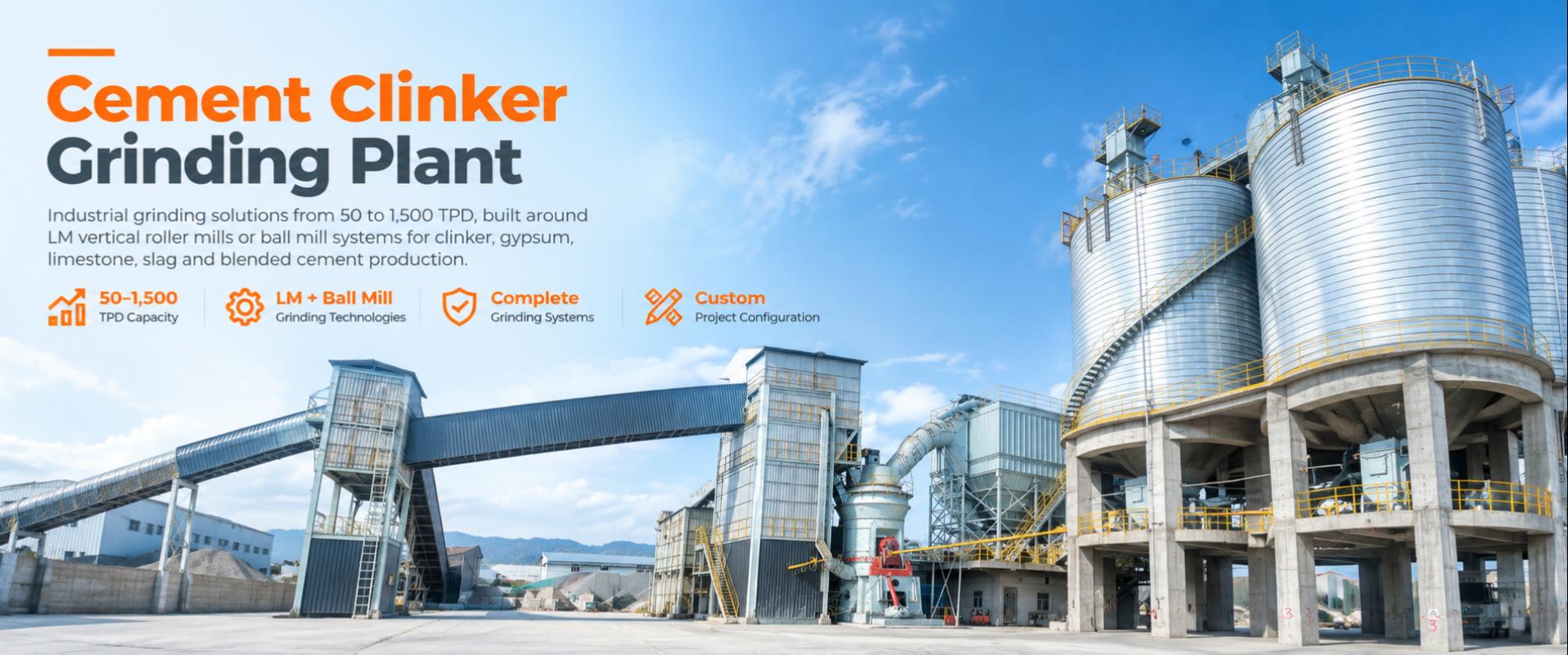
The cement clinker grinding process is the final major stage of cement production. During this process, cooled clinker is ground with gypsum and, depending on the required cement type, limestone, slag, fly ash, pozzolan, or other suitable mineral additives. The resulting fine powder is finished cement, ready for storage, packing, bulk loading, and dispatch.
The grinding process has a direct effect on cement fineness, particle size distribution, strength development, setting behavior, production capacity, power consumption, and operating cost. Liming Heavy Industry provides cement grinding solutions based on the LM Vertical Roller Mill and cement ball mill. For complete clinker production projects, rotary kilns and calcining kilns can also be supplied with related material handling, dust collection, storage, and automation systems.
What Is Cement Clinker?
Cement clinker is the intermediate product produced during high-temperature cement manufacturing. It is formed when properly proportioned raw materials are heated, calcined, and sintered in a rotary kiln. After leaving the kiln, the hot clinker is cooled and stored before it is sent to the cement grinding plant.
Clinker usually consists of hard nodules of varying sizes. It cannot be used directly as finished cement because it must first be ground into a fine powder. During grinding, gypsum is added to regulate cement setting behavior. Suitable mineral additives such as limestone, slag, fly ash, and pozzolan may also be added to produce blended cement products with different performance characteristics. [36][41]
Cement Grinding Process Flow
A standard cement clinker grinding process is designed as a coordinated system. It begins with raw-material receiving and ends with finished cement stored in silos for bagging or bulk dispatch.
Clinker receiving and storage.
Gypsum and additive storage.
Material weighing and proportioning.
Clinker grinding in an LM Vertical Roller Mill or cement ball mill.
Classification of fine and coarse material.
Dust collection and finished-cement recovery.
Conveying of finished cement to storage silos.
Cement packing, bulk loading, and dispatch.
Step 1: Clinker Receiving and Storage
Clinker may be supplied from an on-site clinker production line, an external cement producer, a port terminal, railway transport, or truck delivery. Before grinding, clinker is stored in a clinker silo, clinker hall, warehouse, or other suitable storage system.
Storage capacity should be designed according to production demand, clinker supply reliability, transport conditions, and planned maintenance periods. Adequate storage helps maintain continuous grinding operation when there are delivery interruptions or fluctuations in kiln production.
Clinker size affects grinding performance. Large clinker nodules may require crushing or pre-crushing before they enter the grinding mill. Controlling clinker size helps maintain stable mill feeding and reduces the risk of overload, excessive vibration, and reduced grinding efficiency. Clinker size distribution is also an indicator that can influence grinding performance and cement quality. [40]
Step 2: Gypsum and Additive Preparation
Gypsum is normally added during cement grinding to control the setting behavior of the finished cement. Without sufficient gypsum control, cement can set too quickly because of reactions involving clinker phases such as tricalcium aluminate. Gypsum is therefore an important part of the cement formulation and must be accurately proportioned. [36]
Depending on the target product, clinker can also be ground with limestone, granulated blast-furnace slag, fly ash, natural pozzolan, or other suitable mineral additives. These materials are used to produce blended cement and may influence cement strength development, workability, durability, heat of hydration, product cost, and carbon intensity.
Each material should be stored separately and delivered through a controlled dosing system. Belt weigh feeders, screw feeders, rotary feeders, and other proportioning equipment help maintain the required material ratio. Stable dosing is important because changes in clinker content, gypsum dosage, or additive proportion can affect cement quality and mill operation.
Step 3: Material Dosing and Feeding
Before entering the mill, clinker, gypsum, and additives are measured according to the required cement recipe. The proportioned materials are then conveyed to the grinding system through belt conveyors, screw conveyors, bucket elevators, air slides, or other suitable material-handling equipment.
The feeding system must deliver a stable material flow. Large fluctuations in feed rate can reduce production capacity, increase power consumption, create mill vibration, affect separator performance, and cause inconsistent cement fineness. Automated weighing and PLC-based controls help maintain stable feed proportions throughout the production process.
Grinding aids may be added near the mill inlet in suitable applications. These additives can help reduce particle agglomeration, improve material flow, increase grinding efficiency, and support production stability. Their use and dosage should be determined according to the clinker characteristics, grinding technology, cement formulation, and finished-product requirements. [35][37]
Step 4: Clinker Grinding
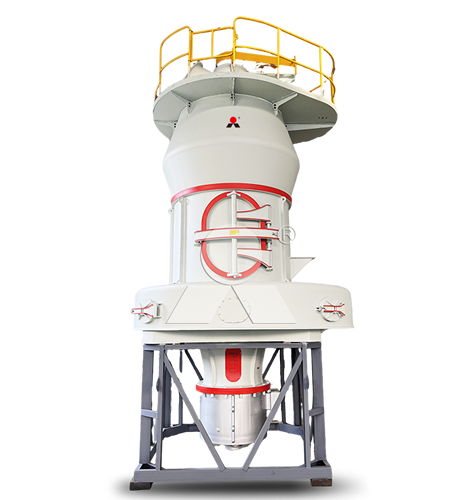
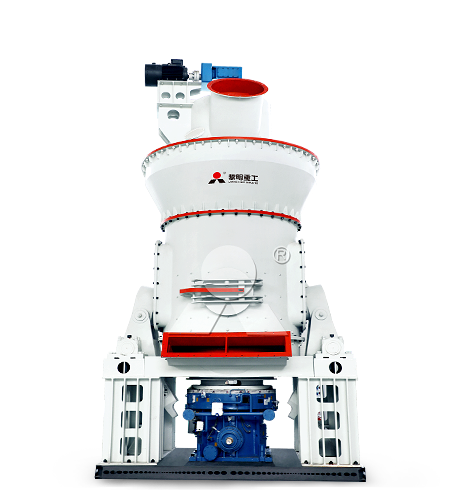
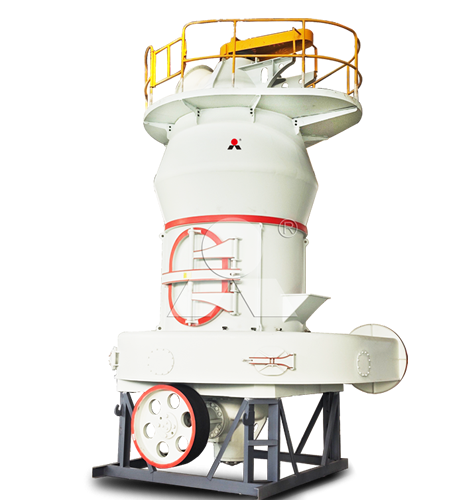
The central stage of the process is the grinding of clinker and additives into fine cement powder. Liming Heavy Industry recommends the LM Vertical Roller Mill and cement ball mill as the primary equipment solutions for cement clinker grinding.
LM Vertical Roller Mill Grinding Process
In an LM Vertical Roller Mill, the mixed material enters the mill and falls onto the center of a rotating grinding table. Centrifugal force moves the material outward across the table. Grinding rollers apply pressure to the material bed, reducing particle size through compression and shearing.
Process air carries fine ground material upward to the integrated dynamic classifier. The classifier separates particles according to the required cement fineness. Qualified fine cement leaves the mill with the gas stream and is collected by the dust-control system. Coarse material is rejected by the classifier and returns to the grinding table for additional grinding.
The LM Vertical Roller Mill combines grinding and classification in a compact vertical process arrangement. Where appropriate hot gas is available, it can also support simultaneous drying and grinding of materials with moisture. This makes it suitable for clinker grinding and blended cement applications involving limestone, slag, fly ash, and other suitable additions.
Cement Ball Mill Grinding Process
In a cement ball mill, clinker, gypsum, and additives enter a horizontal rotating cylinder containing steel grinding media. As the mill rotates, the grinding balls are lifted by the liners and then fall or cascade onto the material. The combined action of impact, friction, and attrition reduces the material into fine powder.
Many cement ball mills use two grinding compartments. The first compartment generally contains larger grinding media for coarse size reduction, while the second compartment uses smaller media for fine grinding. A diaphragm separates the compartments and controls material movement through the mill.
After leaving the ball mill, the ground material is usually sent to a separator. Fine particles that meet the required cement fineness are collected as finished product, while coarse particles are returned to the mill for further grinding. This arrangement is called closed-circuit grinding. Modern cement grinding circuits commonly use this mill-and-classifier loop to control product quality and avoid unnecessary overgrinding. [41]
Step 5: Classification and Fineness Control
Classification separates fine cement from coarse particles after or during grinding. Accurate classification is essential because cement fineness has a major influence on cement performance, mill output, and specific power consumption.
In an LM Vertical Roller Mill, classification is integrated into the mill system through a dynamic classifier. In a cement ball mill circuit, a separate high-efficiency separator is normally installed after the mill. The separator uses airflow and rotor speed to distinguish fine particles from coarse particles.
Fine material moves to the product collection system. Coarse material, often called separator reject, returns to the grinding machine for further size reduction. If too much fine material is returned to the mill, the plant may consume unnecessary energy. If too much coarse material enters the finished product, cement fineness and performance may not meet the required specification.
Cement grinding typically reduces clinker from nodules measuring several millimeters to fine powder in which most particles are below several dozen micrometers. The required Blaine fineness and residue target depend on the cement type, clinker characteristics, local cement standard, and required strength performance. [41]
Step 6: Dust Collection and Process Air Handling
Grinding and material transfer generate dust, so an effective dust-control system is required throughout the cement grinding plant. Bag filters are commonly used to collect fine cement particles from mill outlets, separators, transfer points, silo vents, packing machines, and bulk loading systems.
In addition to environmental control, dust collection is part of the production process because collected fine material can be recovered and returned to the finished cement stream. Poor filter performance can reduce process airflow, increase mill pressure, affect separator efficiency, create dust leakage, and reduce production stability.
Process fans, ducts, dampers, air slides, and filtration equipment must be correctly sized and maintained. In vertical roller mill systems, airflow is especially important because it transports material through the mill and classifier. In ball mill systems, ventilation helps remove heat and transport material through the grinding circuit.
Step 7: Cement Storage and Dispatch
After classification and dust collection, finished cement is conveyed to storage silos. Cement silos provide storage capacity between grinding, quality confirmation, packing, and dispatch. They may include aeration systems, level indicators, discharge equipment, dust filters, and blending arrangements.
Finished cement can be dispatched in bags or as bulk cement. Bagged cement is produced through a packing machine and transferred through conveyors to truck loading areas, warehouses, or palletizing systems. Bulk cement is loaded directly from silos into bulk trucks, railcars, ships, or terminal systems.
The capacity of the packing line and bulk loading system should be matched with grinding output. A grinding plant can lose production efficiency if finished cement cannot be transferred, stored, or dispatched quickly enough.
LM Vertical Roller Mill vs Cement Ball Mill
| Factor | LM Vertical Roller Mill | Cement Ball Mill |
|---|---|---|
| Grinding mechanism | Compression and shearing between grinding rollers and a rotating table | Impact and attrition from steel grinding media |
| Classification | Integrated dynamic classifier | Normally uses a separate separator in a closed circuit |
| Plant layout | Compact vertical process configuration | Conventional horizontal grinding circuit |
| Grinding media | Does not use a large steel-ball charge for primary grinding | Requires steel grinding balls and regular media management |
| Moisture handling | Can support drying and grinding when suitable hot gas is available | May require separate drying arrangements for higher-moisture materials |
| Maintenance focus | Grinding rollers, grinding table, classifier, hydraulic system, gearbox, and wear parts | Grinding balls, liners, diaphragms, bearings, gears, lubrication system, and separator |
| Suitable applications | New grinding plants, compact layouts, blended cement production, and integrated process design | Conventional grinding systems, capacity upgrades, and sites with existing ball mill infrastructure |
There is no universal answer to which grinding technology is better. An LM Vertical Roller Mill may be suitable for projects seeking integrated grinding and classification in a compact layout. A cement ball mill may be a practical solution for conventional grinding circuits, particularly when existing infrastructure, operating experience, and maintenance resources support its use.
Key Process Parameters
Efficient cement clinker grinding requires stable control of the complete system. Operators should monitor process data continuously to maintain production capacity, product fineness, equipment reliability, and energy efficiency.
Clinker feed size, hardness, grindability, chemical composition, and moisture content.
Gypsum and additive proportions in the cement formulation.
Mill feed rate and feed stability.
Grinding pressure, material-bed condition, and vibration for LM Vertical Roller Mill operation.
Grinding-media charge, liner condition, diaphragm condition, and ventilation for ball mill operation.
Separator rotor speed, airflow, circulation load, and separation efficiency.
Finished cement fineness, Blaine value, residue, particle size distribution, and temperature.
Mill motor power, specific energy consumption, fan power, and total plant electricity use.
Bag filter differential pressure, process-air volume, and dust-collection efficiency.
Cement silo inventory, packing capacity, bulk loading capacity, and dispatch performance.
Integrated Clinker Production and Grinding
For an integrated cement project, cement grinding is connected directly with clinker production. Raw materials are crushed, proportioned, ground into raw meal, preheated, calcined, and processed in a rotary kiln to produce clinker. The clinker is then cooled, stored, and sent to the cement grinding plant.
Liming Heavy Industry can provide rotary kilns and calcining kilns for suitable clinker production and industrial calcination applications. A rotary kiln is the central thermal-processing unit used to produce clinker from prepared raw meal. The final kiln system should be selected according to required capacity, raw-material chemistry, fuel type, thermal efficiency target, environmental requirements, and available project infrastructure.
Coordinating kiln output, clinker storage capacity, grinding capacity, cement silos, and packing or bulk dispatch capacity is essential for stable plant operation. The clinker line and cement grinding line should be designed to prevent bottlenecks and maintain sufficient clinker inventory during maintenance periods or market-demand changes.
Conclusion
The cement clinker grinding process transforms clinker, gypsum, and mineral additives into finished cement through material storage, proportioning, grinding, classification, dust collection, storage, and dispatch. Every stage affects cement quality, production capacity, power consumption, and operating cost.
Liming Heavy Industry provides LM Vertical Roller Mill and cement ball mill solutions for cement clinker grinding. The LM Vertical Roller Mill offers an integrated grinding and classification arrangement, while the cement ball mill remains a proven option for conventional closed-circuit grinding systems. Rotary kilns, calcining kilns, and supporting equipment can also be supplied for integrated clinker production and complete cement plant projects.
Related Cement Clinker Grinding Plant


LIMING at MiningMetals Uzbekistan 2026 | Booth B94
2026-10-22

LIMING Heavy Industry at MINEXPO Africa 2026 | Booth 133
2026-10-22
Liming Heavy Industry to Exhibit at bauma CHINA 2026 – Visit Us at Booth E6.510
2026-10-15
Meet Liming Heavy Industry at the 140th Canton Fair 2026
2026-10-13
Liming Heavy Industry to Attend the 140th Canton Fair
2026-09-25
Complete Mineral Processing Solutions
Convenient Reliable Professional Efficient Get Your Quote
Please feel free to submit your inquiry information to us. We will contact with you as soon as possible.
Our team will contact you as soon as possible.