


The cost of a barite grinding plant depends on the required finished powder, production capacity, raw-material condition, and the completeness of the processing system. The grinding mill is the central investment, but crushers, feeding equipment, drying, classification, powder collection, storage, packing, electrical control, installation, and civil works can substantially affect the total project cost.
A reliable budget should be based on the cost per tonne of qualified barite powder over the plant’s operating life—not only on the initial purchase price of the main mill. For standard medium-scale barite powder production, an MTW European Grinding Mill is generally the proportionate choice. For high-capacity projects that require integrated drying, grinding, classification, and conveying, an LM Vertical Mill is more suitable.
What Makes Up the Plant Cost?
A complete barite grinding plant includes several connected process sections. Each section must be sized to match the mill’s sustainable output and the final product specification.
| Plant Section | Typical Equipment | Main Cost Driver |
|---|---|---|
| Raw-material receiving | Receiving hopper, feeder, conveyor, covered storage area | Ore delivery method, storage capacity, moisture protection, and site layout |
| Crushing and screening | Jaw crusher, secondary crusher, vibrating screen, belt conveyors | Maximum raw ore size, required mill-feed size, hardness, and plant capacity |
| Feed storage and dosing | Mill-feed silo, bucket elevator, screw conveyor, rotary valve, variable-speed feeder | Required continuous feed rate, buffer-storage time, and dust-control arrangement |
| Drying system | Hot-air furnace, burner, ducts, temperature-control equipment, insulation | Feed moisture, target product moisture, heat source, local fuel availability, and capacity |
| Grinding and classification | MTW European Grinding Mill or LM Vertical Mill, classifier, motors, lubrication system | Target capacity, finished fineness, particle-size distribution, and raw-material grindability |
| Powder collection | Cyclone collector, pulse dust collector, induced-draft fan, ducts, rotary valves | System air volume, powder fineness, dust-control requirement, and collection efficiency |
| Finished-product storage | Powder silos, air slides, screw conveyors, discharge valves, level sensors | Number of product grades, storage duration, dispatch schedule, and powder-flow properties |
| Packaging and loading | Valve-bag packer, jumbo-bag station, palletizing system, bulk-loading spout | Bag type, loading speed, labor arrangement, and customer delivery format |
| Electrical and control | Electrical cabinets, PLC system, sensors, drives, instrumentation, cable system | Installed power, automation level, safety interlocks, data collection, and remote support requirements |
| Installation and civil work | Foundations, steel structure, workshop, utilities, installation tools, commissioning services | Site conditions, building height, transport access, local construction requirements, and plant scale |
The main lesson is that a grinding mill quotation is not the same as a turnkey plant quotation. A low main-mill price may exclude crushing, drying, dust collection, storage, packaging, installation, and the utilities needed to operate the line.
Capacity Is a Major Cost Driver
Plant capacity changes the size and cost of nearly every item. A line producing 6 tonnes per hour of 200–325 mesh barite powder requires a different mill, motor, fan, dust collector, feed silo, finished-product silo, packing station, and electrical system than a line producing 30–50 tonnes per hour.
Capacity should be calculated as sustained qualified product output. The equipment must maintain the required tonnage while meeting the agreed fineness, particle-size distribution, and moisture specification. A system may process a high tonnage of feed material but deliver less qualified powder if classification is poor or if too much material is returned for regrinding.
| Project Scale | Typical Grinding Route | Configuration Priority |
|---|---|---|
| Small to medium output | MTW European Grinding Mill | Practical equipment investment, flexible operation, conventional powder grades, and straightforward packing |
| Medium output with multiple standard grades | MTW European Grinding Mill with expanded storage and controlled feeding | Stable classification, product-silo management, reliable dust collection, and flexible dispatch |
| Large continuous output | LM Vertical Mill | Integrated drying, grinding, classification, conveying, centralized automation, and high-capacity storage and loading |
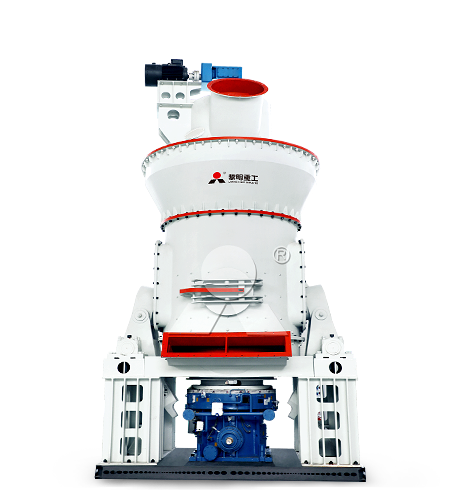
Liming Heavy Industry identifies the MTW European Type Mill as the usual solution for a 6 t/h barite line producing 200–325 mesh powder. The LM Vertical Mill is intended for larger integrated production, with the manufacturer listing a nominal range of 10–400 t/h and approximately 20–400 mesh depending on material and final configuration.
As capacity rises, the cost increase is not limited to the mill. It also includes larger foundations, higher installed electrical power, greater airflow capacity, larger dust collectors, higher-volume finished-product storage, and faster packing or bulk-loading equipment.
Raw Barite Quality Affects Investment
Raw-material conditions have a direct impact on both capital cost and long-term operating cost. Two plants producing the same 325-mesh barite powder may need different configurations because one receives clean, dry, consistently sized barite and the other processes wet, variable, or impurity-rich ore.
Feed Size
Large barite blocks require crushing and screening before grinding. The crushing section may include a receiving hopper, vibrating feeder, jaw crusher, secondary crusher, screen, conveyors, and buffer storage. The larger the incoming ore and the higher the required plant capacity, the more robust this section must be.
Stable, correctly sized mill feed reduces overload risk and helps the grinding system maintain a consistent output. If the feed is already crushed to the required size, the initial investment in the upstream section can be lower.
Moisture
High moisture may require a hot-air drying system. This adds a heat source, burner or furnace, ducts, insulation, temperature monitoring, fan capacity, and fuel-handling equipment. It also increases operating cost through fuel or electricity consumption.
For high-capacity barite projects with drying requirements, the LM Vertical Mill can combine drying, grinding, classification, and conveying in one process. This integrated route can reduce duplicate handling stages compared with a separate drying and grinding arrangement when the plant is properly designed.
For MTW European Grinding Mill projects, hot air can be introduced into the grinding process when moisture control is needed. The design must balance incoming moisture, heat supply, system airflow, classifier performance, dust collection, and required finished-powder moisture.
Hardness, Abrasiveness, and Impurities
Barite can contain quartz, silica, calcite, clay, iron-bearing minerals, and other gangue materials. Hard or abrasive impurities increase wear on grinding parts, classifiers, ducts, valves, and conveying equipment. This affects both the initial choice of wear-resistant materials and the ongoing spare-parts budget.
High-whiteness, low-iron, or tightly controlled chemical-grade powder may require extra preparation equipment, such as magnetic separation, metal detection, washing, sorting, or beneficiation. These requirements increase the project scope but can be essential for producing a powder that meets customer specifications.
Fineness Changes the Configuration
Producing finer barite powder requires more grinding work and more precise classification. The same mill may produce a higher output at 200 mesh than at 325 mesh because the finer product requires longer grinding and more internal circulation.
| Finished Powder Requirement | Equipment and Cost Implication |
|---|---|
| Standard 200-mesh barite | Requires a conventional fine-grinding line with matched classification and collection equipment |
| 325-mesh barite | Requires stricter classifier control, more stable airflow, and may require a larger mill to maintain the same hourly output |
| Controlled particle-size distribution | Requires regular testing, accurate feed control, classifier adjustment, and sufficient circulation capacity |
| Low-moisture powder | May require hot-air drying, moisture monitoring, insulated ducts, and protected finished-product storage |
| High-whiteness or low-iron powder | May require improved raw-material screening, magnetic separation, enclosed conveying, and separate product storage |
For drilling-fluid use, the barite grinding line should be configured around the required particle-size distribution, density, and finished-product consistency. The mill should not simply be operated at the finest possible setting, because excessive ultrafine material can consume unnecessary energy and may not improve the product’s downstream performance.
Barite equipment-selection guidance identifies target fineness, particle-size distribution, production capacity, feed moisture, and raw-material characteristics as the primary variables in determining the appropriate grinding configuration.
LM Vertical Mill or MTW European Mill?
Both mills can form the core of a barite grinding plant, but they should be selected for different operating conditions.
| Selection Factor | LM Vertical Mill | MTW European Grinding Mill |
|---|---|---|
| Best-fit project | Large-scale and continuous barite powder production | Medium-scale, flexible production of conventional fine barite powder |
| Process arrangement | Integrated drying, grinding, classification, and pneumatic conveying | Grinding, air classification, collection, storage, and packing as a coordinated modular line |
| Moisture handling | Well suited to integrated drying for higher-moisture feed | Can include hot air for moderate moisture control |
| Typical powder range | Standard fine powder, approximately 20–400 mesh depending on configuration | Conventional fine powder, commonly 200–325 mesh for barite applications |
| Initial investment level | Usually higher because of larger capacity and integrated system requirements | Usually more proportionate for moderate-capacity projects |
| Plant layout | Compact integrated arrangement with fewer internal transfer stages | Practical arrangement with individual but coordinated process sections |
| Expansion approach | Strong choice for centralized high-capacity growth | Suitable for phased investment and gradual regional-market growth |
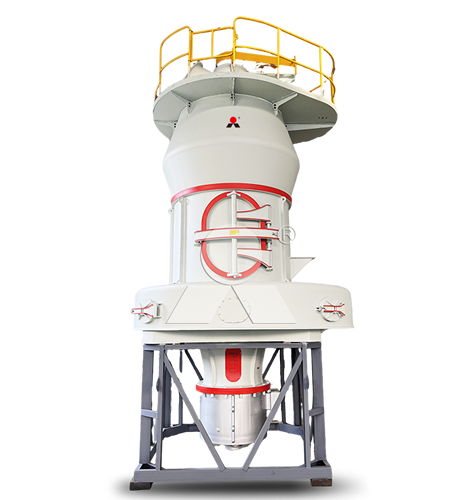
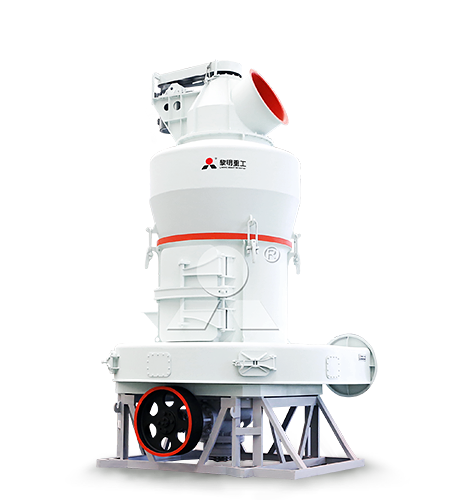
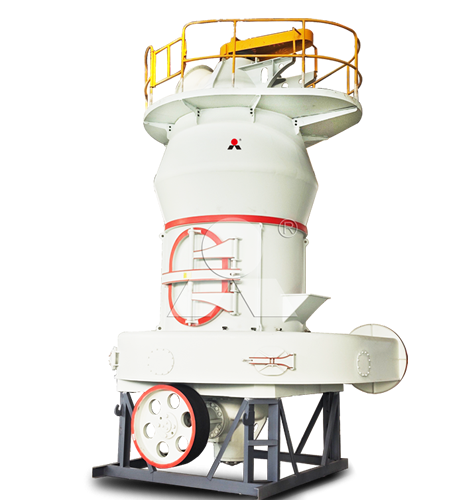
Liming Heavy Industry lists the MTW 6X European Grinding Mill with a capacity range of 6–50 t/h and a discharge fineness range down to 0.045 mm, depending on material and configuration. The correct model should be selected from actual raw-material test data and required qualified output rather than a nominal capacity figure alone.
Equipment Requirements by Plant Section
A practical barite grinding plant usually requires the following equipment groups.
Raw Material and Crushing Section
Receiving hopper and unloading arrangement.
Vibrating feeder for controlled material delivery.
Jaw crusher for primary size reduction.
Secondary crusher when the raw ore is large or the required feed size is smaller.
Vibrating screen for separating qualified mill feed from oversize material.
Belt conveyors, transfer chutes, and dust-control points.
Covered storage area when rain or humidity may affect feed moisture.
Grinding and Classification Section
MTW European Grinding Mill or LM Vertical Mill.
Mill-feed silo and controlled feeding equipment.
Bucket elevator, screw conveyor, or belt conveyor.
Magnetic separator or metal detector to protect grinding components.
Air classifier or internal separator.
Hot-air circuit when raw material requires drying.
Fans, ducts, valves, and airflow-control equipment.
Collection, Storage, and Dispatch Section
Cyclone collector for primary powder separation.
Pulse dust collector for fine-powder recovery and airflow management.
Rotary valves, screw conveyors, air slides, or enclosed powder-transfer systems.
Finished-product silos with level indication and controlled discharge.
Valve-bag packing machine for standard small bags.
Jumbo-bag filling station for industrial bulk packaging.
Bulk-loading equipment where tanker delivery is required.
Forklift access, palletizing area, and covered finished-goods storage.
Installation, Utilities, and Site Work
The installed plant cost includes more than process equipment. Civil work, utilities, building structure, and site engineering can form a significant share of the budget.
Important project requirements include:
Foundations designed for the mill, fans, silos, crushers, and vibrating equipment.
Steel structure or workshop building sized for equipment height and maintenance access.
Electrical transformer, distribution cabinets, motor-control equipment, cables, and grounding.
Heat source and fuel system where hot-air drying is required.
Compressed-air supply for pulse dust collectors, valves, and instrumentation.
Access for truck unloading, finished-product loading, crane service, and maintenance.
Dust-control measures at crushing, conveying, packing, and loading points.
Drainage, stormwater management, and covered storage where rain may affect the barite feed.
Site location can change project cost substantially. A remote location may require additional freight, equipment handling, spare-parts storage, installation support, power infrastructure, and personnel facilities. A compact site may require more detailed structural engineering and vertical material handling.
How to Control the Project Budget
Cost control should begin with a clearly defined production target. Avoid selecting equipment only by a low initial price or an oversized nameplate capacity. Instead, size each plant section around the same sustained qualified-powder output.
Useful budget-control practices include:
Test representative barite samples before selecting the mill and final configuration.
Define powder mesh, particle-size distribution, moisture, purity, whiteness, and capacity before requesting quotations.
Confirm whether the quotation includes crushing, screening, drying, dust collection, storage, packing, automation, electrical equipment, and installation services.
Compare electricity use, heat consumption, wear-parts cost, maintenance access, and expected output—not only equipment price.
Match the automation level to plant size, operating hours, and product-consistency requirements.
Allow adequate silo and packing capacity so the grinding mill does not stop because downstream handling becomes a bottleneck.
Plan for future expansion through reserved site space, electrical capacity, and product-storage capability where appropriate.
Published industry estimates for a full barite processing plant vary widely because beneficiation, drying, grinding, packaging, and local installation requirements differ substantially. One 2025 industry overview estimates complete barite processing plants with beneficiation at approximately USD 8 million to USD 25 million, illustrating why a turnkey plant must be evaluated as a full process scope rather than as a single grinding-mill purchase.
A barite grinding plant should therefore be configured from the final customer requirement backward: define the powder, evaluate the ore, determine sustained capacity, select the appropriate LM Vertical Mill or MTW European Grinding Mill, and then match every upstream and downstream system to that production target. This approach produces a more accurate investment estimate and a more dependable production line.
Related Barite Powder Processing


Liming Heavy Industry at bauma CONEXPO INDIA 2026 | Booth 5-C6
2026-09-07

Turnkey Raw Mill Cement Plant in Saudi Arabia: Design and Installation
2026-09-03
Cement Raw Mill Supplier in Indonesia: Cost and Configuration Analysis
2026-09-01
Liming Heavy Industry to Exhibit at the 24th Global Gypsum Conference & Exhibition in Turkey
2026-08-31
Complete Calcium Carbonate Grinding and Coating Plant Solution
2026-08-29
Complete Mineral Processing Solutions
Convenient Reliable Professional Efficient Get Your Quote
Please feel free to submit your inquiry information to us. We will contact with you as soon as possible.
Our team will contact you as soon as possible.