


Barite powder for drilling mud must meet more than a basic mesh requirement. The grinding system must produce a stable particle-size distribution, suitable density, low moisture, and consistent powder flow so that the finished material can function reliably as a weighting agent in drilling fluids.
For standard API drilling-mud barite in the 80–325 mesh range, the MTW European Grinding Mill is a suitable solution for many projects. For larger continuous-production plants with higher capacity and integrated drying requirements, the LM Vertical Mill provides a more complete grinding route. Liming Heavy Industry identifies MTW European Type equipment as suitable for 80–325 mesh API drilling-mud barite and notes that barite has a Mohs hardness of approximately 3–3.5 with relatively low abrasiveness.
Why Barite Is Used in Drilling Mud
Barite is primarily barium sulfate and has a high specific gravity compared with many common minerals. In drilling-fluid systems, it is added to increase mud density and provide hydrostatic pressure control during well construction.
A properly prepared barite powder helps the drilling fluid maintain the required density while remaining sufficiently pumpable and stable. If the barite is too coarse, it may settle more readily. If the powder contains too much ultrafine material, the drilling fluid may become more difficult to control and may require additional treatment.
For this reason, drilling-grade barite production is not simply a matter of grinding ore as fine as possible. The process must control the full particle-size distribution and maintain consistent quality from one production batch to the next.
Key Requirements for Drilling-Mud Barite
The final product should be developed around the customer’s drilling-fluid specification and the applicable industry standard. Important quality parameters normally include:
| Quality Requirement | Why It Matters |
|---|---|
| Specific gravity | Determines the ability of barite to increase drilling-fluid density |
| Particle-size distribution | Controls suspension behavior, settling tendency, rheology, and compatibility with the drilling-fluid system |
| Maximum coarse fraction | Limits oversized particles that may settle or affect fluid handling |
| Ultrafine fraction | Prevents excessive fine particles that may increase fluid viscosity or alter flow behavior |
| Moisture content | Influences powder flow, storage stability, packing, transport, and product consistency |
| Barium sulfate content | Indicates mineral quality and affects finished-product performance |
| Soluble salt and impurity control | Supports compatibility with the drilling-fluid formulation |
| Batch consistency | Helps drilling-fluid suppliers maintain predictable mixing and density-control performance |
API drilling-grade requirements are commonly evaluated through a combination of specific gravity, chemical composition, soluble alkaline-earth metals, and particle-size distribution. The process must therefore begin with qualified raw barite, because grinding alone cannot increase the specific gravity or remove unsuitable chemical characteristics from low-grade feed.
Target Fineness for Drilling Mud
Drilling-mud barite is commonly produced within the 80–325 mesh range, with 200 mesh and 325 mesh being frequent commercial references. The exact target depends on the customer’s product specification, regional practice, and the drilling-fluid formulation.
A nominal mesh value is useful for production planning, but it should not be used as the only acceptance criterion. Two powders described as 325 mesh can behave differently if one contains excessive coarse particles and the other contains too much ultrafine material.
| Powder Grade | Typical Use | Grinding Focus |
|---|---|---|
| 80–200 mesh barite | Selected drilling-fluid and industrial applications | Stable coarse-particle control and reliable production capacity |
| 200 mesh barite | Common drilling-mud weighting material | Efficient grinding, controlled sieve residue, and stable powder recovery |
| 325 mesh barite | Fine drilling-grade barite and industrial filler applications | Accurate classification, controlled particle-size distribution, and limited overgrinding |
For API-grade barite, the particle-size distribution commonly includes limits on both coarse and ultrafine material. Grinding and classification must be coordinated so that the system produces the agreed powder curve rather than only the required nominal mesh.
Raw Material Preparation
Stable drilling-grade powder begins with stable feed. Raw barite should be evaluated before plant design for barium sulfate content, specific gravity, moisture, hardness, impurities, and size distribution.
Barite ore can contain clay, quartz, calcite, iron-bearing minerals, silica, and other gangue. Depending on the deposit and finished-product requirement, the raw material may need washing, screening, gravity separation, sorting, or magnetic separation before it enters the grinding line.
Key preparation steps include:
Separate unsuitable low-density or impurity-rich material before grinding.
Remove metal fragments with a magnetic separator or metal detector.
Crush barite to a controlled feed size for stable mill operation.
Screen crushed material and return oversize particles for further crushing.
Use covered storage when rain or humidity can increase raw-material moisture.
Blend compatible ore batches when necessary to maintain stable chemical and physical properties.
Proper feed preparation reduces fluctuations in mill load, classifier performance, final powder fineness, and wear-part consumption. It also lowers the risk of producing off-specification drilling-grade material.
MTW European Grinding Mill Solution
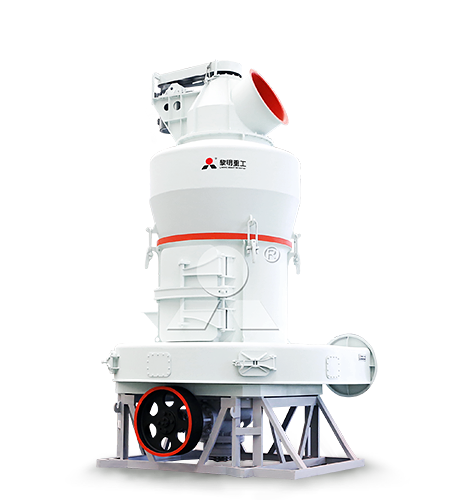
The MTW European Grinding Mill is a practical option for medium-scale drilling-mud barite production. It is particularly suitable for conventional barite grades from 80 mesh to 325 mesh, including common 200-mesh and 325-mesh products.
Crushed barite is delivered from the feed silo to the MTW grinding chamber through a controlled feeder. Grinding rollers press the material against the grinding ring, reducing it through compression and friction. Airflow then carries the powder upward to the classifier.
The classifier separates qualified fine powder from material that remains too coarse:
Powder meeting the required fineness moves with the airflow to the collection system.
Oversized particles return to the grinding zone for further reduction.
This closed-circuit process supports stable product quality because only qualified material proceeds to collection and finished-product storage. Cyclone collectors and pulse dust collectors recover the barite powder, while cleaned air leaves the system or returns through the controlled air circuit.
MTW European Grinding Mill is most appropriate when the drilling-grade barite project requires:
Standard 80–325 mesh barite powder.
Common 200-mesh or 325-mesh drilling-mud grades.
Medium production capacity.
Flexible operation for more than one conventional powder specification.
A practical line with separate crushing, grinding, classification, collection, storage, and packing sections.
Reliable production for regional drilling-fluid distributors or industrial mineral suppliers.
Liming Heavy Industry identifies MTW European Type equipment as the optimal pendulum-mill solution for 80–325 mesh API drilling-mud barite.
LM Vertical Mill Solution
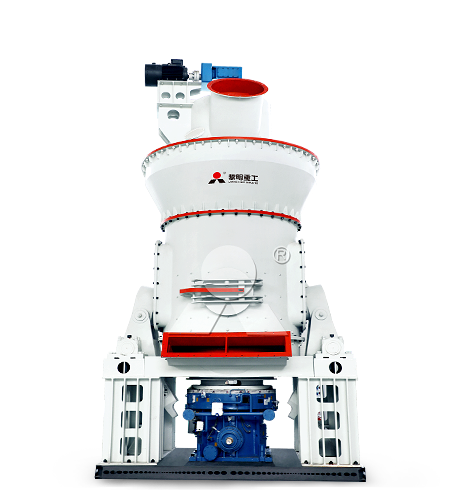
The LM Vertical Mill is better suited to high-capacity drilling-grade barite production where drying, grinding, classification, and conveying should operate as one integrated system. This arrangement is valuable when the plant must run for long hours, supply large powder volumes, or process barite with moisture that requires controlled drying.
Crushed barite is fed onto the rotating grinding table. Rollers apply pressure to the material bed, reducing particle size through compression and shear. When required, hot air enters the mill to remove moisture while transporting fine particles upward to the internal separator.
The separator sends qualified powder to the collection system and returns coarse particles to the grinding table. This continuous internal circulation supports a stable grinding process and helps prevent oversized material from entering the finished-powder silo.
| LM Vertical Mill Feature | Value for Drilling-Mud Barite |
|---|---|
| Integrated drying | Helps process feed containing moisture without relying on a separate drying stage in suitable projects |
| Continuous grinding | Supports high-output operation for large-volume drilling-fluid supply |
| Internal classification | Separates qualified powder and returns coarse material for regrinding |
| Pneumatic conveying | Moves qualified fine powder efficiently toward collection equipment |
| Centralized process control | Helps coordinate feeding, airflow, separator settings, and grinding conditions |
| Compact integrated route | Can reduce intermediate material-transfer points in a high-capacity plant layout |
The LM Vertical Mill should be selected when drilling-grade barite production requires high sustained output, moisture control, long operating hours, and a centralized powder-processing system. It is less appropriate when the required capacity is modest and a flexible MTW-based line can meet the finished-powder specification more proportionately.
Recommended Process Configuration
A drilling-mud barite grinding plant should be configured from raw ore quality through final dispatch. A typical flow is:
Raw barite receiving → quality inspection → beneficiation or impurity removal when required → crushing → screening → mill-feed silo → controlled feeding → drying and grinding → air classification → powder collection → finished-product silo → packing or bulk loading.
| Process Stage | Main Equipment | Function |
|---|---|---|
| Raw material handling | Receiving hopper, feeder, conveyors, covered storage | Receives and stores barite while protecting it from contamination and excess moisture |
| Preparation | Crusher, screen, magnetic separator, washing or beneficiation equipment when required | Produces clean, correctly sized feed for grinding |
| Feeding | Feed silo, bucket elevator, controlled feeder | Maintains a continuous and stable material flow to the mill |
| Grinding | MTW European Grinding Mill or LM Vertical Mill | Reduces barite to the required fine-powder range |
| Drying | Hot-air system where required | Controls material moisture and improves grinding and powder-flow stability |
| Classification | Air classifier or internal separator | Controls finished-powder particle size and returns oversize material for regrinding |
| Collection | Cyclone collector, pulse dust collector, fan, rotary valves | Recovers fine powder and maintains stable airflow through the grinding circuit |
| Storage and delivery | Finished-product silos, bagging system, jumbo-bag station, bulk loader | Stores drilling-grade barite separately and prepares it for shipment |
For high-volume drilling-fluid customers, bulk tanker loading or jumbo-bag filling may be more efficient than small-bag packing. For distributors and containerized export shipments, 25 kg or 50 kg valve bags may be the preferred option. The packing system should be selected according to the customer’s unloading method and transport arrangement.
Control Points During Production
Consistent drilling-grade barite depends on systematic control at every stage. The most important operating points include:
Raw barite specific gravity and chemical composition.
Feed moisture, feed size, and feed-rate stability.
Crusher discharge size and screening efficiency.
Mill load, grinding pressure, vibration, and operating temperature.
Hot-air temperature and drying capacity when moisture control is required.
Classifier speed and airflow volume.
Finished-powder particle-size distribution and sieve residue.
Powder moisture after collection.
Dust-collector pressure and filter-cleaning performance.
Finished-product silo management to prevent mixing between grades or batches.
Routine laboratory testing should be linked to production adjustments. If the product contains excessive coarse particles, the classifier setting, airflow, feed rate, and grinding condition should be reviewed. If the product contains too much ultrafine material, the plant should avoid simply increasing grinding intensity; it should first verify whether the classifier setting is stricter than the product requirement.
Selecting the Right Solution
| Project Condition | Recommended Solution | Reason |
|---|---|---|
| 80–325 mesh drilling-mud barite at moderate capacity | MTW European Grinding Mill | Provides a practical closed-circuit grinding and classification route for conventional drilling-grade powder |
| 200-mesh or 325-mesh powder for regional drilling-fluid supply | MTW European Grinding Mill with crushing, classification, dust collection, and packing system | Supports flexible production of standard grades with controlled fineness |
| High-output drilling-grade production with wet feed | LM Vertical Mill with integrated hot-air system | Combines drying, grinding, classification, and conveying for large continuous production lines |
| High-purity or high-specific-gravity drilling barite | Grinding system plus appropriate ore preparation or beneficiation | Final quality depends on the raw ore as well as grinding performance |
| Multiple product grades and large-volume bulk dispatch | LM Vertical Mill or expanded MTW line, depending on capacity | Requires sufficient silo capacity, grade separation, automated controls, and high-throughput loading equipment |
The correct drilling-mud barite solution starts with raw-material testing and a clear finished-product specification. An MTW European Grinding Mill is an effective choice for conventional 80–325 mesh drilling-grade powder at moderate capacity. An LM Vertical Mill is the preferred route when production scale, feed moisture, integrated processing, and continuous operation require a larger and more centralized grinding plant.
Related Barite Powder Processing


Liming Heavy Industry at bauma CONEXPO INDIA 2026 | Booth 5-C6
2026-09-07

Turnkey Raw Mill Cement Plant in Saudi Arabia: Design and Installation
2026-09-03
Cement Raw Mill Supplier in Indonesia: Cost and Configuration Analysis
2026-09-01
Liming Heavy Industry to Exhibit at the 24th Global Gypsum Conference & Exhibition in Turkey
2026-08-31
Complete Calcium Carbonate Grinding and Coating Plant Solution
2026-08-29
Complete Mineral Processing Solutions
Convenient Reliable Professional Efficient Get Your Quote
Please feel free to submit your inquiry information to us. We will contact with you as soon as possible.
Our team will contact you as soon as possible.