


The price of a barite grinding mill is determined by the complete production requirement, not by the main machine alone. Required capacity, finished-powder fineness, raw-material moisture, process configuration, automation level, wear protection, dust collection, storage, and packing equipment all influence the final investment.
A properly sized system is usually more economical than selecting the lowest initial price. A mill that cannot maintain the required output, product fineness, or operating stability may create higher costs through excessive electricity use, frequent maintenance, powder losses, and production interruptions.
Mill Type Has the Largest Effect
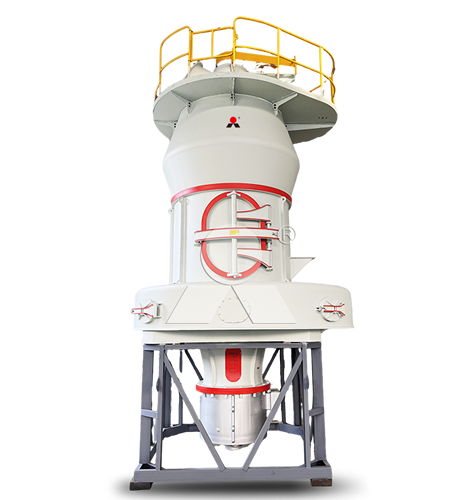
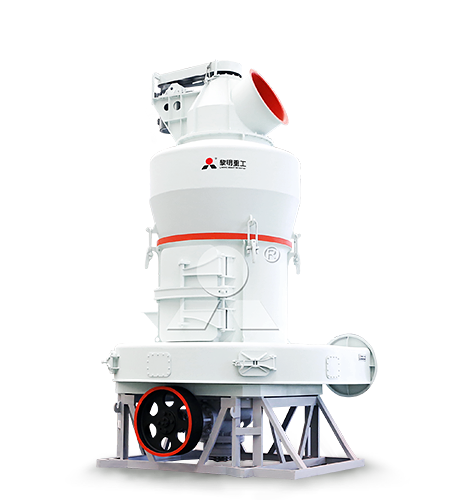
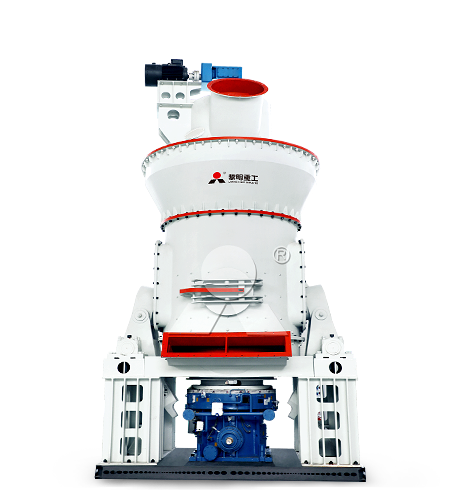
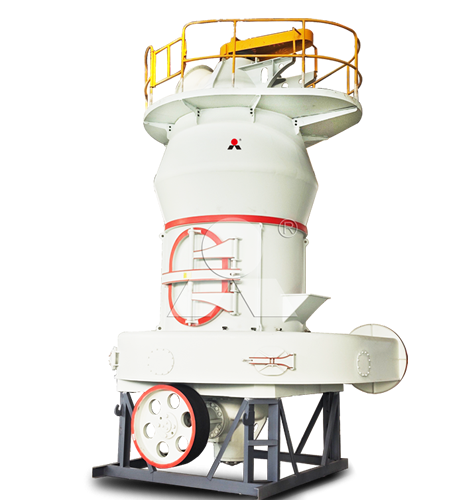
For barite fine-powder production, the main equipment choice is generally between an MTW European Grinding Mill and an LM Vertical Mill. Their investment levels differ because they are designed for different production scales and process arrangements.
| Grinding Solution | Typical Project Position | Main Cost Characteristics |
|---|---|---|
| MTW European Grinding Mill | Medium-scale production of conventional barite powder | Suitable for flexible 200–325 mesh production with a practical grinding, classification, collection, and packing arrangement |
| LM Vertical Mill | Large-scale, continuous barite powder production | Higher system investment is generally associated with integrated drying, grinding, classification, conveying, automation, and larger production capacity |
The MTW European Grinding Mill is often selected for standard barite powder such as 200 mesh and 325 mesh, particularly where the project requires moderate capacity and flexible grade adjustment. Liming Heavy Industry identifies MTW as the typical choice for a 6 t/h barite line producing 200–325 mesh powder.
The LM Vertical Mill is more appropriate when the project requires high output, long operating hours, integrated drying, and centralized continuous production. Liming Heavy Industry lists the LM Vertical Mill with an overall capacity range of 10–400 t/h and a standard fineness range of approximately 20–400 mesh, depending on material and configuration.
Capacity Changes the Equipment Size
Production capacity is one of the largest price drivers. A plant designed to produce 5–10 tonnes per hour uses a different mill model, motor size, fan system, classifier, dust collector, conveying system, silo arrangement, and packing configuration than a plant designed for 30–50 tonnes per hour.
Capacity should be defined as sustained qualified powder output, not only as the maximum throughput of the grinding chamber. The required output must be evaluated under real production conditions, including barite hardness, feed size, feed moisture, target fineness, daily operating hours, and expected availability.
When capacity increases, the investment usually rises in several areas at the same time:
Larger main mill and higher installed motor power.
Higher-capacity crusher, screen, conveyor, and bucket elevator.
Larger mill-feed silo and more robust controlled-feeding system.
Higher-volume hot-air circuit when drying is needed.
Larger classifier, main fan, ducts, cyclone collector, and pulse dust collector.
More finished-product storage capacity.
Faster bagging, jumbo-bag filling, or bulk-loading equipment.
Stronger electrical, control, structural, and civil-work requirements.
A high-capacity mill without matched supporting equipment cannot achieve its intended output. For this reason, the price review should include the entire processing line rather than the mill body alone.
Fineness and Powder Quality Affect Cost
Finer barite powder generally requires more grinding work, tighter classification, longer material residence time, and higher energy consumption. A mill producing 200-mesh barite may achieve a different output than the same mill producing 325-mesh powder from the same raw material.
The final product requirement should define more than a single mesh value. It should include the expected particle-size distribution, maximum sieve residue, moisture, whiteness where relevant, and impurity limits.
| Powder Requirement | Effect on System Cost |
|---|---|
| Standard 200-mesh barite | Usually requires a conventional fine-grinding and classification configuration |
| 325-mesh barite | Requires more precise classification and may reduce output compared with a coarser product |
| Tightly controlled particle-size distribution | May require more accurate classifier adjustment, product testing, process control, and separate storage management |
| High-whiteness or low-contamination powder | May require improved raw-material selection, iron removal, cleaner conveying, protected storage, and stricter quality control |
| Low-moisture finished powder | May require a hot-air source, drying-air circuit, insulated ducts, and additional heat-control equipment |
For drilling-fluid barite, product quality should be evaluated by the full particle-size distribution and applicable density requirements, not only by a nominal mesh. The cost of the grinding system may increase when the project requires more stable control of coarse particles, ultrafine particles, moisture, and product consistency.
Industry guidance for barite mill selection notes that required fineness and particle-size distribution are primary equipment-selection factors, and that capacity changes as the target powder becomes finer. It also highlights the importance of using barite-specific or comparable material data when evaluating actual output.
Raw Barite Condition Matters
Two projects producing the same finished barite powder may require different equipment investments because their raw materials are different. A clean, dry, uniformly crushed barite feed is easier to process than wet, variable, or contaminated ore.
Feed Size
If raw barite arrives as large blocks, the plant requires a stronger crushing and screening section. This may include a vibrating feeder, jaw crusher, secondary crusher, vibrating screen, conveyors, and a feed-storage system. If the feed is already crushed to a size suitable for the mill, the upstream investment can be lower.
Moisture
Moisture affects both equipment selection and energy demand. High-moisture barite may cause material buildup in hoppers, chutes, mills, classifiers, and dust-collection equipment. A drying system may therefore be required.
The LM Vertical Mill can integrate hot-air drying with grinding and classification, making it suitable for higher-capacity projects with moisture-control requirements. The MTW European Grinding Mill can also use a hot-air circuit where necessary, but the air system must be matched carefully to the material moisture and target output.
Hardness and Abrasiveness
Barite itself is relatively soft, but the ore may contain abrasive quartz, silica, iron-bearing minerals, or hard gangue. These impurities increase wear on rollers, grinding rings, tables, liners, classifier parts, ducts, and valves.
Higher abrasiveness can increase the initial cost of wear-resistant components and the long-term budget for spare parts. It also makes raw-material testing more important before selecting the mill model and confirming the expected maintenance interval.
Impurities and Contamination Control
If the finished powder requires high whiteness, low iron content, or controlled chemical composition, the line may need additional equipment such as magnetic separation, metal detection, washing, sorting, or beneficiation before grinding. Enclosed conveying and dedicated silos may also be required to prevent cross-contamination between product grades.
Supporting Equipment Is Part of the Investment
A grinding mill alone cannot produce market-ready barite powder. The plant requires supporting equipment to feed the mill continuously, control product fineness, recover powder, store it safely, and prepare it for delivery.
| Plant Section | Typical Equipment | Why It Influences Cost |
|---|---|---|
| Raw-material receiving | Hoppers, feeders, conveyors, covered storage | Determined by ore delivery method, stockpile volume, and moisture protection requirements |
| Crushing and screening | Jaw crusher, secondary crusher, vibrating screen, belt conveyors | Depends on maximum rock size and the mill’s feed-size requirement |
| Feed control | Feed silo, rotary valve, electromagnetic feeder, variable-speed feeder | Stable feeding improves output and reduces operating fluctuations |
| Drying system | Hot-air furnace, burner, ducts, temperature-control equipment | Required when raw barite moisture exceeds the suitable processing range |
| Grinding and classification | MTW European Grinding Mill or LM Vertical Mill, classifier, motors, lubrication system | The main production core; selected according to capacity, fineness, and operating mode |
| Powder collection | Cyclone collector, pulse dust collector, fan, ducts | Must match airflow volume and protect powder recovery and plant cleanliness |
| Finished-product storage | Powder silos, screw conveyors, air slides, discharge valves | Depends on product variety, dispatch frequency, and storage duration |
| Packaging and loading | Valve-bag packer, jumbo-bag filler, palletizing system, bulk loader | Selected according to customer delivery format and loading volume |
| Control system | Electrical cabinets, sensors, PLC system, instrumentation | Higher automation improves process stability but increases initial investment |
For a medium-scale MTW line, the supporting systems may be arranged as separate but coordinated modules. For an LM Vertical Mill plant, many core functions are integrated, but the crushing, feeding, collection, storage, electrical, and dispatch sections must still be correctly sized.
Automation Level Changes Both Price and Operation
Automation affects the initial investment, but it can improve operating consistency when the plant runs for long hours or produces multiple powder grades. A basic configuration may use local controls and manual adjustment. A more advanced system can coordinate material feed, grinding load, hot-air temperature, fan operation, separator speed, dust collection, and alarm functions.
Higher automation is particularly useful when product consistency is important. Stable control of feed rate, airflow, classifier speed, and mill load reduces the risk of producing off-specification powder. It can also help operators identify abnormal conditions before they lead to major downtime.
| Control Level | Typical Configuration | Best Fit |
|---|---|---|
| Basic control | Local start-stop control, manual operating adjustments, standard protection devices | Smaller plants with one main product and experienced on-site operators |
| Coordinated control | Central electrical cabinet, interlocks, variable-speed feeding, monitored fan and classifier operation | Most commercial barite powder lines producing stable standard grades |
| Advanced automated control | PLC-based monitoring, production data collection, automated alarms, coordinated process adjustment, remote diagnostics options | High-capacity plants, continuous operation, multiple grades, and strict quality requirements |
The appropriate level is the one that supports stable production without adding functions that the plant will not use. An automated system is most valuable when it is supported by reliable sensors, clear operating procedures, and trained personnel.
Installation and Site Conditions
Equipment purchase price is only one part of the project budget. The final installed cost also depends on the site and local engineering requirements.
Important cost factors include:
Foundation design and civil construction.
Steel structure, workshop building, and weather protection.
Installation height and lifting requirements.
Electrical distribution, cable routing, and transformer capacity.
Fuel system for hot-air generation.
Compressed-air system for pulse dust collectors and pneumatic valves.
Dust-control requirements and exhaust-stack arrangement.
Local transport conditions for oversized mill components.
Installation labor, commissioning support, and operator training.
Spare-parts inventory and maintenance-access arrangements.
An LM Vertical Mill may reduce some intermediate material-transfer requirements because drying, grinding, classification, and pneumatic conveying are integrated. However, its larger system capacity may require more substantial foundations, structural work, electrical infrastructure, and installation planning. An MTW European Grinding Mill may have a lower overall entry level for medium-scale projects, but the complete crushing, feeding, collection, storage, and packing system still needs to be included in the budget.
Consider Operating Cost, Not Only Purchase Cost
The lowest quotation is not automatically the lowest-cost solution over the life of the plant. A complete evaluation should consider electricity consumption, heat consumption, wear parts, lubrication, maintenance labor, unplanned downtime, product recovery, dust-collection performance, and the cost of producing off-specification powder.
| Operating Cost Area | What to Evaluate |
|---|---|
| Electricity | Mill motor, main fan, classifier, feeder, conveyors, elevators, dust collector, compressor, and packing equipment |
| Heat consumption | Fuel or electricity used for drying wet barite feed |
| Wear parts | Rollers, grinding rings, table liners, classifier parts, duct liners, and discharge valves |
| Maintenance | Access for inspection, planned shutdown intervals, lubrication requirements, and spare-parts availability |
| Powder recovery | Collection efficiency, dust losses, filter performance, and product discharge reliability |
| Product consistency | Ability to maintain target mesh, particle-size distribution, moisture, and output without frequent adjustment |
| Downtime risk | Reliability of core equipment, auxiliary-system design, and technical support arrangements |
Grinding equipment selection guidance emphasizes total cost of ownership, including electricity, wear parts, and maintenance, rather than focusing only on the purchase price. It also notes that integrated grinding systems may reduce building and layout requirements compared with more dispersed multi-unit circuits.
How to Request an Accurate Quotation
An accurate barite grinding mill quotation requires real project information. Without these details, any listed price is only a general reference and may not include essential equipment.
Prepare the following information before confirming the equipment configuration:
Barite chemical analysis, barium sulfate content, and specific gravity.
Raw-material hardness, abrasiveness, moisture, clay content, and impurity level.
Maximum feed size and available feed size after crushing.
Required finished-powder mesh, micron range, and particle-size distribution.
Required production capacity in tonnes per hour and tonnes per year.
Daily operating hours and expected production schedule.
Final powder application, such as drilling fluid, coatings, plastics, rubber, chemicals, or general filler.
Need for drying and the available heat source.
Available electrical supply, installation area, building height, and local climate conditions.
Required powder storage volume and packaging format.
Preferred delivery method: bags, jumbo bags, or bulk tanker loading.
Required automation level and future capacity-expansion plan.
The final cost of a barite grinding plant is determined by the balance between product quality, output, raw-material condition, and process configuration. An MTW European Grinding Mill is generally the more proportionate choice for flexible, medium-scale 200–325 mesh barite powder production. An LM Vertical Mill is the stronger investment for large-capacity projects requiring integrated drying, grinding, classification, conveying, and continuous operation.
Related Barite Powder Processing


Liming Heavy Industry at bauma CONEXPO INDIA 2026 | Booth 5-C6
2026-09-07

Turnkey Raw Mill Cement Plant in Saudi Arabia: Design and Installation
2026-09-03
Cement Raw Mill Supplier in Indonesia: Cost and Configuration Analysis
2026-09-01
Liming Heavy Industry to Exhibit at the 24th Global Gypsum Conference & Exhibition in Turkey
2026-08-31
Complete Calcium Carbonate Grinding and Coating Plant Solution
2026-08-29
Complete Mineral Processing Solutions
Convenient Reliable Professional Efficient Get Your Quote
Please feel free to submit your inquiry information to us. We will contact with you as soon as possible.
Our team will contact you as soon as possible.