


The most effective way to lower barite grinding energy use is to treat the plant as one connected system. Stable feed preparation, suitable mill selection, accurate air classification, moisture control, efficient dust collection, and disciplined maintenance all matter more than increasing grinding pressure or motor load alone.
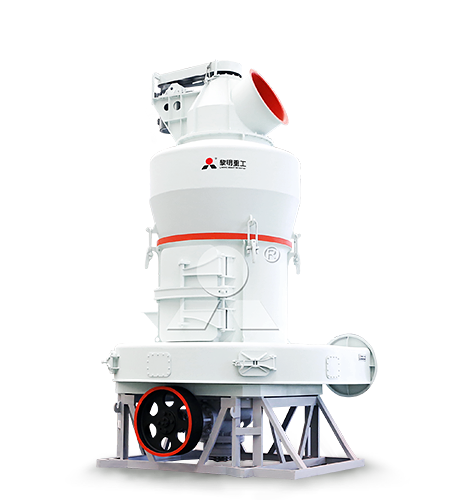
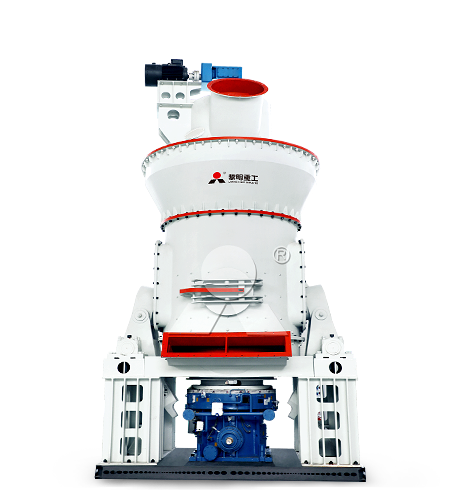
For conventional medium-scale barite powder, the MTW European Grinding Mill provides an efficient route for standard fine grades. For high-capacity plants requiring simultaneous drying, grinding, classification, and conveying, the LM Vertical Mill can reduce unnecessary material transfers and simplify the process. The objective is to achieve the required powder specification at the lowest stable specific energy consumption—not to grind the material finer than the customer needs.
Start with the Right Target
Energy consumption rises sharply when a plant produces excessive ultrafine powder or keeps recirculating material that is already within the acceptable product range. Before adjusting the mill, define the finished-product requirements clearly:
Target fineness in mesh or microns.
Required particle-size distribution.
Maximum sieve residue or permitted oversize content.
Maximum finished-product moisture.
Required output in tonnes per hour.
Specific gravity, purity, whiteness, and other application requirements.
For drilling-fluid barite, a controlled particle-size distribution is more important than producing the finest possible material. A system that sends too much material back for regrinding may increase electricity use without improving drilling-fluid performance. Standard drilling applications commonly need barite around 200–325 mesh, but the final product should be controlled according to the agreed particle-size distribution rather than nominal mesh alone.
A useful operating metric is specific energy consumption:
Specific Energy Consumption=Total Grinding-System Electricity Consumption (kWh)/Qualified Barite Powder Output (t)
This calculation should include the mill motor, classifier, main fan, blower, feeder, elevator, conveyors, dust collector, air compressor, packing equipment, and drying system where relevant. Measuring only the main mill motor can hide major energy losses in auxiliary equipment.
Prepare Better Mill Feed
Grinding efficiency begins before material enters the mill. The mill should receive clean, stable, correctly sized barite feed. Reducing oversized material through efficient crushing generally consumes less energy than forcing the grinding mill to complete excessive size reduction.
Use Proper Crushing and Screening
Large barite lumps require more grinding energy and can create unstable operating conditions. A suitable crushing and screening circuit should produce feed within the selected mill’s required size range. Oversized particles should be returned for further crushing rather than allowed into the grinding system.
This “more crushing, less grinding” approach can reduce the grinding workload because crushing consumes much less energy than fine grinding. Industry guidance notes that crushing may consume roughly 12–25% of the energy used for grinding, making feed-size reduction one of the most direct ways to reduce total plant energy demand.
Consistent feed size also improves the grinding bed, reduces sudden mill-load changes, lowers vibration risk, and supports more accurate classifier performance.
Keep Feed Rate Stable
Rapid changes in feed rate create rapid changes in mill load, differential pressure, airflow demand, classifier efficiency, and product fineness. When the feed rises suddenly, the system may become overloaded and send excess coarse material into circulation. When feed falls sharply, the mill runs below its efficient operating range.
Install a buffer silo ahead of the grinding mill and use a variable-speed feeder linked to process measurements such as mill motor current, mill differential pressure, fan load, separator speed, and product fineness. The goal is to keep the mill operating within a stable load window.
Remove Tramp Metal and Contaminants
Metal fragments, hard foreign objects, and oversized stones increase mechanical stress and can damage grinding rollers, grinding rings, mill tables, liners, and classifiers. A magnetic separator and metal detector ahead of the mill help protect the system and reduce avoidable downtime.
Contaminants can also affect finished-powder quality, particularly in high-whiteness or low-iron barite products. Preventing contamination at the feed stage reduces the need for reprocessing and lowers material losses.
Control Moisture and Airflow
Moisture has a direct effect on grinding efficiency. Wet or sticky barite can build up in hoppers, chutes, conveying equipment, grinding chambers, classifiers, and dust-collection ducts. This reduces powder flow, disrupts air circulation, increases recirculating load, and raises energy consumption per tonne of qualified product.
Match Drying Capacity to Feed Moisture
Drying should be designed around the actual moisture content of the incoming barite and the desired moisture level of the finished powder. Too little heat causes buildup and unstable classification. Too much heat wastes fuel or electricity and may increase system air volume beyond what the classifier and dust collector need.
For high-capacity barite plants processing moist feed, the LM Vertical Mill provides an integrated route in which hot air can dry the material while grinding and powder separation take place. The LM system is designed to integrate drying, grinding, classification, and conveying, which can reduce duplicate material-handling steps in an appropriately sized production line.
For MTW European Grinding Mill lines, hot air can also be introduced when feed moisture requires drying. The heating system, mill airflow, fan capacity, classifier settings, and dust collector should be designed as one air-balance system rather than selected independently.
Optimize Air Volume
Airflow performs several tasks: it dries the feed, carries fine particles to the classifier, transports qualified powder to collection equipment, and maintains negative pressure in the system. However, excessive airflow can carry too many coarse particles toward the separator and increase fan power. Insufficient airflow can reduce powder transport, cause material buildup, and make the product too coarse.
The operating team should adjust airflow together with feed rate and classifier speed. A stable differential-pressure range is usually a better operating target than simply maximizing fan frequency.
Improve Classification Efficiency
Classification is one of the most important energy-control points in a barite grinding plant. An inefficient classifier allows oversized particles into the product or returns too much already-qualified powder to the mill. Both conditions reduce efficiency: the first lowers product quality, and the second increases unnecessary grinding energy.
Set the Classifier for the Actual Product
Higher classifier speed usually creates a finer powder cut, while lower speed generally allows a coarser product. The optimum setting is the lowest classification intensity that still meets the final powder specification.
For example, if a drilling-fluid customer requires a controlled 325-mesh barite grade, operating the separator as if the product must be an ultrafine coating filler can significantly reduce output and increase electricity use. The goal is not maximum fineness; it is stable compliance with the agreed product requirement.
Monitor Particle-Size Distribution
Use regular sieve testing, laser particle-size analysis where available, and retained-residue checks to confirm actual powder quality. Monitor at least:
Finished-product mesh or D97 value.
Residue on the control sieve.
Coarse-particle fraction.
Excessive ultrafine fraction.
Moisture content.
Hourly qualified output.
Specific energy consumption in kWh per tonne.
Particle-size data should guide classifier and airflow changes. Without testing, operators may respond to a temporary output decline by increasing pressure, airflow, or classifier speed in ways that consume more energy but make the product unnecessarily fine.
Operate LM and MTW Efficiently
| Operating Area | LM Vertical Mill | MTW European Grinding Mill |
|---|---|---|
| Best application | Large-capacity, continuous barite grinding with integrated drying requirements | Medium-scale production of conventional fine barite powder |
| Feed control | Maintain a stable material bed on the grinding table through controlled feeding | Maintain a uniform feed rate into the roller-and-ring grinding chamber |
| Grinding adjustment | Coordinate grinding pressure, material-bed thickness, airflow, and separator operation | Coordinate roller condition, feed rate, grinding-zone loading, airflow, and classifier operation |
| Drying strategy | Use the integrated hot-air circuit only to meet actual moisture-removal demand | Match introduced hot air to feed moisture and avoid unnecessary heat or fan load |
| Fineness control | Adjust internal separator speed and airflow based on product testing | Adjust classifier speed and airflow based on product testing |
| Energy focus | Reduce excess internal circulation and keep the integrated system near its stable operating point | Prevent overgrinding, maintain efficient airflow, and avoid unstable feed fluctuations |
Liming Heavy Industry lists the LM Vertical Mill for 20–400 mesh mineral powder production and identifies its integrated drying, grinding, classification, and conveying design. The MTW European Mill is listed for conventional fine grinding, with MTW 6X discharge fineness down to approximately 0.045 mm and a stated capacity range of 6–50 t/h, depending on material and configuration.
Reduce Mechanical and Auxiliary Losses
Grinding efficiency is reduced gradually when wear parts, fans, ducts, filters, and conveyors are not maintained. A plant may still produce powder, but it will consume more energy per tonne and deliver less stable output.
Maintain Grinding Components
For an LM Vertical Mill, inspect the grinding rollers, table liners, nozzle ring, separator components, and hydraulic system. Uneven wear can disturb the grinding bed and require more energy to achieve the same fineness.
For an MTW European Grinding Mill, inspect rollers, grinding rings, blades, classifier components, air ducts, and lubrication systems. Worn grinding surfaces reduce effective crushing action and can increase recirculating load.
Replace wear parts based on condition and performance data, not only after failure. A declining throughput at unchanged feed, fineness, and power conditions is often an early indication that the grinding profile or air system needs inspection.
Keep the Air System Clean
Duct buildup, damaged seals, clogged filter bags, leaking joints, and worn fan impellers increase pressure loss. The main fan then consumes more electricity to maintain the same airflow.
Inspect the pulse dust collector regularly. A filter that is poorly cleaned increases system resistance, reduces effective airflow, and may force operators to increase fan speed. Check pulse-valve operation, compressed-air pressure, filter-bag condition, hopper discharge, and dust buildup in ducts.
Size Auxiliary Equipment Correctly
Fans, elevators, conveyors, rotary valves, compressors, feeders, and packing equipment should be selected for the actual process duty. Oversized equipment may consume avoidable electricity, while undersized equipment creates bottlenecks that force the mill to run inefficiently.
Auxiliary systems can represent a significant share of plant electricity use. One industry comparison estimates that classifiers, feeders, conveyors, and related auxiliaries can add roughly 10–25% to a grinding system’s total electricity consumption, depending on equipment type and process layout.
Measure, Compare, and Improve
Energy reduction should be managed through data, not isolated adjustments. Record operating information by shift, product grade, and raw-material batch. Compare performance only under similar feed and product conditions.
| Daily Operating Indicator | Why It Matters | Action if It Changes |
|---|---|---|
| Qualified output, t/h | Shows whether the system is delivering usable powder rather than only mill throughput | Check feed stability, classifier performance, wear parts, and collection efficiency |
| Total electricity, kWh | Shows the complete plant energy requirement | Separate mill, fan, conveying, dust collection, and packing loads where possible |
| Specific energy, kWh/t | Provides the most useful comparison between shifts and product grades | Investigate when it rises under comparable operating conditions |
| Finished-product fineness | Confirms that energy is producing the required grade | Adjust classifier speed and airflow only after verifying test results |
| Mill differential pressure | Indicates airflow and internal material-circulation condition | Check feed rate, moisture, airflow, and buildup when unstable |
| Fan load | Identifies duct resistance, filter condition, and airflow demand | Inspect ducts, dust collector, leaks, and airflow settings |
| Feed moisture | Influences drying demand, flowability, and grinding stability | Adjust hot-air supply and evaluate covered storage or pre-drying options |
A useful improvement program starts with a baseline. Measure kWh per tonne of qualified barite powder for each product grade over several stable production shifts. Then improve one variable at a time—feed size, feed rate, airflow, classifier setting, drying temperature, or maintenance condition—and compare results without changing the product specification.
Practical Priority List
For most barite grinding plants, the highest-value efficiency actions are:
Define the required finished-powder specification and avoid unnecessary overgrinding.
Improve crushing and screening so the mill receives stable, correctly sized feed.
Use a buffer silo and controlled feeder to eliminate large feed-rate fluctuations.
Measure raw-material moisture and match the drying system to the actual heat requirement.
Adjust classifier speed and airflow according to particle-size test results, not assumptions.
Monitor total kWh per tonne of qualified powder, including fans and auxiliary equipment.
Maintain rollers, rings, table liners, separators, fans, ducts, and dust-collection filters.
Check for air leaks, duct blockage, filter resistance, and unnecessary fan load.
Match the mill type to the required capacity: MTW for flexible conventional fine powder and LM Vertical Mill for larger integrated production.
Review operating data regularly and correct gradual efficiency losses before they become major capacity problems.
Efficient barite grinding does not come from operating the mill at maximum load at all times. It comes from maintaining a stable balance between feed preparation, moisture removal, grinding pressure, airflow, classification, collection, and finished-product quality. When the plant produces the specified barite powder with minimum recirculation and minimum avoidable auxiliary power, energy consumption falls while output and consistency improve.
Related Barite Powder Processing


Liming Heavy Industry at bauma CONEXPO INDIA 2026 | Booth 5-C6
2026-09-07

Turnkey Raw Mill Cement Plant in Saudi Arabia: Design and Installation
2026-09-03
Cement Raw Mill Supplier in Indonesia: Cost and Configuration Analysis
2026-09-01
Liming Heavy Industry to Exhibit at the 24th Global Gypsum Conference & Exhibition in Turkey
2026-08-31
Complete Calcium Carbonate Grinding and Coating Plant Solution
2026-08-29
Complete Mineral Processing Solutions
Convenient Reliable Professional Efficient Get Your Quote
Please feel free to submit your inquiry information to us. We will contact with you as soon as possible.
Our team will contact you as soon as possible.