


Summary:
Calcite and limestone are the two primary raw materials for producing ground calcium carbonate (GCC). While both contain calcium carbonate, calcite offers higher purity, whiteness, and consistency, making it ideal for plastics, coatings, paper, and other high-value applications. Limestone is more economical and widely used in construction materials and general industrial fillers. Choosing the right raw material helps balance product quality, production costs, and market competitiveness.
Details:
Ground Calcium Carbonate (GCC), commonly known as heavy calcium carbonate powder, is one of the most widely used industrial mineral fillers in the world. It plays an essential role in plastics, paper, paints, coatings, construction materials, pharmaceuticals, and many other industries.
Although both calcite and limestone are rich in calcium carbonate (CaCO₃), they are not the same material. Their differences in purity, mineral structure, processing requirements, and end-use performance can significantly affect product quality, production costs, and market competitiveness.
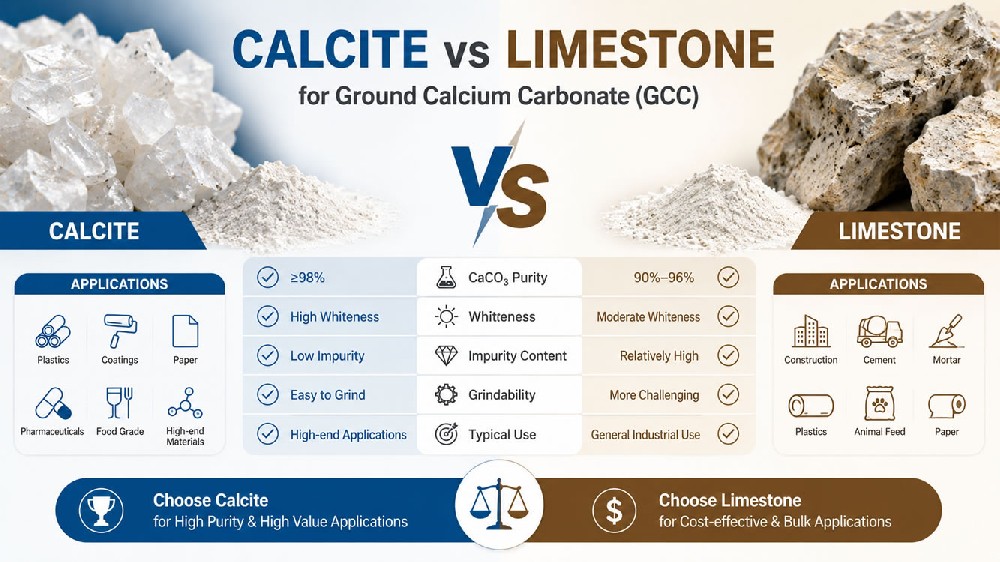
For manufacturers planning a calcium carbonate grinding project, understanding the difference between calcite and limestone is crucial for selecting the right raw material.
What Is Calcite?
Calcite is a naturally occurring crystalline calcium carbonate mineral. It typically forms transparent or white crystals with a highly ordered internal structure.
Key characteristics of calcite include:
CaCO₃ purity often above 98%
High natural whiteness
Low impurity content
Uniform crystal structure
Excellent grindability
Because of these advantages, calcite is widely recognized as one of the highest-quality raw materials for producing premium GCC products.
What Is Limestone?
Limestone is a sedimentary rock composed mainly of calcium carbonate minerals, along with varying amounts of clay, silica, magnesium, iron, and other impurities.
Typical characteristics include:
CaCO₃ content ranging from 90% to 96%
Lower whiteness compared to calcite
Higher impurity levels
More complex mineral composition
Greater variability between deposits
Limestone is abundant worldwide and generally less expensive than high-purity calcite, making it attractive for large-volume industrial applications.
Calcite vs Limestone: Raw Material Quality Comparison
| Property | Calcite | Limestone |
|---|---|---|
| Mineral Type | Pure crystalline mineral | Sedimentary rock |
| CaCO₃ Purity | Usually ≥98% | Typically 90–96% |
| Whiteness | High (90–96%) | Moderate (80–90%) |
| Impurity Content | Very low | Relatively high |
| Color Stability | Excellent | May vary due to iron and clay |
| Consistency | Highly uniform | Deposit-dependent |
In general, calcite offers superior raw material quality for high-value calcium carbonate applications.
Which Material Is Easier to Grind?
Grinding performance directly affects energy consumption, equipment wear, and production costs.
_1761355701097.jpg)
Calcite Grinding Advantages
Calcite has a Mohs hardness of approximately 3 and a relatively uniform crystal structure. As a result:
Grinding efficiency is higher
Energy consumption is lower
Mill wear is reduced
Ultrafine powder production is easier
Particle size distribution is more consistent
These characteristics make calcite an ideal feedstock for ultrafine grinding mills and high-end GCC production lines.
Limestone Grinding Challenges
Although limestone can also be processed into GCC powder, its impurity content often creates additional challenges:
More pre-treatment may be required
Hard impurities can increase equipment wear
Energy consumption may be higher
Achieving very fine particle sizes can be more difficult
Product consistency may vary
For large-scale industrial projects, these factors can influence both operating costs and final product quality.
How Does Product Quality Differ?
The quality of GCC powder depends heavily on the raw material source.
GCC Produced from Calcite
Advantages include:
Higher brightness and whiteness
Better dispersion performance
Improved chemical stability
Lower contamination risk
More uniform particle morphology
Typical applications:
High-end plastics
Automotive compounds
Premium paper coatings
Architectural coatings
Pharmaceuticals
Food-grade products
Personal care products
Flame-retardant materials
Biodegradable plastics
GCC Produced from Limestone
Advantages include:
Lower raw material cost
Abundant availability
Suitable for bulk applications
Typical applications:
Cement and concrete
Dry mortar
Putty powder
Standard plastic products
Animal feed additives
Construction materials
Packaging paper
Infrastructure projects
For these industries, cost efficiency often outweighs the need for premium whiteness or purity.
_1767930326611.jpg)
Which Raw Material Is More Economical?
The answer depends on the target market.
If the goal is to supply high-value industries such as plastics, paints, pharmaceuticals, or specialty paper, calcite usually delivers better long-term profitability because the final product commands a higher market price.
If the objective is large-scale production for construction materials or general industrial fillers, limestone may provide a more attractive cost-performance ratio.
Therefore, the most economical choice is not necessarily the cheapest raw material, but the one that best matches customer requirements and market positioning.
How to Choose Between Calcite and Limestone for a GCC Plant?
When designing a calcium carbonate grinding plant, manufacturers should evaluate:
Target product specifications
Required whiteness and purity
Final application industry
Local raw material availability
Energy consumption targets
Equipment investment budget
Expected product selling price
A detailed raw material analysis and grinding test can help determine the most suitable solution.
Conclusion
Both calcite and limestone are valuable raw materials for producing ground calcium carbonate powder, but they serve different market needs.
Choose calcite when producing high-purity, high-whiteness GCC for premium applications.
Choose limestone when focusing on cost-effective production for construction and general industrial markets.
There is no universally better option. The optimal choice depends on the balance between product quality requirements, production costs, and target market demand. For GCC manufacturers worldwide, selecting the right raw material is the first step toward building a competitive and profitable calcium carbonate business.
About Liming Heavy Industry
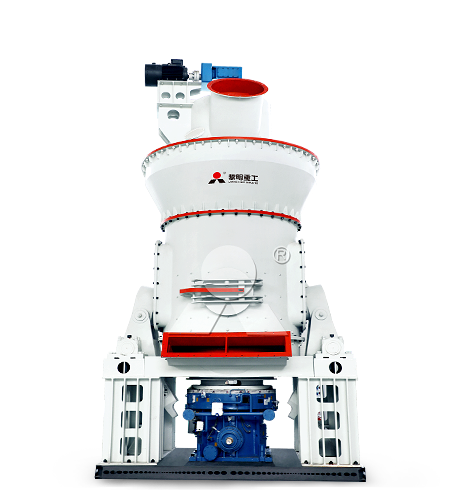
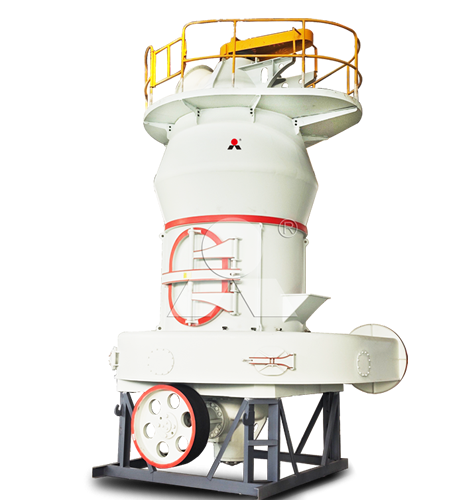
Liming Heavy Industry is a global manufacturer of industrial grinding mills, crushing equipment, calcination systems, drying equipment, and complete mineral processing production lines. The company provides comprehensive solutions for calcium carbonate, limestone, calcite, dolomite, gypsum, quicklime, cement, coal, and various non-metallic mineral processing projects.
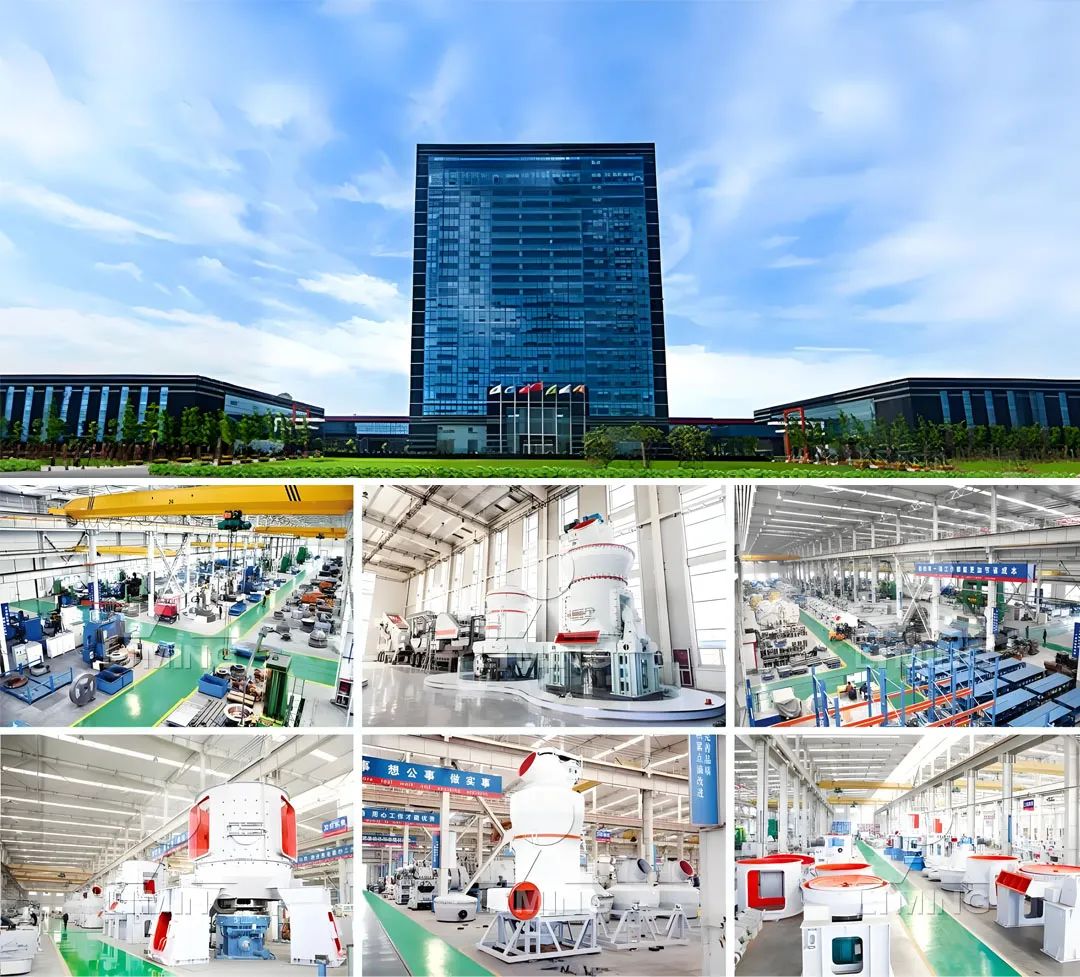
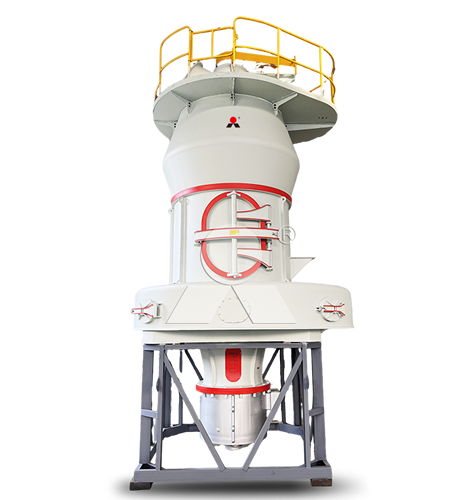
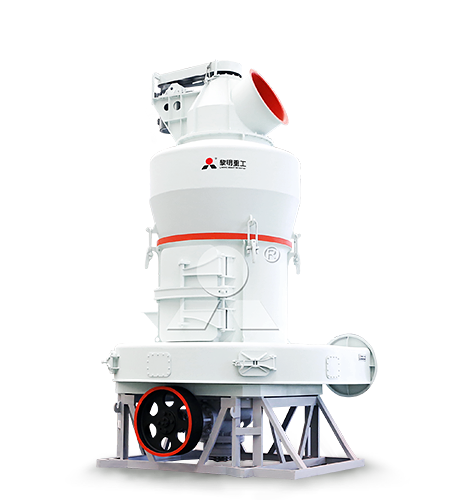
With advanced grinding technologies, including vertical roller mills, Raymond mills, ultrafine grinding mills, and complete powder production lines, Liming Heavy Industry helps customers achieve efficient, energy-saving, and stable production. Its equipment has been exported to more than 180 countries and regions, serving mining, building materials, chemical, metallurgy, and environmental protection industries worldwide.
Whether you are planning a new GCC grinding plant or upgrading an existing calcium carbonate production line, Liming Heavy Industry can provide customized process solutions, equipment selection support, installation guidance, and after-sales services to help maximize your investment value.
Related FAQ


Liming Heavy Industry to Exhibit at bauma CHINA 2026 – Visit Us at Booth E6.510
2026-10-15

Meet Liming Heavy Industry at the 140th Canton Fair 2026
2026-10-13
Liming Heavy Industry to Attend the 140th Canton Fair
2026-09-25
Liming Heavy Industry at bauma CONEXPO INDIA 2026 | Booth 5-C6
2026-09-07
Turnkey Raw Mill Cement Plant in Saudi Arabia: Design and Installation
2026-09-03
Complete Mineral Processing Solutions
Convenient Reliable Professional Efficient Get Your Quote
Please feel free to submit your inquiry information to us. We will contact with you as soon as possible.
Our team will contact you as soon as possible.