


Summary:
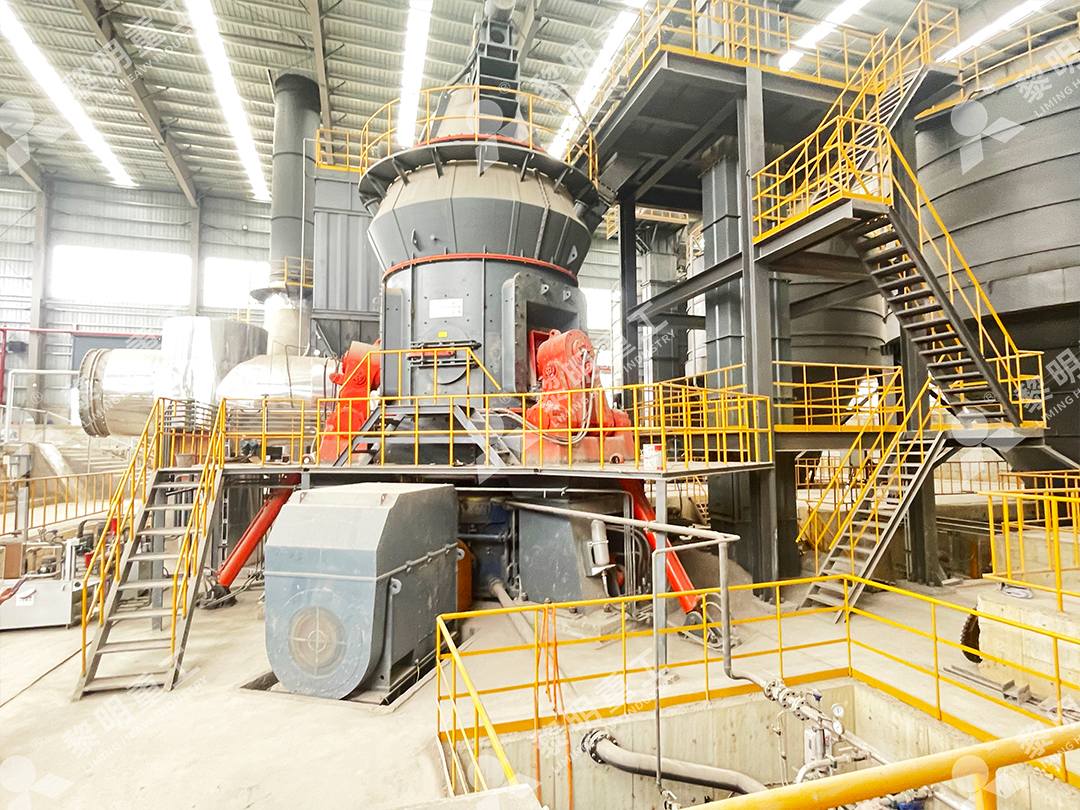
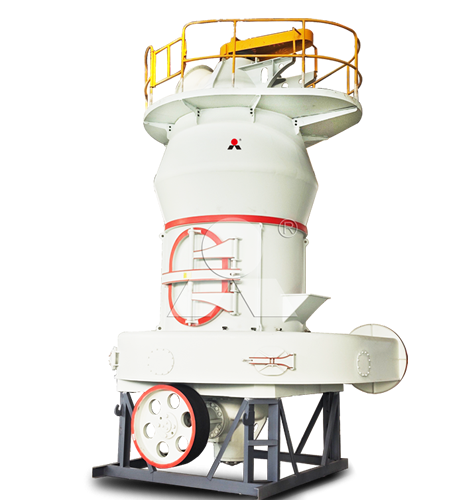
A vertical roller mill grinds material by using centrifugal force to spread it across the grinding table, where it is crushed by rollers. Fine particles are carried upward by airflow and sorted by a classifier, while oversized material is re-ground.
Details:
The main motor drives the grinding table to rotate via a high-torque reduction gearbox. Simultaneously, a high-velocity air stream enters the mill through the air inlet. Raw material is fed through the screw conveyor’s discharge spout, landing directly at the center of the rotating table. Driven by centrifugal force, the material spreads uniformly toward the outer edge.
As the material passes through the grinding track, it is crushed under the immense pressure of the grinding rollers. Large chunks are fractured instantly, while finer particles are compressed into a stable material bed, facilitating high-efficiency inter-particle grinding. The pulverized material continues its outward movement until it encounters the powerful upward air current at the nozzle ring (vane ring).
Heavier, coarse particles lose momentum and fall back onto the table for re-grinding. The remaining material is carried by the airflow to the dynamic classifier at the top. Here, adjustable rotor blades reject any oversized grains, returning them to the table. Only the qualified fine powder passes through the separator to be collected by the system's dust collector as the final product.
To protect the internals, foreign contaminants like iron scraps move to the table's edge but are too heavy to be lifted by the air. These rejects fall into the lower chamber, where scraper blades installed at the bottom of the table push them into the discharge port for removal.
Related FAQ


Meet Liming Heavy Industry at the 140th Canton Fair 2026
2026-10-13

Liming Heavy Industry to Attend the 140th Canton Fair
2026-09-25
Liming Heavy Industry at bauma CONEXPO INDIA 2026 | Booth 5-C6
2026-09-07
Turnkey Raw Mill Cement Plant in Saudi Arabia: Design and Installation
2026-09-03
Cement Raw Mill Supplier in Indonesia: Cost and Configuration Analysis
2026-09-01
Complete Mineral Processing Solutions
Convenient Reliable Professional Efficient Get Your Quote
Please feel free to submit your inquiry information to us. We will contact with you as soon as possible.
Our team will contact you as soon as possible.