


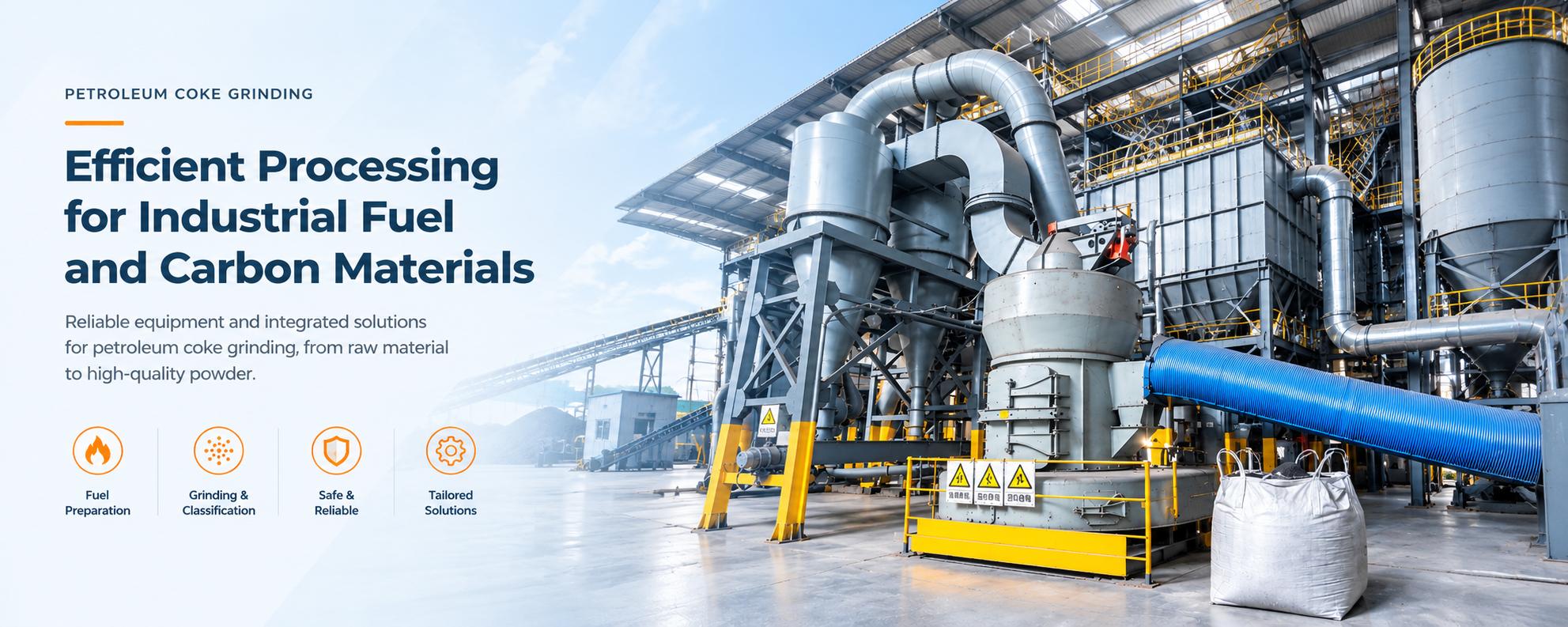
Petroleum coke, commonly called petcoke, is a carbon-rich solid produced when heavy petroleum residues undergo thermal cracking in an oil refinery. During this process, heat breaks down heavy hydrocarbons into lighter gas and liquid products, while a solid carbon-rich material remains. That material is petroleum coke. It is used as an industrial fuel and, when its quality meets the necessary requirements, as a raw material for carbon products.
Where Petroleum Coke Comes From
Crude oil contains many different hydrocarbon components. Refinery distillation separates these components into fractions, but it also leaves behind heavy residues that are difficult to turn into valuable products through distillation alone.
A coking unit processes these heavy residues further. Instead of simply separating the feed, it uses high temperatures to break larger hydrocarbon molecules into smaller ones. Lighter products leave the unit for further refinery processing, while part of the feed becomes petroleum coke. Petcoke is therefore a refinery product, not a naturally occurring mineral extracted from a mine.
This origin matters to downstream users. Petroleum coke from different refineries should not automatically be treated as an interchangeable raw material: its composition and physical structure depend on the feedstock and production conditions.
How Delayed Coking Produces Petroleum Coke
Delayed coking is a widely used route for producing petroleum coke. The process separates rapid heating in a furnace from the longer period needed for coke formation in large vessels called coke drums.
1. Heavy refinery residue enters the heating system
Heavy residue, commonly from vacuum distillation, passes through a furnace and reaches thermal-cracking temperatures. A typical furnace outlet temperature is approximately 485–505°C, although actual operating conditions depend on the refinery feed and process design.
2. The hot feed flows into a coke drum
The heated material enters a large coke drum, where cracking continues. Lighter hydrocarbon vapors leave the drum and move to a fractionation system, while the carbon-rich solid gradually accumulates inside. The drum provides the residence time needed for this conversion.
3. The refinery switches to another drum
Delayed cokers use multiple drums so that one drum can receive hot feed while another undergoes cooling and coke removal. This arrangement allows the upstream processing system to keep operating through alternating drum cycles.
4. The coke is cooled and removed
After a drum completes its operating cycle, the coke is cooled and removed using high-pressure water cutting. The recovered material then requires handling and drainage before storage, shipment, or further processing. Water used during coke removal is one reason the moisture content of delivered green petroleum coke deserves attention.
Another Production Route: Fluid Coking
Fluid coking also converts heavy refinery feed into lighter products and petroleum coke, but it handles the coke differently. Rather than allowing a large solid mass to accumulate inside a drum, it operates with fluidized solid particles. Some coke is burned in a heater to supply heat for the cracking process.
For a downstream processing plant, identifying the production route helps establish what material will actually arrive. The name “petroleum coke” alone does not fully describe particle form, moisture, or processing behavior.
Green Petroleum Coke and Calcined Petroleum Coke Are Different Products
Petroleum coke directly recovered from a coking unit is called green petroleum coke. Here, “green” means uncalcined—not environmentally certified. Green coke still contains residual volatile matter and may contain substantial moisture. Depending on its quality, it may be used as fuel or selected for further processing.
Calcined petroleum coke is produced by heating suitable green coke further, generally at temperatures above 1,200°C. Calcination removes moisture, greatly reduces volatile matter, and changes properties such as density and electrical conductivity. These changes make suitable coke useful for demanding carbon applications, including anodes for aluminum production.
| Characteristic | Green Petroleum Coke | Calcined Petroleum Coke |
|---|---|---|
| Processing stage | Recovered from the refinery coking process | Produced by further heat treatment of suitable green coke |
| Moisture and volatile matter | Higher and more variable | Substantially reduced during calcination |
| Typical role | Industrial fuel or feedstock for further processing | Raw material for qualified carbon-product applications |
| Important qualification | Suitability depends on composition and intended use | Calcination alone does not make every feed suitable for every carbon application |
The distinction is important when specifying a processing line: drying, grinding, and calcining are different operations. Grinding reduces particle size; it does not turn green petroleum coke into calcined petroleum coke.
Why Petroleum Coke Quality Varies
Petroleum coke is not a single uniform grade. Delayed coking can produce different structures, including sponge coke, shot coke, and needle coke. Feedstock characteristics and coking conditions influence which structure develops. These differences help explain why two materials sold under the same general name may serve different applications.
Sponge coke has a porous structure. Suitable grades can be selected for calcination and anode production.
Shot coke consists of rounded particles and is commonly associated with fuel applications.
Needle coke is a specialized material associated with demanding graphite-electrode applications; it should not be treated as ordinary fuel coke.
Physical structure is only part of the specification. Sulfur, metals, ash, moisture, and volatile matter also require attention. Calcination improves important carbon properties, but it should not be assumed to remove all unwanted impurities or convert an unsuitable feed into a premium product.
What Its Production History Means for Grinding and Handling
A petroleum coke grinding project should start with the material that will actually be delivered—not just its commercial name. Refinery origin, coking route, water exposure, and any subsequent calcination help define the feed entering the plant. Green coke and calcined coke should therefore be evaluated separately rather than assigned the same processing conditions.
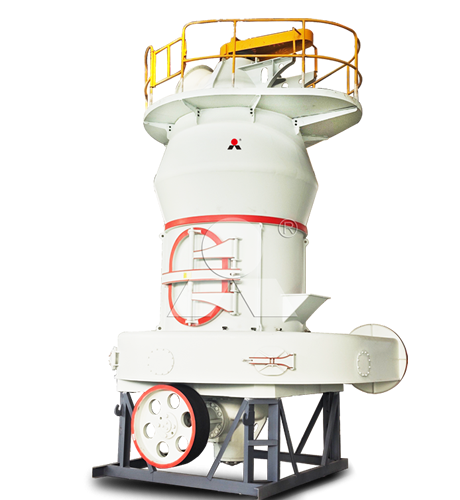
Before configuring a Liming Heavy Industry petroleum coke grinding system, the project specification should establish:
Whether the feed is green or calcined petroleum coke.
The normal and maximum incoming particle size.
The expected moisture range, including variations between deliveries.
The required finished-powder particle-size distribution.
The required production rate and intended downstream application.
The available material analysis and representative samples for evaluation.
These details provide a practical basis for discussing feed preparation, drying requirements, grinding, classification, collection, and storage. No single mill configuration should be assumed suitable for every petroleum coke supply.
Does Petroleum Coke Need to Be Calcined Before Grinding?
Not necessarily. Green petroleum coke can be prepared for fuel applications without first becoming calcined petroleum coke. Carbon-product applications may require calcination and additional quality controls. The intended use determines the processing route; grinding and calcination should not be treated as interchangeable steps.
Is Petroleum Coke the Same as Coal Coke?
No. Petroleum coke comes from heavy petroleum refinery streams, whereas coal coke comes from coal. Their shared name does not make their composition or industrial suitability identical. For purchasing and plant design, the material specification should explicitly identify petroleum coke and state whether it is green or calcined.
Related Petroleum Coke Grinding & Processing Solutions


LIMING at MiningMetals Uzbekistan 2026 | Booth B94
2026-10-22

LIMING Heavy Industry at MINEXPO Africa 2026 | Booth 133
2026-10-22
Liming Heavy Industry to Exhibit at bauma CHINA 2026 – Visit Us at Booth E6.510
2026-10-15
Meet Liming Heavy Industry at the 140th Canton Fair 2026
2026-10-13
Liming Heavy Industry to Attend the 140th Canton Fair
2026-09-25
Complete Mineral Processing Solutions
Convenient Reliable Professional Efficient Get Your Quote
Please feel free to submit your inquiry information to us. We will contact with you as soon as possible.
Our team will contact you as soon as possible.