


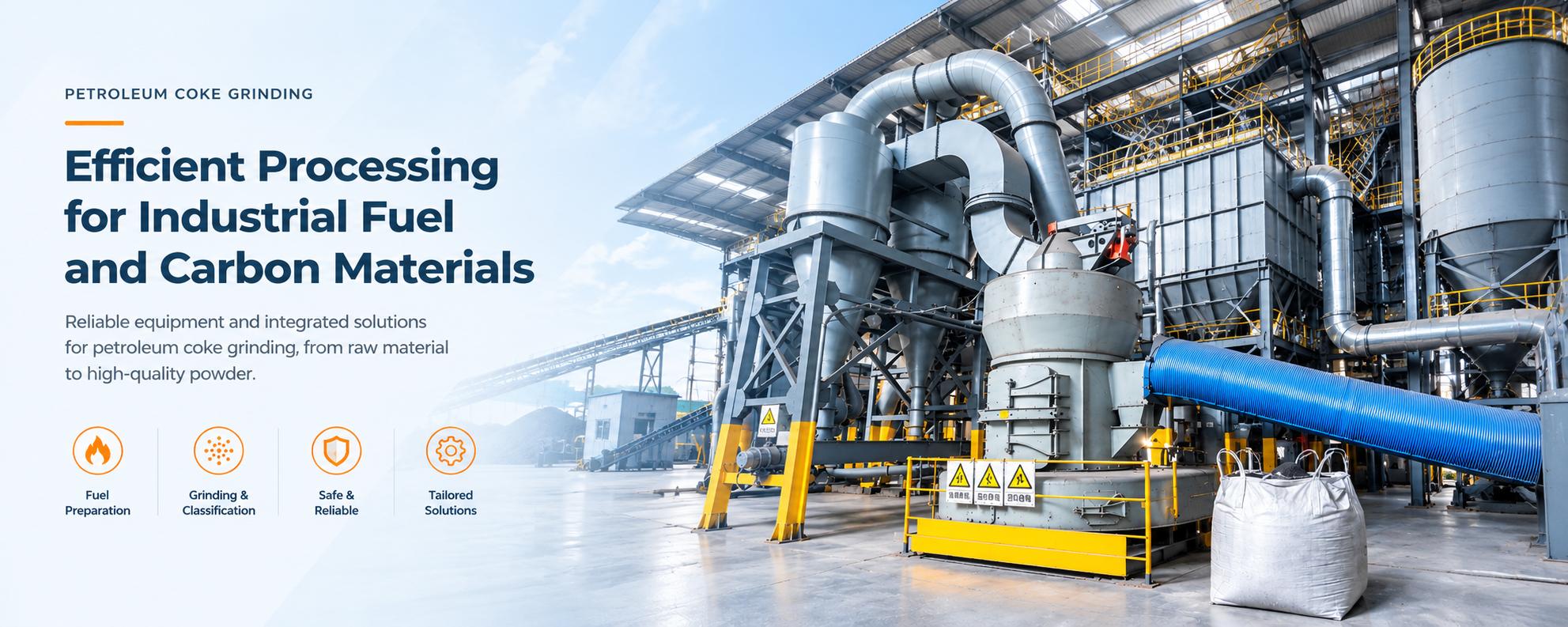
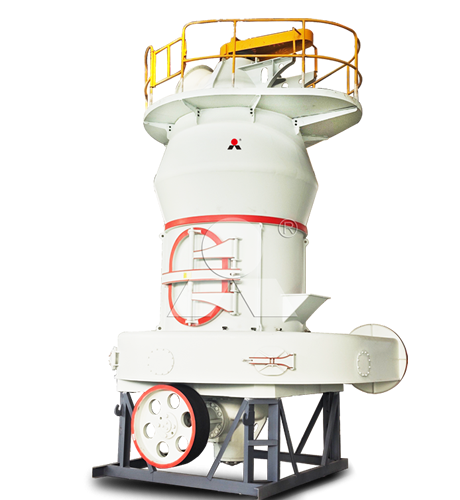
Select a petroleum coke grinding mill by matching the equipment to the actual feed, required powder specification, production rate, drying duty, and safety requirements. Start with representative material data rather than a nominal capacity or mesh figure. For Liming Heavy Industry equipment, the LM Vertical Coal Mill and MTW European Type Grinding Mill are relevant candidates, but the appropriate configuration must be confirmed for the specific petroleum coke application.
The selection should be based on a complete duty: what material enters the system, what product must leave it, and under which operating conditions the required output must be maintained.
Start with the Application, Not the Model Number
Petroleum coke used as fuel and petroleum coke prepared for carbon products should not automatically receive the same grinding specification. Define the downstream requirement before comparing equipment.
For kiln or boiler fuel, obtain the powder specification approved by the combustion-system team.
For carbon-material production, obtain the receiving manufacturer’s particle-size, moisture, and contamination limits.
For a plant processing several coke supplies, define the full expected feed range.
For a plant producing several powder grades, state the required output and acceptance criteria for each grade.
Keep the equipment scope clear. Grinding prepares particle size; it should not be expected to correct unsuitable feed chemistry or perform the function of a separate thermal-treatment process.
Build a Feed Specification Before Requesting a Quotation
A single description such as “petroleum coke, 200 mesh, 10 tons per hour” leaves important design questions unanswered. Prepare a material specification supported by representative samples.
| Feed Information | What to Provide | Selection Question It Helps Resolve |
|---|---|---|
| Material condition | Green or calcined coke, source, and intended use | Which process configuration should be evaluated? |
| Incoming size | Normal distribution and maximum lump size | Is pre-crushing required? |
| Moisture | Normal range, expected maximum, and seasonal variation | What drying arrangement is needed? |
| Material analysis | Relevant chemical and physical test results | What process, product-quality, and safety restrictions apply? |
| Supply variation | Differences between sources or deliveries | What operating range must the system accommodate? |
Where grindability information is unavailable, ask Liming Heavy Industry what sample testing is needed before confirming capacity. Do not substitute hardness alone for an assessment of the actual grinding duty.
Define Fineness in a Form That Can Be Verified
Specify the finished powder using an agreed measurement method. A mesh designation by itself may not adequately describe the permitted coarse fraction or the complete particle-size distribution.
The acceptance requirement should identify:
The selected sieve opening or particle-size measurement method.
The permitted residue or distribution limits.
Any separate restriction on oversized particles.
The sample condition and sampling location.
The production rate at which the powder must meet specification.
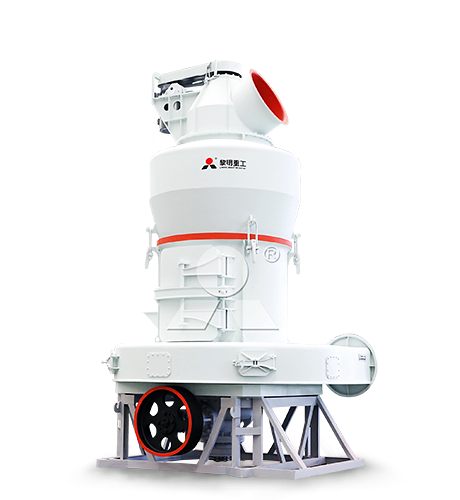
Liming Heavy Industry’s MTW system uses an adjustable classifier to separate accepted fines from coarse particles that return for further grinding. The required product should nevertheless be specified by measured results, not by classifier speed alone.
Compare the Relevant Liming Heavy Industry Mill Options
| Selection Factor | LM Vertical Coal Mill | MTW European Type Grinding Mill |
|---|---|---|
| Published application relevance | Petroleum coke is explicitly identified among suitable solid fuels | Petroleum coke is listed among processing applications |
| Process arrangement | Combines grinding, drying, classification, and conveying | Grinding circuit includes a separator, blower, collection equipment, and feed-handling components |
| Main point to evaluate | Integrated solid-fuel preparation and the required drying duty | Compatibility with the feed condition, powder specification, and required system safeguards |
| Capacity basis | Confirm using the actual petroleum coke and required product | Confirm using the actual petroleum coke and required product |
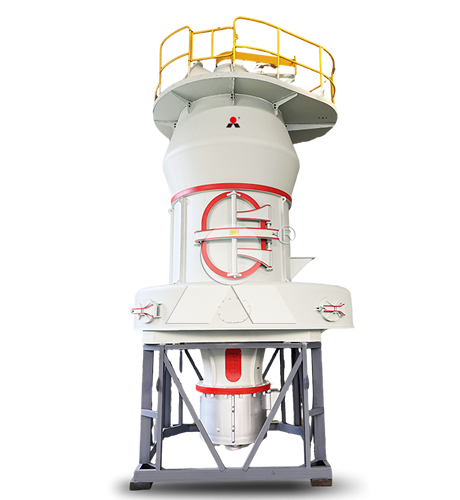
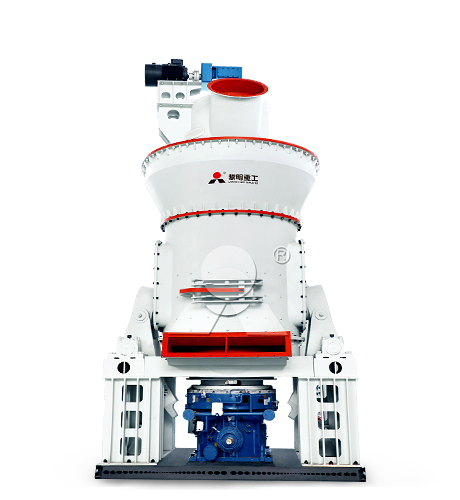
These descriptions identify candidates, not a final selection. Liming Heavy Industry’s LM solid-fuel system integrates drying and grinding, while its MTW line uses separate circuit components around the mill and classifier. Evaluate the complete installation rather than comparing the main machines in isolation.
When to Evaluate an LM Configuration
Consider the LM Vertical Coal Mill when the project calls for an integrated petroleum coke preparation system with drying, grinding, classification, and conveying. Ask for confirmation of the required configuration, available heat source, process-gas arrangement, and performance across the stated moisture range.
When to Evaluate an MTW Configuration
Consider the MTW European Type Grinding Mill where Liming Heavy Industry confirms its suitability for the specific petroleum coke and powder duty. The published product guidance gives a general feed-moisture limit below 6%, so wetter feed requires explicit review rather than an assumption of unchanged performance.
The same product page combines petroleum coke application listings with general restrictions referring to non-flammable and non-explosive materials. Obtain written clarification of the approved petroleum coke configuration and its safety scope; a generic mineral-grinding package should not be assumed suitable without that review.
Check Drying Capacity Separately from Grinding Capacity
An integrated drying function does not mean that any incoming moisture can be handled at the same output. The LM process uses hot air or suitable process gas to exchange heat with material during grinding, so the thermal arrangement forms part of the system design.
Request performance conditions for both normal and maximum feed moisture. The proposal should identify the available heat source, expected operating range, finished-moisture requirement, and any change in throughput at wetter conditions.
Do not apply moisture limits published for limestone, slag, or another material directly to petroleum coke. Have the supplier confirm the actual material-specific duty.
Evaluate the Complete Line and Its Safety Scope
A grinding project includes more than the mill. Confirm the boundaries for receiving, pre-crushing, feeding, process-gas supply, classification, collection, storage, and downstream transfer. Liming Heavy Industry’s published systems include these connected functions, although the exact arrangement varies by application.
For petroleum coke, require a material-specific safety review and a responsibility matrix identifying who provides dust testing, hazard assessment, protective-system engineering, controls integration, and commissioning verification. Do not treat a dust collector or a general equipment description as proof that the complete safety duty has been addressed.
Compare Operating Cost on the Same Basis
Ask each proposal to state what its energy figures include. Main-motor consumption is not the same measurement as total-system consumption.
Use a comparison covering:
Mill, fan, classifier, feeder, and conveying electricity within an agreed boundary.
Drying heat and its availability.
Wear parts and maintenance access.
Collection-system consumables and maintenance.
Product changeover or cleaning requirements where applicable.
Expected service support and critical spare parts.
Compare all figures at the same feed moisture, finished fineness, and sustained production rate. Avoid using general percentage-saving claims as a substitute for a project-specific operating-cost assessment.
Agree Acceptance Criteria Before Ordering
The purchase agreement should connect guaranteed output to a clearly defined feed and product specification. Establish the test procedure before commissioning, including representative material, test duration, sampling, laboratory methods, and measurement boundaries.
Confirm the feed falls within the agreed material specification.
Operate at the required sustained production rate.
Measure finished fineness and moisture using the agreed procedures.
Record energy consumption within the defined system boundary.
Verify collection, transfer, controls, and protective functions within their approved test scope.
The right Liming Heavy Industry petroleum coke grinding mill is the one supported by a verified system proposal for the actual duty—not simply the largest model or the lowest initial quotation. A complete feed specification, measurable powder requirements, and agreed acceptance conditions provide the clearest basis for that decision.
Related Petroleum Coke Grinding & Processing Solutions


LIMING at MiningMetals Uzbekistan 2026 | Booth B94
2026-10-22

LIMING Heavy Industry at MINEXPO Africa 2026 | Booth 133
2026-10-22
Liming Heavy Industry to Exhibit at bauma CHINA 2026 – Visit Us at Booth E6.510
2026-10-15
Meet Liming Heavy Industry at the 140th Canton Fair 2026
2026-10-13
Liming Heavy Industry to Attend the 140th Canton Fair
2026-09-25
Complete Mineral Processing Solutions
Convenient Reliable Professional Efficient Get Your Quote
Please feel free to submit your inquiry information to us. We will contact with you as soon as possible.
Our team will contact you as soon as possible.