


Classification systems separate mineral particles by size so that drilling-fluid powders meet their required performance range. They are essential for barite and hematite weighting powders, bentonite drilling clay, and calcium carbonate bridging materials because the wrong particle-size distribution can cause settling, excessive viscosity, poor hydration, weak bridging, or inconsistent fluid-loss control.
Grinding creates smaller particles; classification decides which particles become finished product and which particles must be returned for further grinding or diverted into another grade. A reliable drilling mineral powder plant therefore treats the classifier, screens, dust collector, and sampling system as core process equipment rather than secondary accessories.
Why Classification Is Critical
Drilling minerals are selected for different functions. Barite and hematite must remain sufficiently suspended while providing density. Bentonite must disperse and hydrate effectively to develop viscosity and filtration control. Calcium carbonate must have particles sized to bridge pore openings or fractures without creating excessive fine material.
A nominal mesh value is not enough to describe these products. For example, two powders marked as “200 mesh” can have very different fine and coarse fractions. One may contain enough oversize particles to settle in the drilling fluid, while the other may contain excessive ultrafines that increase viscosity and chemical consumption.
| Classification Result | Effect on Drilling-Fluid Performance | Required Process Action |
|---|---|---|
| Excessive coarse particles | Can settle more easily, create unstable mud density, reduce dispersion, and weaken filtration or bridging consistency. | Return oversize material for further grinding or separate it into a designated coarse grade. |
| Excessive ultrafine content | Can increase surface area, raise viscosity, increase water or chemical demand, and complicate rheology control. | Reduce overgrinding and optimize classifier speed, airflow, feed rate, and circulation load. |
| Wide uncontrolled size range | Creates inconsistent results between batches and makes drilling-fluid formulation less predictable. | Use stable feed preparation, closed-circuit grinding, calibrated classification, and regular laboratory testing. |
| Defined multi-grade product | Supports effective bridging and lost-circulation treatment across different pore and fracture sizes. | Produce and store each grade separately, then blend according to a controlled formulation. |
Air Classification for Fine Powders
Air classification is commonly used for fine drilling mineral powders. In this system, air carries ground particles into a separator. The separator uses airflow, centrifugal force, gravity, and adjustable rotor or blade settings to divide the feed into fine and coarse fractions.
Fine particles with sufficient aerodynamic mobility move with the air stream into the powder-collection system. Larger or heavier particles cannot remain in the classified air stream and return to the grinding chamber for further reduction. This creates a closed-circuit process that continuously controls the final particle-size distribution.
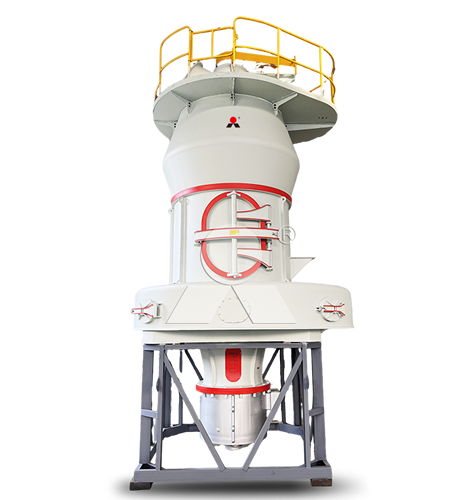
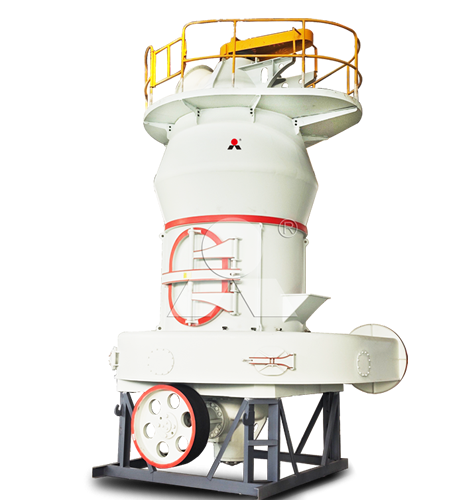
For barite, hematite, bentonite, and fine calcium carbonate, air classification is normally integrated with the grinding mill. The classifier can be installed within the mill or arranged as an external high-efficiency separator, depending on the process design and required powder specification.
| Air Classification Component | Main Function | Importance for Drilling Minerals |
|---|---|---|
| Airflow system | Transports ground particles toward the separator and collector. | Controls the carrying force acting on fine and coarse particles. |
| Classifier rotor or separator | Separates particles according to aerodynamic behavior and cut size. | Determines whether powder enters the final product or returns for regrinding. |
| Coarse-powder return path | Returns unqualified material to the mill. | Prevents oversize particles from entering the finished powder silo. |
| Pulse dust collector | Separates fine finished powder from process air. | Recovers valuable powder and supports stable air-pressure balance. |
| Induced-draft fan | Creates the airflow required for transportation and classification. | Directly influences cut size, classifier efficiency, and finished-product recovery. |
The air-classification setting should always be verified through finished-product testing. Increasing classifier speed can generally produce a finer cut, but it can also increase the ultrafine fraction and reduce throughput. Reducing classifier speed can increase output, but it may allow more coarse particles into the final product. The correct setting is the one that meets the required particle-size distribution with stable capacity.
LM Vertical Roller Mill Classification
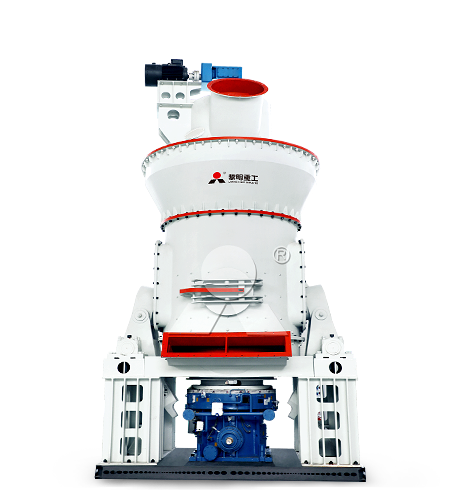
The LM Vertical Roller Mill uses an internal classification system as part of its integrated grinding process. Material enters the mill and is ground on the vertical table by grinding rollers. Airflow lifts the ground particles to the separator installed above the grinding zone.
Qualified fine powder passes through the separator and travels with the air stream to the dust-collection system. Coarse particles cannot pass through the classifier and fall back onto the grinding table. They are mixed with fresh feed and processed again. This internal return circuit allows the mill to combine grinding, drying, classification, and pneumatic conveying in one main process system.
For large-scale drilling mineral production, the LM Vertical Roller Mill is suitable when the plant needs high throughput and integrated moisture control. It can be configured for fine barite, hematite, bentonite, and fine calcium carbonate powder. The classifier should be adjusted based on laboratory particle-size data, including the coarse residue and ultrafine fraction, rather than only according to a nominal mesh label.
| LM Vertical Roller Mill Control Point | Classification Effect | Operator Focus |
|---|---|---|
| Feed rate | Changes mill loading and the quantity of particles entering the classifier. | Maintain steady feed to avoid swings in finished-powder fineness. |
| Grinding pressure | Influences how quickly particles are reduced before reaching the separator. | Avoid excessive grinding force that may generate too many ultrafines. |
| Separator adjustment | Changes the cut size between accepted fine powder and returned coarse powder. | Use particle-size test results to maintain the required product distribution. |
| Air volume | Changes particle lifting, transport, and separator performance. | Maintain stable airflow and inspect ducts, fan performance, and dust collector condition. |
| Hot-air temperature | Controls drying while influencing gas density and material transport. | Balance moisture removal with stable classification and mineral-quality protection. |
MTW European Grinding Mill Classification
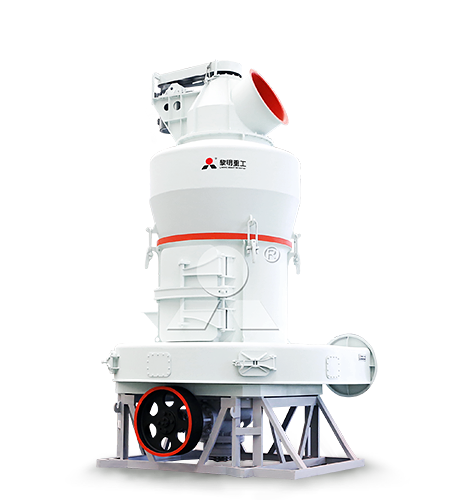
The MTW European Grinding Mill uses roller-and-ring grinding with an air-classification circuit. After material is fed into the grinding chamber, rollers grind it against the ring. Airflow carries the resulting powder upward to the separator, where the required fine fraction is separated from oversized particles.
Qualified powder enters the dust collector and is transferred to finished-product storage. Coarse material falls back into the grinding chamber for further processing. This closed-circuit arrangement is suitable for barite, bentonite, hematite, and fine calcium carbonate grades when the project requires flexible capacity and controlled fine-powder production.
The MTW European Grinding Mill should be operated with stable feeding and balanced airflow. A sudden increase in feed quantity may overload the classifier and increase coarse residue. Low airflow can reduce fine-powder transport and produce an overly coarse product. Excessive airflow can carry an uncontrolled amount of ultrafine material into the collector and affect the final particle-size distribution.
| MTW European Grinding Mill Control Point | Possible Problem if Unstable | Recommended Check |
|---|---|---|
| Crusher discharge size | Oversized feed can reduce grinding efficiency and cause unstable classification. | Check screen condition, crusher gap, and feed-size variation. |
| Feeder output | Fluctuating feed can cause unstable mill load and inconsistent product fineness. | Calibrate the feeder and monitor the hopper discharge condition. |
| Roller and grinding-ring wear | Worn components may increase coarse residue or reduce mill capacity. | Inspect wear parts according to a planned maintenance schedule. |
| Classifier setting | Incorrect adjustment can cause excessive coarse particles or too many ultrafines. | Adjust using verified sieve and particle-size analysis results. |
| Fan and dust-collector performance | Airflow imbalance can change cut size, powder recovery, and system pressure. | Inspect fan current, duct leakage, filter condition, and differential pressure. |
Screening for Calcium Carbonate Grades
Air classification is effective for fine powder, but screening is the principal classification method for medium and coarse calcium carbonate used as a bridging and lost-circulation material. These grades require particles large enough to bridge pore throats, fractures, or vugs. Sending them through a fine grinding circuit would destroy the very particle sizes needed for their drilling function.
Calcium carbonate is often supplied in extra-fine, fine, medium, and coarse grades. Published drilling-material examples identify extra-fine calcium carbonate at D50 values of 2–5 μm, fine material at 10–14 μm, medium material at 135–165 μm, and coarse material at 550–650 μm.
| Calcium Carbonate Grade | Typical D50 Range | Preferred Classification Method | Drilling Function |
|---|---|---|---|
| Extra-fine | 2–5 μm | Fine grinding with air classification. | Fine pore sealing and filter-cake improvement. |
| Fine | 10–14 μm | Fine grinding with air classification. | Seepage-loss control and void filling within a bridge. |
| Medium | 135–165 μm | Controlled crushing and multi-deck screening. | Bridging of moderate pore openings and fractures. |
| Coarse | 550–650 μm | Controlled crushing, screening, and dedicated grade storage. | Initial bridging across larger fractures and severe loss zones. |
For calcium carbonate bridging materials, “fine,” “medium,” and “coarse” are relative product names, not universal particle-size standards. The actual D10, D50, and D90 values should be specified and tested. D10 is the size below which 10% of the particles fall, D50 is the median size, and D90 is the size below which 90% of particles fall.
Formation characteristics should guide the final particle-size selection. Research on bridging materials has found that calcium carbonate particle size should be close to the median pore-throat size at the formation face for effective bridging.
Quality Control and Testing
Classification performance must be verified by laboratory testing. The plant should not rely on classifier speed, screen labels, or visual powder appearance alone. Sampling should be performed regularly at the finished-product point and, when necessary, at intermediate stages such as mill discharge, classifier return, dust-collector discharge, and product-silo outlet.
| Mineral Product | Key Particle-Size Tests | Main Acceptance Focus |
|---|---|---|
| Barite | Wet-screen residue above 75 μm and fine-particle content below 6 μm. | Control of coarse settling particles and excessive ultrafines. |
| Hematite | Wet-screen and laser particle-size analysis, including coarse and ultrafine fractions. | Tight particle distribution for high-density fluid weighting. |
| Bentonite | Wet-screen residue above 75 μm, along with rheology and filtration tests on prepared slurry. | Fine, uniform powder that hydrates effectively and leaves limited coarse residue. |
| Fine calcium carbonate | Laser particle-size analysis, D10, D50, D90, and screen verification where applicable. | Consistent fine bridging and filter-cake performance. |
| Medium and coarse calcium carbonate | Screen analysis, D10, D50, D90, and contamination checks between grades. | Preservation of particles needed for bridging and lost-circulation control. |
For drilling-grade bentonite, a commonly referenced requirement limits wet-screen residue above 75 μm to 4.0% by mass. This test should be considered together with viscosity, yield point, and filtration performance because bentonite is judged by how it functions after hydration, not by dry particle size alone.
A properly designed classification system allows a drilling mineral powder plant to produce predictable material rather than variable powder. The LM Vertical Roller Mill is suitable for high-capacity integrated grinding and air classification, while the MTW European Grinding Mill is suitable for flexible fine-powder production with closed-circuit separation. For medium and coarse calcium carbonate, crushing and calibrated screening remain the essential classification route.
Related Oil & Gas Mineral Processing


Liming Heavy Industry at bauma CONEXPO INDIA 2026 | Booth 5-C6
2026-09-07

Turnkey Raw Mill Cement Plant in Saudi Arabia: Design and Installation
2026-09-03
Cement Raw Mill Supplier in Indonesia: Cost and Configuration Analysis
2026-09-01
Liming Heavy Industry to Exhibit at the 24th Global Gypsum Conference & Exhibition in Turkey
2026-08-31
Complete Calcium Carbonate Grinding and Coating Plant Solution
2026-08-29
Complete Mineral Processing Solutions
Convenient Reliable Professional Efficient Get Your Quote
Please feel free to submit your inquiry information to us. We will contact with you as soon as possible.
Our team will contact you as soon as possible.