


Dust collection is a core part of a mineral powder plant, not an add-on after the mill is installed. In drilling-mineral production, an effective system captures dust at crushing, grinding, classification, conveying, storage, bagging, and bulk-loading points; returns collected powder to the process where suitable; and protects workers, equipment, product quality, and the surrounding site.
The most effective approach is source capture: enclose the dust-generating point, keep it under slight negative pressure, transport dust-laden air through properly sized ductwork, separate the powder in a collector, and discharge or recirculate cleaned air only after appropriate verification. NIOSH identifies local exhaust ventilation as the most common dust-control method in mineral-processing plants and emphasizes capture at the source through enclosures, hoods, and chutes.
Where Dust Is Generated
Dust can be released anywhere dry mineral material changes direction, falls, breaks, is ground, is screened, or is transferred. Fine barite, bentonite, hematite, calcium carbonate, limestone, and other mineral powders become airborne easily when they fall into open hoppers, move on belts, discharge from elevators, or enter bags and bulk trucks.
| Plant Section | Main Dust Source | Preferred Control Method |
|---|---|---|
| Raw ore receiving | Truck unloading, hopper filling, rock drop points, and loader movement. | Covered receiving station, enclosed hopper, local exhaust hood, low drop height, and controlled water mist where compatible with the process. |
| Crushing and screening | Crusher inlet and outlet, vibrating screens, transfer chutes, and conveyor discharge points. | Enclosed crusher housing, sealed chutes, local exhaust ventilation, and dedicated dust-collection branches. |
| Drying and grinding | Mill feed, mill discharge, hot-air system, classifier, and inspection openings. | Closed mill circuit, negative-pressure operation, sealed access doors, and a correctly sized pulse dust collector. |
| Air classification | Classifier leakage, coarse-powder return points, and duct connections. | Sealed classifier housing, balanced airflow, leak inspection, and stable fan performance. |
| Finished-powder conveying | Screw conveyors, bucket elevators, rotary valves, silo inlets, and transfer points. | Enclosed conveying, flexible sealed connections, vent filters, and extraction at high-displacement points. |
| Bagging and big-bag filling | Bag spouts, filling heads, bag removal, stitching stations, and palletizing areas. | Sealed filling spouts, local extraction hood, bag clamps, downward-draft collection, and bag-cleaning equipment. |
| Bulk tanker loading | Air displaced from the tanker during loading and powder leakage around loading connections. | Closed loading connection, tanker vent filtration, loading-bellow seal, and dedicated collection system. |
Crushing, milling, screening, drying, bagging, and loading are specifically identified as mineral-processing activities where local exhaust ventilation captures dust and transports it through ductwork to a filtration device.
Core Dust Collection System
A typical dry mineral powder dust-control system consists of enclosed process equipment, capture hoods or suction points, ductwork, a main fan, a dust collector, discharge equipment, and an air-monitoring arrangement. The system must be designed as one connected airflow network. A high-efficiency collector cannot compensate for undersized ducts, poor hood design, uncontrolled air leakage, or inadequate fan capacity.
| Component | Main Role | Design Consideration |
|---|---|---|
| Enclosure or hood | Captures dust before it spreads into the workshop. | Position it close to the dust source, minimize openings, and ensure operators can access the equipment safely. |
| Flexible curtain or sealed chute | Limits the amount of air drawn into transfer points and reduces dust escape. | Use durable material and maintain sufficient clearance for the moving product stream. |
| Ductwork | Transports dust-laden air from each collection point to the filter. | Size branches for the required airflow, maintain transport velocity, minimize unnecessary bends, and seal all joints. |
| Pulse dust collector | Separates mineral powder from the air stream using filter bags or cartridges. | Select filter media according to powder properties, temperature, moisture, abrasiveness, and required emission performance. |
| Cleaning system | Removes accumulated dust from filter surfaces. | Use stable compressed-air pressure and monitor differential pressure to identify filter loading or cleaning problems. |
| Rotary valve or screw conveyor | Discharges collected dust while maintaining the collector’s pressure balance. | Prevent air leakage and ensure the discharge capacity matches the dust loading. |
| Induced-draft fan | Creates negative pressure and draws air from capture points through the collector. | Size the fan after calculating airflow, pressure losses, filter resistance, duct length, elbows, and future capacity margin. |
| Stack or clean-air outlet | Releases filtered air or returns it to the process where appropriate. | Verify the applicable local requirements and conduct periodic emission checks. |
Negative-pressure extraction is important because it draws air inward through small openings instead of allowing powder-laden air to escape outward. NIOSH notes that local exhaust ventilation captures dust before it is liberated into the plant, particularly when a hood, enclosure, or chute is incorporated directly at the source.
Pulse Dust Collectors
Pulse dust collectors are widely used in mineral powder plants because they can handle continuous fine-powder loading while cleaning filter bags or cartridges automatically. Dust-laden air enters the collector, larger particles separate by gravity or flow change, and fine powder is captured on the filter surface. Short bursts of compressed air periodically clean the filters, allowing the collected mineral powder to fall into the hopper below.
For a drilling-mineral plant, the collected powder may be returned to the finished-product stream if it is confirmed to meet the same product specification. This is common for fine barite, bentonite, hematite, or calcium carbonate collected from a closed grinding and classification system. Dust from mixed-grade packing areas, contaminated floor-cleaning systems, or different raw-material lines should not be returned automatically without confirming product compatibility.
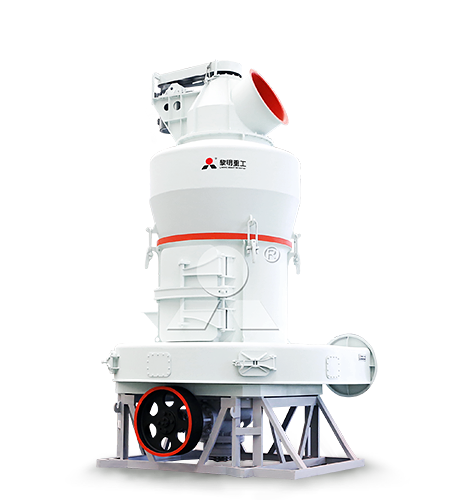
Liming Heavy Industry’s MTW European Type Trapezium Mill system is equipped with a pulse dust collector, and its mill descriptions identify the collector as part of the closed powder-production process.
| Collector Issue | Likely Cause | Recommended Response |
|---|---|---|
| Visible dust at equipment openings | Insufficient airflow, poor enclosure design, duct leakage, blocked branch, or open inspection door. | Inspect hood position, measure airflow, check dampers and ducts, seal gaps, and restore the required negative pressure. |
| High collector differential pressure | Blocked filters, weak pulse cleaning, high moisture, excessive powder loading, or unsuitable filter media. | Check compressed-air pressure, solenoid valves, pulse sequence, filter condition, powder moisture, and hopper discharge. |
| Low collector differential pressure with dust emissions | Torn filters, open access panels, bypass leakage, missing filter elements, or major duct leakage. | Inspect filter bags or cartridges, access doors, seals, tube sheets, and all air-leak locations. |
| Powder buildup in collector hopper | Rotary valve failure, blocked screw conveyor, bridging, moisture pickup, or insufficient hopper slope. | Restore discharge operation, inspect powder flow, add suitable hopper-flow assistance, and control moisture. |
| Frequent filter damage | High temperature, abrasive dust, chemical incompatibility, reverse-air shock, or mechanical contact. | Select appropriate filter media, reduce abrasion upstream where practical, verify temperature, and inspect cage or cartridge support condition. |
Design by Mineral Type
Different minerals create different challenges for the dust-control system. The collector, filter media, hopper design, and maintenance plan should be selected according to actual powder properties rather than using one generic arrangement for every material.
| Mineral Powder | Dust Collection Priority | Practical Consideration |
|---|---|---|
| Barite | High collection efficiency, sealed transfers, and recovery of fine finished powder. | Dense powder can accumulate in hoppers; ensure the rotary valve and screw conveyor are sized for the material’s bulk density. |
| Hematite | Abrasion-resistant ducts, collector inlet protection, and robust discharge equipment. | Iron oxide and silica-bearing gangue can wear elbows, valves, fans, and internal collector surfaces. |
| Bentonite | Moisture control, anti-bridging hopper design, and stable pulse cleaning. | Moisture-bearing clay can adhere to filters and form bridges in hoppers or conveying equipment. |
| Calcium carbonate | Separate collection paths for different particle-size grades. | Prevent dust-collector fines from contaminating medium or coarse bridging products. |
| Silica-bearing minerals | Source capture, filtration performance, exposure monitoring, and worker-protection controls. | Assess respirable crystalline silica exposure where quartz or silica-bearing gangue is present. |
Where the mineral feed contains crystalline silica, dust control requires additional attention because respirable silica can create serious worker-health risks. In the United States, OSHA’s general-industry respirable crystalline silica standard sets an action level of 25 μg/m3 and a permissible exposure limit of 50 μg/m3 as 8-hour time-weighted averages. Local requirements vary, so every plant should apply the regulations and exposure-control requirements of its installation location.
Dust Control at Bagging and Loading
Bagging and bulk loading are often among the highest dust-emission points in a powder plant because product is intentionally transferred from a closed process into a package or transport vessel. A mill may operate cleanly, yet the plant can still have visible dust if the packing line is not properly enclosed and ventilated.
For valve-bag packing, the filling spout should seal tightly to the bag. The bagging station should include local extraction close to the filling zone, and the collector should be sized for the displaced air volume as powder enters the bag. Bag-cleaning equipment and controlled bag discharge can reduce dust released when filled bags leave the packing head.
For big bags, use a filling head with an inflatable or mechanical seal around the bag inlet, a vented filling arrangement, and extraction at the top of the filling station. For bulk tanker loading, use a closed loading connection and provide a filtered vent path for displaced air. NIOSH notes that mineral-processing bagging operations commonly use exhaust ventilation to draw dust generated during filling into a collection system.
Use enclosed transfer points: Cover conveyors, seal chutes, and reduce free-fall distance where practical.
Maintain negative pressure: Ensure air flows into enclosures rather than out through gaps and access openings.
Install extraction at the source: Collect dust where material drops, changes direction, is screened, or enters packaging.
Keep grades separated: Use dedicated collection routes or controlled return paths where fine, medium, and coarse products must remain separate.
Use industrial vacuum cleaning: Remove settled powder with suitable vacuum equipment instead of dry sweeping or compressed-air blowdown.
Maintain filters and valves: Monitor differential pressure, pulse-cleaning performance, hopper discharge, fan current, and duct leakage.
Control access openings: Keep inspection doors and hopper covers sealed during operation unless a safe maintenance procedure requires them to be opened.
Verify air performance: Measure airflow and static pressure at critical hoods and branches, especially after process changes or capacity expansion.
LM and MTW System Integration
In an LM Vertical Roller Mill or MTW European Grinding Mill line, dust collection must be integrated with the grinding and classification circuit. The fan, separator, mill, collector, rotary valve, ducts, and finished-powder conveying equipment operate as one pressure-balanced system.
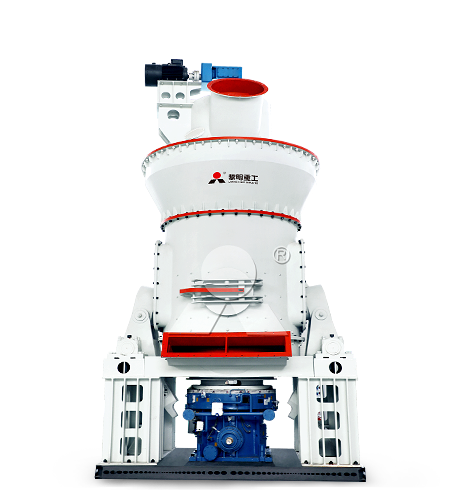
The LM Vertical Roller Mill is suitable for large powder plants requiring integrated drying, grinding, classification, and pneumatic conveying. Its dust-control design should account for hot process gas, feed moisture, classifier airflow, powder temperature, and the increased gas volume associated with drying.
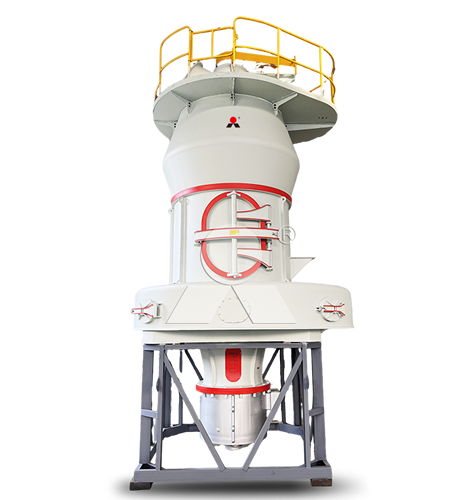
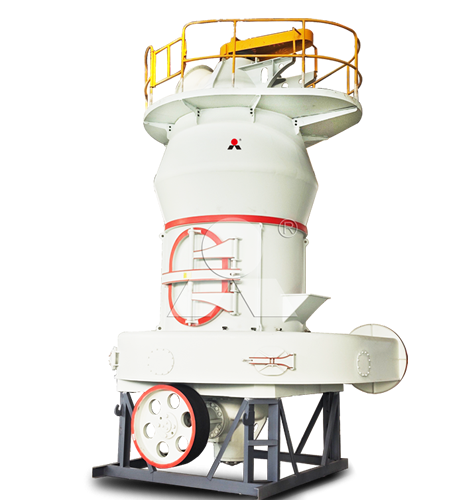
The MTW European Grinding Mill is suitable for flexible-capacity fine-powder production and normally uses an air-classification and pulse-collection arrangement. The collector must be matched to the mill airflow and the dust load generated by the selected mineral. A collector that is undersized can reduce powder recovery, disturb classifier performance, and allow dust to escape from feed or discharge points.
A well-designed dust-collection system improves far more than workshop cleanliness. It protects workers, recovers valuable product, stabilizes airflow for grinding and classification, prevents cross-contamination between mineral grades, reduces housekeeping burden, and supports reliable long-term operation of the entire mineral powder plant.
Related Oil & Gas Mineral Processing


Liming Heavy Industry at bauma CONEXPO INDIA 2026 | Booth 5-C6
2026-09-07

Turnkey Raw Mill Cement Plant in Saudi Arabia: Design and Installation
2026-09-03
Cement Raw Mill Supplier in Indonesia: Cost and Configuration Analysis
2026-09-01
Liming Heavy Industry to Exhibit at the 24th Global Gypsum Conference & Exhibition in Turkey
2026-08-31
Complete Calcium Carbonate Grinding and Coating Plant Solution
2026-08-29
Complete Mineral Processing Solutions
Convenient Reliable Professional Efficient Get Your Quote
Please feel free to submit your inquiry information to us. We will contact with you as soon as possible.
Our team will contact you as soon as possible.